TRENDING
Winter Hair Care: 10 Tips for Healthy Hair

8 min read
Last updated November 6, 2026
Winter hair care comes down to moisture and gentle handling. Use conditioner after every wash, cut back on hot tools and keep your scalp moisturized. Trim split ends about every six weeks. These habits fight dryness, breakage and static all season.
This guide shares 10 simple ways to keep your hair healthy this winter.
This article is for general information only. See a dermatologist if you notice sudden hair loss or a painful, flaky scalp.
Key Takeaways
- Cold air outside and dry heat inside pull moisture from your hair.
- Condition after every wash to strengthen strands and reduce static.
- Air-dry when you can and limit flat irons and curling irons.
- Get a trim about every six weeks to remove damaged ends.
- Space out coloring and chemical treatments during winter.
On This Page
- Why Hair Gets Dry in Winter
- 10 Winter Hair Care Tips
- How to Stop Static
- A Simple Winter Hair Routine
- When to See a Dermatologist
- Know Your Hair Type
- Protect Your Hair Outdoors
- Pick a Gentle Shampoo
- Deep Conditioning at Home
- Sleep Habits for Healthy Hair
- Eat for Healthy Hair
- Use a Humidifier
- Winter Hair Care for Kids
- Common Winter Hair Myths
Why Hair Gets Dry in Winter
Winter is tough on hair. Cold, dry air outside and heated air inside both pull moisture away.
The American Academy of Dermatology (AAD) lists habits that can damage your hair.
As a result, hair can feel rough, look dull and break more easily. Static also gets worse when the air is dry.
Cleveland Clinic dermatologist Dr. Wilma Bergfeld offers a simple rule. “You should treat your hair like a cashmere sweater,” she told Cleveland Clinic Health Essentials.
6 weeksHow often to trim hair to remove damaged ends, per dermatologist advice from Cleveland Clinic.
10 Winter Hair Care Tips
The American Academy of Dermatology (AAD) shares tips for using leave-in conditioner.
1. Wash Based on Your Scalp
There is no single right schedule. Oily scalps may need daily washing, while dry or color-treated hair can go longer between washes.
2. Always Use Conditioner
Condition after every wash. Conditioner helps bind strands together, which adds strength and cuts down on static.
Choose a formula made for your hair type.
3. Try a Leave-In Conditioner
A light leave-in product adds extra moisture through the day. It is especially helpful for curly or thick hair.
4. Limit Heat Styling
Flat irons, curling irons and hot blow dryers dry out hair fast. Air-drying is the gentlest option.
If you do use heat, keep the setting low and use a heat protectant first.
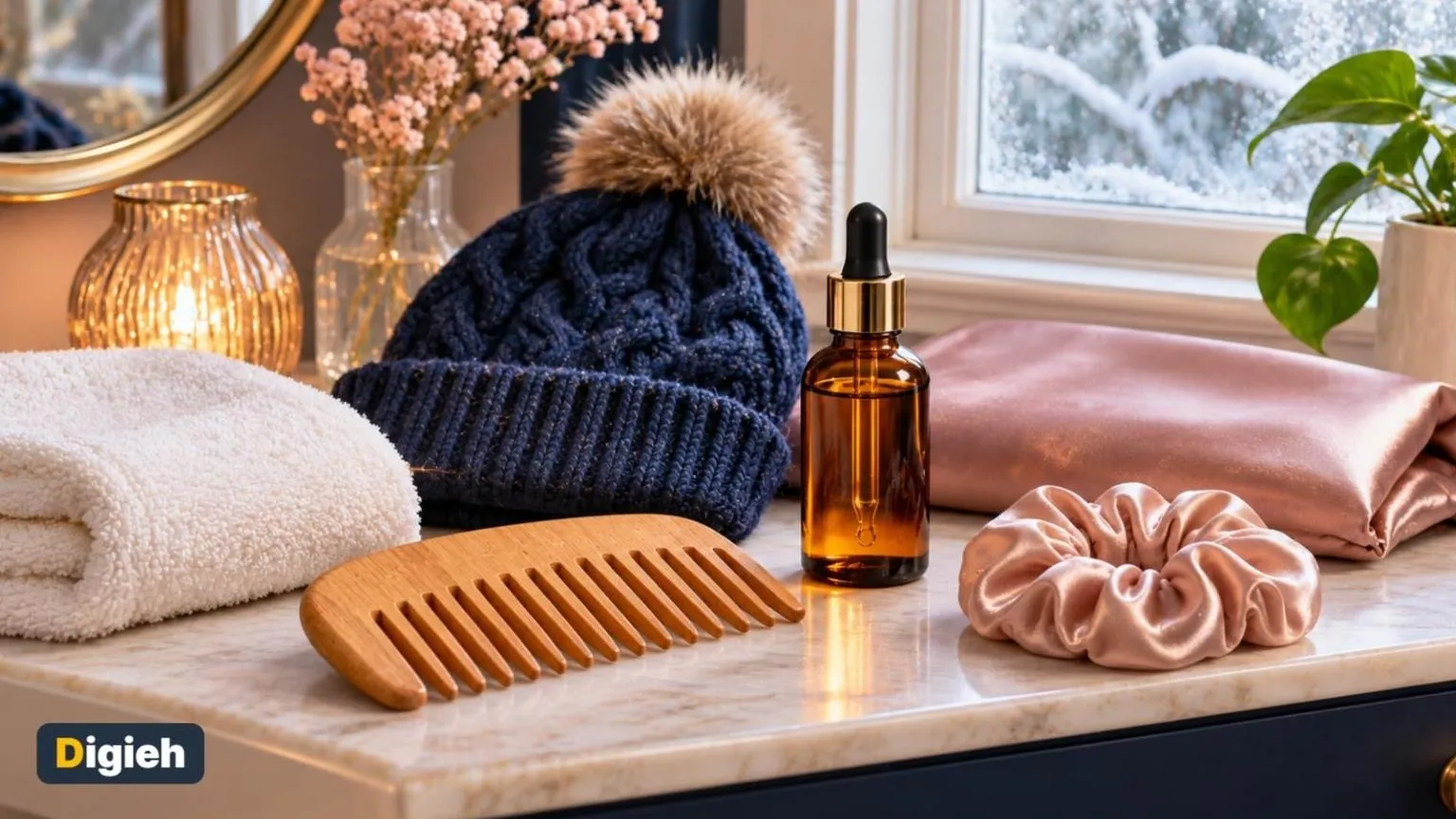
Quick tip. Swap your cotton pillowcase for a silk or satin one. It causes less friction, so hair breaks and frizzes less overnight.
5. Be Gentle When Hair Is Wet
Wet hair breaks easily. Wait until it is less damp before you comb it.
Use a wide-tooth comb or a brush with smooth, coated tips.
6. Moisturize Your Scalp
Your scalp dries out in winter too. A few drops of a light oil or a scalp conditioner can help.
7. Try a Hot Oil Treatment
A warm oil treatment once in a while can soften dry ends. It may also help calm static.
8. Trim Regularly
Split ends travel up the hair shaft if you leave them. A small trim about every six weeks keeps ends healthy.
What is your biggest winter hair problem?
- Dryness
- Static
- Frizz
- Dry, itchy scalp
9. Skip Tight Styles
Tight ponytails, braids and rubber bands can pull and snap hair. Choose looser styles and soft fabric ties.
10. Space Out Chemical Treatments
Coloring, perms and straightening treatments add stress to hair. In winter, try to wait 8 to 10 weeks or more between them.
Avoid bleaching when you can.
Good to know. Tuck a silk scarf inside your winter hat. It helps reduce static and friction on your hair.
How to Stop Static
Static makes hair fly away, especially after you pull off a winter hat. Dry hair is the main cause.
Moisturized hair is heavier, so the strands stay together. Use a hydrating shampoo, a leave-in conditioner or an oil treatment.
Also, product buildup can make static worse. So use a gentle clarifying shampoo now and then if your hair feels coated.
A Simple Winter Hair Routine
Here is an easy weekly plan you can follow.
- Condition after every wash
- Use a leave-in product on dry ends
- Air-dry when you can
- Oil or mask treatment once a week
- Wear loose styles
- Book a trim every six weeks
Use this tool to plan your next trims.
Trim planner
Add to calendar
When to See a Dermatologist
Most winter dryness improves with gentle care. However, some signs need a professional.
- Sudden or patchy hair loss
- A scalp that is red, painful or very itchy
- Thick flakes that do not improve with care
- Breakage that keeps getting worse
A dermatologist can check for scalp conditions and suggest the right treatment.
Know Your Hair Type
Different hair types need different winter care. Knowing yours helps you choose the right products.
| Hair Type | Winter Challenges | Helpful Care |
|---|---|---|
| Fine | Flat, static, oily roots | Light conditioners and leave-in sprays |
| Thick | Dryness and tangles | Rich conditioners and gentle detangling |
| Curly | Frizz and dry ends | Curl creams and less frequent washing |
| Coily | Breakage and dryness | Oils, butters and protective styles |
| Color-treated | Fading and dryness | Color-safe shampoo and deep conditioning |
Read product labels for your hair type. Many brands make lines for each type.
Protect Your Hair Outdoors
Cold wind and dry air can rough up your hair. Protection helps it stay smooth.
- Wear a hat or hood in windy weather.
- Choose a hat lined with satin or silk to reduce friction.
- Tuck long hair into your coat or scarf.
- Never go outside with wet hair in freezing weather.
Wet hair can become brittle in very cold air. Dry it fully before heading out.
Pick a Gentle Shampoo
Harsh shampoos strip natural oils, leaving hair dry. Gentle formulas work better in winter.
Look for shampoos labeled hydrating, moisturizing or sulfate-free. Focus shampoo on your scalp, not the ends.
Rinse with lukewarm water instead of hot water. Hot water dries out both hair and scalp.
Free updates
Join the Digieh list
Be the first to know when our weekly brief launches.
No spam. Unsubscribe anytime. Read our Privacy Policy.
Deep Conditioning at Home
A weekly deep conditioning treatment adds extra moisture. It helps hair feel softer and more manageable.
Apply a hair mask or rich conditioner to damp hair. Focus on the ends, where hair is oldest and driest.
Cover your hair with a shower cap and leave the treatment on for the time the label suggests. Rinse with cool water.
Sleep Habits for Healthy Hair
Your sleep routine affects your hair. Small changes reduce breakage and frizz overnight.
- Sleep on a silk or satin pillowcase.
- Tie long hair in a loose braid or bun.
- Avoid sleeping with wet hair.
- Use a soft scrunchie instead of tight elastics.
Satin bonnets or scarves also protect curly and coily hair while you sleep.
Eat for Healthy Hair
Hair needs nutrients to grow strong. A balanced diet supports healthy hair year-round.
- Protein from eggs, fish, beans and lean meat
- Iron from leafy greens and beans
- Healthy fats from nuts, seeds and fish
- Vitamins from fruits and vegetables
Sudden hair shedding can have many causes. See a doctor if you notice large amounts of hair loss.
Use a Humidifier
Indoor heating dries the air in winter. Dry air pulls moisture from your hair and scalp.
A humidifier adds moisture back to the air. Place one in your bedroom at night.
Clean your humidifier often, following the maker’s instructions.
Winter Hair Care for Kids
Kids’ hair can get dry and tangled in winter too. Gentle care keeps it healthy.
Use a mild, tear-free shampoo and a detangling spray. Comb gently from the ends up.
Keep kids’ hair covered with hats on cold days. Choose soft hats that do not tug.
Common Winter Hair Myths
Some popular beliefs about winter hair are not true.
- Myth. Cutting hair makes it grow faster. Fact. Trims prevent split ends, but they do not change growth speed.
- Myth. Hats cause hair loss. Fact. Normal hats do not cause hair loss, though very tight ones can cause breakage.
- Myth. You should not wash your hair in winter. Fact. Wash as often as your scalp needs.
The American Academy of Dermatology (AAD) shares tips for healthy hair.
Winter Hair Mistakes to Avoid
Some habits make winter hair drier. Watch out for these common mistakes.
- Washing hair with very hot water
- Going outside with wet hair
- Skipping conditioner
Use lukewarm water and let hair dry before heading out into the cold.
Wear a soft hat to protect your hair from wind. Use a gentle leave-in conditioner on dry ends.
Try this today. Turn your shower a little cooler for your next wash. Hot water strips natural oils from your hair.
Test Yourself
What is the gentlest way to dry hair in winter?
- Air-drying
- A hot blow dryer
- A flat iron
Air-drying uses no heat, so it is the gentlest choice.
What helps reduce static in hair?
- Washing twice a day
- Keeping hair moisturized
- Using more hairspray
Moisturized hair is heavier, so strands stay together.
Frequently Asked Questions
How often should I wash my hair in winter?
It depends on your scalp. Oily scalps may need daily washing, while dry hair can go longer between washes.
How do I stop static in my hair?
Keep your hair moisturized with conditioner, a leave-in product or an oil treatment.
Should I trim my hair in winter?
Yes. A small trim about every six weeks removes damaged ends.
Is air-drying better in winter?
Yes. Air-drying uses no heat, so it is the gentlest choice for dry winter hair.
Can I go outside with wet hair in winter?
It is best not to. Wet hair can become brittle in freezing weather.
What pillowcase is best for winter hair?
A silk or satin pillowcase reduces friction, frizz and breakage.
How often should I deep condition in winter?
Once a week works well for most people.
Do hats cause hair loss?
No. Normal hats do not cause hair loss, though very tight ones can cause breakage.
Wrapping Up
Start with conditioner after every wash and less heat styling this week. Then book a trim and add a weekly moisture treatment.
For more winter beauty help, read our guide on how to heal chapped lips fast. For your skin, see our winter skincare guide.
Found this useful?
Editor’s Note
This guide is accurate as of November 6, 2026. It offers general tips and does not replace advice from a dermatologist.
Spot an error in this article? Please contact us at support@digieh.com or read our Corrections Policy.
Keep exploring
Your next read is waiting
 1BusinessWhy AI Chip Demand Is Boosting Gas Makers4 min read
 2HealthBritish Doctor With Ebola Treated at London Hospital4 min read
 3SportsHow to Choose Running Shoes That Fit Right8 min read
 4Food & Lifestyle10 High-Protein Meals That Make Meal Planning Easier4 min read
 5Finance & MarketsHow to Cancel Unused Subscriptions and Save8 min read
 6AI & TechClaude Personal Finance Tool Now Analyzes Your Spending4 min read