
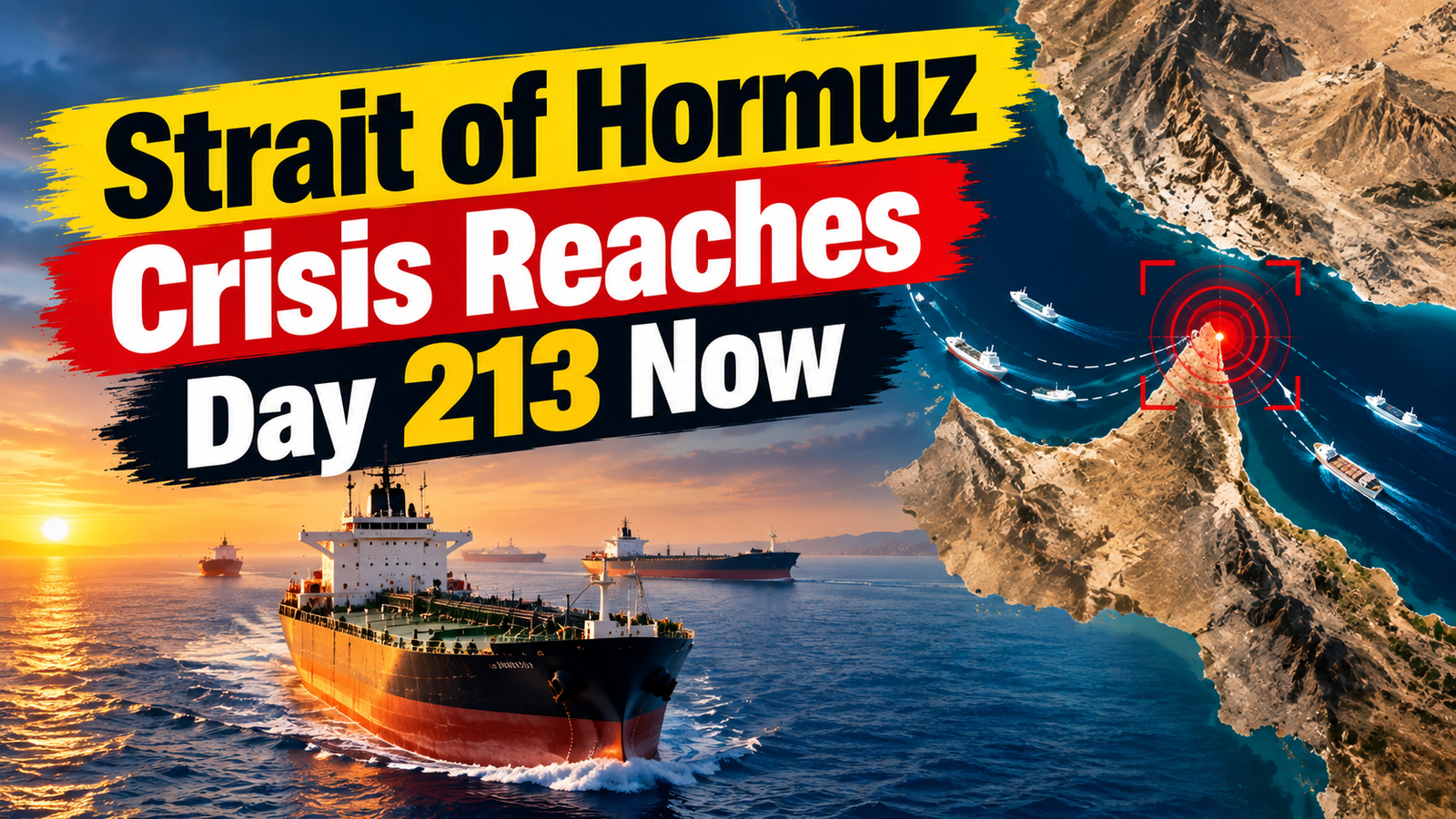

The Strait of Hormuz remains a live conflict zone. Iran and the United States are exchanging new ceasefire proposals this week.
The narrow waterway sits between Iran and Oman. It has stayed disrupted for over 200 days. It connects the Persian Gulf to international shipping routes. Roughly one-fifth of the world’s daily oil supply normally passes through this passage.
How the Crisis Began
The current conflict traces back to late February 2026. The United States and Israel launched joint military strikes against Iran on February 28. Iran responded by closing the Strait of Hormuz shortly after.
Iranian officials warned they would fire on any vessel attempting passage. A senior adviser to Iran’s Revolutionary Guards said the closure was final at the time.
Recent Attacks on Ships
Multiple vessels have reportedly come under attack in recent days. The U.K. Maritime Trade Operations Centre said a tanker was struck this week. An unknown projectile reportedly hit the vessel.
Separate reports describe additional tankers hit by similar projectiles. Some reports also claim U.S. Marines were injured after an Iranian missile struck a vessel. This specific claim has not been fully confirmed through official channels.
Where Ceasefire Talks Currently Stand
Iran proposed a seven-day ceasefire plan last week. The plan included a phased reopening of the strait. President Trump rejected that specific proposal.
Despite the rejection, talks have continued through indirect channels. Qatar has reportedly helped facilitate communication. Iranian state media said Tehran received a new U.S. counterproposal this week.
Iran’s President Masoud Pezeshkian told reporters there remains an atmosphere of distrust. Meanwhile, Trump maintained that the United States has total control of the strait.
The Economic Ripple Effects
The prolonged closure has forced major shipping changes. Iraq recently began importing gasoline through Syria’s Baniyas port instead.
Oil price forecasts have continued climbing as the disruption drags on. Alternate export routes have helped partially offset losses. Fuel exports from the Gulf reportedly are nearing prewar levels.
A recent analysis pointed to the United Kingdom’s renewable energy use. Wind and solar power reportedly helped it avoid nearly six billion pounds in extra gas costs.
What Regional Leaders Are Saying
Gulf nations have repeatedly called for de-escalation. The United Arab Emirates urged all sides this week to work toward reopening the strait peacefully.
U.S. Senator John Kennedy criticized Iran’s earlier seven-day proposal. He called it “not a serious offer.” His comments reflect broader skepticism among some U.S. officials.
Editor’s Note
Conflicts involving major shipping routes rarely stay contained for long. This one has already reshaped oil markets and trade routes. It has also strained diplomatic relationships across multiple continents.
With talks technically still active, a real path toward de-escalation remains possible. Neither side has fully committed to specific terms yet. The situation remains fluid, and official details continue shifting daily.
This information is accurate as of 9:00 AM Gulf Standard Time, September 30, 2026, and reflects an actively developing situation that may change rapidly.
According to CBS News, ABC News, and Gulf News
We aim to provide accurate, reliable, and current information on this sensitive, ongoing conflict. If you spot an error in this article, please contact us at support@digieh.com or read our Corrections Policy and we’ll correct it as soon as possible.