
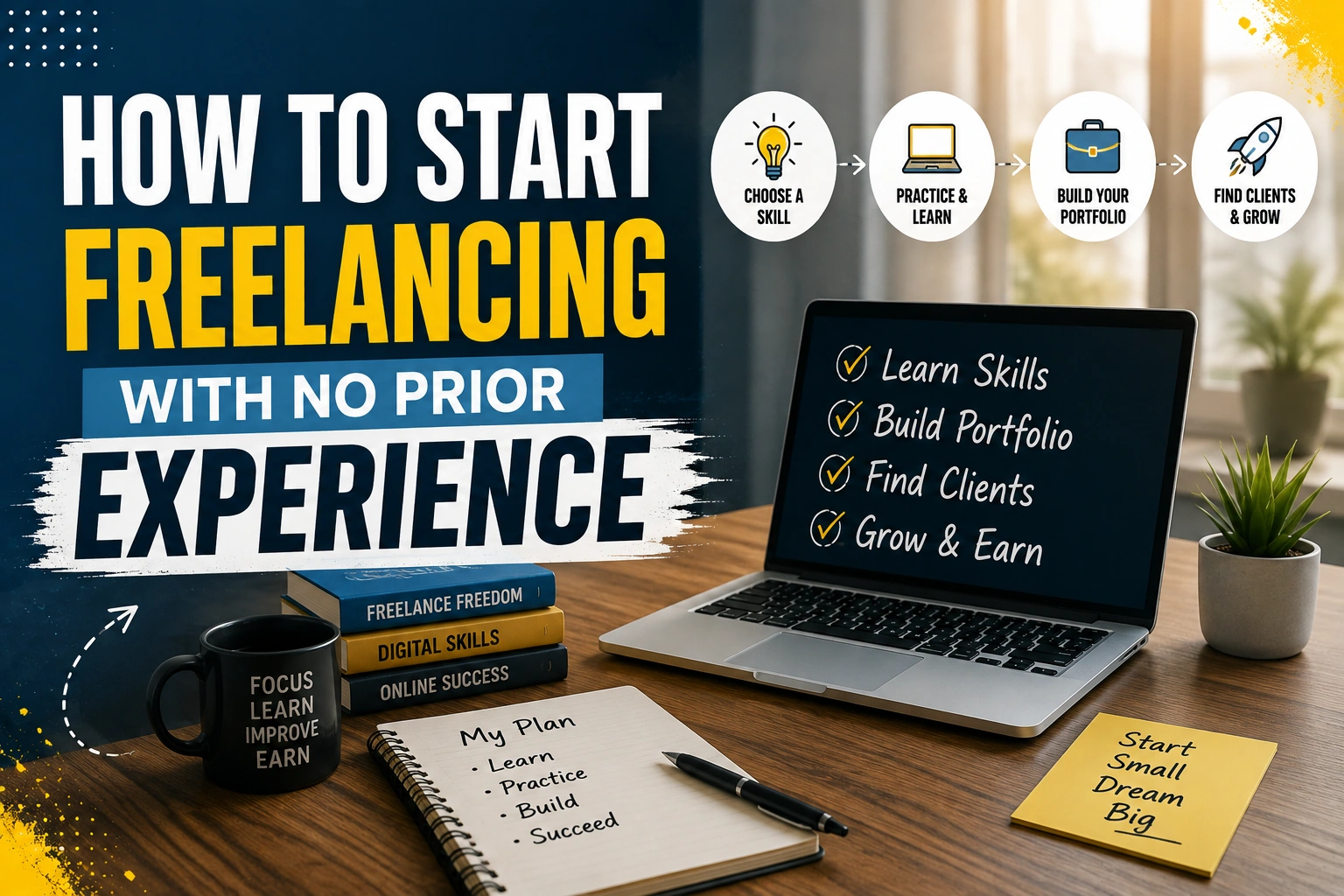
You don’t need years of experience to start freelancing. With the right skill, a simple plan, and some patience, anyone can land their first paying client.
Freelancing has grown into a mainstream way to earn a living. Millions of people now work independently instead of tying themselves to a single employer, and businesses of all sizes have gotten comfortable hiring freelancers for everything from writing to design to development. If you’ve been thinking about starting but don’t know where to begin, this guide walks you through the process step by step.
Why Freelancing Works Even Without Experience
Here’s something worth understanding upfront: companies don’t hire freelancers because of their resumes. They hire them to get a specific result, whether that’s a blog post written, a logo designed, or a website fixed. Experience is just one way clients try to guess whether you’ll deliver. It’s not the only way.
That means a beginner with a strong sample portfolio can often beat an “experienced” freelancer who has nothing to show. Your job isn’t to prove years on the job. It’s to prove you can solve the problem in front of you.
Step 1: Pick One Skill and Stick With It
The biggest mistake beginners make is trying to offer everything at once. Instead, choose one clear, marketable skill you can sell. This might be content writing, basic graphic design, simple website copy, social media management, or data entry.
Picking a single focus does two things. First, it makes it much easier for potential clients to understand exactly what you do. Second, it lets you build a portfolio of relevant, focused samples instead of a scattered mix that doesn’t clearly show your strengths.
If you’re not sure what skill to choose, think about what you’re already decent at, or what you’d enjoy learning over the next few weeks. You don’t need to be an expert. You just need to be useful.
Step 2: Build a Simple Portfolio, Even Without Past Clients
No client history? That’s completely normal when you’re starting out. You can still create a portfolio using sample work.
Write a few blog posts on topics you’d want to be hired for. Design a couple of mock logos or social media graphics. Build a small demo website. None of this needs to be paid work, it just needs to demonstrate what you can do.
Platforms like Canva make it easy to create polished-looking samples quickly, even if you’re not a trained designer. The goal is simple: give a potential client enough proof that hiring you feels like a safe bet.
How to Start Freelancing: Tools You’ll Need
Before you go looking for your first client, it helps to have a few basics in place. You don’t need to spend money upfront. Most of what you need is free or already sitting on your computer.
- A laptop or desktop with a stable internet connection
- A free email address dedicated to your freelance work
- A portfolio, even a simple one with two or three samples
- A profile on at least one freelance platform
- A basic tool for invoicing or tracking payments, such as PayPal or Wise
Once these pieces are in place, you’re technically ready to start applying for work. Everything else you’ll learn along the way.
Step 3: Choose the Right Platform to Find Clients
Once you have a skill and a few samples ready, it’s time to look for actual work. Freelance marketplaces remain the fastest way for beginners to find their first clients, since they already have buyers actively searching for services.
Upwork and Fiverr are two of the most popular starting points, each with a slightly different model. Upwork works more like a job board, where you apply to posted projects. Fiverr lets you create “gigs” that clients can browse and purchase directly. Freelancer.com is another solid option, often used for a wide range of project types, from writing to programming.
It’s worth trying more than one platform in the beginning. Different platforms attract different types of clients, and casting a wider net early on increases your odds of landing that crucial first job.
Step 4: Write Proposals That Actually Get Read
Getting noticed on a crowded platform comes down to how well you pitch yourself. A generic, copy-pasted proposal rarely works. Instead, read the job post carefully and respond directly to what the client actually needs.
Keep your proposal short and specific. Mention how you’d approach their particular project, not just a general list of your skills. If you have a relevant sample, link to it directly. Clients skim quickly, so make it easy for them to say yes.
Consistency matters here more than talent. Sending five to ten targeted proposals a day, day after day, tends to produce results faster than sending a handful and waiting.
Step 5: Don’t Be Afraid to Start Small
Your first project doesn’t need to be glamorous or high-paying. In fact, it shouldn’t be your main focus at all. Your real goal early on is collecting a strong review and proving you can deliver.
Once you have a few five-star reviews, pricing gets easier, and better clients start finding you instead of the other way around. Think of your first few gigs as an investment in your reputation, not just a paycheck.
Step 6: Reach Out to People You Already Know
While platforms are useful, don’t underestimate your existing network. Former coworkers, classmates, and even casual LinkedIn connections can become your very first clients, or point you toward someone who needs your skill.
A simple message explaining that you’ve started freelancing, along with a link to your portfolio, often works better than cold outreach to strangers. People are generally happy to support someone they already know and trust.
Step 7: Price Yourself Fairly, Not Cheaply
It’s tempting to underprice yourself just to win your first few jobs. A small discount early on can be reasonable, but avoid pricing so low that it becomes hard to raise your rates later.
Instead, research what others with similar skills are charging on your chosen platform, and set a starting rate that reflects real effort, even if it’s on the lower end of that range. As your reviews and portfolio grow, gradually raise your prices to match the value you’re providing.
How Much Can You Realistically Earn as a Beginner?
It’s fair to wonder whether this is worth your time financially, especially at the start. Early income varies widely depending on your skill and the platform you use, but most beginners shouldn’t expect large earnings in the first month.
Many new freelancers earn modest amounts on their first few projects, often pricing lower than they will later simply to build reviews. This is normal and temporary. As your portfolio and ratings grow, so does your ability to charge more, and many freelancers see their income climb steadily over their first six months to a year.
The key is patience. Freelancing rarely pays well immediately, but it tends to reward consistency over time far better than most side hustles.
Common Mistakes to Avoid
A few habits tend to slow beginners down more than anything else:
- Trying to offer too many services at once, which confuses potential clients
- Ignoring deadlines, even on small projects, which damages your reputation quickly
- Underpricing so aggressively that raising rates later feels impossible
- Giving up after just one or two slow weeks
- Skipping a portfolio entirely and expecting clients to trust you anyway
It also helps to stay realistic about timelines. Most beginners who stay consistent land their first client within a few weeks, not overnight. Treating freelancing like a real business from day one, rather than a casual side activity, tends to separate those who stick with it from those who give up early.
Editor’s Note
Freelancing rewards consistency far more than talent alone. The people who succeed usually aren’t the most skilled from day one, they’re the ones who kept sending proposals, kept improving their samples, and didn’t quit after a slow first month. Start small, stay patient, and treat every project, even the tiny ones, as a chance to build proof that you can deliver.
We aim to provide accurate, reliable, and current information. If you spot an error in this article, please contact us at support@digieh.com or read our Corrections Policy and we’ll correct it as soon as possible.