TRENDING
Puppy First Week at Home: Day-by-Day Training Plan

5 min read
Last updated November 19, 2026
A puppy’s first week is about routine, potty breaks, a vet visit and gentle training. Take your puppy outside every two hours and see a vet within a week.
Below is a simple day-by-day plan built on advice from animal welfare groups and federal health experts.
Key Takeaways.
- Plan a vet visit within a few days to a week, federal health experts advise.
- Puppies can hold their bladder about one hour per month of age.
- Puppies 8 to 12 weeks old need four small meals a day.
- Never punish accidents. Reward success outside right away.
Jump to a section
- Before your puppy comes home
- Day-by-day plan
- Potty schedule
- Potty timer calculator
- How often to feed
- Keeping the family safe
- Mistakes to avoid
- When to call the vet
- Frequently asked questions
- Conclusion
Before Your Puppy Comes Home
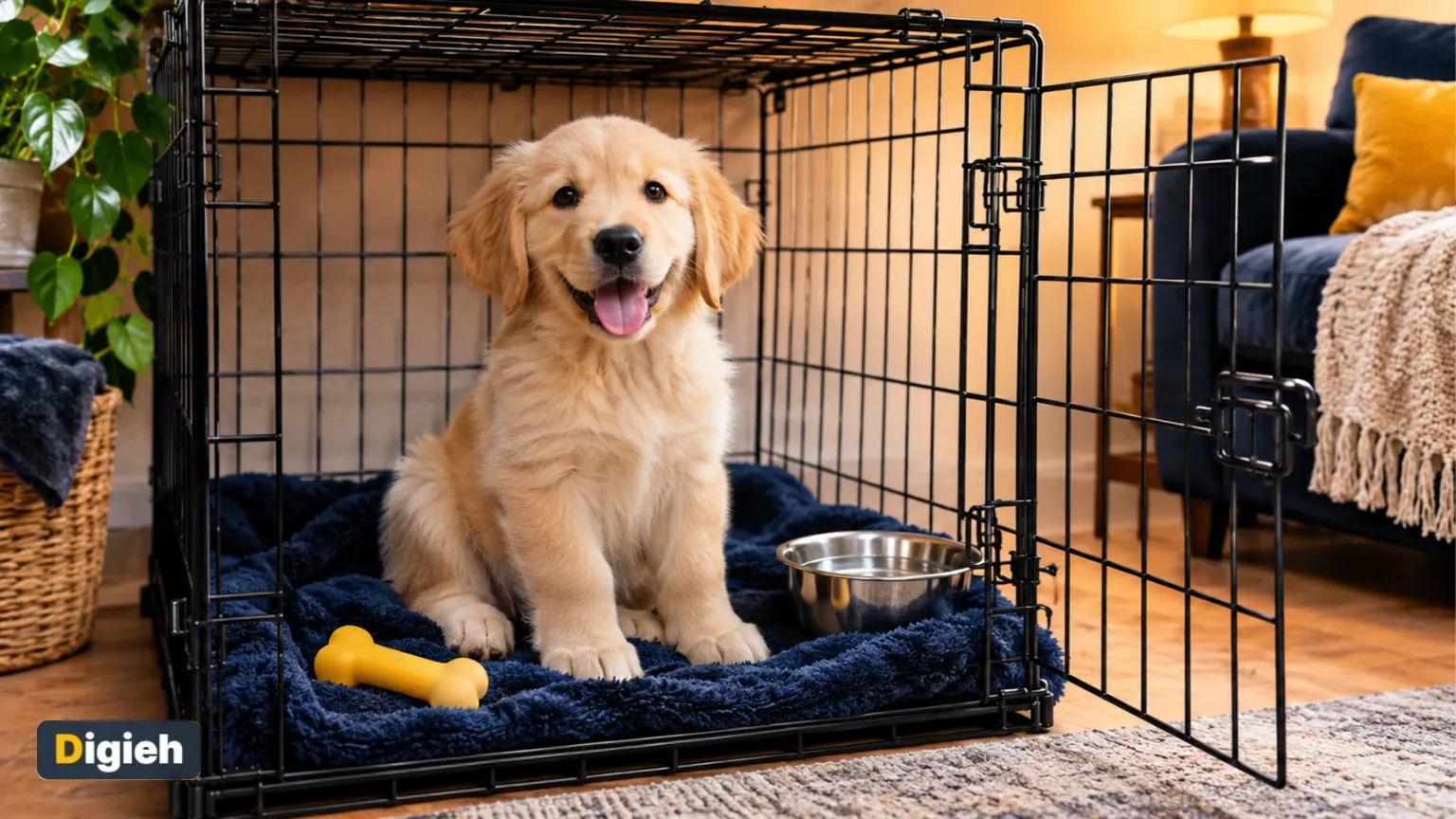
- A crate or small gated area with a soft blanket.
- Food and water bowls and the food your puppy already eats.
- A collar or harness, a leash and a name tag with your phone number.
- Chew toys and puppy-safe treats.
- Enzyme cleaner for accidents.
- A vet appointment booked for the first week.
Give your puppy a warm, quiet resting spot away from drafts, like a crate with a clean blanket. That tip comes from a dog care guide by the American Society for the Prevention of Cruelty to Animals (ASPCA).
Day-by-Day First Week Plan
| Day | Main goal | What to do |
|---|---|---|
| Day 1 | Settle in | Show the potty spot first, then the crate. Keep visits short and calm. |
| Day 2 | Start the routine | Set fixed times for meals, potty breaks, play and naps. |
| Day 3 | Crate comfort | Feed meals near or in the crate. Leave the door open at first. |
| Day 4 | Name and rewards | Say the name, reward eye contact and practice sit. |
| Day 5 | Vet visit | Bring any records. Ask about vaccines and parasite control. |
| Day 6 | Gentle handling | Touch paws, ears and mouth briefly, with treats. |
| Day 7 | Safe new sights | Meet calm, healthy friends at home. Hear new household sounds. |
Plan is a Digieh schedule based on federal vet advice and Humane World for Animals potty training tips.
Keep training sessions short, about five minutes, and end on a success.
Potty Training Schedule
Take your puppy out at least every two hours, per Humane World for Animals. Also go out right after waking, playing, eating or drinking.
Use the same spot and a short cue phrase. Reward the moment your puppy finishes, not before.
Remove the water bowl about two and a half hours before bedtime. Most puppies can sleep about seven hours without a break.
1 hourHow long a puppy can usually hold its bladder per month of age, according to Humane World for Animals.
What is the hardest part of a new puppy’s first week?
- Potty training
- Night crying
- Chewing everything
- Not sure
Potty Timer Calculator
Digieh built this calculator on the one-hour-per-month guideline. Enter your puppy’s age in weeks.
How long your puppy can wait
Good to know. This is a rough guide. During the day, keep to breaks at least every two hours, even if the calculator shows more.
How Often to Feed a Puppy
| Puppy age | Meals per day |
|---|---|
| 8 to 12 weeks | 4 |
| 3 to 6 months | 3 |
| 6 months to 1 year | 2 |
Meal counts come from the society’s general dog care guide. Ask your vet about portion sizes for your breed.
Feed on a set schedule. Puppies often need to go out soon after eating, so a schedule makes potty training easier.
Free updates
Join the Digieh list
Be the first to know when our weekly brief launches.
No spam. Unsubscribe anytime. Read our Privacy Policy.
Keeping the Family Safe and Healthy
- Wash hands with soap after touching the puppy, its bowls or its poop.
- Supervise young children with the puppy at all times.
- Do not disturb the puppy while it eats or sleeps.
- Pick up poop right away, especially where children play.
- Avoid raw food diets, which can carry harmful germs.
These steps come from the healthy pets page run by the Centers for Disease Control and Prevention.
Handle paws gently every day so nail trims are easy later. Our guide shows how to trim dog nails safely.
Mistakes to Avoid in the First Week
- Punishing accidents, which builds fear and slows training.
- Too many visitors on day one.
- Long walks in public places before vaccines are done.
- Leaving the puppy loose and unsupervised in the house.
- Lifting a puppy by its front legs, tail or scruff.
Chilly weather ahead? See our tips on caring for dogs and our list of holiday foods pets should avoid.
Watch for coughing or a runny nose in new puppies. Our guide to dog flu symptoms explains the signs.
When to Call the Vet
See a vet promptly if a new puppy gets sick soon after you bring it home, federal health experts advise. Also tell the breeder or shelter.
- Vomiting or diarrhea that lasts more than a day
- Not eating for a day
- Coughing, sneezing or nasal discharge
- Very low energy or weakness
- Signs of pain or a swollen belly
Try this today. Write your puppy’s schedule on a sheet and stick it on the fridge. Everyone at home can then follow one routine.
Test Yourself
About how long can a 3-month-old puppy hold its bladder?
- 1 hour
- 3 hours
- 8 hours
Puppies can hold it about one hour per month of age, so about 3 hours at 3 months.
Frequently Asked Questions
When should a new puppy see the vet?
Within a few days to a week after you bring it home, federal health experts advise.
How often should a puppy go out at night?
Young puppies may need one or two night breaks. Many can sleep about seven hours once settled.
How many meals does a puppy need?
Four meals a day from 8 to 12 weeks and three from 3 to 6 months. After that, two meals a day until age one.
Conclusion
A calm routine, frequent potty breaks and a quick vet visit set up your puppy for success.
Your next step is to book the vet visit and set your puppy’s first-week schedule today.
Editor’s Note
This article is accurate as of November 19, 2026. Advice comes from the Centers for Disease Control and Prevention, the society’s dog care guide and Humane World for Animals.
Spot an error in this article? Please contact us at support@digieh.com or read our Corrections Policy.
Keep exploring
Your next read is waiting
 1Pets & AnimalsCat Not Using Litter Box: Causes and Fixes6 min read
 2TechnologyDo I Need a VPN: Honest Home Guide5 min read
 3RecipesEasy Chicken Karahi Recipe Made in One Pan7 min read
 4NewsHow Long Can a Blackout Last? Real Cases5 min read
 5HealthLDL Cholesterol: How to Lower It Without Medication5 min read
 6Parenting & FamilyHealthy Lunchbox Ideas Your Kids Will Actually Eat7 min read
Found this useful?