TRENDING
How to Clean a Washing Machine and Stop Odors

8 min read
Last updated November 6, 2026
To clean a washing machine, run an empty hot cycle with two cups of white vinegar. Then run a second hot cycle with half a cup of baking soda. Wipe the door seal, detergent drawer and drum with a damp cloth and leave the door open to dry.
A dirty washer can leave clothes smelling musty. Cleaning it once a month keeps laundry fresh and the machine running well.
Key Takeaways
- Clean your washer about once a month.
- Use hot water with vinegar, then baking soda.
- Scrub the rubber door seal on front-loaders.
- Clean the detergent drawer and filter.
- Leave the door open after each wash.
On This Page
- Signs Your Washer Needs Cleaning
- How to Clean a Washing Machine Step by Step
- Front-Loader vs Top-Loader Tips
- How to Keep It Fresh
- Mistakes to Avoid
- Why Washing Machines Get Dirty
- How Often to Clean Your Washer
- Cleaning the Detergent Drawer
- Cleaning the Door Seal
- Using Bleach Safely
- Use the Right Detergent
- Common Washer Odors and Fixes
- Prevent Mold Between Cleanings
- Check Hoses and Connections
- Clean the Outside Too
- Top-Loader Agitator Care
Signs Your Washer Needs Cleaning
A musty smell is the most common sign. You may also see black spots on the door seal.
Clothes that come out with gray residue also point to buildup.
Cold water washes and liquid fabric softener can add to the problem. They leave a thin film inside the drum over time.
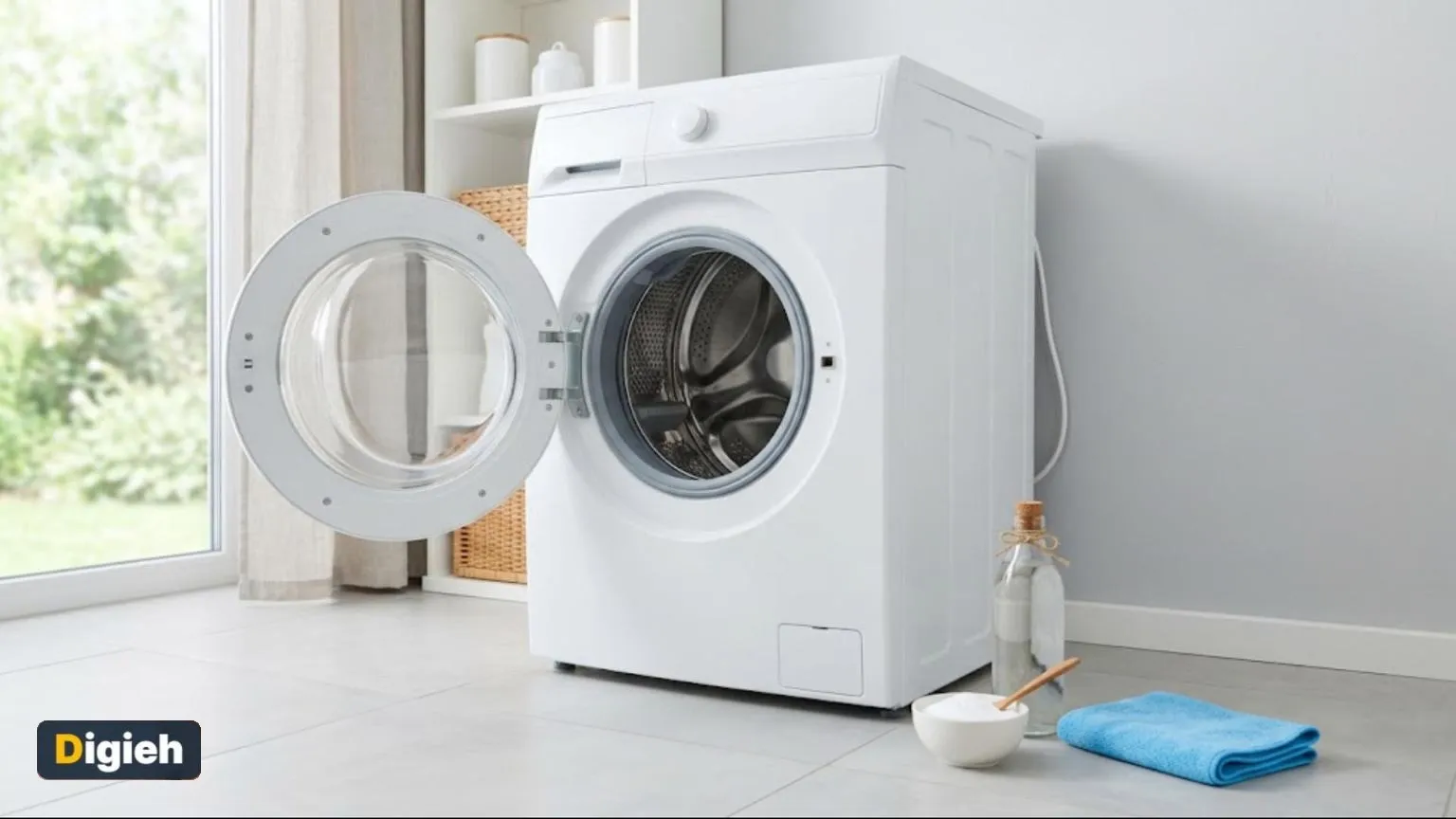
1Monthly cleaning keeps your washer fresh and odor-free.
How to Clean a Washing Machine Step by Step
1. Run a Vinegar Cycle
Pour two cups of white vinegar into the drum. Run the hottest, longest cycle.
2. Run a Baking Soda Cycle
Sprinkle half a cup of baking soda in the drum. Run another hot cycle.
3. Clean the Door Seal
Pull back the rubber seal and wipe away gunk with soapy water.
Quick tip. Use an old toothbrush for the folds of the door seal. It reaches hidden grime easily.
4. Wash the Detergent Drawer
Remove the drawer if you can. Soak and scrub it in warm, soapy water.
5. Wipe and Dry
Wipe the drum and outside. Leave the door open to air dry.
What kind of washer do you have?
- Front-loader
- Top-loader
- High-efficiency top-loader
- Shared laundry room
Front-Loader vs Top-Loader Tips
ENERGY STAR explains how efficient washers save water and energy.
| Washer Type | Extra Step |
|---|---|
| Front-loader | Clean the door seal and drain pump filter |
| Top-loader | Let vinegar soak in the full tub for one hour |
| High-efficiency | Use the self-clean cycle if your model has one |
Use this calculator to plan your cleaning schedule.
Washer cleaning planner
Good to know. Busy households with many loads may need to clean the washer every two to three weeks.
- White vinegar
- Baking soda
- Old toothbrush
- Microfiber cloths
- Warm soapy water
- Towel for the filter
How to Keep It Fresh
Remove wet clothes right after the cycle ends. Damp loads breed mildew.
The Environmental Protection Agency (EPA) explains how moisture leads to mold.
Leave the door and detergent drawer open between washes.
Mistakes to Avoid
Do not use too much detergent. Extra soap leaves sticky buildup.
Never mix bleach with vinegar, since the Centers for Disease Control and Prevention (CDC) warns against mixing cleaners.
Never mix vinegar and bleach in the same cycle. The mix releases harmful fumes.
Clean the Filter Too
Many front-loaders have a small filter near the bottom. Check your manual to find it.
Place a towel underneath, open it slowly and clear out lint and coins.
Add to calendar
Why Washing Machines Get Dirty
It seems strange that a machine that cleans clothes can get dirty. Yet washers collect grime over time.
Detergent, fabric softener and body oils leave residue inside. Lint and hair build up in hidden spots.
Front-loading washers can trap moisture in the door seal. Mold and mildew grow in that damp, dark space.
How Often to Clean Your Washer
Regular cleaning keeps your washer fresh and working well. A simple schedule helps.
| Task | How Often |
|---|---|
| Wipe the door seal | After each week of laundry |
| Leave the door open to dry | After every load |
| Clean the detergent drawer | Once a month |
| Run a cleaning cycle | Once a month |
| Clean the filter | Every few months, or as the manual says |
If your washer smells musty, clean it right away. Do not wait for the next scheduled cleaning.
Cleaning the Detergent Drawer
The detergent drawer collects sticky residue and mold. It needs regular cleaning.
Pull the drawer out completely. Most drawers release with a small tab or button.
Soak it in warm, soapy water for a few minutes. Scrub every corner with an old toothbrush.
Wipe the empty slot inside the machine too. Dry everything before you put the drawer back.
Cleaning the Door Seal
The rubber seal on a front loader traps water, hair and lint. Check it often.
- Pull back the folds of the seal gently.
- Remove any hair, coins or lint.
- Wipe it with a cloth and warm, soapy water.
- Use a vinegar solution for mildew spots.
- Dry it fully with a clean towel.
Never mix vinegar and bleach. The combination can release harmful fumes.
Using Bleach Safely
Some people prefer bleach to kill mold and germs. Follow the label closely.
Use only the amount the label suggests. Run an empty hot cycle with bleach in the dispenser.
Run a second rinse cycle with plain water. That clears any leftover bleach.
Open windows or run a fan for fresh air. The Centers for Disease Control and Prevention (CDC) explains how to clean and disinfect with bleach safely.
Use the Right Detergent
Using the wrong detergent or too much soap leaves residue. Residue leads to smells and buildup.
High-efficiency (HE) washers need high-efficiency (HE) detergent. Regular detergent makes too many suds in these machines.
Measure your detergent carefully. Use the line on the cap, not a full cap.
Too much fabric softener can also build up. Use it sparingly, or try wool dryer balls instead.
Free updates
Join the Digieh list
Be the first to know when our weekly brief launches.
No spam. Unsubscribe anytime. Read our Privacy Policy.
Common Washer Odors and Fixes
Different smells point to different problems. Here is how to fix them.
| Smell | Likely Cause | Fix |
|---|---|---|
| Musty or moldy | Damp door seal or drum | Clean the seal and leave the door open |
| Rotten egg | Bacteria in the drain | Clean the filter and run a hot cycle |
| Sour | Wet clothes left too long | Move laundry to the dryer quickly |
| Burning | Possible motor or belt issue | Stop using it and call a repair technician |
A burning smell can mean a serious problem. Unplug the washer and get professional help.
Prevent Mold Between Cleanings
Small daily habits stop mold before it starts. They take only seconds.
- Leave the door or lid open after each load.
- Remove wet clothes right away.
- Wipe the seal dry once a week.
- Pull out the detergent drawer slightly to let it air.
- Keep the laundry room well ventilated.
These habits work especially well for front-loading washers.
Check Hoses and Connections
Washer hoses wear out over time. A burst hose can flood your home.
Check the hoses behind the washer a few times a year. Look for cracks, bulges or leaks.
Many experts suggest replacing rubber hoses every few years. Braided steel hoses tend to last longer.
Clean the Outside Too
The outside of your washer collects dust and spills. Wipe the top, buttons and door with a damp cloth.
Pull the machine out once a year if you can. Sweep or vacuum the dust and lint behind it.
Top-Loader Agitator Care
Top-loading washers with a center agitator need some extra attention. Gunk can collect under the agitator cap.
Check your manual to see if the cap lifts off. If it does, remove it and clean the inside with warm, soapy water.
Wipe under the rim of the drum too. Lint and detergent often hide there.
Washing Machine Mistakes to Avoid
Some habits make your washer dirty or less efficient. Watch out for these common mistakes.
- Using too much detergent
- Leaving wet clothes in the drum for hours
- Keeping the door closed after every wash
- Overloading the machine
Use the amount of detergent shown on the label. Extra soap can leave residue and odors.
Make Washer Care a Habit
A few small habits keep your washer fresh between deep cleans.
Leave the door open after washing so the drum can dry. Wipe the rubber seal once a week.
Read Your Manual
Your manual lists the best cleaning steps for your model. Following it can help your washer last longer.
Keep a small cleaning schedule on the laundry room wall as a reminder.
Try this today. Run an empty hot cycle with two cups of white vinegar today. Then wipe the door seal dry.
Test Yourself
What should you never mix in a wash cycle?
- Vinegar and water
- Vinegar and bleach
- Baking soda and water
The mix releases harmful fumes.
How can you stop washer odors?
- Leave the door open after washing
- Use extra detergent
- Leave wet clothes inside
Airflow dries moisture that causes mildew.
Frequently Asked Questions
How often should I clean my washing machine?
About once a month.
Can I use bleach instead of vinegar?
Yes, but never use them together.
Why does my washer smell?
Trapped moisture and soap buildup cause mildew.
Do washer cleaning tablets work?
Yes. They are a simple option if you prefer them.
Why does my front-load washer smell?
Moisture trapped in the door seal can grow mold. Wipe it dry and leave the door open.
Can I use bleach to clean my washer?
Yes. Follow the label, then run a plain rinse cycle. Never mix bleach with vinegar.
What is high-efficiency (HE) detergent?
It is low-sudsing detergent made for high-efficiency washers.
How often should I replace washer hoses?
Check them a few times a year and replace them if they crack, bulge or leak.
Wrapping Up
Run a vinegar cycle this weekend and enjoy fresher laundry. A little care keeps your washer working for years.
Keep the whole house fresh with our Thanksgiving cleaning checklist. Save on bills with tips to lower your heating bill.
Found this useful?
Editor’s Note
This guide is accurate as of November 6, 2026. Check your washer manual before cleaning.
Spot an error in this article? Please contact us at support@digieh.com or read our Corrections Policy.
Keep exploring
Your next read is waiting
 1HealthBritish Doctor With Ebola Treated at London Hospital4 min read
 2BusinessHow to Ask for a Raise: Tips and What to Say8 min read
 3Food & LifestyleWhy 4 Irish Beaches Are Among Europe’s Best4 min read
 4AI & TechClaude Personal Finance Tool Now Analyzes Your Spending4 min read
 5NewsChina Is Building Its Biggest Aircraft Carrier Yet4 min read
 6Home & KitchenHow to Unclog a Drain Naturally Without Chemicals8 min read