TRENDING
Dog Separation Anxiety: Signs and How to Help

5 min read
Last updated November 19, 2026
Dog separation anxiety shows as barking, chewing or accidents only when your dog is left alone. Slow practice, calm goodbyes and food puzzles can help a lot.
It is a stress reaction, not bad behavior. With patience, most dogs learn to feel safe on their own.
Key Takeaways.
- Signs appear only when your dog is alone or about to be left.
- Rule out medical problems, boredom and gaps in house training first.
- Practice very short absences and build up slowly.
- Never punish your dog. It makes anxiety worse.
Jump to a section
- Signs of separation anxiety
- Is it really separation anxiety?
- What causes it
- Help for mild cases
- Help for moderate or severe cases
- What not to do
- When to get help
- Frequently asked questions
- Conclusion
Signs of Separation Anxiety in Dogs
These signs happen when your dog is alone or separated from you, the animal welfare society (ASPCA) notes.
- Pacing, panting or whining as you get ready to leave.
- Barking or howling after you go.
- Chewing or digging near doors and windows.
- Peeing or pooping indoors only when alone.
- Heavy drooling or trying hard to escape.
One sign now and then may not mean separation anxiety. Signs that happen often are more telling, the American Kennel Club says.
Try this today. Record your dog with a phone or pet camera while you are out. You will see exactly when and how the stress starts.
Is It Really Separation Anxiety?
Other problems can look the same. Check these first.
| What you see | Could also be | How to tell |
|---|---|---|
| Accidents indoors | Medical problem or incomplete house training | Happens even when you are home |
| Peeing on furniture | Scent marking | Small amounts on upright surfaces |
| Chewed shoes or toys | Puppy chewing or boredom | Happens with you home too |
| Barking | Reacting to noises outside | Starts with sounds, not with your leaving |
| Peeing when greeted | Excitement or submissive peeing | Happens during greetings only |
Look-alike problems come from the animal welfare society (ASPCA) guide. Digieh added the “how to tell” column.
Does your dog get upset when you leave home?
- Yes, every time
- Sometimes
- No, never
- Not sure
What Causes Separation Anxiety?
A big change in a dog’s life can trigger it. Common triggers include a new home, a change in schedule or losing a family member.
Shelter dogs may be at risk after losing an earlier home. That point comes from an animal welfare society (ASPCA).
Help for Mild Cases
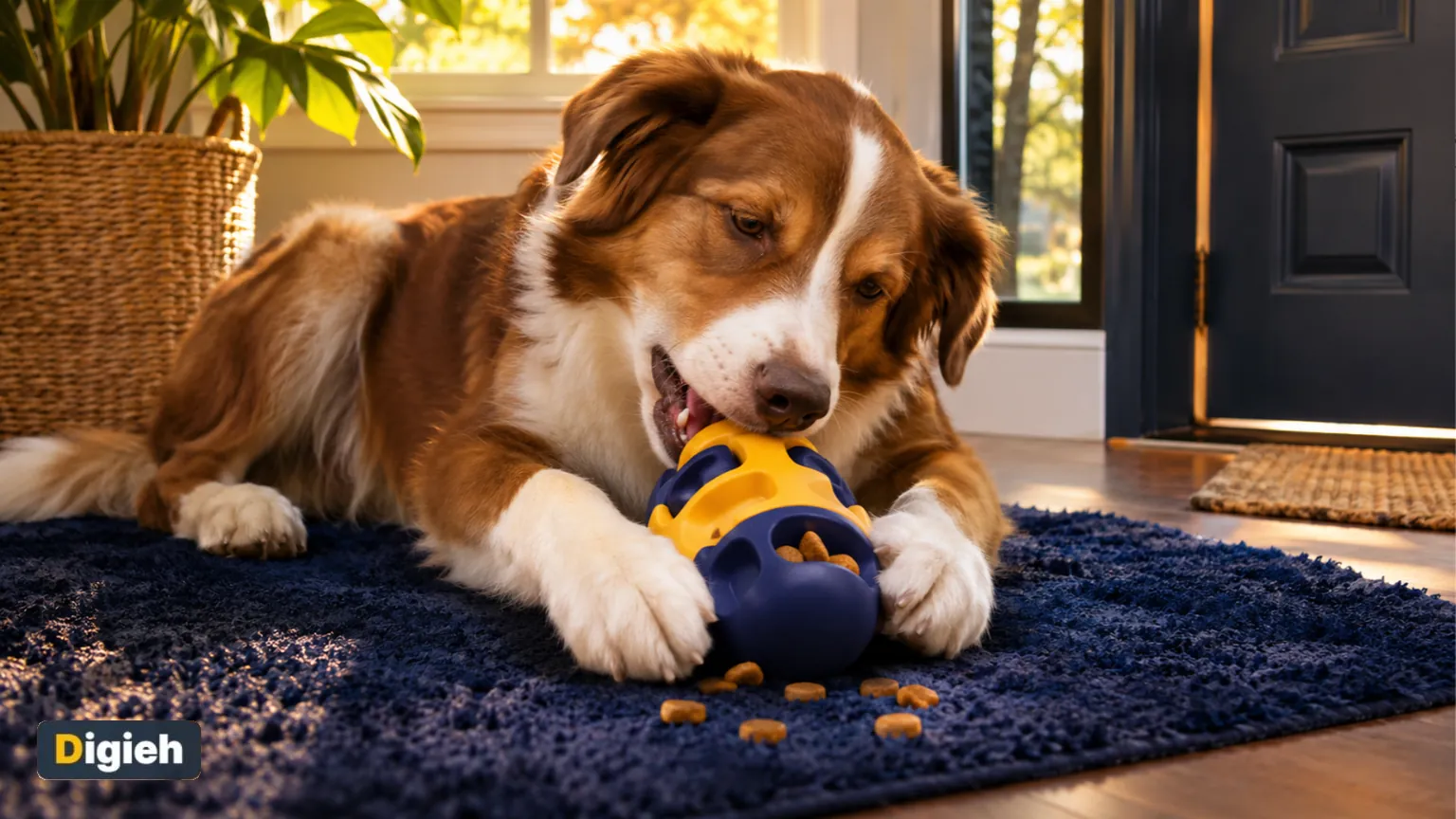
- Give a special food puzzle toy only when you leave.
- Take it away when you come home, so it stays special.
- Keep goodbyes and hellos short and calm.
- Exercise your dog before you leave.
- Practice having your dog stay in another room while you are home.
A dog that eats from its food toy while alone is a good sign, a vet hospital association toolkit notes. A dog too upset to eat needs a slower plan.
Exercise helps a dog settle but is not a cure on its own, the American Kennel Club notes.
Free updates
Join the Digieh list
Be the first to know when our weekly brief launches.
No spam. Unsubscribe anytime. Read our Privacy Policy.
Help for Moderate or Severe Cases
These dogs need a slow plan over several weeks. The goal is to keep your dog below the point of panic.
- Practice your leaving routine, like picking up keys, without going anywhere.
- Step outside for a few seconds, then come back calmly.
- Add time slowly, only when your dog stays relaxed.
- Watch the first 40 minutes closely, since that is when most anxiety shows.
- Avoid leaving your dog alone for long while training, using a sitter, daycare or family help.
The 40-minute point comes from the animal welfare society (ASPCA). Progress can feel slow, but rushing often sets dogs back.
40 minutesWindow after you leave when most separation anxiety shows, according to an animal welfare society (ASPCA).
Good to know. A crate helps some dogs feel safe but makes others panic. Try a room behind a baby gate if your dog fights the crate.
What Not to Do
- Do not scold or punish. Your dog is scared, not disobedient.
- Do not crate your dog all day as a fix.
- Do not assume a second dog will help. The problem is usually about you leaving.
- Do not start supplements or calming products without asking your vet.
Loud nights can add stress too. Our guide to dogs scared of fireworks covers safe rooms. New puppy? Our puppy first week plan builds alone time early.
When to Get Help
See your vet if your dog hurts itself or has accidents even when you are home. Also go if there is no progress after a few weeks.
For moderate or severe cases, an animal welfare society (ASPCA) suggests a certified animal behaviorist or a board-certified vet behaviorist. A vet may also discuss medicine alongside training.
Older dogs can develop new worries. Our senior dog care tips explain what to watch for.
Health note. This guide is general information. Ask your veterinarian before giving any medicine or supplement.
Test Yourself
When does most separation anxiety show after a dog is left alone?
- After 4 hours
- In the first 40 minutes
- Only at night
The animal welfare society (ASPCA) says most anxious behavior happens within the first 40 minutes alone.
Frequently Asked Questions
How do I know if my dog has separation anxiety?
Signs like barking, chewing or accidents happen only when you are away or about to leave. A video of your dog alone helps confirm it.
Does crate training help separation anxiety?
It helps some dogs and worsens it for others. Watch how your dog reacts.
Will getting a second dog help?
Often not, because the anxiety is usually about being apart from you.
Can separation anxiety be cured?
Many dogs improve a lot with slow training and, in some cases, help from a vet.
Conclusion
Separation anxiety is stressful for dogs and owners, but it often gets better. Small steps, calm routines and patience matter most.
Your next step is to record your dog alone for 30 minutes to see what really happens.
Editor’s Note
This article is accurate as of November 19, 2026. Guidance comes from the American Society for the Prevention of Cruelty to Animals and the American Kennel Club.
Spot an error in this article? Please contact us at support@digieh.com or read our Corrections Policy.
Keep exploring
Your next read is waiting
 1NewsWhat Causes a Nationwide Blackout? The Simple Explanation6 min read
 2Finance & MarketsFed Rate Hike December 2026: What It Means5 min read
 3GamingHow to Choose a Gaming Monitor, Specs Explained8 min read
 4Pets & AnimalsWet vs Dry Cat Food: Pros, Cons, Costs5 min read
 5Home & KitchenLaundry Symbols Explained: Free Printable Care Label Chart5 min read
 6HealthAlways Bloated: Common Causes and What Actually Helps5 min read
Found this useful?