TRENDING
Easy Roast Chicken Recipe for Beginners

8 min read
Last updated November 6, 2026
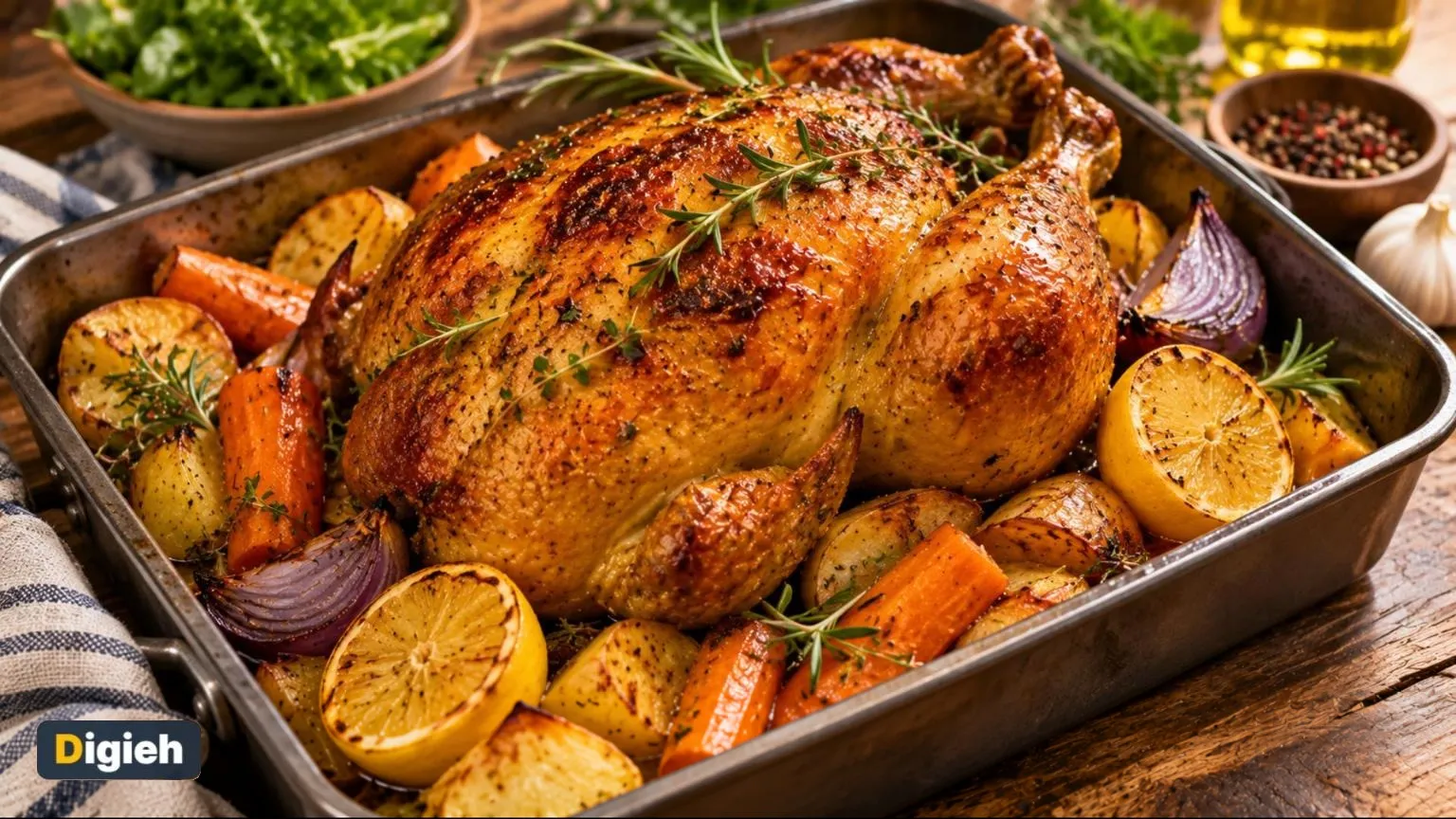
To roast a chicken, pat it dry and rub it with oil, salt, pepper and herbs. Roast it at 425 degrees Fahrenheit for about 1 hour to 1 hour and 20 minutes. The thickest part of the thigh should reach 165 degrees Fahrenheit.
Roast chicken is a simple, cozy dinner that feels special. It is also a great option for smaller holiday meals.
Key Takeaways
- Dry skin turns out crispier.
- Season generously inside and out.
- Use a thermometer to check for 165 degrees Fahrenheit.
- Rest the chicken so the juices stay inside.
- Leftovers keep 3 to 4 days in the fridge.
On This Page
- What You Need
- How to Roast a Chicken Step by Step
- Easy Flavor Ideas
- What to Serve With It
- Leftovers and Food Safety
- How to Choose a Chicken
- How to Thaw a Frozen Chicken
- Dry Brining for Juicier Meat
- Trussing the Chicken
- Where to Place the Thermometer
- Roast Vegetables in the Same Pan
- How to Carve a Roast Chicken
- Make Gravy From the Drippings
- Use the Leftover Carcass
- Keep Your Kitchen Clean
- Easy Seasoning Blends
- Ways to Use Leftover Chicken
What You Need
This recipe serves 4 to 6 people.
Do not rinse raw chicken, since the United States Department of Agriculture (USDA) says it spreads germs.
| Ingredient | Amount |
|---|---|
| Whole chicken | 4 to 5 pounds |
| Olive oil or melted butter | 2 tablespoons |
| Salt | 2 teaspoons |
| Black pepper | 1 teaspoon |
| Garlic | 1 head, halved |
| Lemon | 1, halved |
| Fresh thyme or rosemary | A few sprigs |
165 degrees FahrenheitSafe internal temperature for roast chicken.
How to Roast a Chicken Step by Step
1. Heat the Oven
Preheat to 425 degrees Fahrenheit.
2. Dry the Chicken
Remove giblets and pat the chicken dry with paper towels. Do not rinse it.
3. Season
Rub oil all over. Season the outside and inside with salt and pepper.
Quick tip. Leave the seasoned chicken uncovered in the fridge overnight. The skin dries out and crisps up beautifully.
4. Stuff With Aromatics
Place lemon, garlic and herbs inside the cavity.
5. Roast
Set the chicken breast side up in a pan. Roast for about 1 hour to 1 hour and 20 minutes.
6. Check the Temperature
Insert a thermometer into the thickest part of the thigh. It should read 165 degrees Fahrenheit.
7. Rest and Carve
Let it rest 10 to 15 minutes, then carve.
Good to know. Check the thigh, not the breast. The thigh takes longer to cook.
Use this calculator to estimate roasting time.
Roast time estimator
Easy Flavor Ideas
Rub with smoked paprika and garlic powder for a smoky flavor. Try lemon pepper and oregano for a bright, Greek-style bird.
Brush with honey and mustard during the last 15 minutes for a sweet glaze.
Which flavor would you try?
- Lemon herb
- Smoky paprika
- Honey mustard
- Garlic butter
What to Serve With It
Roast potatoes, carrots and onions in the same pan. Add a green salad or steamed green beans.
Serve with warm rolls and a simple pan gravy.
- Preheat to 425 degrees Fahrenheit
- Pat chicken dry
- Season inside and out
- Add lemon, garlic and herbs
- Check for 165 degrees Fahrenheit
- Rest before carving
Leftovers and Food Safety
Refrigerate leftovers within 2 hours. Use them within 3 to 4 days.
The United States Department of Agriculture (USDA) explains safe chicken handling from store to table.
Wash hands, boards and knives after handling raw chicken. FoodSafety.gov lists safe cooking temperatures.
Add to calendar
How to Choose a Chicken
The right bird makes roasting easier. Look for a whole chicken that weighs about 3 to 5 pounds.
A smaller chicken cooks faster and more evenly. A larger bird feeds more people but takes longer.
| Chicken Size | Serves | Rough Roasting Time at 425 Degrees |
|---|---|---|
| 3 pounds | 3 to 4 | About 1 hour |
| 4 pounds | 4 to 5 | About 1 hour 15 minutes |
| 5 pounds | 5 to 6 | About 1 hour 30 minutes |
These times are only a guide. Always check the temperature with a food thermometer.
Check the date on the package. Use or freeze fresh chicken within one to two days of buying it.
How to Thaw a Frozen Chicken
Never thaw chicken on the counter. Bacteria grow quickly at room temperature.
There are three safe ways to thaw it.
- In the fridge. Allow about one day for every 4 to 5 pounds.
- In cold water. Keep it in a sealed bag and change the water every 30 minutes.
- In the microwave. Cook it right away after thawing.
The United States Department of Agriculture (USDA) explains each safe thawing method.
Dry Brining for Juicier Meat
A dry brine is a simple trick for flavorful, juicy chicken. It also helps the skin turn crisp.
Rub salt all over the chicken, including under the skin. Set it on a rack in the fridge, uncovered.
Leave it overnight, or for at least a few hours. The salt seasons the meat deeply.
Skip extra salt when you season before roasting. The brine already did that job.
Trussing the Chicken
Trussing means tying the legs together with kitchen twine. It helps the bird cook evenly and look neat.
Cross the legs at the ankles and tie them tightly. Tuck the wing tips under the back.
If you do not have twine, you can skip this step. The chicken will still taste great.
Where to Place the Thermometer
The thermometer must go in the right spot to give a true reading. Check the thickest part of the thigh.
Push the probe in without touching the bone. Bone can make the reading higher than the meat.
Check the breast and the wing joint too. Every spot should reach 165 degrees Fahrenheit.
The United States Department of Agriculture (USDA) explains how to use food thermometers.
Free updates
Join the Digieh list
Be the first to know when our weekly brief launches.
No spam. Unsubscribe anytime. Read our Privacy Policy.
Roast Vegetables in the Same Pan
Turn your chicken into a full meal with one pan. The vegetables soak up the tasty drippings.
Good choices include potatoes, carrots, onions, parsnips and Brussels sprouts. Cut them into even chunks.
Toss them with oil and salt, then scatter them around the chicken. Stir them once halfway through cooking.
How to Carve a Roast Chicken
Carving looks tricky, but it gets easy with practice. Use a sharp knife and a cutting board with a groove.
- Cut through the skin between the leg and the body.
- Pull the leg away and cut through the joint.
- Separate the thigh and drumstick at the joint.
- Slice down along the breastbone to remove each breast.
- Cut off the wings at the joint.
Slice the breast meat across the grain. Arrange everything on a warm platter.
Make Gravy From the Drippings
The pan drippings make delicious gravy. Pour them into a cup and let the fat rise.
Spoon a few tablespoons of fat into a pan. Whisk in flour, then add broth and simmer until thick.
Use the Leftover Carcass
Do not throw away the bones. They make a rich homemade broth.
Place the carcass in a large pot with onion, carrot and celery. Cover with water and simmer for a few hours.
Keep Your Kitchen Clean
Raw chicken can spread germs to counters, sinks and other food. Use a separate cutting board for raw meat.
Wash your hands with soap after touching raw chicken. Clean surfaces with hot, soapy water.
Easy Seasoning Blends
A good spice rub turns a simple roast into something special. Mix these blends with a little oil before rubbing them on.
| Blend | Ingredients |
|---|---|
| Lemon herb | Lemon zest, garlic, thyme and rosemary |
| Smoky paprika | Smoked paprika, garlic powder and cumin |
| Italian | Oregano, basil, garlic and a little red pepper |
| Garlic butter | Soft butter, minced garlic and parsley |
Rub some of the blend under the skin too. It flavors the meat directly.
Ways to Use Leftover Chicken
Leftover roast chicken saves time on busy days. Shred the meat and store it in the fridge.
- Toss it into a green salad.
- Fold it into tacos or wraps.
- Stir it into soup or fried rice.
- Mix it with mayonnaise for chicken salad sandwiches.
Use leftovers within three to four days, or freeze them for later.
Roast Chicken Mistakes to Avoid
A few small mistakes can make roast chicken dry or bland. Here is how to avoid them.
- Skipping the step of drying the skin
- Cooking straight from the fridge
- Guessing doneness without a thermometer
- Carving right away
Pat the chicken dry before seasoning for crispy skin. Let it rest before carving.
Use Leftover Roast Chicken
Leftover chicken makes quick meals for busy days. Store it in the fridge within two hours.
Add chicken to salads, wraps or soups. Use the bones to make a simple homemade broth.
Plan a Weekly Roast
Roasting one chicken on Sunday can give you meals for several days. It saves time and money.
Try this today. Pat your chicken dry and salt it the night before. The skin roasts crisper and the meat tastes better.
Test Yourself
Should you rinse raw chicken?
- Yes, always
- Only with hot water
- No, it spreads germs
Rinsing can splash bacteria around the sink.
Where should you check the temperature?
- Thickest part of the thigh
- The wing tip
- The skin
The thigh is the last part to finish cooking.
Frequently Asked Questions
Should I rinse raw chicken?
No. Rinsing can spread germs around your kitchen.
How do I get crispy skin?
Pat the chicken dry and roast at high heat.
How do I know it is done?
The thigh should reach 165 degrees Fahrenheit.
Why rest the chicken?
Resting keeps the juices inside the meat.
How long does it take to roast a 4-pound chicken?
About 1 hour 15 minutes at 425 degrees Fahrenheit. Check that it reaches 165 degrees.
Can I roast a chicken from frozen?
It is safe but takes about 50 percent longer. Thawing first gives more even results.
What is dry brining?
It means salting the chicken and chilling it uncovered for several hours or overnight.
Where do I check the temperature?
Check the thickest part of the thigh without touching the bone.
Wrapping Up
Roast a simple chicken this week for an easy, cozy dinner. It is a great skill for any home cook.
Serve it with our creamy mashed potatoes. Add warm homemade dinner rolls.
Found this useful?
Editor’s Note
This recipe is accurate as of November 6, 2026. Oven times vary, so always use a thermometer.
Spot an error in this article? Please contact us at support@digieh.com or read our Corrections Policy.
Keep exploring
Your next read is waiting
 1Food & LifestyleHow to Store Fresh Herbs So They Last8 min read
 2NewsHow 840,000 Trees Brought Tapirs Back to Brazil4 min read
 3AI & TechClaude Personal Finance Tool Now Analyzes Your Spending4 min read
 4HealthRaw or Powdered Turmeric? What the Science Says4 min read
 5TechnologyThe Galaxy S27 May Use Three Different Chips4 min read
 6Finance & MarketsPound Hits Highest Level Since the Brexit Vote3 min read