TRENDING
How 840,000 Trees Brought Tapirs Back to Brazil

4 min read
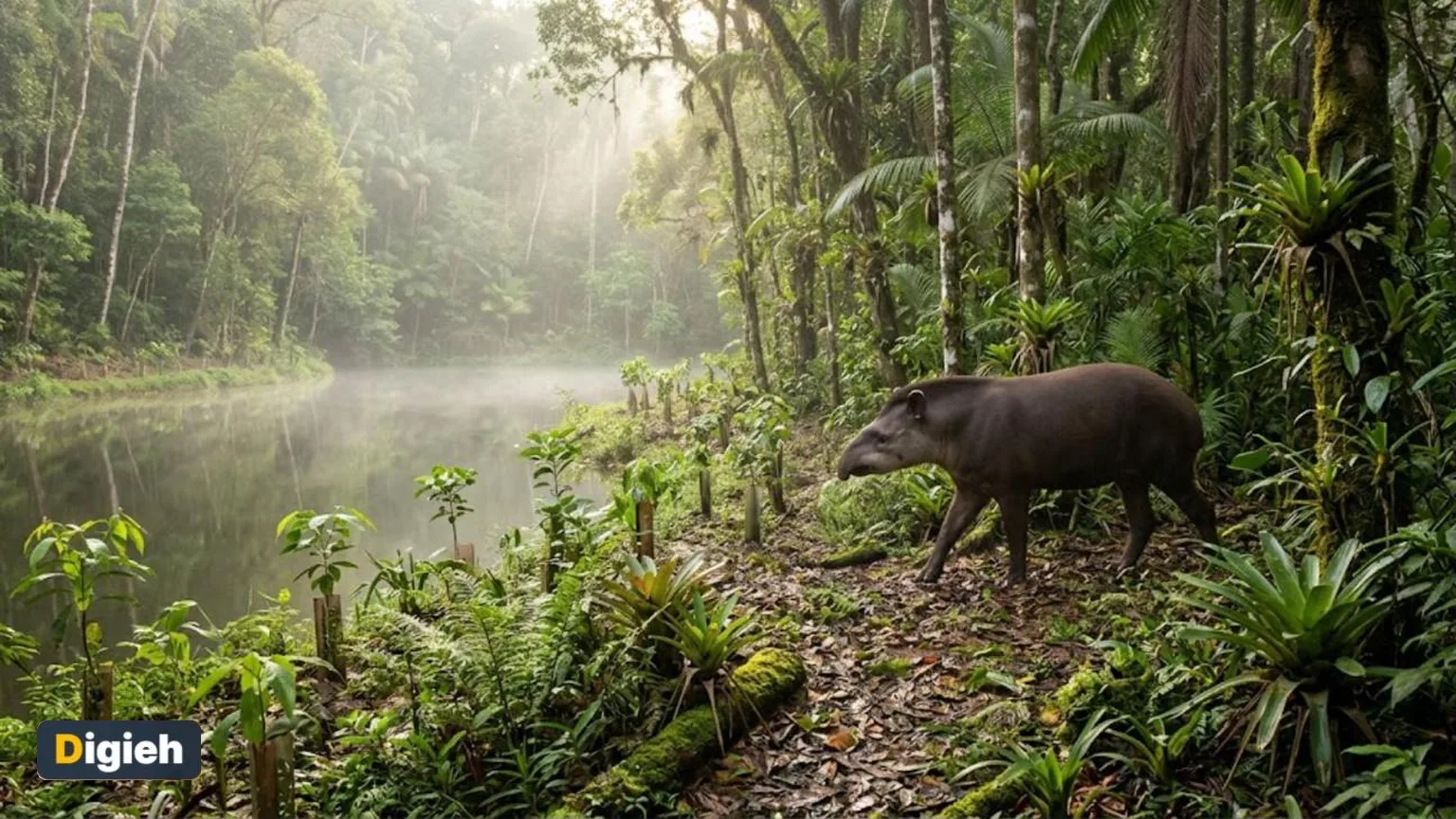
A family in Brazil’s Rio de Janeiro state replanted an old cattle farm with about 840,000 trees. Tapirs, gone from the state since 1914, now live there again.
Key Points
- Nicholas and Raquel Locke turned their family farm into a nature reserve in 2001.
- Early replanting added about 840,000 trees, according to a World Land Trust report.
- Lowland tapirs returned in 2017, and calves have since been born in the wild.
From Cattle Farm to Rainforest
The Locke family had farmed land in the Guapiacu valley since 1907. Over time, farmers cleared much of the forest there for cattle.
In 2001, Nicholas and Raquel Locke set up a nonprofit reserve on the land. People know it as the Reserva Ecologica de Guapiacu (REGUA), which means Guapiacu Ecological Reserve.
Their goal was to bring back the Atlantic Forest. This forest once covered much of Brazil’s coast, but large parts of it have been lost.
Good to know. Restoring a forest takes decades. Bringing back key animals, like tapirs, can help the forest keep growing on its own.
How the Brazil Family Planted 840,000 Trees
According to a February 2025 World Land Trust report, the reserve has planted 840,000 trees across 607 hectares. That is about 1,500 acres, or roughly 850 soccer fields.
Part of the old pasture also became a restored wetland. The World Land Trust says this wetland made the area suitable for tapirs again.
Planting on this scale takes years of work. Teams grow young trees in nurseries, plant them out and care for them until they can survive alone.
1914The year tapirs disappeared from Rio de Janeiro state, before their return in 2017, as Euronews reported.
Tapirs Come Home After a Century
Lowland tapirs are large plant-eating mammals with short, flexible snouts. They had been missing from Rio de Janeiro state for more than 100 years.
The species is listed as Vulnerable on the global Red List of threatened species, according to the World Land Trust. Habitat loss and hunting are major threats.
“Tapirs have been extinct in Rio since 1914,” Professor Fernando Fernandez told Euronews in 2020.
In December 2017, the first three tapirs arrived at the reserve. The release was part of the Refauna project run by the Federal University of Rio de Janeiro.
In early 2020, a tapir named Eva gave birth to a calf. It was the first tapir born in the wild in the state in a century.
More calves have followed since then. Each birth is a sign that the animals have found enough food, water and shelter.
Would you plant trees on your land if you could?
- Yes, definitely
- Maybe a few
- I already do
Free updates
Join the Digieh list
Be the first to know when our weekly brief launches.
No spam. Unsubscribe anytime. Read our Privacy Policy.
Why Tapirs Matter to the Forest
People often call tapirs the gardeners of the forest. They eat fruit and spread seeds through their droppings as they wander.
This helps new trees grow in new places. So the return of tapirs can help the forest keep healing on its own.
Researchers track the animals with radio collars and hidden cameras. These tools show where the tapirs travel and how the group is growing.
The tapirs also share the reserve with other returning wildlife. Healthy wetlands and young forest give many species a second chance.
A Model for Other Places
The reserve shows that damaged land can recover with patience. It took decades of planting, care and monitoring.
Groups like the World Land Trust support projects like this around the world. They help buy and protect land that wildlife needs.
You do not need a farm to help nature. Planting native plants at home or joining a local cleanup can make a difference. If you love spotting wildlife, start with our guide to bird watching for beginners.
Try this today. Find out which trees or plants are native to your area. Plant one in a pot or garden this season.
Why are tapirs called gardeners of the forest?
- They dig holes
- They trim branches
- They spread seeds
Tapirs eat fruit and spread seeds in their droppings, helping new trees grow.
Frequently Asked Questions
Where is the Guapiacu reserve?
It sits in the Guapiacu valley in Rio de Janeiro state, Brazil, inside the Atlantic Forest region.
When did tapirs return to Rio de Janeiro state?
The first three tapirs arrived at the reserve in December 2017. The first wild-born calf followed in early 2020.
Can visitors go to the reserve?
The reserve welcomes nature lovers, including bird watchers. Check its official website before planning a visit, and pack well for outdoor walks with our winter hiking tips.
Found this useful?
Editor’s Note
This story is accurate as of November 6, 2026. Tree and tapir figures come from a World Land Trust report and Euronews. Counts may change as monitoring continues.
Spot an error in this article? Please contact us at support@digieh.com or read our Corrections Policy.
Keep exploring
Your next read is waiting
 1Food & Lifestyle10 High-Protein Meals That Make Meal Planning Easier4 min read
 2Finance & MarketsHow to Teach Kids About Money: Simple Lessons8 min read
 3HealthRaw or Powdered Turmeric? What the Science Says4 min read
 4EntertainmentHow to Start Drawing as a Beginner8 min read
 5SportsHow to Start Walking for Fitness: Beginner Plan8 min read
 6AI & TechClaude Personal Finance Tool Now Analyzes Your Spending4 min read