TRENDING
Dry Mouth: Causes, Night Relief and Warning Signs
Dry mouth explained: symptoms, common causes like medicines and mouth breathing, day and night relief, foods to choose, tooth care and when to see a doctor.

7 min read
Last updated November 25, 2026
Dry mouth happens when you do not make enough saliva. Common causes are medicines, not drinking enough, breathing through your mouth at night and anxiety.
Sipping water, chewing sugar-free gum and limiting caffeine and alcohol help. See a doctor if it lasts for weeks or comes with other symptoms.
Health note. This article is for general information only and is not medical advice. Do not stop a prescribed medicine because of dry mouth without talking to your doctor.
Key Takeaways.
- Saliva protects teeth, so dry mouth raises the risk of tooth decay.
- Hundreds of medicines can reduce saliva, says a US dental research institute.
- Dry mouth is not a normal part of ageing.
- Breathing through your mouth at night is a common cause of morning dryness.
- Lasting dry mouth can be linked to diabetes or Sjogren’s syndrome.
Jump to a section
- What dry mouth is
- Symptoms
- Common causes
- Official advice compared
- Should I see a doctor?
- Daytime relief
- Dry mouth at night
- Foods and drinks
- Protecting your teeth
- Pharmacy products
- When to Get Help
- Questions to Ask Your Doctor
- Frequently Asked Questions
- Sources
- Conclusion
What Is Dry Mouth?
Dry mouth, also called xerostomia, means your mouth does not have enough saliva. Saliva helps you chew, swallow and taste, and it washes away food and germs.
It also contains calcium and phosphate that keep teeth strong, explains the National Institute of Dental and Craniofacial Research.
2 to 3 litresDaily water for dry mouth, about 8 to 12 cups, says the US dental research institute.
Symptoms
- A sticky, dry feeling in the mouth.
- Trouble chewing, swallowing or speaking.
- A burning or sore mouth.
- Cracked lips and mouth sores.
- Bad breath.
- Changes in taste.
These signs come from the National Health Service and the US dental research institute.
Common Causes
| Cause | Examples | What to do |
|---|---|---|
| Medicines | Some blood pressure, depression and bladder medicines | Ask your doctor, do not stop them yourself |
| Dehydration | Not drinking enough, heavy sweating, illness | Drink more water |
| Mouth breathing | Blocked nose, snoring | Treat the blocked nose |
| Anxiety | Stress, panic | Relaxation, support |
| Health conditions | Diabetes, Sjogren’s syndrome, oral thrush | See a doctor |
| Cancer treatment | Head and neck radiotherapy, chemotherapy | Ask your care team |
Sources: National Health Service and US dental research institute, checked November 25, 2026.
Thirst and dry mouth with frequent peeing can be a sign of diabetes. Read our guide to type 2 diabetes symptoms.
Official Advice Compared
| Question | National Health Service (UK) | US dental research institute |
|---|---|---|
| First steps | Sip cold water, ice, sugar-free gum | Drink 8 to 12 cups of water, sugarless gum |
| Avoid | Alcohol, caffeine, fizzy, acidic, spicy food, smoking | Caffeine, alcohol, tobacco, spicy or salty food |
| Products | Pharmacy gels, sprays, lozenges | Saliva substitutes |
| Teeth | Brush twice, alcohol-free mouthwash | Daily care and regular dental checkups |
Sources: National Health Service and National Institute of Dental and Craniofacial Research, checked November 25, 2026.
Should I See a Doctor?
Tap the signs you have. The bars show the best next step. This is a guide, not a diagnosis.
- Dry mouth now and then
- Dry mouth every morning
- Lasting several weeks despite self-care
- Trouble eating or talking
- Sore, red, bleeding mouth or white patches
- Peeing a lot and very thirsty
- Dry eyes as well
- Started after a new medicine
When is your mouth driest?
- When I wake up
- During the day
- After talking a lot
- Not sure
Daytime Relief
- Sip cold water often through the day.
- Suck ice cubes or sugar-free sweets.
- Chew sugar-free gum to boost saliva.
- Use lip balm for dry lips.
- Take sips of water with meals.
These tips come from the National Health Service. Products with xylitol may also help protect teeth, notes the US dental research institute.
Try this today. Keep a reusable water bottle with you and refill it at lunch. Small, regular sips work better than big drinks now and then.
Dry Mouth at Night
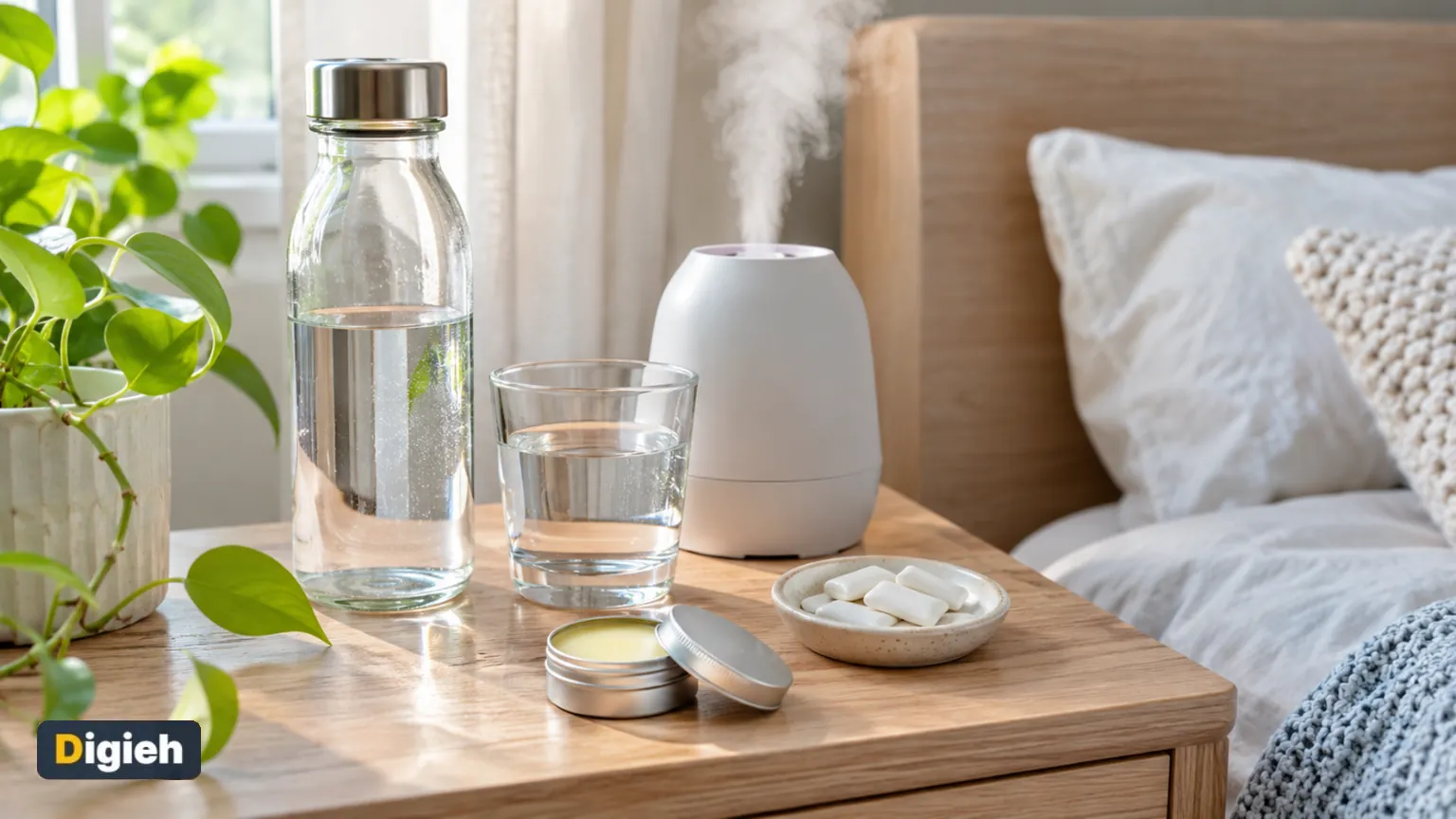
- Keep a glass of water by the bed.
- Use a humidifier in the bedroom.
- Treat a blocked nose so you breathe through it.
- Take dentures out at night.
- Avoid alcohol close to bedtime.
Snoring and mouth breathing are common causes of a dry mouth in the morning. See our guides to stopping snoring and sleep apnoea.
Foods and Drinks
| Choose | Limit |
|---|---|
| Water and milk | Coffee, strong tea and energy drinks |
| Soft, moist foods like soups and stews | Dry crackers and toast |
| Sauces and gravies with meals | Spicy and very salty foods |
| Sugar-free gum and sweets | Sugary snacks and fizzy drinks |
| Cool fruit like melon | Alcohol |
Source: National Health Service advice, checked November 25, 2026.
Protecting Your Teeth
Without enough saliva, tooth decay and mouth infections are more likely. Good daily care is essential.
- Brush twice a day with fluoride toothpaste.
- Clean between your teeth daily.
- Use an alcohol-free mouthwash.
- See your dentist regularly.
- Cut down on sugary snacks.
Learn more about mouth health in our guide to gum disease.
Free updates
Join the Digieh list
Be the first to know when our weekly brief launches.
No spam. Unsubscribe anytime. Read our Privacy Policy.
Pharmacy Products
Pharmacists sell gels, sprays, tablets and lozenges that keep the mouth moist. Not all suit everyone, so ask which is best for you.
If you have your own teeth, avoid acidic artificial saliva products, the National Health Service advises.
Medicines and Dry Mouth
Check your medicine leaflet for dry mouth as a side effect. Your doctor may be able to change the dose or switch medicines.
Never stop a prescribed medicine without advice. Bring a list of all your medicines, including supplements, to your appointment so your doctor can spot the likely cause.
Dry Mouth and Anxiety
Stress and anxiety can switch off saliva for a while. That is why the mouth feels dry before a speech or exam. Slow breathing and sipping water help.
If anxiety is frequent, see our guide to anxiety symptoms and coping.
Dry Mouth During Cancer Treatment
Radiotherapy to the head and neck can damage the glands that make saliva. Some chemotherapy makes saliva thick and sticky.
- Ask your care team about saliva substitutes.
- See your dentist before and during treatment.
- Use a soft toothbrush and fluoride toothpaste.
- Keep sipping water through the day.
Talking, Singing and Public Speaking
Teachers, singers and people who talk all day often get a dry mouth. Keep water nearby and take small sips between sentences.
Dry Mouth and Exercise
Heavy breathing and sweating during exercise can quickly dry the mouth. Drink water before, during and after a workout, and breathe through your nose when you can.
Dry Mouth in Older Adults
Older adults often take several medicines that cause dry mouth. But dryness is not a normal part of ageing and should be checked, the US dental research institute notes.
Which habit helps relieve dry mouth?
- Sipping water through the day
- Drinking more coffee
- Using alcohol mouthwash
Sipping water keeps the mouth moist. Caffeine and alcohol can make dryness worse.
Dry Mouth Myths
- It is just part of getting older. It is often caused by medicines or health conditions.
- Any mouthwash helps. Alcohol-based mouthwash can dry the mouth more.
- It is harmless. Lasting dry mouth can damage teeth.
- Drinking lots of juice helps. Sugary and acidic drinks can harm teeth, so choose water.
- Only old people get it. Anyone can, especially on certain medicines.
When to Get Help
See a doctor if dry mouth makes it hard to eat or talk. Also see one if it lasts a few weeks despite self-care. Also go if your mouth is painful, red, swollen or bleeding, or has white patches, the National Health Service advises.
See a doctor too if you also pee a lot, feel very thirsty or have dry eyes.
Questions to Ask Your Doctor
- Could my medicines be causing dry mouth?
- Should I be tested for diabetes?
- Could this be Sjogren’s syndrome?
- Which saliva substitute should I try?
- How can I protect my teeth?
- Should I see a dentist more often?
Frequently Asked Questions
Why is my mouth dry at night?
Often from breathing through your mouth, snoring or a blocked nose during sleep.
Is dry mouth a sign of diabetes?
It can be, especially with thirst and frequent peeing.
Does chewing gum help dry mouth?
Yes. Sugar-free gum helps your mouth make more saliva, and xylitol may protect teeth.
Can anxiety cause dry mouth?
Yes. Stress and anxiety can reduce saliva for a short time.
Sources
- National Health Service: Dry mouth
- National Institute of Dental and Craniofacial Research: Dry mouth
- MedlinePlus: Mouth disorders
Conclusion
Dry mouth is common and usually easy to ease with simple daily habits. Lasting dryness deserves a check, as it can hurt your teeth and point to other conditions.
Next step: keep water close, swap to sugar-free gum and check your medicine leaflets. See a doctor if it lasts for more than a few weeks.
Editor’s Note
This article is accurate as of November 25, 2026. Facts come from the National Health Service, a US dental research institute and MedlinePlus.
Spot an error in this article? Please contact us at support@digieh.com or read our Corrections Policy.
Keep exploring
Your next read is waiting
 1HealthEarwax Build-Up: Safe Removal and When to Worry7 min read
 2Pets & AnimalsHow to Choose Dog Food: Reading the Label7 min read
 3Beauty & Personal CareDandruff vs Dry Scalp: Signs, Causes and Treatment7 min read
 4HealthCellulitis: Signs, Treatment and When It Is Serious7 min read
 5HealthRestless Legs Syndrome: Symptoms, Causes and Night Relief7 min read
 6HealthKnee Pain: Common Causes, Relief and Warning Signs7 min read
Found this useful?