TRENDING
How to Stop Snoring: 12 Proven Tips That Work

8 min read
Last updated November 9, 2026
Snoring keeps millions of couples awake, and it can leave the snorer tired too. The good news is that simple changes often make a big difference.
This guide explains why snoring happens and walks through proven fixes you can try tonight. It also covers the warning signs that point to a more serious sleep problem.
Health note. This article is general information, not medical advice. Loud snoring with pauses in breathing can signal sleep apnea, so talk to a doctor if you notice those signs.
Key Takeaways
- Snoring happens when relaxed tissues in the throat and nose vibrate as you breathe.
- Sleeping on your side is one of the easiest fixes.
- Losing extra weight, cutting back on alcohol and quitting smoking all help.
- Nasal strips and mouth devices can work for specific causes.
- Gasping, choking or daytime sleepiness need a doctor visit.
Inside this guide
- Why people snore
- Find your snoring type
- Fixes to try tonight
- Lifestyle changes that last
- Snoring aids
- Help for the partner
- Snoring or sleep apnea?
- When to see a doctor
- Frequently asked questions
Why People Snore
When you fall asleep, the muscles in your mouth, tongue and throat relax. The airway narrows, and air moving through it makes soft tissue vibrate. That vibration is the sound you hear.
The National Health Service in the United Kingdom lists several common triggers. Each one narrows the airway or relaxes it further.
- Carrying extra weight, especially around the neck
- Smoking, which irritates and swells the airway
- Drinking alcohol, especially close to bedtime
- Sleeping flat on your back
- A blocked or narrow nose from colds or allergies
- Sleeping pills and some other sedating medicines
Age plays a part too. Throat muscles lose tone over the years, so snoring often starts or worsens in middle age.
Who snores in your home?
- Me
- My partner
- We both do
- Nobody, luckily
Find Your Snoring Type
The best fix depends on where the noise comes from. A partner can help you spot the pattern. You can also record yourself with a free sleep app on your phone.
| Clue | Likely source | Fixes to try first |
|---|---|---|
| Snoring with mouth closed | Tongue falling back | Side sleeping, mouth device |
| Snoring with mouth open | Mouth breathing | Chin strap, treat a blocked nose |
| Snoring mostly on your back | Position | Side sleeping, wedge pillow |
| Snoring with a stuffy nose | Nasal blockage | Nasal strips, saline rinse, allergy care |
| Snoring after drinks | Relaxed throat muscles | Skip alcohol near bedtime |
Many people have more than one type. Start with the cheapest and simplest fix, then add more if needed.
Fixes to Try Tonight
1. Sleep on your side
Lying on your back lets your tongue and soft palate fall toward the back of your throat. Turning onto your side keeps the airway more open.
Staying on your side can be tricky. Try these simple tricks.
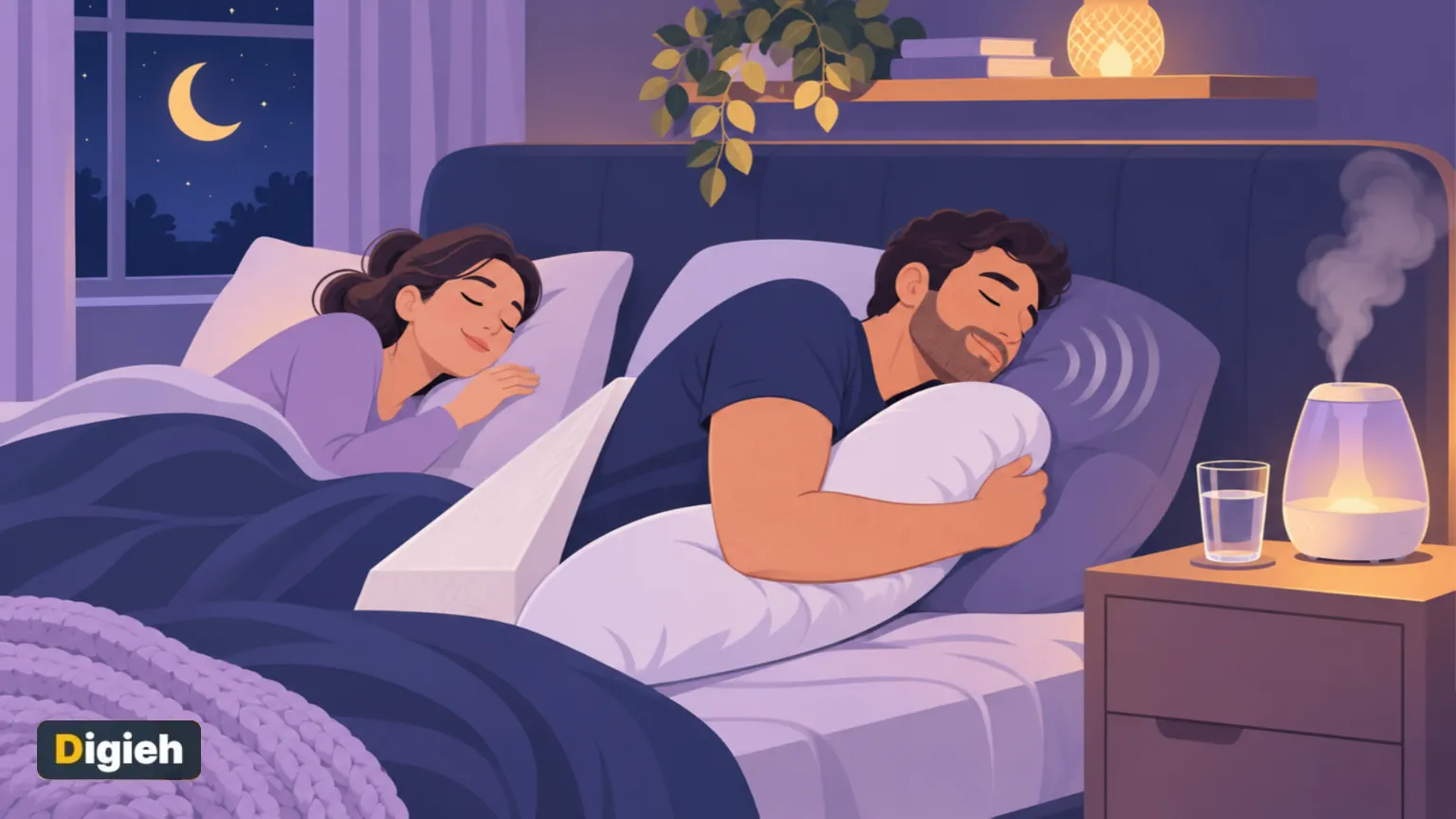
- Hug a long body pillow so you do not roll over.
- Sew a tennis ball into a pocket on the back of an old shirt.
- Wedge a firm pillow behind your back.
- Use a positional trainer that buzzes gently when you roll onto your back.
2. Raise your head
A wedge pillow or a raised bed head can ease snoring for some people. Lift the whole upper body rather than stacking pillows, which can bend your neck.
3. Clear your nose
A stuffy nose forces you to breathe through your mouth. Rinse with a saline spray before bed, take a hot shower or run a humidifier in dry winter air.
If a cold or sore throat causes the stuffiness, try our sore throat home remedies.
4. Skip the nightcap
Alcohol relaxes the throat muscles more than normal sleep does. Try to stop drinking at least three hours before bed and see if the snoring eases.
5. Drink enough water
When your body lacks fluids, the mucus in your nose and throat turns sticky. That can make snoring worse, so sip water through the day.
3Stop drinking alcohol at least three hours before bed to give your throat muscles a fair chance.
Lifestyle Changes That Last
Lose extra weight
Extra fat around the neck squeezes the airway. Even a modest weight loss can make snoring quieter or stop it altogether.
Aim for steady changes you can keep, like more walking and smaller portions.
Quit smoking
Smoke irritates the lining of the nose and throat and causes swelling. Quitting helps your airway, your heart and your lungs.
Review your medicines
Sleeping pills, some allergy pills and some muscle relaxants can deepen throat relaxation. Never stop a prescribed medicine on your own. Ask your doctor or pharmacist whether another option suits you better.
Keep a regular sleep schedule
Being overtired leads to deeper, floppier sleep, which can make snoring louder. Go to bed and wake up at the same time each day.
For more ways to rest well, read our guide on how to sleep better in winter.
Try throat exercises
Some small studies suggest that daily mouth and throat exercises may reduce snoring. Examples include singing, pushing your tongue against the roof of your mouth and saying vowel sounds out loud.
These exercises are free and safe to try. Give them a few weeks before you judge the results.
Snoring Aids That Can Help
Pharmacies sell many anti-snoring products. Match the product to your snoring type for the best chance of success.
| Aid | How it works | Best for |
|---|---|---|
| Nasal strips | Hold the nostrils open from the outside | Narrow or stuffy nose |
| Nasal dilators | Hold the nostrils open from the inside | Narrow or stuffy nose |
| Mouth device | Moves the lower jaw and tongue forward | Tongue blocking the throat |
| Chin strap | Keeps the mouth closed | Mouth breathers |
| Vestibular shield | Sits in the mouth to encourage nose breathing | Mouth breathers |
| Wedge pillow | Raises the upper body | Back sleepers |
A dentist can fit a custom mouth device. Custom devices usually feel more comfortable and work better than cheap boil-and-bite versions.
Be wary of products that promise a cure for everyone. No single gadget fixes every type of snoring.
Free updates
Join the Digieh list
Be the first to know when our weekly brief launches.
No spam. Unsubscribe anytime. Read our Privacy Policy.
Help for the Partner
Snoring affects two people. While the snorer works on fixes, the partner can protect their own sleep.
- Wear comfortable foam or silicone earplugs.
- Play white noise or a fan to mask the sound.
- Try falling asleep first, before the snoring starts.
- Gently nudge the snorer onto their side.
- Sleep apart for a few nights if you both need rest.
Separate bedrooms are not a sign of a failing relationship. Many couples choose them so both people stay rested and kind to each other.
Snoring or Sleep Apnea?
Most snoring is harmless, apart from the noise. Sometimes, though, it signals obstructive sleep apnea. In this condition, the airway closes completely and breathing stops for short periods.
Watch for these signs of sleep apnea.
- Breathing that stops and starts during sleep
- Gasping, snorting or choking noises
- Feeling very sleepy during the day
- Morning headaches
- Trouble focusing or a short temper
- Waking often to use the bathroom at night
Untreated sleep apnea raises the risk of high blood pressure, heart problems and drowsy driving accidents. It is very treatable, so it is worth checking.
Snoring in Children
Children snore now and then, especially when they have a cold. Loud snoring most nights is different.
In children, large tonsils or adenoids often cause it. Talk to your pediatrician if your child snores loudly most nights. Also call if your child breathes through the mouth or seems tired by day.
When to See a Doctor
Book an appointment if any of these apply.
- Home fixes have not helped after a few weeks.
- Snoring is hurting your sleep, mood or relationship.
- You notice any sign of sleep apnea.
- You feel sleepy while driving.
Bring your partner if you can, since they hear what you cannot. A recording from your phone also helps.
Your doctor will check your nose, mouth and throat. They may suggest a sleep study, which you can sometimes do at home with a small monitor.
Medical treatments
- A breathing machine that keeps the airway open with gentle air pressure, mainly for sleep apnea
- A custom mouth device made by a dentist
- Treatment for allergies or nasal problems
- Surgery in some cases, usually after other options fail
Surgery does not always work, and snoring can return. Doctors usually suggest it only after other treatments.
A Simple Two-Week Plan
- Nights 1 to 3. Record your snoring to learn your type.
- Nights 4 to 7. Sleep on your side and skip alcohol in the evening.
- Nights 8 to 10. Add nasal strips or a saline rinse if your nose feels blocked.
- Nights 11 to 14. Record again and compare the results.
- Day 15. See a doctor if nothing has changed or you notice warning signs.
Write down what you tried each night. A short log makes it easy to see what works.
Common Snoring Myths
| Myth | Fact |
|---|---|
| Only men snore | Women snore too, especially after menopause. |
| Snoring is always harmless | It can signal sleep apnea. |
| Thin people never snore | Jaw shape, nose structure and alcohol matter too. |
| A gadget will fix it overnight | The right fix depends on your snoring type. |
If a cough keeps you up as well, see our tips on how to stop coughing at night.
Test Yourself
Which sleeping position usually makes snoring worse?
- On your side
- On your back
- Sitting up
Lying on your back lets the tongue fall toward the throat.
Which sign suggests you should see a doctor about snoring?
- Snoring only during a cold
- Snoring after a late meal
- Gasping or choking during sleep
Gasping and choking can signal sleep apnea.
Frequently Asked Questions
Can you cure snoring?
Often, yes. Finding the cause is the key.
Do nasal strips really work?
They help when snoring starts in the nose.
Why do I snore more in winter?
Dry air and colds can block your nose.
Is snoring bad for your health?
Simple snoring is usually harmless. Sleep apnea is not.
Conclusion
Most people can quiet their snoring with simple steps. Sleep on your side, skip late drinks, clear your nose and keep a healthy weight.
Watch for gasping, choking or heavy daytime sleepiness. Those signs deserve a doctor visit, because sleep apnea is serious but treatable.
Found this useful?
Editor’s Note
This guide is accurate as of November 9, 2026. It draws on snoring guidance from the National Health Service in the United Kingdom.
It is general information, not medical advice. Talk to a health professional about your own symptoms.
Spot an error in this article? Please contact us at support@digieh.com or read our Corrections Policy.
Keep exploring
Your next read is waiting
 1Fruits & VegetablesHow to Tell If an Avocado Is Ripe (and Ripen It Faster)8 min read
 2Food & LifestyleEasy Fudgy Brownies Recipe From Scratch8 min read
 3MedicinesHow to Dispose of Old or Expired Medicines Safely8 min read
 4HealthEczema in Winter: How to Calm Dry, Itchy Skin8 min read
 5Home & KitchenWinter Houseplant Care: How to Keep Indoor Plants Alive8 min read
 6Finance & MarketsIndex Fund Investing for Beginners: A Simple Guide8 min read