TRENDING
Fridge Without Power: How Long Food Stays Safe
A closed fridge keeps food safe for up to 4 hours without power. See which foods to toss, which to keep, freezer times and what you can safely refreeze.

7 min read
Last updated November 27, 2026
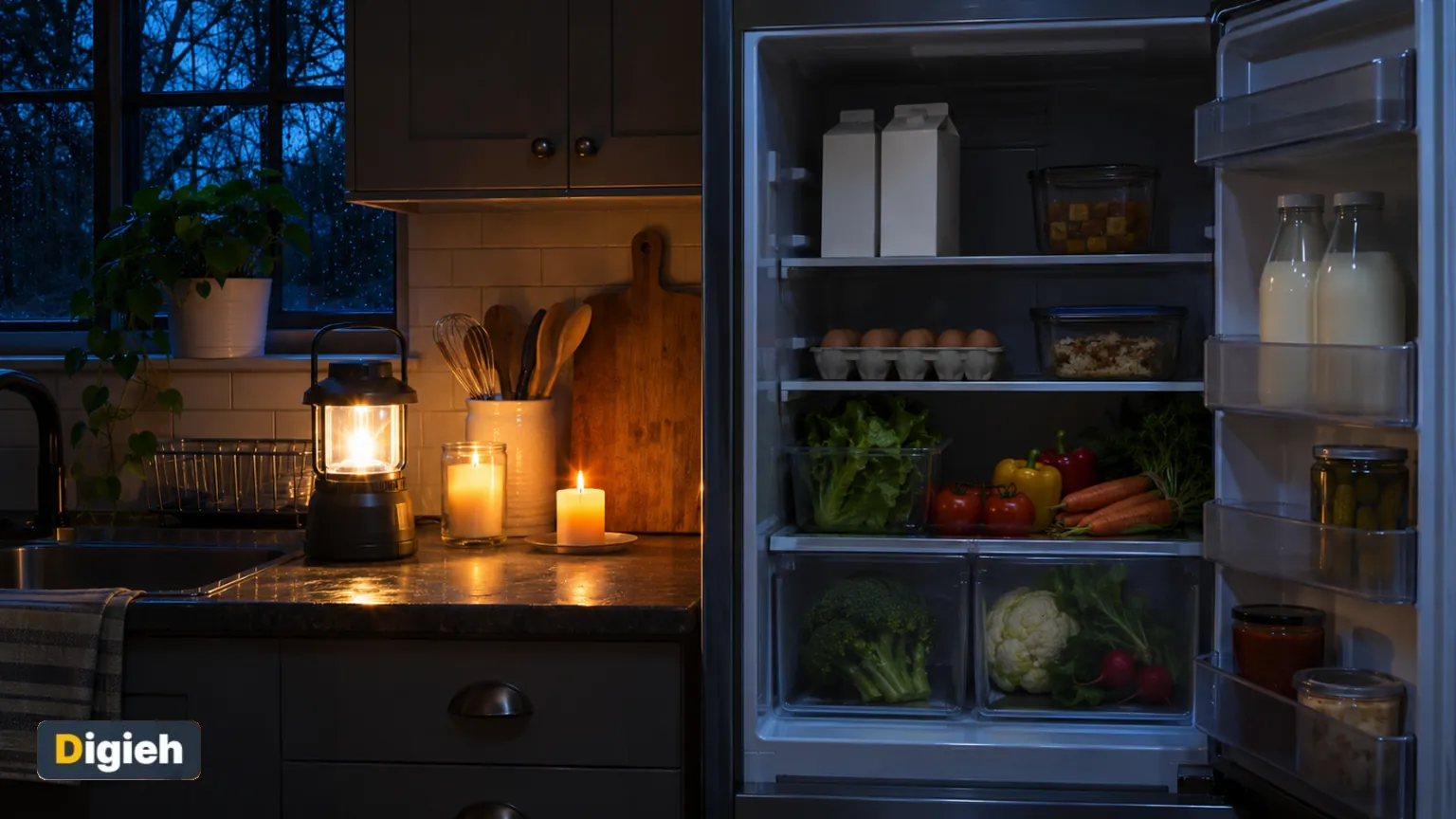
A closed fridge keeps food safe for up to 4 hours without power. A full freezer holds for about 48 hours, and a half-full one for about 24 hours.
After that, some foods must go and others are fine. This guide gives you the official keep or toss lists, food by food.
Key Takeaways.
- Keep the fridge and freezer doors closed as much as you can.
- Throw out perishable fridge food after 4 hours without power.
- Foods that sat above 40 degrees Fahrenheit for over 2 hours can make you sick.
- Hard cheese, butter, uncut fruit and bread are usually safe to keep.
- Never taste food to check it. When in doubt, throw it out.
Jump to a section
- How long does a fridge keep food safe?
- How long does a freezer last?
- Which fridge foods should you throw out?
- Which fridge foods can you keep?
- Can you refreeze thawed food?
- Keep or toss checker
- How can you keep food cold longer?
- What to do when the power comes back
- Why not just smell or taste it?
- Frequently Asked Questions
- Conclusion
How Long Does a Fridge Keep Food Safe Without Power?
Up to 4 hours, as long as the door stays closed. That is the official advice from FoodSafety.gov, the federal food safety site.
The key number is 40 degrees Fahrenheit (4 degrees Celsius). Bacteria grow fast in perishable food above that temperature.
Once perishable food has been above 40 degrees Fahrenheit for more than 2 hours, it should go. Meat, poultry, fish, eggs and leftovers are the main worries.
4 hoursHow long a closed fridge keeps food safe in a power outage, per FoodSafety.gov.
Planning ahead for long outages? Our guide to how long blackouts last shows real cases from hours to months.
How Long Does a Freezer Last Without Power?
A full freezer holds a safe temperature for about 48 hours if you keep the door shut. A half-full freezer lasts about 24 hours.
| Appliance | Door kept closed | Safe time |
|---|---|---|
| Fridge | Yes | Up to 4 hours |
| Full freezer | Yes | About 48 hours |
| Half-full freezer | Yes | About 24 hours |
Source: FoodSafety.gov and the Centers for Disease Control and Prevention.
Good to know. A full freezer stays cold longer because the frozen food keeps itself cold. Packing empty space with frozen water bottles helps.
Which Fridge Foods Should You Throw Out?
Throw these out if they sat above 40 degrees Fahrenheit (4 degrees Celsius) for more than 2 hours. The list follows the official chart from FoodSafety.gov.
Meat, fish and eggs
- Raw or cooked meat, poultry, fish and seafood, plus soy meat substitutes
- Lunch meats, hot dogs, bacon and sausage
- Meat, tuna, shrimp, chicken or egg salad
- Fresh shell eggs, hard-cooked eggs and egg dishes
- Opened canned meats and fish
Dairy
- Milk, cream, sour cream, buttermilk and yogurt
- Soft cheeses such as brie, cottage, cream cheese, mozzarella and ricotta
- Shredded cheese and low-fat cheese
- Opened baby formula
Cooked food and sauces
- Leftovers, casseroles, soups and stews
- Cooked pasta, rice and potatoes
- Pizza with any topping
- Gravy, stuffing and broth
- Custards, puddings, cheesecake and cream-filled pastries
- Opened creamy dressings and opened spaghetti sauce
Fruit and vegetables
- Cut fresh fruit
- Cut fresh vegetables and pre-washed bagged greens
- Cooked vegetables and cooked tofu
- Potato salad and baked potatoes
Opened mayonnaise, tartar sauce and horseradish have their own rule. Toss them if they sat above 50 degrees Fahrenheit (10 degrees Celsius) for more than 8 hours.
Which Fridge Foods Can You Keep?
Some foods handle warmer temperatures well. The same chart says you can keep these.
| Food group | Safe to keep |
|---|---|
| Cheese | Hard cheeses like cheddar, Swiss and Parmesan, plus processed cheese |
| Spreads | Butter and margarine, peanut butter, jelly |
| Fruit | Uncut fresh fruit, opened fruit juice, dried fruit |
| Sauces | Mustard, ketchup, soy sauce, barbecue sauce, pickles, olives, vinegar-based dressings |
| Bakery | Bread, rolls, cakes, muffins, tortillas, waffles, pancakes, bagels |
| Vegetables | Uncut fresh vegetables, fresh mushrooms, herbs and spices |
Source: FoodSafety.gov power outage chart.
Even safe foods should be thrown out if they smell, look or feel unusual. The Centers for Disease Control and Prevention gives that advice too.
Can You Refreeze Thawed Food?
Often yes. Food that still has ice crystals, or feels as cold as a fridge, can usually go back in the freezer. Quality may drop a little.
| Frozen food | Still icy or fridge-cold | Thawed and above 40 degrees for over 2 hours |
|---|---|---|
| Meat, poultry, seafood, soups and stews | Refreeze | Discard |
| Ice cream and frozen yogurt | Discard | Discard |
| Milk | Refreeze, some texture loss | Discard |
| Hard cheese | Refreeze | Refreeze |
| Fruit and fruit juice | Refreeze | Refreeze unless moldy, slimy or yeasty |
| Vegetables and vegetable juice | Refreeze | Discard after 6 hours above 40 degrees |
| Bread, rolls, plain cakes, waffles | Refreeze | Refreeze |
| Frozen meals and pizza | Refreeze | Discard |
Source: FoodSafety.gov frozen food chart. Temperatures are in degrees Fahrenheit.
Keep or Toss? Quick Checker
Tap the foods you have. The bars lean toward keep or toss, based on the official chart. Always throw out anything that smells or looks wrong.
- Hard cheese like cheddar
- Butter or margarine
- Uncut apples or oranges
- Ketchup, mustard or pickles
- Bread and bagels
- Milk or yogurt warm for over 2 hours
- Raw chicken or meat warm for over 2 hours
- Leftover pizza or rice warm for over 2 hours
- Eggs warm for over 2 hours
- Cut melon or bagged salad warm for over 2 hours
What do you worry about most when the power goes out?
- Meat and fish
- Milk and dairy
- Frozen food
- Not sure
Free updates
Join the Digieh list
Be the first to know when our weekly brief launches.
No spam. Unsubscribe anytime. Read our Privacy Policy.
How Can You Keep Food Cold Longer?
A little planning saves a lot of food. These steps come from the Centers for Disease Control and Prevention.
- Keep appliance thermometers in the fridge and freezer.
- Set the fridge at 40 degrees Fahrenheit or below and the freezer at 0 degrees or below.
- Freeze water bottles and gel packs before storms.
- Keep a cooler ready for food from the fridge.
- Buy block ice or dry ice if the outage could be long.
- Keep both doors closed during the outage.
After 4 hours, move perishable fridge food into a cooler with ice or frozen gel packs. Keep the cooler at 40 degrees Fahrenheit or below.
Never use a gas stove or grill indoors to cook or keep warm. Our power outage preparedness guide covers safe cooking and heat.
What Should You Do When the Power Comes Back?
Start with the thermometers, then go shelf by shelf. Doing it in order helps you avoid wasting safe food or keeping risky food.
- Read the fridge and freezer thermometers before you open anything else.
- Refreeze or cook freezer food that still has ice crystals or is at 40 degrees Fahrenheit or below.
- Throw out fridge perishables that went more than 4 hours without power or a cold source.
- Check food kept in coolers and toss anything that warmed above 40 degrees.
- Throw out any food with an unusual smell, color or texture.
These steps follow the Centers for Disease Control and Prevention. The Department of Agriculture gives the same 4 hour limit in its guide to keeping food safe during emergencies.
If the outage lasted days, start fresh with a deep clean. Our guide on how to deep clean a fridge walks you through it.
Why Not Just Smell or Taste It?
Food can look and smell fine and still carry germs that make you sick. The Centers for Disease Control and Prevention says never to taste food to check it.
So go by time and temperature, not by your nose. Throw out any food with an odd smell, color or texture as well.
Try this today. Put a thermometer in your fridge tonight. After an outage, it tells you at a glance if food stayed at 40 degrees or below.
Test Yourself
Your fridge was off for 6 hours with the door closed. What should you do with the raw chicken?
- Cook it well and eat it
- Throw it out
- Refreeze it
A closed fridge is only safe for about 4 hours, so raw chicken left longer should be thrown out.
Frequently Asked Questions
How long will milk last in a fridge without power?
About 4 hours with the door closed. After 2 hours above 40 degrees Fahrenheit, throw it out.
How long do eggs stay good in the fridge without power?
The same 4 hours applies. Fresh eggs that sat above 40 degrees for over 2 hours should be thrown out.
How long will cheese last in the fridge without power?
Hard cheeses like cheddar and Parmesan can be kept. Soft and shredded cheeses should go after 2 hours above 40 degrees.
Can I eat food from the freezer after a power outage?
Yes, if it still has ice crystals or is at 40 degrees Fahrenheit or below. You can refreeze it or cook it.
How long does a full freezer keep food frozen?
About 48 hours with the door closed. A half-full freezer lasts about 24 hours.
Sources
- FoodSafety.gov: Food safety during a power outage
- Centers for Disease Control and Prevention: Keep food safe after a disaster or emergency
- Department of Agriculture: Keep your food safe during emergencies
Conclusion
Time and temperature decide what stays and what goes. Keep the doors shut, watch the 4 hour mark, and toss perishables when in doubt.
Next step: put a thermometer in your fridge and freezer today. For your full outage kit, see our power outage checklist.
Saw a rumor about a long national blackout? Read our 90-day blackout fact check.
Editor’s Note
This article is accurate as of November 27, 2026. Food lists follow FoodSafety.gov and the Centers for Disease Control and Prevention.
Spot an error in this article? Please contact us at support@digieh.com or read our Corrections Policy.
Keep exploring
Your next read is waiting
 1HealthCeliac Disease: Symptoms, Testing and the Gluten-Free Diet7 min read
 2Pets & AnimalsFleas on Dogs and Cats: Treatment and Prevention7 min read
 3MedicinesIs Sugar an Electrolyte? The Simple Science Answer7 min read
 4Beauty & Personal CareDandruff vs Dry Scalp: Signs, Causes and Treatment7 min read
 5HealthPinched Nerve in the Neck: Symptoms and Relief7 min read
 6HealthKeratosis Pilaris: Causes, Treatment and Smoother Skin Tips7 min read
Found this useful?