TRENDING
Power Outage Preparedness: How to Get Ready and Stay Safe

8 min read
Last updated November 9, 2026
To prepare for a power outage, build a kit with water, shelf-stable food, flashlights and batteries. Add a radio and a power bank. Plan for medical needs, keep devices charged before storms and learn how to keep food cold.
Never run a generator indoors or in a garage. The Centers for Disease Control and Prevention says to keep it more than 20 feet from windows, doors and vents.
This guide covers what to do before, during and after an outage, so your family stays safe and comfortable.
Key Takeaways
- Store at least one gallon of water per person per day for several days.
- Keep fridge and freezer doors closed to hold the cold longer.
- Run generators outdoors only, far from windows and doors.
- Install battery-powered carbon monoxide detectors near sleeping areas.
- Plan ahead for medical devices and medicines that need power or cold.
Inside this guide
- Build a power outage kit
- Before an outage
- During an outage
- Keep food safe
- Generator safety
- Stay warm without power
- Medical needs
- After the power returns
- Frequently asked questions
Build a Power Outage Kit
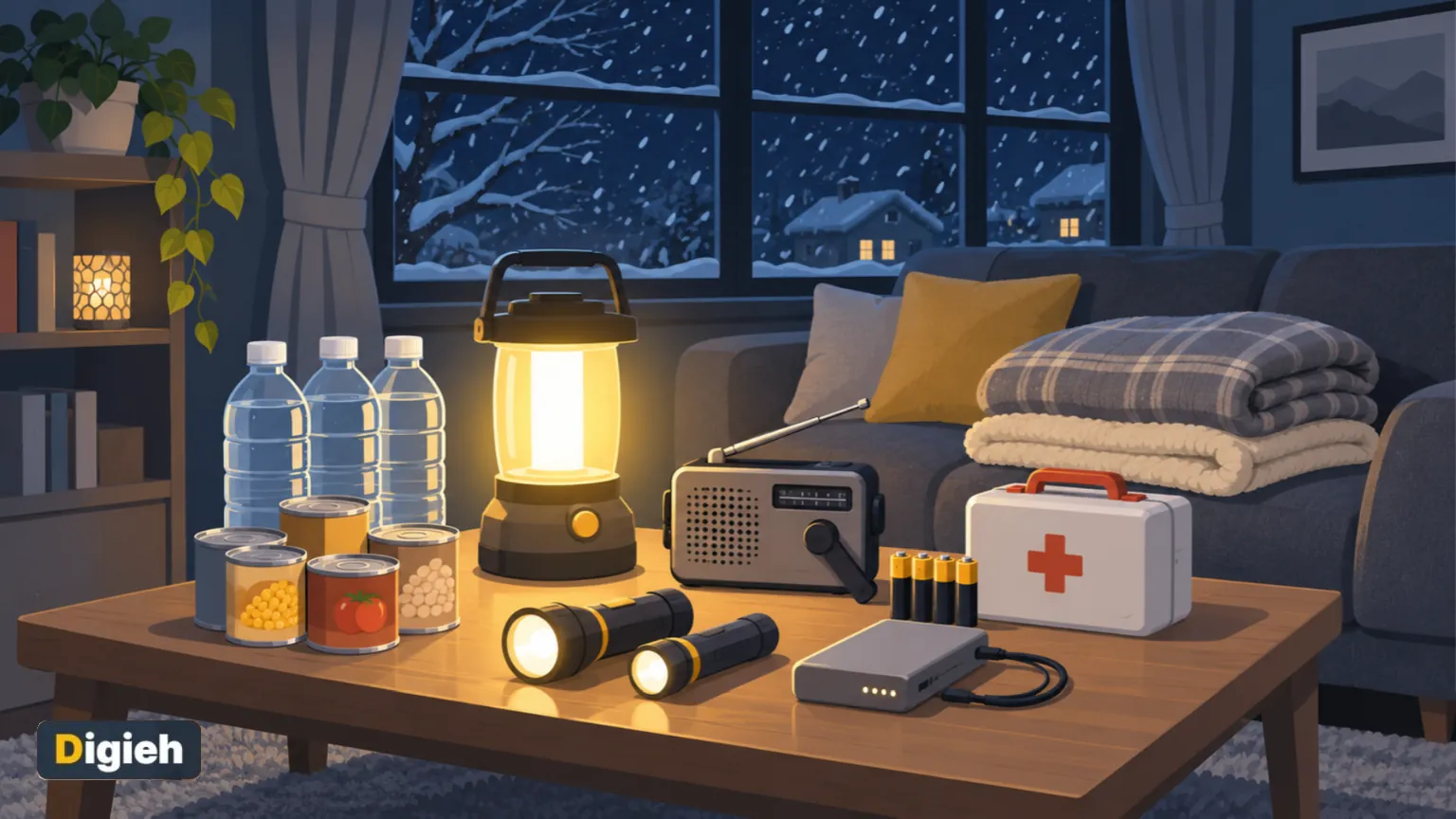
A good kit lets you ride out an outage for several days. Store everything together in a bin you can grab quickly.
- Water, at least one gallon per person per day for three days or more
- Shelf-stable food that needs no cooking, plus a manual can opener
- Flashlights and battery lanterns, with spare batteries
- A battery or hand-crank radio for news
- Charged power banks for phones
- A first aid kit and a supply of medicines
- Warm blankets, hats and extra layers
- Cash, since card readers may not work
The National Weather Service lists similar supplies in its cold weather preparedness guide. It suggests water for at least three days.
400+Americans who die each year from unintentional carbon monoxide poisoning not linked to fires, per the health agency.
Quick tip. Use flashlights and battery lanterns instead of candles. They are far safer around children, pets and curtains.
Before an Outage
- Charge phones, laptops and power banks when storms are forecast.
- Fill your car’s gas tank, since gas pumps need power.
- Freeze containers of water to help keep food cold.
- Learn how to open your garage door manually.
- Write down important phone numbers on paper.
- Sign up for outage alerts from your utility company.
Watch the forecast closely during winter storms. Our guide to winter storm watches and warnings explains what each alert means.
How ready is your home for a power outage?
- Fully stocked
- Partly ready
- Not ready yet
- Not sure
During an Outage
- Report the outage to your utility company.
- Unplug sensitive electronics to protect them from power surges.
- Leave one light switched on so you know when power returns.
- Keep fridge and freezer doors closed as much as possible.
- Check on neighbors, especially older adults living alone.
- Stay away from downed power lines and report them right away.
Save phone battery by lowering screen brightness and closing apps. Our guide to extending phone battery life has more tips.
Keep refrigerated medicines safe when the power goes out. See how to store medicines at home.
Keep Food Safe
Your fridge and freezer can keep food cold for a while if you keep the doors shut. According to Department of Agriculture guidance, a closed fridge keeps food safe for about four hours.
A full freezer can hold its temperature for about 48 hours, or about 24 hours if half full. Keep the door closed to stretch that time.
- Keep appliance thermometers in the fridge and freezer.
- Use a cooler with ice for food you need to keep cold longer.
- Throw out perishable food that has been above 40 degrees Fahrenheit for two hours or more.
- Never taste food to check whether it is safe.
Good to know. When in doubt, throw it out. Spoiled food can make you sick even if it looks and smells normal.
Generator Safety
Portable generators can be lifesavers, but they produce deadly carbon monoxide. The health agency’s carbon monoxide page gives clear rules.
- Run generators outdoors only, more than 20 feet from windows, doors and vents.
- Never run one in a home, basement or garage, even with doors open.
- Use a battery-powered carbon monoxide detector while the generator runs.
- Let the generator cool before refueling.
- Plug appliances directly into the generator with heavy-duty outdoor cords.
Never connect a generator to your home’s wiring without a proper transfer switch installed by an electrician. Backfeeding can injure utility workers.
Learn the warning signs in our guide to carbon monoxide poisoning signs.
Stay Warm Without Power
- Gather in one room and close doors to hold in heat.
- Dress in layers, with hats and warm socks.
- Use blankets and sleeping bags.
- Cover windows with blankets or heavy curtains at night.
- Eat and drink regularly, since food helps your body make heat.
Never use a gas stove, oven or grill to heat your home. They can release carbon monoxide.
If you use a space heater on generator power, follow our space heater safety tips. Also watch for frozen pipes and see what to do when pipes freeze.
Make a Family Outage Plan
Everyone in your home should know what to do when the lights go out. A simple plan prevents panic.
- Agree on where you keep flashlights and the emergency kit.
- Decide who checks on older relatives or neighbors.
- Choose a backup place to stay if the outage lasts several days.
- Teach kids how to use a flashlight and stay away from candles.
- Keep a paper list of key phone numbers.
Practice once a year, such as at the start of winter. Kids often enjoy a pretend blackout night with flashlights and board games.
Free updates
Join the Digieh list
Be the first to know when our weekly brief launches.
No spam. Unsubscribe anytime. Read our Privacy Policy.
Keep Busy and Calm
Long outages can be stressful, especially for children. Have a few activities ready that need no power.
- Board games, cards and puzzles
- Books and coloring supplies
- Downloaded music or shows on a charged device
- A battery radio for news and music
Sticking to normal meal and bedtime routines also helps everyone feel more settled.
Pets During a Power Outage
Pets feel the cold and stress of an outage too. Include them in your plan.
- Store extra pet food and water in your kit.
- Keep pets indoors and give them warm bedding.
- Keep pets away from candles, heaters and generators.
- Have a carrier ready in case you need to leave.
Tips for Apartment Dwellers
Apartments bring their own challenges, such as elevators that stop and hallways that go dark.
- Keep a flashlight by your door for dark stairwells.
- Know where the building’s emergency exits are.
- Ask building management about backup power and heat.
- Never use a generator on a balcony.
Get to know your neighbors before an emergency. Sharing supplies and checking on each other makes long outages easier for everyone.
Medical Needs
Plan ahead if someone in your home relies on power for health.
- Ask your doctor how long medicines that need refrigeration stay safe without power.
- Keep backup batteries for medical devices.
- Tell your utility company if someone uses life-sustaining equipment.
- Know where you can go if you need power for a device.
Some areas open warming or charging centers during long outages. Check local news or your city’s website.
Protect Your Home and Electronics
Power can surge when it returns. Unplugging electronics during an outage helps protect them.
A surge protector adds a layer of safety for computers and televisions. A small battery backup can keep internet equipment running for a short time.
After the Power Returns
- Wait a few minutes before plugging electronics back in.
- Check food temperatures and throw out anything unsafe.
- Reset clocks, alarms and thermostats.
- Restock your kit with fresh batteries, water and food.
- Note what you wished you had and add it to your kit.
If you lost a lot of food, check whether your home insurance or utility offers any reimbursement.
Power Outages and Your Car
Your car can charge phones and provide a warm place, but never run it in a closed garage. Keep the tailpipe clear of snow if you sit in a running car outside.
Keep a kit in your car too. Our winter car emergency kit guide lists what to pack.
Your Power Outage Checklist
- I have water for at least three days
- I have flashlights and spare batteries
- I keep my phones and power banks charged
- I have carbon monoxide detectors with battery backup
- I know generator safety rules
- I planned for medical needs
Try this today. Put a flashlight in every bedroom and test your carbon monoxide detector batteries.
Test Yourself
How far from windows and doors should a generator run?
- Five feet
- Ten feet
- More than 20 feet
The health agency advises more than 20 feet from windows, doors and vents.
How long does a closed fridge keep food safe during an outage?
- About four hours
- About two days
- About one week
A closed fridge keeps food safe for about four hours, per agriculture department guidance.
Frequently Asked Questions
How much water should I store for a power outage?
Store at least one gallon per person per day for three days or more.
Is it safe to use candles during an outage?
Battery lights are safer. If you use candles, never leave them unattended.
Can I run a generator in my garage with the door open?
No. Carbon monoxide can still build up. Run generators outdoors only.
What food should I keep for outages?
Choose shelf-stable foods like canned goods, peanut butter, crackers and dried fruit.
Conclusion
A little planning makes power outages much easier. Build a kit, charge devices before storms and keep food cold by keeping doors shut.
Run generators outdoors only and use carbon monoxide detectors to keep your family safe.
Found this useful?
Editor’s Note
This guide is accurate as of November 9, 2026. It draws on the Centers for Disease Control and Prevention and the National Weather Service. Food safety advice follows Department of Agriculture guidance.
Follow instructions from local officials and your utility during emergencies.
Spot an error in this article? Please contact us at support@digieh.com or read our Corrections Policy.
Keep exploring
Your next read is waiting
 1MedicinesDo Collagen Supplements Work for Skin and Joints?9 min read
 2Fruits & VegetablesWinter Squash Types: How to Pick and Cook9 min read
 3Science & DiscoveriesQuadrantid Meteor Shower 2027: Best Time to Watch9 min read
 4FashionHow to Clean White Sneakers So They Shine9 min read
 5AI & TechHow to Use AI for Smarter Holiday Shopping9 min read
 6Travel & TourismHow to Pack a Carry-On for a Week9 min read