TRENDING
Will the Grid Hold This Winter? NERC Explained
Will the power grid hold this winter? NERC's 2026-2027 winter report explained: which areas face elevated risk, why gas matters and how to prepare at home.

5 min read
Last updated November 20, 2026
The North American power grid should handle a normal winter. A long, wide cold snap could still cause blackouts in some places.
That is the main message of the new winter outlook from the North American Electric Reliability Corporation (NERC).
The grid watchdog released its 2026-2027 Winter Reliability Assessment on November 18, 2026. It says the outlook is better than last winter, thanks to new batteries, new gas plants and fewer plant closures.
Key Takeaways.
- Every area has enough power for a normal winter peak, the watchdog says.
- No area is rated high risk this winter, but several are at elevated risk in extreme cold.
- Winter capacity grew about 26 gigawatts, led by batteries and gas.
- Peak demand is forecast to rise again, driven by data centers and electrification.
- Gas supply in a long cold snap remains the biggest worry.
What the Winter Report Found
The assessment looks at whether there will be enough power plants, fuel and transmission to meet winter demand. It covers the United States, Canada and part of Mexico.
| Finding | Number |
|---|---|
| New winter on-peak capacity | About 26 gigawatts (2.4%) |
| Added batteries | 9.2 gigawatts |
| Added natural gas | 8.7 gigawatts |
| Demand response available | 43.6 gigawatts, up from 41.7 |
| Rise in combined peak demand | 21 gigawatts (2.6%) |
| Areas forecasting a higher winter peak | 21 of 23 |
Source: America’s Electric Cooperatives and the American Public Power Association, reporting on the watchdog’s report.
26 gigawattsNew winter capacity added since last winter, led by batteries and gas, per America’s Electric Cooperatives.
One gigawatt can power several hundred thousand homes at a time. So the new capacity is a real cushion, though demand grew by a similar amount.
Which Areas Face Elevated Risk
Elevated risk means an area could struggle in extreme, widespread cold. It does not mean blackouts are expected.
| Area | Why it is flagged |
|---|---|
| New England | Limited gas pipeline capacity in deep cold |
| Eastern Southeast region | Supply can fall short on cold mornings when solar output is low |
| Parts of the Southwest Power Pool (SPP) and the Midcontinent Independent System Operator (MISO) | Local transmission limits can block imports in a wide cold event |
| Quebec and the Maritimes | Supply can get tight at extreme winter peaks |
| Pacific Northwest | Many gas plants burn only gas, so fuel shortages hit harder |
Source: Utility Dive and the American Public Power Association.
Watchdog engineer Bob Tallman tied New England’s risk to its limited gas pipelines, Utility Dive reported. The Southeast concern centers on early mornings, before solar panels ramp up.
Why Demand Keeps Climbing
Data centers, large factories and the shift to electric heat are pushing winter demand higher. Combined peak demand is forecast to rise about 21 gigawatts this winter, a bit more than last year’s increase.
Cold snaps can also push demand above forecasts. The public power association notes that short-term forecasts may underestimate demand in extreme cold.
Have you lost power during a winter storm in the past few years?
- Yes, more than once
- Yes, once
- No
- Not sure
The Gas Problem in a Long Cold Snap
Natural gas heats homes and runs many power plants. In deep cold, both needs peak at the same time, and supplies can run short.
This year’s report adds a new analysis of gas system risks. January 2026 arctic blasts showed extreme cold can last 10 days or more, per the public power group.
The watchdog urges grid operators to check generator fuel supplies and stay in close contact with pipeline companies. “We anticipate operators will need everything in their tool kit,” chief executive Jim Robb said, per co-op reporting.
Free updates
Join the Digieh list
Be the first to know when our weekly brief launches.
No spam. Unsubscribe anytime. Read our Privacy Policy.
What El Nino Could Mean
Some forecasts show El Nino bringing a milder winter to parts of North America. That would ease pressure on the grid.
But reliability manager Mark Olson warned that ice storms and abnormal cold can still happen within mild averages. A mild forecast is not a promise.
What This Means for Your Home
Most people will not lose power because of supply shortages this winter. Storms that knock down local lines remain the most common cause of outages.
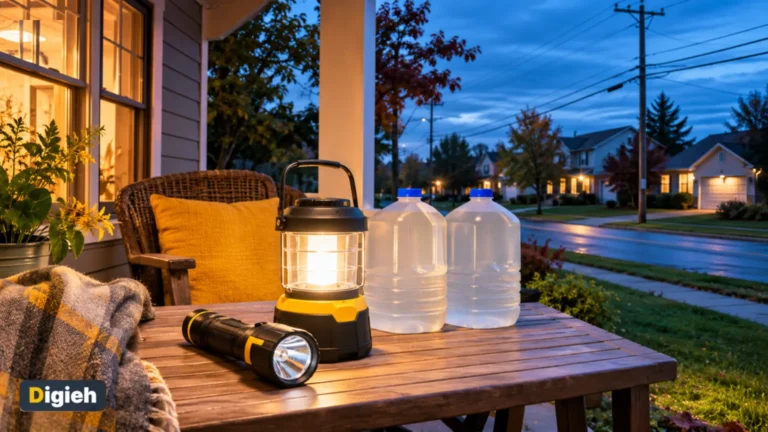
- Keep flashlights and spare batteries where you can find them in the dark.
- Charge power banks before big storms.
- Keep a few days of water and easy food.
- Know how to keep pipes from freezing.
- Never run a generator, grill or camp stove indoors.
- Sign up for outage alerts from your utility.
The federal Ready.gov outage guide explains how to prepare and stay safe. Our power outage preparedness guide has a full checklist.
Safety first. Carbon monoxide from generators and grills kills people every winter. Run generators outside, far from windows and doors.
Can a Nationwide Blackout Happen?
The report does not warn of a nationwide blackout. The North American grid is split into regions, so most problems stay local.
Read our explainer on what causes a nationwide blackout, and our check on how long blackouts usually last. We also fact-checked viral claims about a 90-day blackout.
Try this today. Check your flashlight batteries and charge one power bank today, before the first big storm.
Test Yourself
What does elevated risk mean in the winter report?
- Blackouts are expected
- An area could struggle in extreme, widespread cold
- The area has no power plants
Elevated risk is about extreme conditions. All areas have enough power for a normal winter peak.
Frequently Asked Questions
Will there be blackouts this winter?
Not in a normal winter, the watchdog says. A long, wide cold snap could cause shortfalls in some areas.
Which areas are most at risk?
New England, parts of the Southeast, parts of the central US, Quebec, the Maritimes and the Pacific Northwest are flagged.
Why is gas such a big issue?
Gas heats homes and fuels many power plants, so deep cold can strain supply for both at once.
Is the grid better prepared than last year?
Yes. New batteries, gas plants and fewer retirements improved the outlook.
Conclusion
The grid enters this winter in better shape, but extreme cold and gas supply are still the weak spots. A little home preparation goes a long way.
Your next step is to check your outage kit before the first big storm.
Editor’s Note
This article is accurate as of November 20, 2026. Facts come from Utility Dive, the American Public Power Association and America’s Electric Cooperatives. The full report is on the watchdog’s website.
Spot an error in this article? Please contact us at support@digieh.com or read our Corrections Policy.
Keep exploring
Your next read is waiting
 1Travel & TourismFlight Canceled: Your Refund Rights and Next Steps5 min read
 2TechnologyReceipt to Spreadsheet: Track Holiday Spending From Photos7 min read
 3Pets & AnimalsHow Often to Bathe a Dog: Vet Guide7 min read
 4AI & TechGoogle Genie 4: How to Build Playable Worlds5 min read
 5Home & KitchenLaundry Symbols Explained: Free Printable Care Label Chart5 min read
 6CarsTrade-In vs Private Sale Calculator: Which Pays More7 min read
Found this useful?