TRENDING
Sourdough Starter From Scratch: Day by Day Guide
Sourdough starter from scratch: a day-by-day gram plan, signs it is ready, a troubleshooting table, mold vs hooch safety, fridge care and ways to use discard.

7 min read
Last updated November 20, 2026
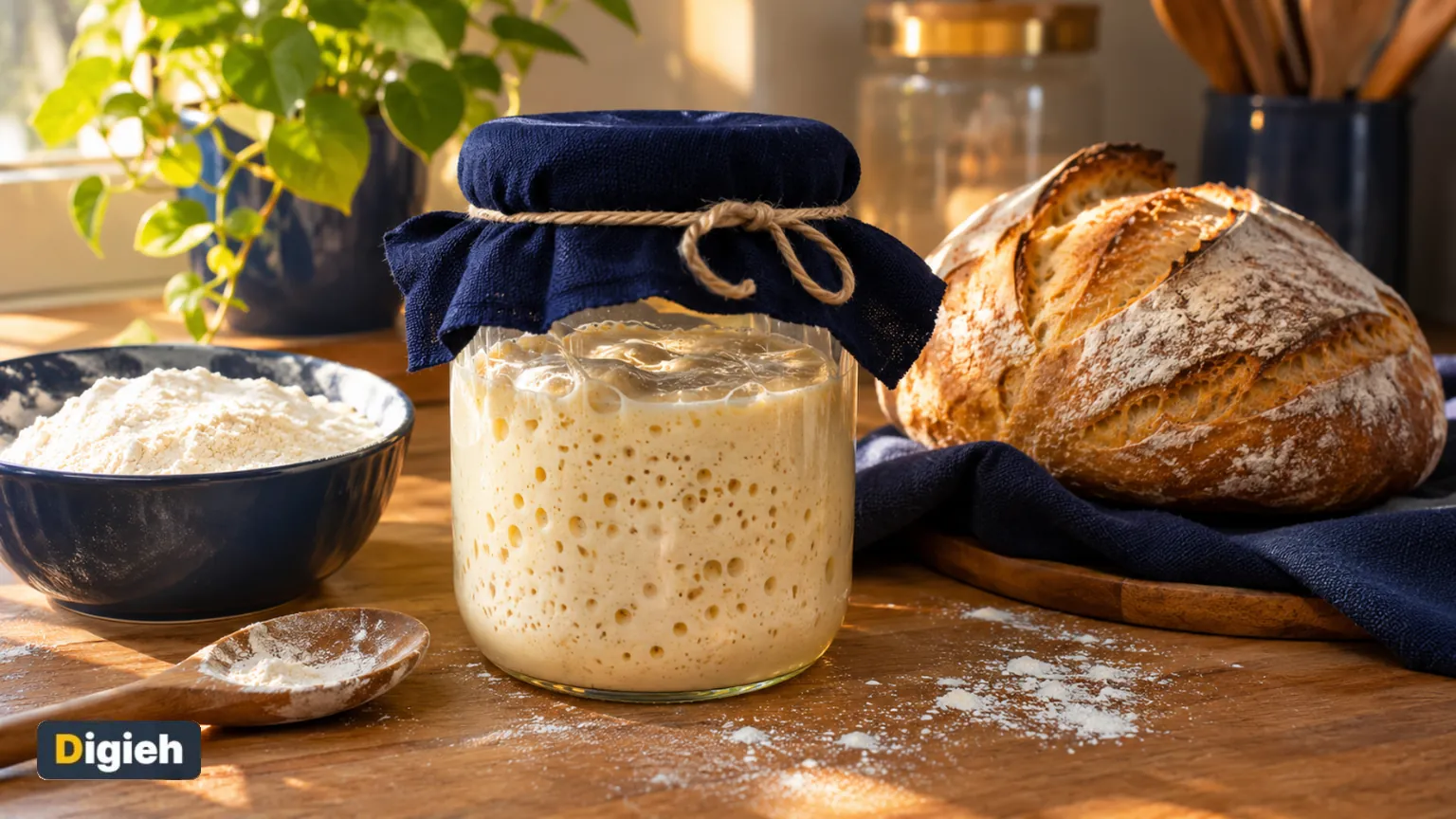
To make a sourdough starter from scratch, mix 106 grams of flour with 113 grams of water. Leave it somewhere warm. Each day, throw out half and feed it fresh flour and water.
After a few days it will bubble and smell yeasty. Most starters are strong enough to bake with after about two weeks of steady feeding.
Key Takeaways.
- You only need flour, water, a jar and a kitchen scale.
- Keep it warm, around 70 degrees Fahrenheit.
- Feed twice a day from day 3, throwing out some each time.
- It is ready when it doubles within 4 to 6 hours of feeding.
Jump to a section
- What you need
- Best flour
- Busy schedule
- Day-by-day plan
- Signs it is ready
- Troubleshooting
- Safety: mold vs hooch
- Caring for a mature starter
- Cups or grams
- Using the discard
- Your first loaf
- Frequently asked questions
- Conclusion
What You Need
| Item | Why |
|---|---|
| All-purpose or whole wheat flour | Feeds the wild yeast and bacteria |
| Water at room temperature | Activates the flour |
| A clean glass jar | Lets you see the bubbles and rise |
| A kitchen scale | Weighing is more reliable than cups |
| A loose cover or cloth | Lets gas escape while keeping dust out |
| A rubber band | Marks the level after each feeding |
Source: equipment based on the Clemson Cooperative Extension sourdough guide.
Flour type changes how fast the starter develops, notes Colorado State University. Whole wheat or rye often gets going faster than white flour.
Day-by-Day Sourdough Starter Plan
| Day | What to do | What you may see |
|---|---|---|
| 1 | Mix 106 g flour and 113 g water, cover loosely | A thick paste, little activity |
| 2 | Discard half, add 106 g flour and 113 g water | Maybe a few bubbles |
| 3 | Keep 113 g, feed 106 g flour and 113 g water every 12 hours | Bubbles and a yeasty smell |
| 4 to 5 | Keep feeding every 12 hours | More bubbles, some rise |
| 6 to 14 | Keep feeding, watch the rise after each feeding | Doubling becomes regular |
Source: amounts and schedule from the Clemson Cooperative Extension guide.
Mark the jar with a rubber band after each feeding. It makes the rise easy to see.
4 to 6 hrsTime for a ready starter to double after feeding, per Clemson Extension.
Signs Your Starter Is Ready
- It doubles in size within 4 to 6 hours of feeding.
- It has bubbles all the way through.
- It smells pleasantly sour and yeasty.
- It looks gooey and pourable, like thick batter.
- A spoonful floats in a glass of water.
The float test is a quick check, not a perfect one. Rising reliably after every feeding matters most.
Have you ever made a sourdough starter?
- Yes, and it worked
- Yes, but it failed
- Not yet
- Not sure
Which Flour Works Best?
| Flour | How it behaves | Tip |
|---|---|---|
| All-purpose white | Steady, mild flavor | Easy to find and works for most people |
| Whole wheat | Faster start, more flavor | Mix half and half with white to start |
| Rye | Often the fastest and most active | Great for a slow starter |
| Bread flour | Strong and bubbly | Good once the starter is established |
Source: Digieh summary based on North Carolina State Extension and Colorado State University notes on flour.
Whole grain flours carry more natural microbes and nutrients than refined white flour, notes North Carolina State Extension. Its own recipe starts with rye.
The same guide suggests letting tap water sit out overnight so chlorine can fade. It also advises a glass or plastic jar, not metal.
A Feeding Schedule for Busy People
- Feed at breakfast and again after dinner, about 12 hours apart.
- If you miss a feeding, just feed at the next chance. Starters are forgiving.
- Going away for a week? Feed it, then put it in the fridge.
- Use a phone reminder until feeding becomes a habit.
Once your starter is mature and lives in the fridge, one feeding a week is enough. That makes sourdough easy to fit into a busy life.
Troubleshooting a Slow Starter
| Problem | Likely cause | Fix |
|---|---|---|
| No bubbles after 3 days | Room too cold | Move it to a warmer spot near 70 degrees |
| Rose fast, then stopped | Normal early bacteria burst | Keep feeding, it usually returns |
| Very runny | Too much water or very warm | Use a little less water or more flour |
| Smells like nail polish | Hungry starter | Feed more often |
| Rises slowly even after 2 weeks | Weak flour or cold room | Try some whole wheat flour and warmth |
Source: Digieh troubleshooting based on temperature advice from Colorado State University and the Clemson guide.
Cold slows fermentation, while too much heat can rush or stop it, Colorado State says. Around 70 degrees Fahrenheit is the sweet spot.
Free updates
Join the Digieh list
Be the first to know when our weekly brief launches.
No spam. Unsubscribe anytime. Read our Privacy Policy.
Safety: Mold vs Hooch
Do not taste raw starter. Colorado State University advises against tasting raw sourdough starter. Bake it first.
| What you see | Is it safe? | What to do |
|---|---|---|
| Clear or gray liquid that smells like alcohol | Yes, this is hooch | Pour it off or stir it in, then feed |
| Whitish clumps on a chilled starter | Yes, usually yeast | Stir and feed |
| Colored or fuzzy spots | No, this is mold | Throw it all out and clean the jar |
| Pink or orange streaks | No, treat as spoiled | Throw it out and start over |
Source: Colorado State University Food Smart Colorado. When in doubt, throw it out.
A healthy starter becomes acidic as it ferments, which helps keep harmful germs away. That is why steady feeding matters for safety too.
Caring for a Mature Starter
Once it is strong, feed it equal weights of starter, flour and water. Feed daily at room temperature, or weekly in the fridge, says the Clemson guide.
- Room temperature: feed once a day if you bake often.
- Fridge: feed once a week if you bake now and then.
- Before baking: take it out and feed it once or twice to wake it up.
- Long breaks: you can dry a little starter to store for later.
Starters can live for years with regular feeding. Some families keep the same one going for generations.
Cups or Grams?
Weighing is more reliable than cups, because a cup of flour can weigh very different amounts. In the Clemson recipe, 106 grams of flour is about 1 cup. And 113 grams of water is about half a cup.
If you only have cups, spoon flour into the cup and level it off instead of scooping. Keep your method the same every day.
Using the Discard
The starter you remove before feeding is called discard. You do not have to waste it.
- Pancakes and waffles.
- Crackers.
- Biscuits and scones.
- Flatbreads and tortillas.
- Muffins.
Clemson suggests pancakes, scones, tortillas and biscuits as easy ways to use discard. Store it in a jar in the fridge for up to a few days.
Your First Sourdough Loaf
Use your starter when it is at its peak, a few hours after feeding. Mix it with flour, water and salt, then give the dough time to rise slowly.
Sourdough rises more slowly than yeast bread, often taking many hours. Be patient with your first few loaves and keep notes on times and temperatures.
Baking for the holidays? See our healthy Christmas cookies and Christmas dinner menus. For gut health questions, read do probiotics work.
Try this today. Mix your first 106 grams of flour and 113 grams of water tonight. Put a rubber band on the jar at the starting level.
Test Yourself
What should you do if your starter grows fuzzy colored spots?
- Stir them in
- Scrape them off and feed
- Throw it all out
Colored or fuzzy spots are mold. Throw out the whole starter and clean the jar.
Frequently Asked Questions
How long does a sourdough starter take?
Usually about two weeks of regular feeding before it is strong enough to bake with.
What is the liquid on top of my starter?
It is called hooch, a sign your starter is hungry. Pour it off or stir it in, then feed.
Can I use tap water?
Usually yes. If your water is heavily chlorinated, let it sit out for a few hours first.
Do I have to discard part of my starter?
Yes, otherwise it grows too big and becomes weak. Use the discard in other recipes.
Why is my starter not rising?
The most common cause is a cold room. Move it somewhere warmer and try some whole wheat or rye flour.
Can I make a starter with gluten-free flour?
Yes, many people use brown rice or other gluten-free flours. Expect a different texture and keep feeding steadily.
Conclusion
A sourdough starter needs only flour, water, warmth and patience. Feed it steadily and watch for the signs it is ready.
Your next step is to start day one tonight and mark your feeding times on your phone.
Editor’s Note
This article is accurate as of November 20, 2026. Amounts and schedule come from Clemson Cooperative Extension. Safety advice comes from Colorado State University and North Carolina State Extension.
Spot an error in this article? Please contact us at support@digieh.com or read our Corrections Policy.
Keep exploring
Your next read is waiting
 1TechnologyPasskeys Explained: Should You Stop Using Passwords Now5 min read
 2Pets & AnimalsDog Years Calculator: Your Dog’s Age by Size7 min read
 3AI & TechGPT-6.2 Astra vs Sol: What ChatGPT Users Get4 min read
 4HealthLow Blood Pressure Symptoms: Causes and Warning Signs7 min read
 5CarsUsed Car Checklist: 20 Checks Before You Buy6 min read
 6Food & LifestyleGreek Yogurt vs Regular: Protein, Sugar and Calcium7 min read
Found this useful?