TRENDING
Frozen Pipes: What to Do When Pipes Freeze or Burst

8 min read
Last updated November 9, 2026
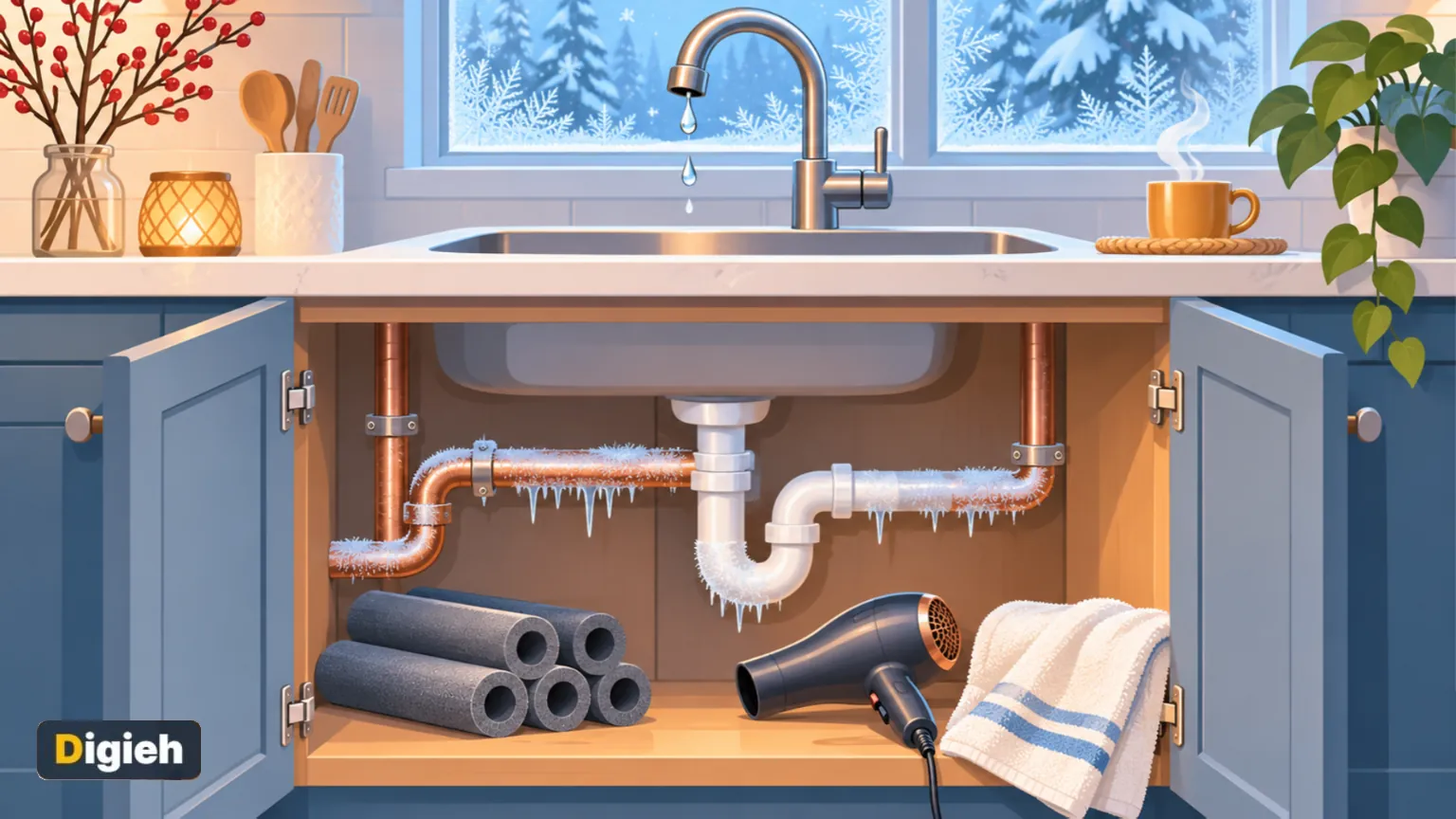
If your pipes freeze, open the faucet first. Then gently warm the frozen section with a hair dryer, heating pad or warm towels. Never use an open flame.
If a pipe bursts, shut off the main water valve right away. Turn off electricity near the water and call a licensed plumber.
This guide explains how to spot and thaw a frozen pipe. It also covers what to do after a burst and how to prevent the next one.
Key Takeaways
- A faucet that only trickles in freezing weather may have a frozen pipe.
- Keep the faucet open while you thaw so melting water can flow.
- Use gentle heat only, never a blowtorch, propane heater or other flame.
- If a pipe bursts, close the main water shutoff valve immediately.
- One frozen pipe often means others nearby are frozen too.
Inside this guide
- Signs your pipes are frozen
- Find the frozen section
- How to thaw a frozen pipe
- What never to do
- If a pipe bursts
- Pipes inside walls
- Insurance and cleanup
- Prevent the next freeze
- Frequently asked questions
Signs Your Pipes Are Frozen
Frozen pipes usually show up on the coldest mornings. Watch for these clues.
- Little or no water comes out when you turn on a faucet.
- A toilet does not refill after flushing.
- You see frost on exposed pipes.
- You hear strange banging or gurgling sounds in the plumbing.
- A faint sewer smell rises from drains.
The American Red Cross notes in its frozen pipes guide that a trickling faucet may point to a frozen pipe.
55°FLowest thermostat setting to use when you leave home in cold weather, per the frozen pipes guide.
Find the Frozen Section
Before you can thaw a pipe, you need to know where the ice is. Start with the pipes most at risk.
- Pipes along outside walls
- Pipes where the water line enters your home through the foundation
- Pipes in unheated basements, crawl spaces, attics and garages
- Pipes under kitchen and bathroom sinks on outside walls
- Outdoor hose faucets and sprinkler lines
Check every faucet in the house. The Red Cross points out that when one pipe freezes, others often freeze too.
Good to know. If only one faucet is affected, the freeze is likely near that fixture. If no faucets work, the freeze may be near where the main line enters the house.
How to Thaw a Frozen Pipe
- Open the faucet the pipe supplies, both hot and cold sides.
- Start warming the pipe closest to the faucet and work toward the frozen area.
- Use a hair dryer, an electric heating pad or towels soaked in hot water.
- A space heater can help warm the area if kept away from anything flammable.
- Keep heating until full water pressure returns.
- Check all other faucets for low flow.
The Red Cross advises keeping the faucet open as you treat the pipe. Running water helps melt the remaining ice.
Be patient. It may take some time for ice to melt, especially in thick pipes or very cold spots.
Quick tip. Wrap a towel around the pipe and pour hot water over it slowly. Put a bucket underneath to catch drips.
Have your pipes ever frozen?
- Yes, more than once
- Yes, once
- Never
- Not sure
What Never to Do
- Do not use a blowtorch, propane or kerosene heater or charcoal stove.
- Do not use any open flame near pipes.
- Do not leave a space heater unattended.
- Do not use electrical tools while standing in water.
- Do not wait too long to call a plumber if you cannot find the ice.
The Red Cross specifically warns against open flame devices. They can cause fires and damage pipes.
If you use a space heater, follow our space heater safety tips.
If a Pipe Bursts
A burst pipe can release a lot of water quickly. Acting fast limits the damage.
- Shut off the main water valve right away.
- Turn off electricity in areas with standing water, if it is safe.
- Open faucets to drain remaining water from the pipes.
- Move furniture, electronics and valuables out of the wet area.
- Mop up water and start drying the space with fans.
- Call a licensed plumber to repair the pipe.
Know where your main shutoff valve is before winter. It is often near the water meter, in a basement or where the main line enters the house.
Pipes Inside Walls
A pipe frozen inside a wall is harder to reach. Try these options before opening a wall.
- Turn up the heat in the home.
- Aim a space heater toward the wall, keeping safe distances.
- Open cabinet doors to let warm air reach pipes behind them.
If the pipe stays frozen or you cannot find it, call a licensed plumber. The Red Cross gives the same advice when you cannot locate or reach the frozen section.
Frozen Outdoor Faucets and Sprinkler Lines
Outdoor faucets and sprinkler lines freeze easily because they sit outside the heated part of the home. The Red Cross lists them among the most vulnerable pipes.
- Disconnect, drain and store garden hoses before winter.
- Close the indoor shutoff valve that supplies outdoor faucets.
- Leave the outdoor faucet open so leftover water can expand.
- Drain sprinkler and pool lines following the installer’s directions.
A frozen hose left attached can push ice back into the pipe inside your wall. Removing hoses in fall prevents that damage.
When to Call a Plumber
- You cannot find the frozen section.
- The pipe is inside a wall, ceiling or floor.
- You see cracks, bulges or leaks in the pipe.
- Water pressure does not return after thawing.
- A pipe has burst.
A licensed plumber has tools to find and thaw hidden freezes safely. Calling early can prevent costly water damage.
If You Rent
Tell your landlord or property manager right away if pipes freeze or burst. They are usually responsible for plumbing repairs.
Take photos of any damage to your belongings. Then check what your renters insurance covers.
Free updates
Join the Digieh list
Be the first to know when our weekly brief launches.
No spam. Unsubscribe anytime. Read our Privacy Policy.
Insurance and Cleanup
Water damage from burst pipes can be costly. Take steps to protect yourself financially.
- Take photos and videos of all damage before cleanup.
- Keep receipts for repairs, fans and cleanup supplies.
- Call your insurance company to report the damage.
- Dry the area within a day or two to help prevent mold.
Renters should contact their landlord right away. Renters insurance may cover damage to your belongings, as our guide to renters insurance explains.
Prevent the Next Freeze
Once your water is flowing again, take steps to stop it from happening again. The Red Cross suggests these habits.
- Let faucets drip during severe cold if exposed pipes feed them.
- Open kitchen and bathroom cabinet doors so warm air reaches the pipes.
- Keep the thermostat at the same setting day and night.
- Keep the heat at 55 degrees or higher if you leave home.
- Insulate exposed pipes with foam sleeves or approved heat tape.
- Disconnect and drain outdoor hoses.
For a full prevention plan, read our guide on how to prevent frozen pipes.
Watch the forecast too. Our guide to freeze warnings and frost advisories explains what each alert means.
Prepare Before a Cold Snap
A little planning makes frozen pipes less likely and easier to handle. Do these tasks before the first hard freeze.
- Keep a hair dryer, towels and a bucket where you can reach them fast.
- Save a local plumber’s number in your phone.
- Seal gaps where cold air reaches pipes, such as around dryer vents.
- Ask a neighbor to check your home if you travel in winter.
These small steps can save a big repair bill later. Most of them take less than ten minutes to finish.
Keep Your Heating System Ready
A working furnace is your best defense against frozen pipes. Schedule a checkup before the coldest weather arrives.
Our furnace maintenance tips show what to check. To keep costs down while staying warm, see how to lower your heating bill.
Your Frozen Pipe Checklist
- I know where my main water shutoff valve is
- I open the faucet before thawing
- I use only gentle heat, never flame
- I check other faucets after thawing
- I keep the heat at 55 degrees or more when away
- I insulated exposed pipes
Try this today. Find your main water shutoff valve and tag it with a bright label. Show everyone in the home how to close it.
Test Yourself
What should you do with the faucet while thawing a pipe?
- Keep it closed
- Keep it open
- Remove it
An open faucet lets melting water flow, which helps thaw the rest of the ice.
What is the first step if a pipe bursts?
- Call a friend
- Turn up the heat
- Shut off the main water valve
Closing the main valve stops water from flooding your home.
Frequently Asked Questions
How long does it take for pipes to freeze?
It depends on the temperature, insulation and pipe location. Exposed pipes in very cold weather can freeze overnight.
Will frozen pipes thaw on their own?
They may thaw as temperatures rise, but waiting increases the risk of a burst. Thaw them gently as soon as possible.
Should I leave all faucets dripping?
Drip faucets served by exposed pipes during severe cold. A slow drip is usually enough.
Does homeowners insurance cover burst pipes?
Many policies cover sudden bursts, but rules vary. Check your policy and call your insurer.
Conclusion
Frozen pipes need quick, gentle action. Open the faucet, warm the pipe slowly and never use flame.
If a pipe bursts, shut off the main valve and call a plumber. Then take steps to prevent the next freeze.
Found this useful?
Editor’s Note
This guide is accurate as of November 9, 2026. It draws on frozen pipe guidance from the American Red Cross.
For major leaks or electrical concerns, contact a licensed plumber or electrician.
Spot an error in this article? Please contact us at support@digieh.com or read our Corrections Policy.
Keep exploring
Your next read is waiting
 1Food & LifestyleEasy Fudgy Brownies Recipe From Scratch8 min read
 2BikesRiding a Bike in Winter: Gear, Safety and Tips8 min read
 3PhonesPhone Privacy Settings to Change Right Now8 min read
 4Home & KitchenPower Outage Preparedness: How to Get Ready and Stay Safe8 min read
 5HealthHow to Practice Gratitude: Simple Daily Habits That Help8 min read
 6Fruits & VegetablesWinter Fruits and Vegetables in Season: A Simple Guide8 min read