TRENDING
Smart Furnace Maintenance Tips That Save You Money

10 min read
Last updated November 8, 2026
Heating is one of the biggest costs in many homes each winter. A furnace that works harder than it should wastes money every single day.
The good news is that simple care goes a long way. A few minutes a month can lower bills and help prevent expensive breakdowns.
This guide covers easy do-it-yourself tasks, what a yearly tune-up includes and safety checks every household should know.
Key Takeaways
- Check your furnace filter monthly and change it at least every three months.
- Schedule a professional tune-up every fall before the busy season.
- Keep vents, registers and returns clear of furniture and clutter.
- Install carbon monoxide detectors and test them regularly.
- Consider evaluating a furnace that is more than 10 years old.
1 monthHow often to inspect, clean or change your furnace filter, according to the Energy Star maintenance checklist.
Why Furnace Maintenance Saves Money
A dirty or poorly tuned furnace burns more fuel to deliver the same heat. That extra fuel shows up on your monthly bill.
Small problems also grow when ignored. A loose part or clogged drain can turn into a costly emergency call on the coldest night of the year.
Regular care can also help your furnace last longer. Pushing back a replacement by even a few years can save a large sum.
Task 1. Check and Change the Air Filter
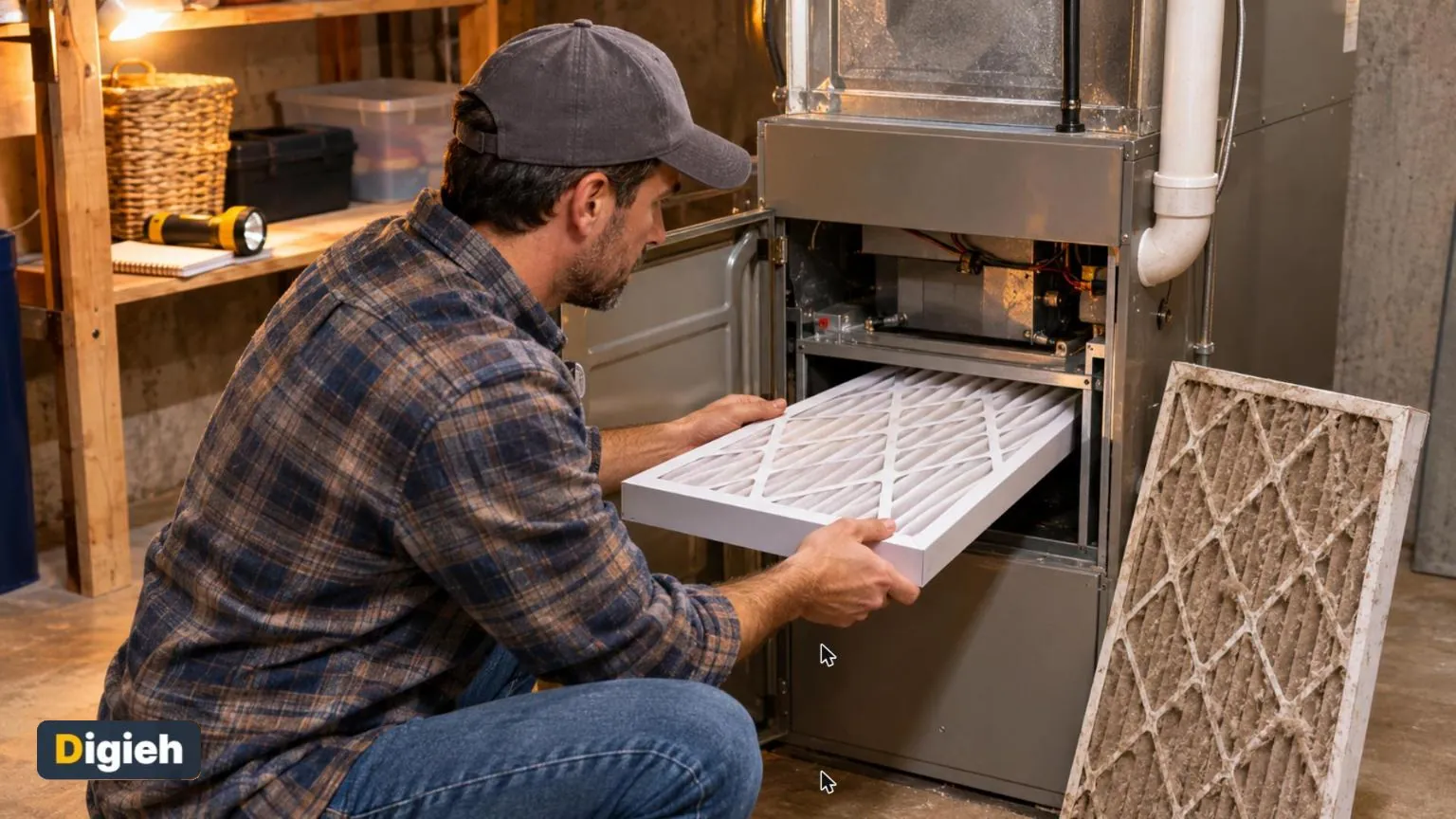
The air filter is the easiest and most important thing you can maintain yourself. It traps dust before it reaches the blower and your rooms.
The Energy Star maintenance checklist says to inspect, clean or change filters once a month. Mass Save is a utility energy program in Massachusetts. It says to change filters at least every three months.
A clogged filter blocks airflow. The furnace then runs longer and works harder to warm your home.
How to Change a Filter
- Turn the thermostat off before you start.
- Find the filter slot near the blower or return air duct.
- Slide out the old filter and note the size printed on its frame.
- Insert the new filter with the airflow arrow pointing toward the furnace.
- Close the panel and turn the system back on.
Write the date on the new filter’s frame with a marker. That makes it easy to remember when you last changed it.
Buying filters in multipacks often lowers the cost per filter. Keep a spare on the shelf so you never skip a change.
When did you last change your furnace filter?
- This month
- A few months ago
- Over a year ago
- Not sure
Task 2. Schedule a Yearly Tune-Up
A professional check-up catches problems you cannot see. Energy Star recommends an annual pre-season check-up by a contractor.
Book your heating check in the fall, before contractors get busy. Energy Star suggests tying it to the fall time change so you remember.
What a Heating Tune-Up Covers
According to Energy Star, a contractor typically checks these items.
- Thermostat settings
- Electrical connections and motor voltage
- Lubrication of moving parts
- The condensate drain
- System controls and the start cycle
- Gas or oil connections and gas pressure
- Burner combustion
- The heat exchanger, for cracks or burner problems
A cracked heat exchanger can be dangerous. It is one of the most important reasons not to skip yearly service.
Ask for a written list of what was checked and any issues found. Keep these records with your home files.
Choosing a Contractor
Look for a licensed and insured heating company with solid local reviews. Ask friends and neighbors who they trust.
Get the price in writing before work begins. Be cautious of anyone who pushes a full replacement without clear reasons.
Good to know. Energy Star notes that airflow problems can reduce system efficiency by up to 15 percent. Clean filters and clear vents help prevent that loss.
Task 3. Keep Air Moving Freely
Your furnace needs open paths to push warm air through the house. Blocked vents waste energy and leave some rooms chilly.
The Cooperative Extension home energy team advises keeping heating ducts and cold air returns unobstructed. Move couches, rugs and boxes away from registers.
Vacuum dust from vent covers every few months. Open the registers in rooms you use, even if they feel warm.
Task 4. Clear the Area Around the Furnace
Furnace rooms often turn into storage spaces. That clutter can be a fire risk and can block the air your furnace needs.
The extension guidance says to keep paper, flammable liquids and other combustibles away from open-flame appliances. Leave a clear space around the unit.
Never block combustion air or ventilation openings. A furnace needs fresh air to burn fuel safely.
- Check the filter
- Clear space around the furnace
- Vacuum vent covers
- Move furniture off registers
- Test carbon monoxide detectors
- Book the fall tune-up
Task 5. Check Outdoor Vents
Many newer furnaces vent through a side wall instead of a chimney. These pipes can get blocked by snow, ice or leaves.
The extension team recommends keeping side-wall vents clear. Check them after every big snowstorm.
If your home has a chimney, look for black stains on the outside. The guidance notes that stains can mean pollutants are leaking into the home.
Carbon Monoxide Safety
Carbon monoxide is a gas you cannot see or smell. Furnaces, water heaters and other fuel-burning appliances can produce it when something goes wrong.
The extension guidance urges every home with fuel-burning equipment to install carbon monoxide detectors. Place them near sleeping areas and on each level.
Know the warning signs. Symptoms can include headache, nausea, dizziness and burning eyes.
If You Suspect Carbon Monoxide
- Open doors and windows if you can do so quickly.
- Get everyone, including pets, out of the house.
- Call 911 if anyone feels ill or unconscious.
- Have a heating contractor inspect the system before you return.
Test detectors monthly and replace batteries as the maker directs. Replace the whole unit when it reaches the end of its life.
Quick tip. Set a phone reminder for the first day of each month to check your filter. It takes less than two minutes.
Use Your Thermostat Wisely
Maintenance works best when paired with smart settings. Mass Save says a programmable thermostat can save about $180 per year with preset schedules.
Lower the temperature while you sleep or are away. Then let it warm up shortly before you wake or come home.
Make sure the thermostat is not near a drafty window or a heat source. A poor location can confuse it and waste energy.
Our guide to lowering your heating bill this winter has more money-saving ideas.
Seal and Insulate Ductwork
Leaky ducts lose heated air into attics, crawl spaces and garages. You pay to heat spaces you never use.
Mass Save says sealing and insulating ducts can improve efficiency by up to 20 percent. It calls ducts very leaky if more than a fifth of the air escapes.
Use mastic sealant or foil tape on joints you can reach. Regular cloth duct tape tends to fail over time.
How often should you check your furnace filter?
- Once every two years
- Only when it breaks
- Once a month
Energy Star recommends checking filters monthly.
Signs Your Furnace Needs Attention
Call a professional if you notice any of these warning signs.
- Rooms that heat unevenly or never feel warm
- Loud banging, squealing or rattling noises
- A yellow or flickering burner flame instead of steady blue
- The furnace turning on and off very often
- A sudden jump in your heating bill
- Soot, rust or water around the unit
Acting early often means a smaller repair bill. Waiting can turn a simple fix into a major replacement.
Free updates
Join the Digieh list
Be the first to know when our weekly brief launches.
No spam. Unsubscribe anytime. Read our Privacy Policy.
Repair or Replace?
Every furnace eventually wears out. Mass Save suggests evaluating heating equipment that is more than 10 years old.
The program says a new Energy Star model can cut yearly energy bills by nearly $200. Savings depend on location. Proper installation matters too, since poor installation can reduce efficiency by up to 30 percent.
Get at least two or three written quotes before deciding. Ask about rebates from your utility and any available tax credits.
Yearly filter cost estimator
Compare this small cost with a single emergency repair call.
Choosing the Right Filter
Filters come in many sizes and grades. Always match the exact size printed on your old filter’s frame.
Higher-grade filters trap smaller particles, which can help people with allergies. But very dense filters can restrict airflow in some systems.
Check your furnace manual or ask your contractor which grade works best. The right choice balances clean air with steady airflow.
Washable filters exist too. They cost more upfront but can be rinsed and reused if cleaned on schedule.
Seasonal Furnace Calendar
| Season | Task |
|---|---|
| Early fall | Book a professional tune-up |
| Before first cold night | Test the heat and carbon monoxide detectors |
| Every month in winter | Check and change the filter as needed |
| After big storms | Clear snow from outdoor vents |
| Spring | Note any problems to mention at the next service |
A simple calendar keeps you on track without much effort. Post it near the furnace or save it on your phone.
Common Mistakes That Cost Money
Some habits quietly drive up heating costs. Avoid these common errors.
- Forgetting the filter for an entire season
- Closing too many vents, which can strain the system
- Cranking the thermostat very high to heat faster
- Skipping tune-ups until something breaks
- Hiring the first contractor without comparing quotes
Raising the thermostat higher does not warm a room faster. The furnace delivers heat at the same rate either way.
What to Do if the Furnace Stops Working
Before calling for repair, check a few simple things. These quick steps can save the cost of a service visit.
- Make sure the thermostat is set to heat and above room temperature.
- Check that the furnace power switch is on.
- Look for a tripped breaker in your electrical panel.
- Replace a badly clogged filter.
- Confirm the furnace door panel is closed tightly.
If none of these work, call a licensed professional. Never try to repair gas lines or burners yourself.
Budget for Upkeep
Plan for maintenance like any other household bill. A small monthly set-aside makes tune-ups and filters painless.
Some contractors offer yearly service plans. Compare the price with a single tune-up call to see if the plan saves money.
Check whether your utility offers free home energy assessments. Many programs also offer rebates on thermostats, insulation and high-efficiency equipment.
More Winter Home Tips
Furnace care is one part of a cozy, affordable winter. Freezing temperatures bring other household risks as well.
Learn how to prevent frozen pipes before the next cold snap. If you use portable heaters, review our space heater safety tips.
Heat escaping into the attic can also cause roof problems. Our guide to preventing ice dams explains the connection.
Which burner flame color is normal for most gas furnaces?
- Yellow and flickering
- Steady blue
- Orange with smoke
A steady blue flame is typical. A yellow, flickering flame can signal a problem.
Try this today. Pull out your furnace filter and hold it up to a light. If you cannot see light through it, replace it now.
Frequently Asked Questions
How often should I change my furnace filter?
Energy Star recommends checking it monthly. Mass Save says to change it at least every three months.
How often does a furnace need a tune-up?
Once a year, ideally in the fall before heavy use.
Can I maintain my furnace myself?
You can change filters, clear vents and keep the area clean. Leave gas, electrical and burner work to licensed pros.
How long does a furnace last?
Many last well over a decade with good care. Consider an evaluation once yours passes 10 years old.
Does a dirty filter raise my heating bill?
Yes. A clogged filter restricts airflow and makes the furnace run longer.
Conclusion
Furnace maintenance is one of the easiest ways to save on winter heating. Check the filter monthly and book a yearly tune-up.
Keep vents clear, install carbon monoxide detectors and watch for warning signs. Those simple habits protect both your budget and your family.
Found this useful?
Editor’s Note
This article is accurate as of November 8, 2026. It draws on guidance from Energy Star, Mass Save and the Cooperative Extension home energy team. Savings figures are estimates and vary by home, and this is general information, not financial advice.
Spot an error in this article? Please contact us at support@digieh.com or read our Corrections Policy.
Keep exploring
Your next read is waiting
 1TechnologySimple Steps to Set Up a Password Manager10 min read
 2HealthHoliday Heartburn Relief: Simple Tips That Really Work10 min read
 3Food & LifestyleEasy Swedish Meatballs Recipe With Rich Creamy Gravy9 min read
 4EntertainmentFun Winter Reading Challenge Ideas for Every Reader10 min read
 5Finance & Markets529 Plan Basics: Essential 2027 Limits for Parents9 min read
 6SportsHow to Host the Ultimate Football Watch Party10 min read