TRENDING
Ice Fishing for Beginners: Essential Safety and Gear

10 min read
Last updated November 8, 2026
Ice fishing turns a frozen lake into a winter playground. It is quiet, social and surprisingly easy to start.
You do not need a boat or fancy equipment. A short rod, some bait and a hole in the ice can be enough for your first trip.
But safety comes first on frozen water. This guide covers safe ice, basic gear, simple techniques and clear signs it is time to head back to shore.
Key Takeaways
- Wait for at least 4 inches of clear, solid ice before walking out.
- Never ice fish alone, and tell someone where you are going.
- Wear ice picks around your neck and carry a throw rope.
- Dress in warm, waterproof layers and avoid cotton.
- Small jigs, live bait and patience catch most winter fish.
4 inchesMinimum thickness of new, clear ice for fishing on foot, according to the New York State Department of Environmental Conservation.
Why Try Ice Fishing?
Ice fishing lets you reach spots that are hard to fish from shore in summer. You can walk right over deep water and weed edges.
It is also a great social sport. Families and friends often fish side by side and share snacks and stories.
Many fish stay active all winter. Panfish like bluegill, crappie and perch are common and fun first targets.
Step 1. Learn About Safe Ice
Safe ice should be your number one concern. The New York State Department of Environmental Conservation says exactly that.
No ice is ever completely safe. Thickness can change a lot across a single lake.
The New York guidance for new, clear ice is a good starting point.
| Clear Ice Thickness | What It Can Support |
|---|---|
| 2 inches or less | Stay off |
| 4 inches | Ice fishing on foot |
| 5 inches | Snowmobile |
| 8 to 12 inches | Car or small pickup |
| 12 to 15 inches | Medium truck |
The Iowa Department of Natural Resources uses the same 4-inch rule for clear blue ice. Many experienced anglers wait for 5 inches or more.
Not All Ice Is Equal
White or cloudy ice is much weaker than clear ice. The New York guidance says white ice needs double the thickness.
Slush ice is about half as strong. Ice over moving water is weaker too.
Be extra careful near shore, around docks, near inlets and outlets, and over springs. Ice around submerged trees and weeds is often thinner as well.
Have you ever tried ice fishing?
- Yes, many times
- Once or twice
- Never, but I want to
- Not sure
Step 2. Check Local Rules and Licenses
Most states require a fishing license for adults, even in winter. Buy yours online or at a local shop before your trip.
Check the rules for the lake you plan to fish. Some waters limit the number of lines, hole size or power augers.
Many state wildlife agencies post weekly fishing and ice reports. Iowa’s natural resources department suggests reading these reports before heading out.
Step 3. Gather Your Safety Gear
Safety gear is not optional on the ice. The Iowa natural resources department recommends carrying these items.
- Ice picks worn around your neck
- A life jacket
- A floating throw rope
- A whistle
- Ice cleats for your boots
- A first aid kit
- A full set of dry clothes, including gloves
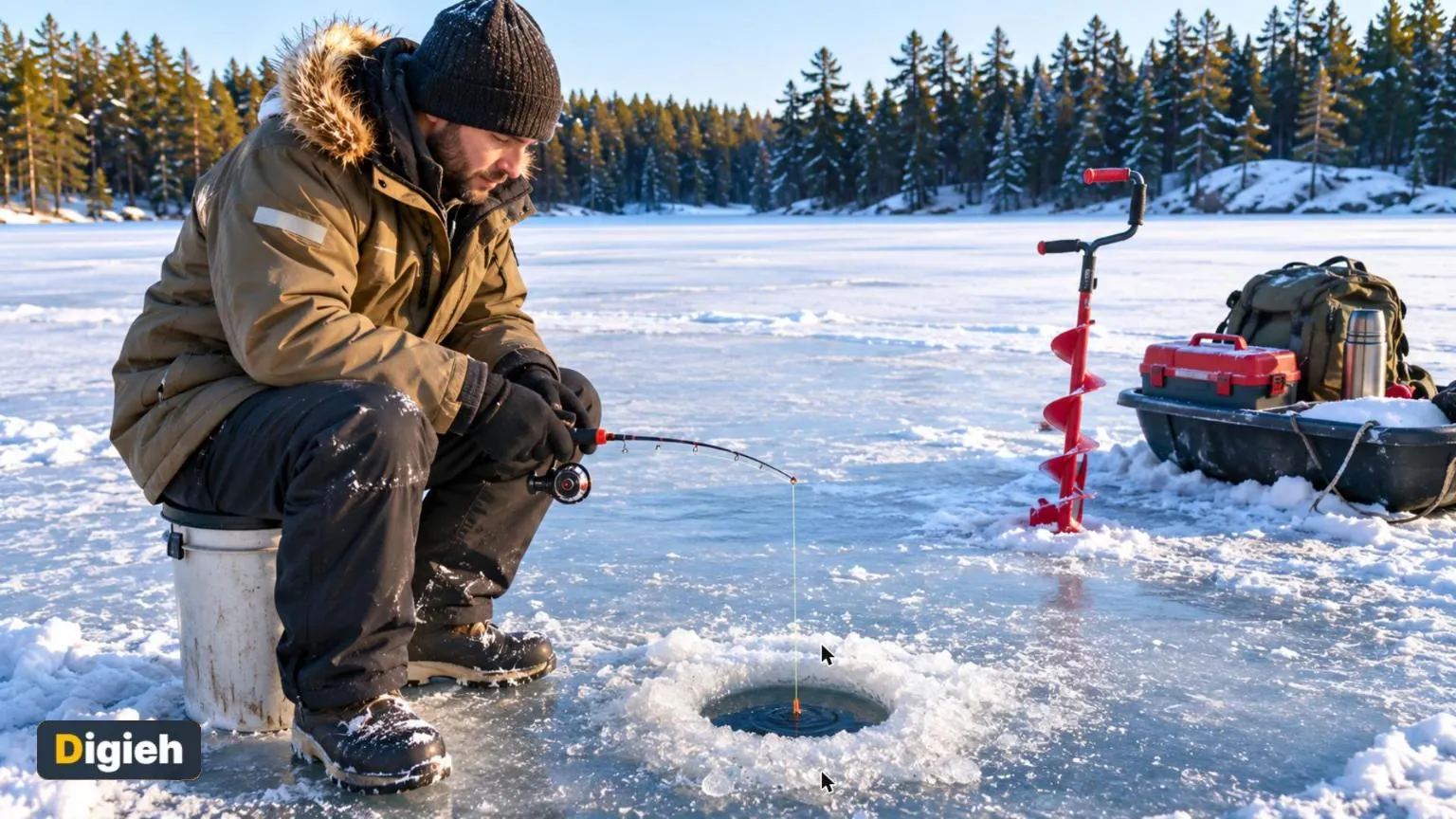
Ice picks are two handles with sharp points. If you fall through, you dig them into the ice to pull yourself out.
Use a spud bar or auger to test the ice as you walk. Drill test holes near shore and every so often as you move out.
Good to know. A five-gallon bucket can double as a flotation aid in an emergency, notes the Iowa Department of Natural Resources.
Step 4. Dress for the Cold
Standing still on a windy lake feels much colder than a winter walk. Good clothing keeps your day fun and safe.
Start with a base layer that pulls sweat away from your skin. The New York guidance warns against cotton because it loses warmth when wet.
Add a warm middle layer and a windproof, waterproof jacket and pants. Finish with a warm hat, insulated waterproof boots and wool socks.
Bring extra gloves, because hands get wet when handling bait and fish. Hand and toe warmers make long sits more comfortable.
Our guide to frostbite and hypothermia warning signs explains what to watch for in cold weather.
Step 5. Pick Your Fishing Gear
Ice fishing gear is smaller and simpler than summer gear. Here are the basics most beginners need.
- Short ice rod. Iowa’s guide says ice rods are often 18 to 24 inches long.
- Light line. Winter fish can be picky, so thin line helps.
- Small jigs and hooks. Bright colors and small spoons work well.
- Live bait. Wax worms, small grubs and minnows are popular.
- Bucket. It carries gear, works as a seat and holds your catch.
- Skimmer. This ladle scoops slush and ice chips from the hole.
Tip-ups are another option. A flag pops up when a fish takes the bait, so you can watch several holes at once.
Choosing a Tool to Cut Holes
You need a tool to make your hole. The New York guidance compares three common choices.
A spud bar is the cheapest and works on ice up to about a foot thick. A hand auger is the best all-around choice for moderate ice.
A power auger is fastest for thick ice but heavier and pricier. Some waters restrict them, so check the rules first.
Iowa’s guidance suggests keeping holes no larger than 10 inches across. Many panfish anglers use 6-inch holes or smaller.
- Fishing license
- Ice picks and throw rope
- Life jacket and whistle
- Short rod, line and small jigs
- Live bait in an insulated container
- Auger or spud bar and skimmer
- Bucket, cleats and dry clothes
Step 6. Choose Your Spot
Most ice fishing happens in water less than 20 feet deep, according to Take Me Fishing. Fish often gather near weed edges, drop-offs and underwater structure.
A cluster of other anglers and old holes can be a good sign. It often means fish were caught there recently.
Give others plenty of room, though. Ice anglers are usually friendly and happy to share tips if you ask politely.
Many state agencies offer free lake maps online. They show depths and fish habitat to help you plan.
Smaller lakes and protected bays often freeze first and offer calmer conditions. They can be good choices for your first trip.
Avoid areas with current, such as river mouths and narrow channels. Moving water keeps ice thinner, even in very cold weather.
Write down spots where you catch fish. Winter fish often return to the same areas year after year.
Step 7. Drill and Fish
Drill a few holes at different depths. Then move between them until you find active fish.
Measure the depth with a weighted line or a small sonar unit. Many fish feed near the bottom in winter.
Drop your jig to the bottom, then lift it a few inches. Jig slowly and keep the line tight so you can feel light bites.
Winter fish often bite softly. A spring bobber or small float helps you see the tiny tap.
Check your bait about every half hour, as Take Me Fishing suggests. Clear new ice from the hole often so your line does not freeze.
Quick tip. Keep your live bait in an insulated container inside your jacket. Warm, lively bait catches more fish.
Free updates
Join the Digieh list
Be the first to know when our weekly brief launches.
No spam. Unsubscribe anytime. Read our Privacy Policy.
Best Times to Fish
Fish are often most active around dawn and dusk. Iowa’s guidance points to early morning through mid-morning and late afternoon to sunset.
Midday can still produce fish, especially on cloudy days. Try different depths if the bite slows down.
Early ice and late ice periods can be good for fishing. They are also riskier, so take extra care with ice checks.
Which ice is strongest?
- White, snowy ice
- New, clear ice
- Slushy ice
New, clear ice is strongest. White ice needs about double the thickness.
When to Get Off the Ice
Knowing when to leave is the most important ice fishing skill. Head back to shore right away if you notice any of these signs.
- Cracking, booming or popping sounds under your feet
- Water seeping onto the ice surface
- Slushy, gray or darkening ice
- Open water appearing nearby
- A warm spell, rain or strong sun softening the ice
- Feeling very cold, shivering hard or getting wet
Leave together with your group. Walk spread apart so your weight is not in one spot.
If Someone Falls Through
Call for help right away. Do not run to the hole, because the ice around it is already weak.
Throw a rope or reach with a long pole while staying low on safe ice. Lie flat to spread out your weight.
If you fall in yourself, turn toward the direction you came from. Use your ice picks, kick your legs and roll away from the hole once out.
Get to a warm place quickly and change into dry clothes. Seek medical care if anyone shows signs of hypothermia.
What should you wear around your neck on the ice?
- Ice picks
- A fishing license
- A thermometer
Ice picks help you grip the ice and pull yourself out if you fall through.
Using an Ice Shelter
A portable shelter blocks wind and makes long days more comfortable. Pop-up and flip-over styles are popular with beginners.
Some states have shelter rules. Iowa requires name and address markings on unattended shelters and reflectors after dark.
Never use fuel-burning heaters in a closed shelter without good airflow. Carbon monoxide can build up quickly and cause serious harm.
Ice Fishing With Kids
Kids often love ice fishing, especially when the fish are biting. Keep trips short and fun for the first few outings.
Choose a spot with plenty of panfish so they stay busy. Bring hot drinks, snacks and a sled for breaks.
Make sure kids wear warm layers and stay close by at all times. Teach them never to walk near open holes or unknown ice.
Looking for more cold-weather family fun? Try our guides to snowshoeing for beginners and sledding safety tips.
Budget-Friendly Ways to Start
Ice fishing can be cheap if you start small. A basic combo rod, a few jigs and a bucket cost far less than most hobbies.
Borrow or rent bigger items like augers and shelters at first. Some bait shops and parks rent gear by the day.
Many states also host free fishing weekends in winter. During these events, residents can usually fish without a license, though other rules still apply.
Look for beginner clinics run by state agencies, parks or fishing clubs. They often lend gear and teach safety basics on supervised ice.
Handling Your Catch
If you plan to keep fish, follow local size and bag limits. Keep a small ruler handy to check lengths.
For catch and release, handle fish quickly with wet hands. Return them gently to the hole as soon as possible.
Fish caught in winter can freeze fast in cold air. Keep the ones you take in a bucket or cooler for the trip home.
Try this today. Look up your state’s fishing license rules and weekly ice report. Then ask a local bait shop about beginner-friendly lakes.
Frequently Asked Questions
How thick does ice need to be for ice fishing?
Wait for at least 4 inches of new, clear ice for fishing on foot. Many anglers prefer 5 inches or more.
What do I need to start ice fishing?
You need a fishing license, a short rod, small jigs, bait, a hole-cutting tool and safety gear like ice picks.
What fish can I catch through the ice?
Bluegill, crappie, yellow perch, walleye and northern pike are common, depending on where you live.
Is ice fishing dangerous?
It can be if the ice is weak. Check thickness often, never go alone and carry safety gear.
Do I need a fishing license in winter?
In most states, yes. Check your state wildlife agency for exact rules.
Conclusion
Ice fishing is a peaceful way to enjoy winter and catch fish without a boat. Start with simple gear and an experienced friend.
Always check the ice, wear safety gear and know when to leave. With good habits, a frozen lake can become your favorite winter hangout.
Found this useful?
Editor’s Note
This article is accurate as of November 8, 2026. It draws on guidance from state wildlife agencies in Iowa and New York, plus Take Me Fishing. Ice conditions change quickly, so always check local reports and rules.
Spot an error in this article? Please contact us at support@digieh.com or read our Corrections Policy.
Keep exploring
Your next read is waiting
 1Finance & Markets529 Plan Basics: Essential 2027 Limits for Parents9 min read
 2BusinessEssential Holiday Staffing Tips for Small Business Owners10 min read
 3Food & LifestyleSmart Winter Pet Safety Tips for Cold Days10 min read
 4SportsVital Sledding Safety Tips Every Parent Should Know10 min read
 5TechnologySimple Steps to Set Up a Password Manager10 min read
 6EntertainmentKwanzaa 2026 Dates and Traditions: A Meaningful Guide9 min read