TRENDING
Ice Hockey Rules Explained: Easy Guide for Beginners

10 min read
Last updated November 8, 2026
Hockey season is in full swing, and many new fans are tuning in for the first time. The game moves fast, and the whistles can feel confusing at first.
The good news is that the core rules are simple once you see them in action. A few key ideas explain most of what happens on the ice.
This guide covers the basics in plain language. You will learn about players, periods, icing, offside, penalties and overtime.
Key Takeaways
- Each team plays with five skaters and one goalie on the ice.
- A professional game has three 20-minute periods.
- Icing and offside are the two most common whistles.
- Penalties send players to the box and create power plays.
- Regular season ties go to overtime and then a shootout.
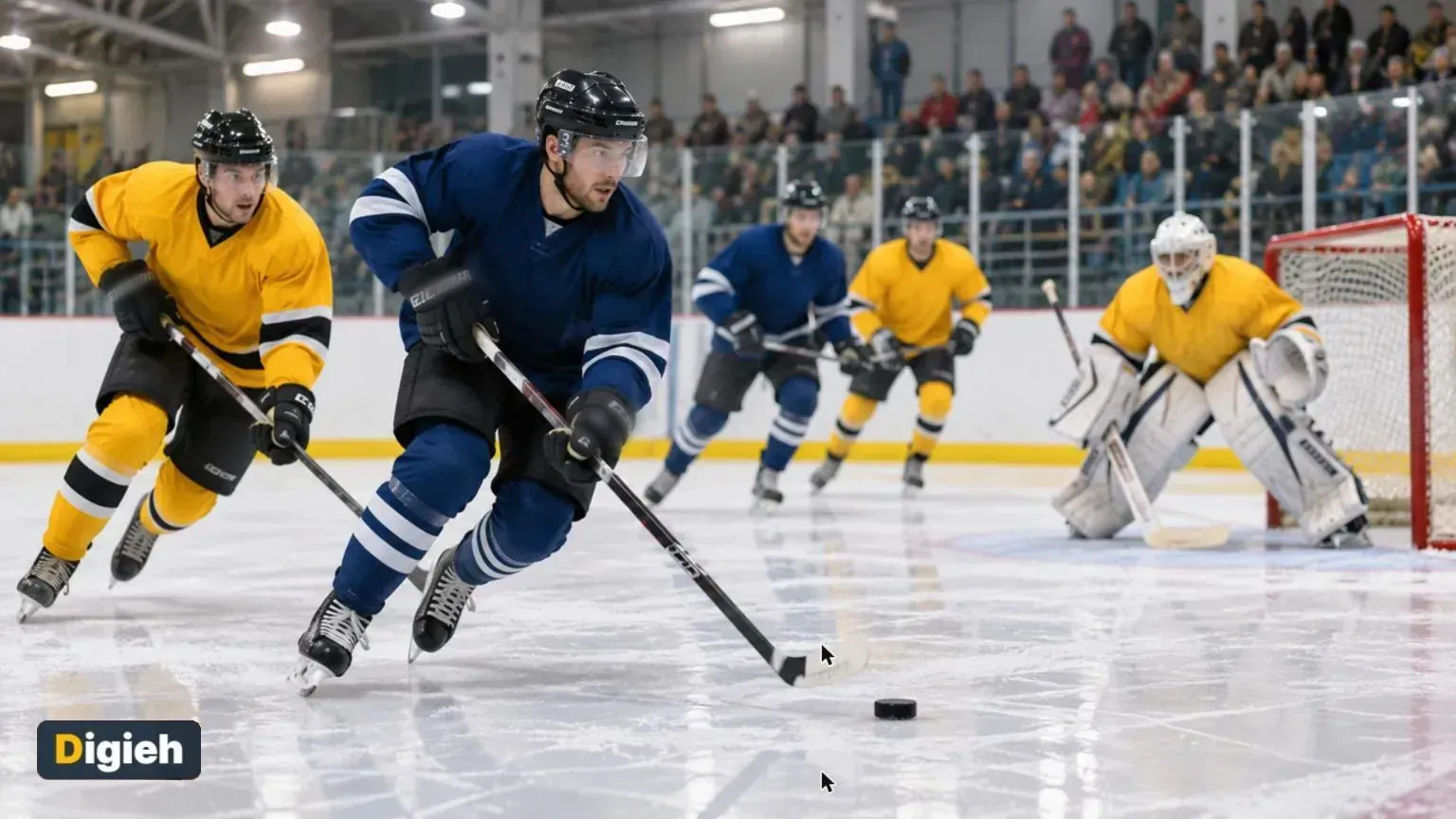
6 playersEach team keeps five skaters and one goalie on the ice, according to the Cut Knife Minor Hockey rules guide.
The Goal of the Game
Hockey is simple at heart. Two teams try to shoot a hard rubber puck into the other team’s net.
Players use sticks to pass, carry and shoot the puck. The team with more goals at the end wins.
Players skate on a sheet of ice surrounded by boards and glass. The action rarely stops for long, which is part of the fun.
Players on the Ice
Each team has six players on the ice at once. According to the Cut Knife Minor Hockey rules guide, that means five skaters and one goalie.
The skaters usually include three forwards and two defensemen. Forwards focus on scoring, while defensemen protect their own zone.
A typical professional roster carries about 20 players. That includes roughly 12 forwards, 6 defensemen and 2 goalies.
Line Changes
Hockey is tiring, so players rotate often. Shifts usually last less than a minute.
Teams can swap players at any time, even while play continues. This is called changing on the fly.
There is one key exception. A team that ices the puck cannot change players before the next faceoff.
The Goalie
The goalie guards the net and can use hands, pads and stick to stop shots. Goalies wear extra padding for protection.
In professional play, goalies can only handle the puck in certain areas behind the net. A trapezoid shape marks the zone where they may play it.
Teams sometimes pull their goalie late in a game. This adds an extra skater when they need a goal badly.
Basic Equipment
Every player wears skates, a helmet, gloves and padding. Shin guards, elbow pads and shoulder pads protect against falls and stray pucks.
Sticks come in many different lengths and blade curves. Players choose based on comfort and whether they shoot left or right.
The puck is a hard disc of frozen rubber. Officials keep pucks cold so they glide smoothly and bounce less.
How a Game Is Timed
A professional game has three periods of 20 minutes each. The clock stops whenever play stops, so games take much longer in real time.
Teams switch ends after each period. There is a break between periods for rest and ice cleaning.
Youth and recreational leagues often use shorter periods. Check your local league rules if you are watching a younger game.
Which hockey rule confuses you most?
- Icing
- Offside
- Penalties
- Not sure
The Rink Layout
Knowing the rink makes every rule easier to follow. Painted lines divide the ice into clear zones.
The center red line splits the rink in half. Two blue lines create three zones, called the defensive zone, the neutral zone and the offensive zone.
Each end has a thin red goal line in front of the net. The blue semicircle in front of the goal is the crease, where the goalie works.
Why the Lines Matter
The red line matters most for icing calls. The blue lines matter most for offside calls.
Once you know these markings, you can follow almost every whistle. Spend your first few minutes of any game just studying the ice.
Officials on the Ice
Professional games usually have four officials. Two referees call penalties and goals, while two linesmen handle icing, offside and faceoffs.
Referees wear orange armbands so fans can spot them easily. Linesmen also break up scuffles between players.
Video review helps officials confirm close goals. Coaches can also challenge some calls, such as a missed offside before a goal.
Faceoffs
A faceoff starts play. The referee drops the puck between two opposing players.
Faceoffs happen at the start of each period and after every goal. They also restart play after most stoppages.
The spot depends on why play stopped. There are nine faceoff spots across the rink.
The Icing Rule Explained
Icing is one of the first rules new fans notice. It stops teams from simply firing the puck down the ice to waste time.
The CoachUp guide to icing and offside explains it clearly. Icing occurs when a player shoots from their own half across the center line. The puck must also cross the opponent’s goal line untouched.
When icing is called, play stops. The faceoff moves back into the zone of the team that iced it.
When Icing Does Not Apply
There are several exceptions to know.
- A team playing shorthanded on a penalty can ice the puck freely.
- If the puck goes into the net, it counts as a goal instead.
- If the goalie leaves the crease to play it, icing is waved off.
- If an opponent could have touched it, the referee may wave it off.
Good to know. Many leagues use hybrid icing. The linesman judges a race for the puck and blows the whistle early to prevent dangerous collisions.
The Offside Rule Explained
Offside confuses many new fans at first. The idea is simple once you picture the blue lines.
An attacking player cannot cross the blue line into the offensive zone before the puck does. The puck must lead the way.
If a player enters too early, the linesman blows the whistle. Play restarts with a faceoff outside the zone.
Tag Up
Many leagues use a tag up rule. If players are offside, they can skate back across the blue line to clear it.
Once every attacker has left the zone, the team can enter again legally. This keeps play moving without a whistle.
The Two-Line Pass
Some youth and amateur leagues still call a two-line pass. That happens when a pass crosses two lines before a teammate touches it.
Professional leagues removed that rule years ago. Ask about your local league if you are unsure.
- Know the five skaters and one goalie
- Spot the center red line
- Watch the blue lines on attacks
- Learn the main penalty lengths
- Understand power plays
- Know overtime and shootout basics
Penalties and the Penalty Box
Hockey allows physical play, but there are limits. Breaking the rules sends a player to the penalty box.
The team without that player plays shorthanded. The other team gets a power play with an extra skater.
Types of Penalties
The Cut Knife Minor Hockey guide lists the main penalty lengths.
- A minor penalty lasts two minutes.
- A double minor lasts four minutes, often for drawing blood.
- A major penalty lasts five minutes for more serious fouls.
- A misconduct lasts ten minutes, but the team stays at full strength.
- A game misconduct removes the player for the rest of the game.
Common Fouls
You will see a few fouls again and again. Tripping, hooking and holding are among the most frequent.
High sticking, slashing and interference are also common. Roughing and boarding are called when contact goes too far.
Referees raise an arm to signal a delayed penalty. Play continues until the guilty team touches the puck.
Free updates
Join the Digieh list
Be the first to know when our weekly brief launches.
No spam. Unsubscribe anytime. Read our Privacy Policy.
How Power Plays Work
A power play gives one team a big advantage. With an extra skater, they can pass more freely and set up shots.
If the power play team scores during a minor penalty, the penalty ends early. The penalized player returns to the ice.
If the shorthanded team scores instead, the penalty continues. That surprise goal is called a shorthanded goal.
Quick tip. Watch the penalty clock on the screen during a power play. It shows how much time the shorthanded team must survive.
Scoring Basics
A goal counts when the whole puck crosses the goal line between the posts. Part of the puck on the line is not enough.
Players earn points for goals and assists. Up to two teammates can get an assist on each goal.
Some goals are not allowed. Kicking the puck in on purpose or batting it with a hand usually does not count.
Overtime and Shootouts
Ties are common after regulation. The Sports Illustrated overtime explainer breaks down the National Hockey League format.
In the regular season, teams play a five-minute overtime with three skaters each. The first goal wins the game.
If nobody scores, a shootout decides the winner. Each team sends three shooters first, then more rounds follow if needed.
Playoff Overtime
Playoff games never end in a shootout. Teams play full 20-minute periods at five skaters a side.
The first goal wins, no matter how long it takes. Some playoff games have run into several extra periods.
Penalties in Overtime
A penalty during regular season overtime adds a skater for the other team. The power play becomes four skaters against three.
This creates more open ice and more scoring chances. It often leads to a quick finish.
How does a regular season National Hockey League game end if overtime stays tied?
- The game ends in a tie
- A shootout decides the winner
- Teams play another full period
After a scoreless five-minute overtime, a shootout decides the regular season winner.
How the Standings Work
National Hockey League teams earn two points for any win. A loss in regulation earns no points.
A team that loses in overtime or a shootout still earns one point. That reward makes reaching overtime valuable.
Playoff spots are based on total points. Close races can come down to those single overtime points.
Tips for Watching Your First Game
Watch the puck less and the players more. Following positioning helps you predict passes and shots.
Keep an eye on the blue lines during attacks. You will start spotting offside calls before the whistle.
Listen to the broadcast team explain penalties. Hearing the call alongside the replay builds your knowledge fast.
Hosting friends for a game night? Our guide on how to host a football watch party shares snack and setup ideas that work for hockey too.
How long does a minor penalty last?
- Two minutes
- Five minutes
- Ten minutes
A minor penalty lasts two minutes, or less if the power play team scores.
Trying Hockey Yourself
Watching often sparks the urge to play. Many rinks offer adult learn to play programs.
Start with basic skating skills before adding a stick and puck. Our guide to ice skating tips for beginners covers balance, stopping and safe falls.
Always wear a helmet and proper gear on the ice. Our guide to sledding safety tips also covers smart winter play for families.
Common Questions From New Fans
New fans often ask why fights happen. Professional leagues penalize fighting, but it still occurs at times.
Others ask why the clock stops so often. The clock pauses for whistles, so the true playing time stays at 60 minutes.
Many wonder why players shoot the puck into the corners. This dump and chase style helps teams enter the zone without risking offside.
Try this today. Watch one period of a hockey game and count the icing and offside calls. Naming each whistle is the fastest way to learn.
Frequently Asked Questions
How many players are on the ice in hockey?
Each team has six players on the ice. That includes five skaters and one goalie.
What is icing in hockey?
Icing happens when a team shoots the puck from its own half past the opponent’s goal line untouched. Play stops and the faceoff moves to the offending team’s zone.
What does offside mean in hockey?
An attacking player cannot enter the offensive zone before the puck. The linesman stops play if this happens.
How long is a hockey penalty?
A minor penalty lasts two minutes. Majors last five minutes and misconducts last ten.
How does hockey overtime work?
Regular season games use five minutes of three skaters a side, then a shootout. Playoff overtime uses full 20-minute periods until someone scores.
Conclusion
Hockey rules seem tricky at first, but they make sense quickly. Learn icing, offside and penalties, and most whistles will click.
Watch a few games with these basics in mind. Soon you will be calling penalties before the referee does.
Grab a seat, pick a team and enjoy one of the fastest games on ice.
Found this useful?
Editor’s Note
This article is accurate as of November 8, 2026. Rules can vary by league and age level, so check your local league for details.
Spot an error in this article? Please contact us at support@digieh.com or read our Corrections Policy.
Keep exploring
Your next read is waiting
 1HealthWinter Headaches: Common Causes and Simple Relief Tips10 min read
 2TechnologyHow to Choose the Best Home Wi-Fi Router10 min read
 3EntertainmentFun Winter Reading Challenge Ideas for Every Reader10 min read
 4Food & LifestyleCrispy Homemade Potato Latkes With Golden Lacy Edges9 min read
 5Finance & MarketsSinking Funds Explained: A Smart Way to Save10 min read
 6SportsBudget Home Gym Setup: Simple Guide for Beginners11 min read