TRENDING
How to Choose Dog Food: Reading the Label
How to choose dog food: read the adequacy statement, life stages, name rules, guaranteed analysis, calories, grain-free facts and how to switch foods safely.

7 min read
Last updated November 25, 2026
The most important part of a dog food label is the nutritional adequacy statement. It tells you if the food is complete and balanced, and for which life stage.
After that, check the product name, the guaranteed analysis and the calories. The ingredient list matters less than most people think.
Pet health note. This article is general information, not veterinary advice. Dogs with health problems may need a diet chosen by a vet.
Key Takeaways.
- Look for a complete and balanced statement that matches your dog’s life stage.
- Words like dinner, with and flavour change how much of an ingredient is in the food.
- Ingredients are listed by weight, heaviest first, including water.
- Feeding guides are a starting point. Adjust to keep your dog at a healthy weight.
- Change foods slowly over about a week to avoid an upset stomach.
Jump to a section
- Which food suits my dog?
- The adequacy statement
- Life stages
- What the name tells you
- Guaranteed analysis
- Reading the ingredient list
- Calories and feeding guides
- Label claims compared
- Grain-free food
- Questions to ask the maker
- Switching foods
- When to Get Help
- Questions to Ask Your Vet
- Frequently Asked Questions
- Sources
- Conclusion
Which Food Suits My Dog?
Tap what fits your dog. The bars show which label to look for. This is a rough guide only. Your vet can advise for your dog.
- Puppy under 1 year
- Large-breed puppy
- Healthy adult dog
- Pregnant or nursing dog
- Senior dog in good health
- Overweight dog
- Dog with a health condition
Source: built by Digieh from Association of American Feed Control Officials and World Small Animal Veterinary Association guidance.
What do you check first on a dog food bag?
- Ingredients
- Price
- Brand
- Not sure
The Nutritional Adequacy Statement
This small statement is usually on the back or side. It may be the most important part of the label. It is described this way by the Association of American Feed Control Officials, which sets US pet food standards.
- Complete means all required nutrients are present.
- Balanced means they are in the right ratios.
- Formulated to meet means the recipe was designed to meet nutrient profiles.
- Animal feeding tests means the food was also tested on dogs.
Treats and toppers often say for intermittent or supplemental feeding. They should not be a dog’s main meal.
3 percentThe minimum share of a named ingredient in a food labelled with that ingredient, under US feed control rules.
Life Stages
- Growth: for puppies.
- Gestation and lactation: for pregnant or nursing dogs.
- Adult maintenance: for healthy adult dogs.
- All life stages: meets growth needs, so suits puppies and adults.
Nutrient levels differ by stage, so match the label to your dog. Large-breed puppies may need a food made for their size.
What the Name Tells You
| Name on the bag | What it means |
|---|---|
| Beef dog food | At least 95 percent beef, not counting water |
| Beef dinner, entree or formula | At least 25 percent beef, not counting water |
| Dog food with beef | At least 3 percent beef |
| Beef flavour dog food | Beef flavour must be detectable, but amount can be small |
Source: Association of American Feed Control Officials, checked November 25, 2026. Rules apply in the US.
Try this today. Read the small word after the meat. Chicken dinner and with chicken can contain far less chicken than Chicken dog food.
Guaranteed Analysis
The label must list four basic guarantees, explains the Association of American Feed Control Officials.
- Minimum crude protein.
- Minimum crude fat.
- Maximum crude fibre.
- Maximum moisture.
Wet food has much more water, so its protein percentage looks lower. To compare wet and dry food fairly, compare on a dry matter basis.
Reading the Ingredient List
Ingredients are listed by weight, heaviest first. Fresh meat contains a lot of water. It can sit near the top even if there is less of it once cooked.
Many vet nutritionists advise against choosing a food on the ingredient list alone. The maker’s expertise and quality control matter more, notes the World Small Animal Veterinary Association.
Calories and Feeding Guides
Calorie content is required on US labels and helps prevent overfeeding. Feeding charts are only a starting point.
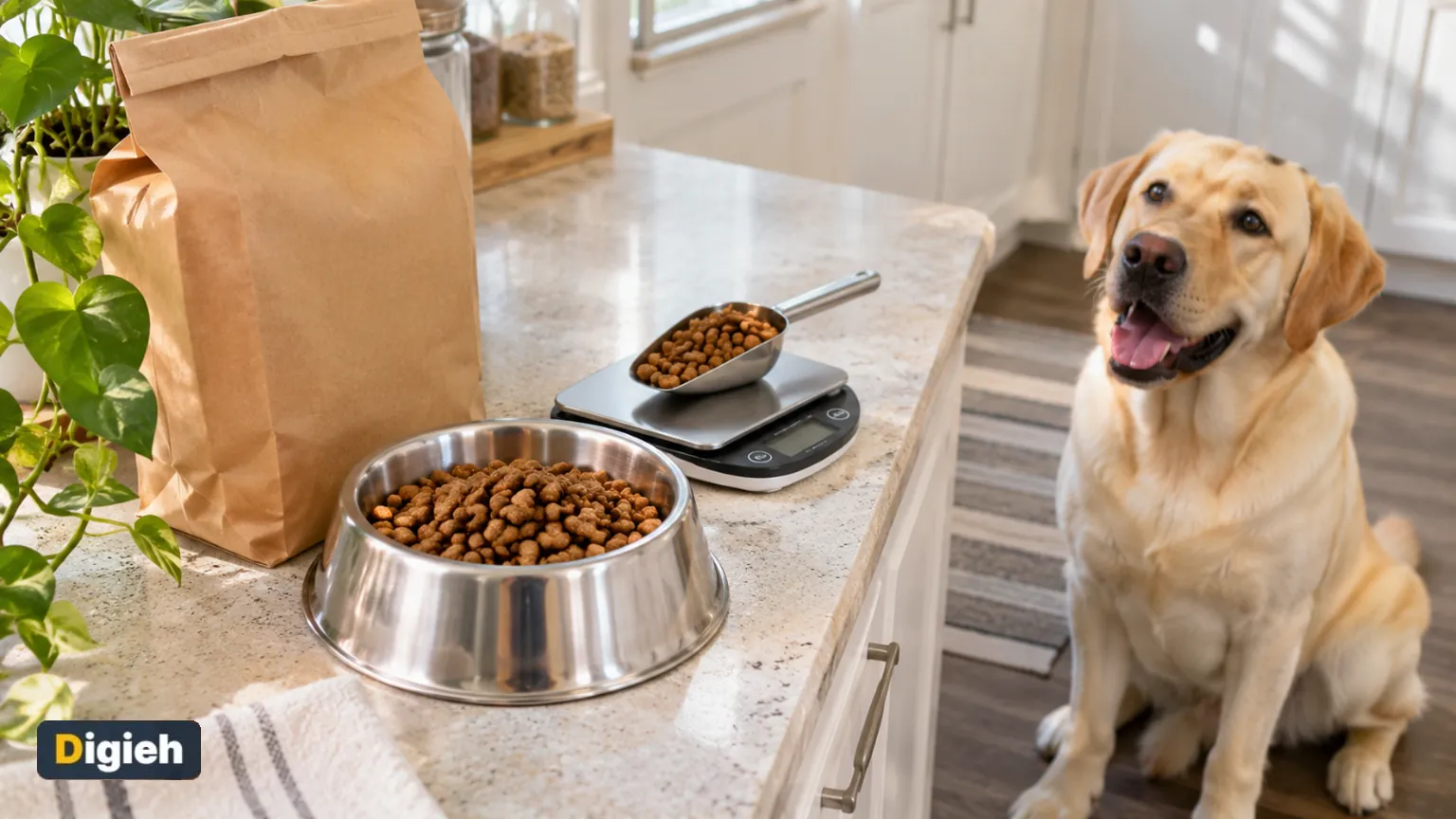
- Weigh food with a kitchen scale, not a cup.
- Count treats as part of daily calories.
- Check your dog’s body shape every few weeks.
- Adjust portions to keep a visible waist.
Label Claims Compared
| Claim | What to know |
|---|---|
| Natural | Usually means no artificial additives, not more nutritious |
| Premium or gourmet | Marketing words with no set standard |
| Holistic | No official definition |
| Human grade | Strict rules apply, but does not guarantee better nutrition |
| Grain-free | No grains, but often more peas, lentils or potatoes |
Sources: US feed control officials and world vet association guidance, checked November 25, 2026.
Free updates
Join the Digieh list
Be the first to know when our weekly brief launches.
No spam. Unsubscribe anytime. Read our Privacy Policy.
Grain-Free Food
The US Food and Drug Administration has looked into reports of heart disease in dogs eating certain foods. The disease is called dilated cardiomyopathy. Many of those foods were labelled grain-free.
A cause has not been proven, and most dogs on these diets have no problems. Talk to your vet before choosing grain-free, and read the agency’s investigation page.
Questions to Ask the Maker
- Do you employ a qualified pet nutritionist?
- Who formulates your recipes?
- What quality checks do you run on ingredients and finished food?
- Have you published any research on your foods?
- How many calories are in a cup or can?
These questions come from the World Small Animal Veterinary Association. Good companies should answer them readily.
Switching Foods
- Days 1 to 2: mix one quarter new food with old food.
- Days 3 to 4: half and half.
- Days 5 to 6: three quarters new food.
- Day 7: all new food.
- Slow down if your dog gets loose stools.
If your dog has an upset stomach, see our guide to dog diarrhoea.
Feeding Senior Dogs
Older dogs often need fewer calories but still need good-quality protein. Some do well on a senior food, while others stay on an adult food.
There is no official senior life stage on US labels, so senior foods can vary a lot. Ask your vet what suits your older dog. Work out your dog’s age with our dog years calculator.
Budgeting for Dog Food
Food is one of the biggest yearly costs of owning a dog. A pricier food is not always better, but cheaper food may mean feeding larger portions.
Compare the cost per day, not per bag. See more in our guide to the real costs of owning a dog.
Puppies and Large Breeds
Puppies need food labelled for growth or all life stages. Large-breed puppies may need controlled calcium and calories to support healthy bones.
Planning meals for a new puppy? See our puppy first week plan.
What does Chicken dinner on a dog food bag mean?
- At least 25 percent chicken, not counting water
- 100 percent chicken
- Only chicken flavour
Words like dinner, entree or formula mean the named ingredient makes up at least 25 percent, not counting water.
Dog Food Myths
- The first ingredient tells you everything. Weight includes water, and the full recipe matters more.
- Expensive always means better. Price does not guarantee quality or nutrition.
- By-products are bad. Many are nutritious organ meats.
When to Get Help
See your vet if your dog is losing or gaining weight. Ongoing vomiting, diarrhoea or itchy skin after a diet change also need a check. Dogs with kidney, liver or heart disease need a diet planned by a vet.
Ask your vet before starting a home-cooked or raw diet, as these are easy to get unbalanced.
Questions to Ask Your Vet
- Which life stage food suits my dog?
- How many calories should my dog eat each day?
- Is my dog a healthy weight?
- Is grain-free right for my dog?
- Does my dog need a special diet?
- How should I switch foods?
Frequently Asked Questions
What should I look for first on a dog food label?
The complete and balanced statement for your dog’s life stage.
Is grain-free dog food bad?
Not proven, but ask your vet given the heart disease reports.
What does all life stages mean?
It meets the needs of puppies, so it suits adults too.
How much should I feed my dog?
Start with the bag’s guide, then adjust to keep a healthy weight.
Sources
- Association of American Feed Control Officials: Reading labels
- World Small Animal Veterinary Association: Selecting pet foods
- US Food and Drug Administration: Diet and canine heart disease
Conclusion
A good dog food label tells you more than the picture on the bag. Check the adequacy statement, life stage and name rules first.
Next step: look at your dog’s current food for the complete and balanced statement. Ask your vet if anything is unclear.
Editor’s Note
This article is accurate as of November 25, 2026. Facts come from US feed control officials, a world vet association and the US Food and Drug Administration.
Spot an error in this article? Please contact us at support@digieh.com or read our Corrections Policy.
Keep exploring
Your next read is waiting
 1Pets & AnimalsKennel Cough in Dogs: Signs, Treatment and Recovery7 min read
 2HealthKnee Pain: Common Causes, Relief and Warning Signs7 min read
 3Parenting & FamilyFood Stamp Rule Could Change Free School Meals4 min read
 4Finance & MarketsPetrol Price in Pakistan Today: Rs318 a Litre4 min read
 5NewsThanksgiving Storm 2026: Where Travel Delays Are Likely4 min read
 6AI & TechChatGPT Classic Is Retiring: How to Switch Apps4 min read
Found this useful?