TRENDING
Tennis Elbow: Causes, Exercises and Recovery Time Explained
Tennis elbow explained: symptoms, causes beyond tennis, home care, a recovery timeline, everyday swaps, treatment options and when to see your doctor.

7 min read
Last updated November 25, 2026
Tennis elbow is pain on the outside of the elbow caused by overused forearm tendons. Most people who get it do not play tennis.
It usually gets better with rest, ice or heat, a forearm strap and simple exercises. Some cases last over a year, but surgery is rarely needed.
Health note. This article is for general information only and is not medical advice. See a doctor or physiotherapist about elbow pain that does not improve.
Key Takeaways.
- Repeated gripping and wrist twisting strain the tendons on the outside of the elbow.
- It is most common between ages 35 and 54, says the National Health Service.
- Typing, using a mouse, screwdrivers, painting and racket sports can all trigger it.
- Try physiotherapy if home care has not helped after 6 weeks.
- Surgery is only considered after 6 to 12 months of symptoms.
Jump to a section
- What it is
- Symptoms
- Tennis elbow vs golfer’s elbow
- Causes and risk factors
- Official advice compared
- Should I see a doctor?
- Home care
- Recovery timeline
- Everyday swaps
- Treatment options
- When to Get Help
- Questions to Ask Your Doctor
- Frequently Asked Questions
- Sources
- Conclusion
What Is Tennis Elbow?
Doctors call it lateral epicondylitis. The tendons that attach forearm muscles to the bony bump on the outside of the elbow get irritated from overuse.
Repeated tensing of the muscles that lift the hand and wrist can break down tendon fibers, explains Mayo Clinic.
35 to 54The age range when tennis elbow is most common, according to the National Health Service.
Symptoms
- Pain on the outside of the elbow, from mild to constant.
- Pain that spreads down the forearm.
- Pain when gripping, lifting, shaking hands or turning a doorknob.
- Weak grip, such as trouble holding a cup.
- Tenderness or swelling over the bony bump.
- Pain that wakes you at night in bad cases.
These come from the National Health Service and Mayo Clinic.
Tennis Elbow vs Golfer’s Elbow
| Feature | Tennis elbow | Golfer’s elbow |
|---|---|---|
| Where it hurts | Outside of the elbow | Inside of the elbow |
| Movement that hurts | Lifting the wrist, gripping | Bending the wrist, gripping |
| Common triggers | Mouse use, screwdrivers, backhand shots | Throwing, golf, lifting |
| Treatment | Rest, strap, exercises | Rest, strap, exercises |
Source: Digieh summary built from MedlinePlus and Mayo Clinic. A doctor can confirm which you have.
Causes and Risk Factors
- Repeated gripping and twisting: typing, mouse use, sewing, screwdrivers, painting, cutting meat.
- Racket sports: especially backhand shots with poor form or the wrong grip size.
- Jobs: plumbing, carpentry, painting, butchery and cooking.
- Age: most common in middle age.
- Other factors: smoking, obesity and some medicines.
These come from Mayo Clinic and the National Health Service.
Playing pickleball or tennis? Good technique helps. See our guide to how to play pickleball.
Official Advice Compared
| Question | National Health Service (UK) | Mayo Clinic (US) |
|---|---|---|
| First steps | Reduce triggers, painkiller or gel, hot or cold pack | Rest, ice, pain relievers |
| Brace | Forearm strap or brace can help | Part of treatment |
| Physiotherapy | If no better after 6 weeks | Physical therapy is a main treatment |
| Surgery | If it lasts 6 to 12 months | For cases that do not respond |
| How long | Usually improves with rest, can last over a year | Most people get better with care |
Sources: National Health Service and Mayo Clinic, checked November 25, 2026.
Should I See a Doctor?
Tap the signs you have. The bars show the level of care that fits best. This is a guide, not a diagnosis.
- Mild ache after a lot of gripping
- Pain for more than 2 weeks despite rest
- No better after 6 weeks of home care
- Pain wakes me at night
- Numbness or tingling in the hand
- Hot, red, swollen elbow with fever
- Elbow looks out of shape after a fall
What do you think triggered your elbow pain?
- Computer work
- Sport
- Tools or housework
- Not sure
Home Care That Helps
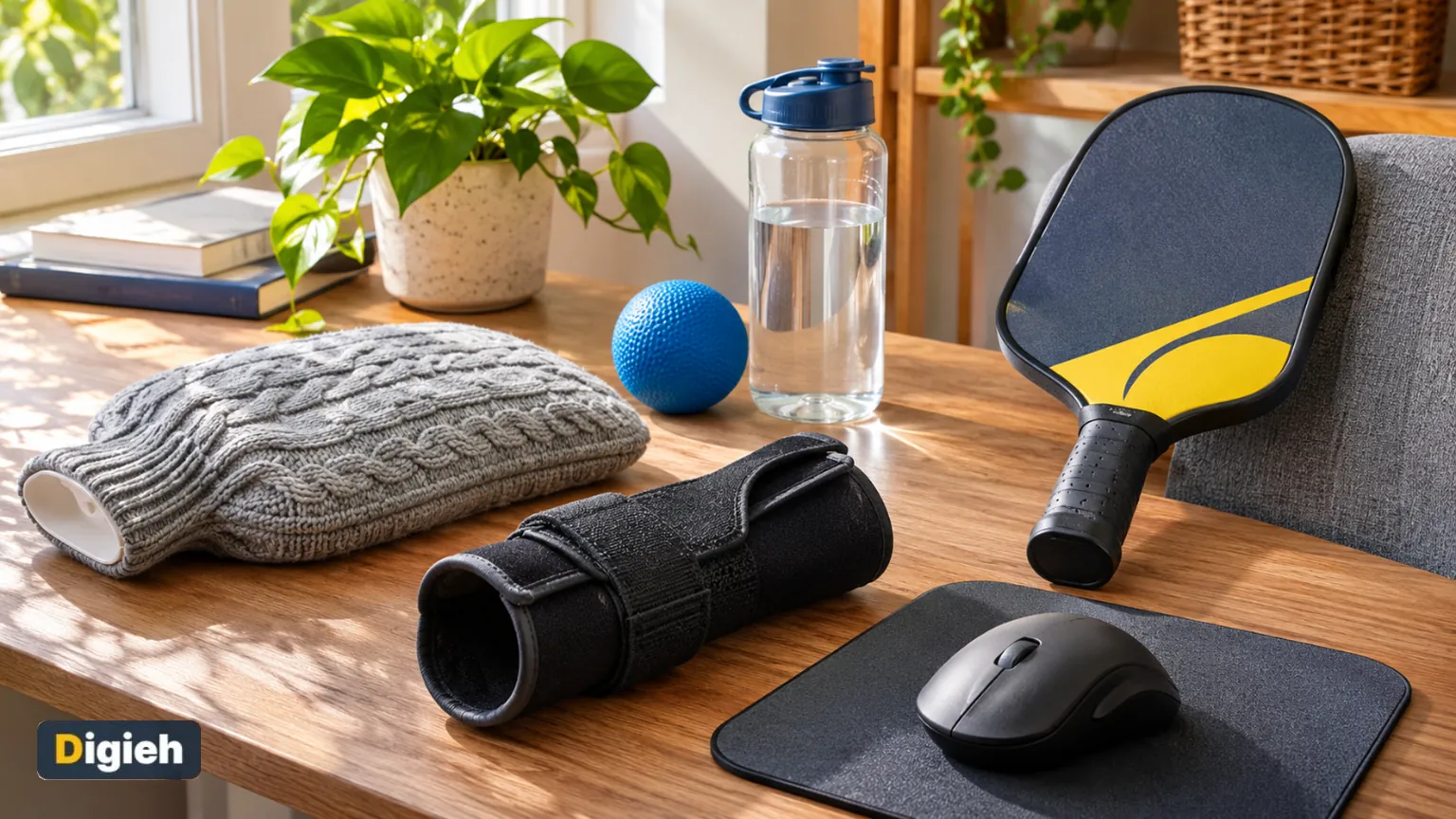
- Cut down on the activities that cause pain.
- Use paracetamol or an anti-inflammatory gel if they are safe for you.
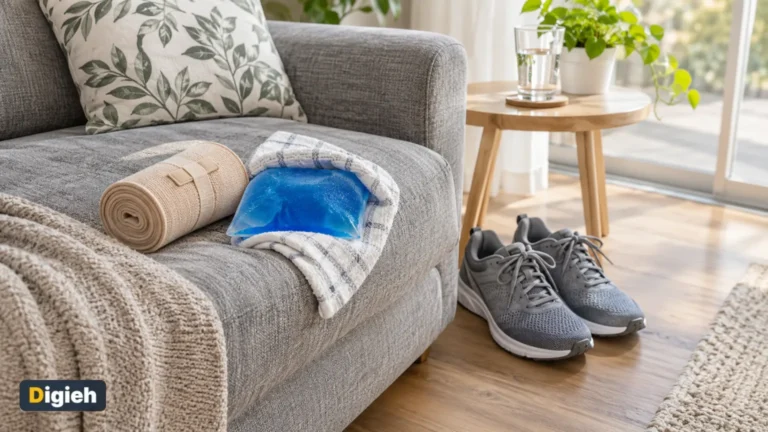
- Use a hot or cold pack wrapped in a towel for up to 20 minutes. Repeat every 2 to 3 hours.
- Do gentle bending and straightening exercises.
- Try a forearm strap or elbow brace from a pharmacy.
- Do not smoke or go near flames when using ibuprofen gel, which can catch fire.
These steps come from the National Health Service.
Try this today. Today, fit a forearm strap just below your elbow before a gripping task. Notice if it eases the pain.
Recovery Timeline
| Time | What to expect | What to do |
|---|---|---|
| First 2 weeks | Pain eases with rest | Rest, packs, strap, pain relief |
| 2 to 6 weeks | Slow improvement | See a doctor if no better after 2 weeks |
| 6 weeks and beyond | Most people improve | Physiotherapy with stretching and strengthening |
| 6 to 12 months | A few still have pain | Ask about other treatments or surgery |
Based on time points from the National Health Service, checked November 25, 2026. Recovery varies.
Free updates
Join the Digieh list
Be the first to know when our weekly brief launches.
No spam. Unsubscribe anytime. Read our Privacy Policy.
Everyday Swaps
| Instead of | Try |
|---|---|
| Gripping a mug by the handle | Holding it with both hands |
| Carrying bags with your palm down | Carrying with your palm up, or using a backpack |
| A small, hard mouse | A larger mouse and a wrist rest |
| Long DIY sessions | Short breaks every 20 to 30 minutes |
| Heavy one-handed lifting | Lifting with both hands close to your body |
Source: Digieh tips based on triggers listed by Mayo Clinic.
Lifting weights? Good form protects your elbows. See our strength training at home guide.
Gentle Exercises a Physiotherapist May Suggest
Exercises help the tendon heal and get stronger, but they should not cause sharp pain. A physiotherapist can show you the right moves and how much to do.
- Wrist stretches: gently stretching the forearm muscles with the arm straight.
- Grip work: squeezing a soft ball for short sets.
- Slow wrist lifts: lifting and lowering a very light weight with the palm down.
- Forearm turns: slowly rotating the forearm while holding a light object.
Start slowly and build up over weeks. Stop and check with a professional if pain gets worse. Steady effort over time matters more than doing a lot at once.
Tennis Elbow at Work
Many cases come from desk and manual jobs, not sport. Small changes to your setup and routine can protect your elbow.
- Keep your wrists straight when typing.
- Use tools with thicker, padded handles.
- Switch hands or tasks often.
- Take short breaks to stretch your forearms.
- Ask your employer about adjustments if your job involves heavy gripping.
Treatment Options
- Physiotherapy: massage, stretching and strengthening for the wrist and forearm.
- Anti-inflammatory tablets: a doctor may prescribe these for a short time.
- Injections: sometimes offered for stubborn pain, but relief may not last.
- Surgery: to remove damaged tendon tissue, considered after 6 to 12 months.
In many parts of the United Kingdom, you can refer yourself to physiotherapy. You do not need a doctor first, the National Health Service says.
Tingling in the fingers is a different problem. Read our guide to carpal tunnel syndrome.
When does the National Health Service suggest physiotherapy for tennis elbow?
- If no better after 6 weeks of home care
- On the first day
- Only after surgery
Physiotherapy is suggested if home treatment has not helped after 6 weeks.
When to Get Help
Get urgent care if your elbow is hot, red and swollen with a fever. Also get urgent care if it looks out of shape after a fall.
See a doctor if elbow pain continues after 2 weeks of rest and self-care, says the National Health Service.
Also see a doctor about numbness, tingling or weakness in the hand.
Questions to Ask Your Doctor
- Is this tennis elbow or another problem?
- Should I see a physiotherapist?
- Which brace or strap should I use?
- Which exercises are safe for me?
- Can I keep working or playing sport?
- Would an injection help?
- When should I think about surgery?
Frequently Asked Questions
How long does tennis elbow take to heal?
Many people improve in weeks to months, but some cases last over a year.
Can you get tennis elbow without playing tennis?
Yes. Most people who get it do not play tennis.
Should I wear a brace?
A forearm strap or brace can ease pain during activities.
Is heat or ice better?
Either can help. Use a wrapped pack for up to 20 minutes at a time.
Sources
Conclusion
Tennis elbow is common and usually gets better with time and simple care. Changing how you grip and lift helps it heal.
Next step: rest the elbow and try a strap for two weeks. See a doctor if it is not improving.
Editor’s Note
This article is accurate as of November 25, 2026. Facts come from the National Health Service, Mayo Clinic and MedlinePlus.
Spot an error in this article? Please contact us at support@digieh.com or read our Corrections Policy.
Keep exploring
Your next read is waiting
 1HealthIowa Lead Azide Blast: What Residents Should Know6 min read
 2Finance & MarketsUK Bank Transfer Scam Losses Jump 22 Percent4 min read
 3Pets & AnimalsCat Urinary Problems: Signs That Need Urgent Care7 min read
 4Parenting & FamilyFood Stamp Rule Could Change Free School Meals4 min read
 5Beauty & Personal CareDandruff vs Dry Scalp: Signs, Causes and Treatment7 min read
 6NewsThanksgiving Storm 2026: Where Travel Delays Are Likely4 min read
Found this useful?