TRENDING
Head Lice: Signs, Wet Combing, Treatment and Myths
Head lice and nits explained: signs, how they spread, wet combing steps, lotions that work, what does not, house cleaning, school rules and when to get help.

7 min read
Last updated November 25, 2026
Head lice are tiny insects that live in hair and spread mainly by head-to-head contact. They are common in children and are not a sign of dirty hair.
Wet combing with a fine-toothed comb or a pharmacy lotion clears most cases. Children do not need to stay off school.
Health note. This article is for general information only and is not medical advice. Read the pack and ask a pharmacist before using lice products on babies, during pregnancy or on broken skin.
Key Takeaways.
- Only live lice confirm an infestation, not nits alone.
- Lice crawl. They cannot jump, hop or fly.
- Pets do not get or spread human head lice.
- Wet combing on days 1, 5, 9 and 13 catches lice as eggs hatch.
- Treat everyone who has lice on the same day.
Jump to a section
- What head lice are
- Signs
- How they spread
- Lice, nits or dandruff?
- Official advice compared
- What should I do next?
- Wet combing step by step
- Lotions and sprays
- What does not work
- Cleaning the house
- School and nursery
- When to Get Help
- Questions to Ask Your Doctor
- Frequently Asked Questions
- Sources
- Conclusion
What Are Head Lice?
Head lice are small insects about the size of a sesame seed. They feed on blood from the scalp, explains the Centers for Disease Control and Prevention.
Their eggs are called nits. Nits stick firmly to hairs close to the scalp and look like tiny white or brown specks.
Lice do not spread disease, but the itching and scratching can be miserable.
Days 1, 5, 9 and 13The wet combing schedule from the National Health Service. A final check follows on day 17.
Signs of Head Lice
- Itching, especially behind the ears and at the back of the neck.
- A tickling feeling of something moving in the hair.
- Seeing live lice when combing.
- Nits stuck to hairs near the scalp.
- Scratch marks or sores on the scalp.
- Poor sleep and irritability in children.
Some people have no itching at all, especially the first time. That is according to the Centers for Disease Control and Prevention.
How Head Lice Spread
- Head-to-head contact, the main way, during play, sleepovers or selfies.
- Shared hats, scarves and hair clips, less often.
- Shared combs, brushes and towels, less often.
- Pillows or sofas just used by someone with lice, rarely.
Lice are unlikely to spread in swimming pools. Chlorine does not kill them either, the Centers for Disease Control and Prevention notes.
Lice, Nits or Dandruff?
| Sign | Live lice | Nits (eggs) | Dandruff flakes |
|---|---|---|---|
| What it looks like | Small grey-brown insects that move | Tiny ovals glued to the hair | White or yellow flakes |
| Where | Close to the scalp | On the hair shaft near the scalp | On the scalp and shoulders |
| Easy to brush off? | They crawl away from light | No, they stick firmly | Yes |
| Means active lice? | Yes | Not always | No |
| What to do | Treat now | Check for live lice | Use anti-dandruff shampoo |
Sources: Centers for Disease Control and Prevention and National Health Service, checked November 25, 2026.
Flakes but no lice? Read our guide to dandruff vs dry scalp. Thick, scaly patches may be scalp psoriasis instead.
Official Advice Compared
| Question | National Health Service (UK) | Centers for Disease Control and Prevention (US) |
|---|---|---|
| How to check | Wet combing with a detection comb | Fine-toothed comb and a magnifier |
| Treatment | Wet combing, or lotions and sprays | Over-the-counter or prescription products |
| Laundry | Does not need a hot wash | Hot wash items used in the 2 days before treatment |
| School | No need to stay off | Can finish the day and return after treatment |
| Prevention | No way to prevent, check regularly | Avoid head-to-head contact and sharing |
Sources: National Health Service and Centers for Disease Control and Prevention, checked November 25, 2026.
The two agencies differ on laundry. A hot wash of pillowcases and hats is a simple extra step if you want peace of mind.
What Should I Do Next?
Tap what you have found. The bars show the next step that fits best. This is a guide, not a diagnosis.
- I found live lice
- Only nits, no live lice
- Treatment did not work
- My child is under 6 months
- I am pregnant or breastfeeding
- Scalp sores look red, swollen or crusty
- Lice in eyebrows or eyelashes
Which treatment have you tried first?
- Wet combing
- Pharmacy lotion or spray
- Both
- Not sure
Wet Combing Step by Step
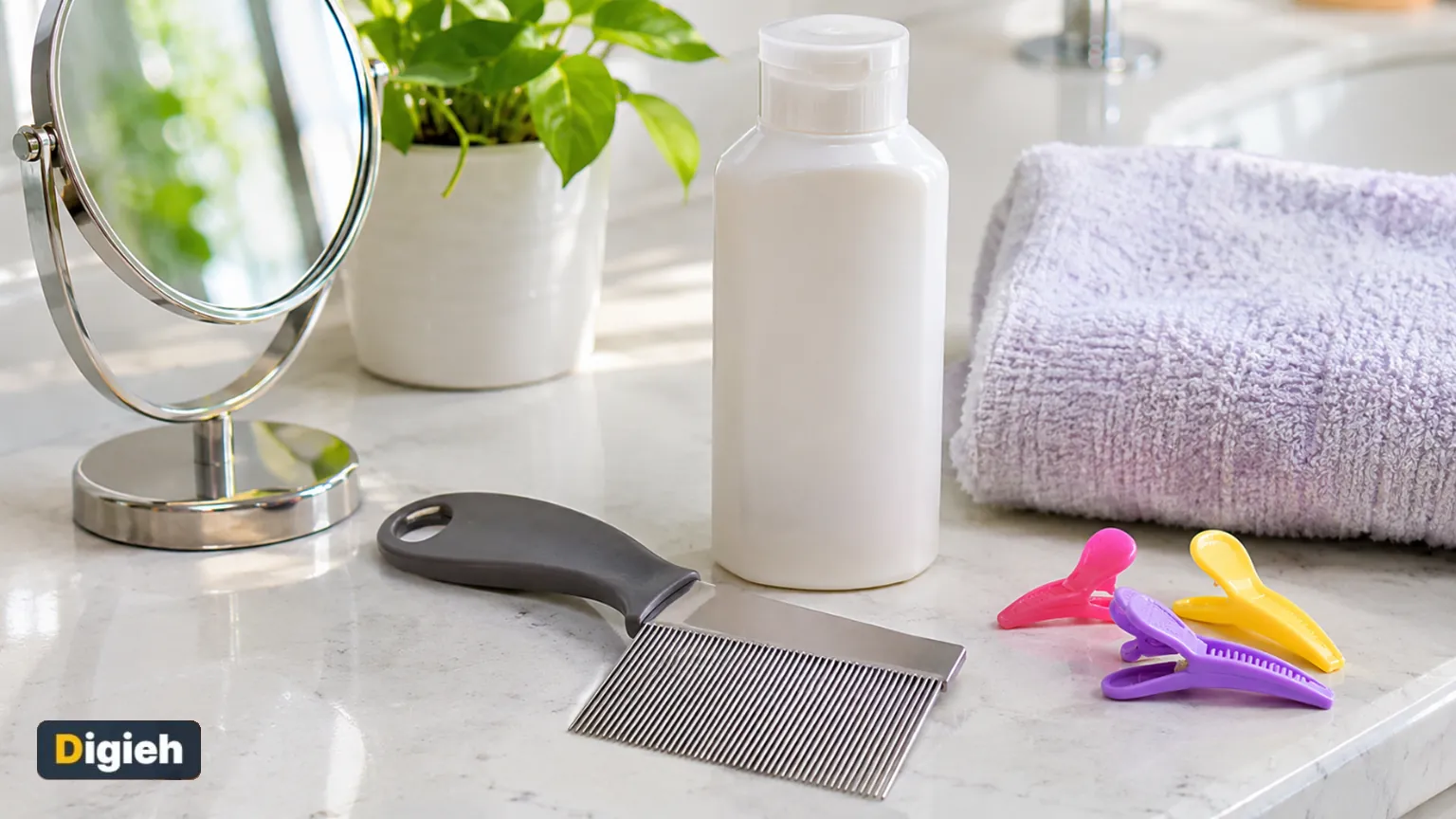
- Wash the hair with ordinary shampoo.
- Apply plenty of conditioner.
- Comb the whole head from roots to ends with a detection comb.
- Wipe the comb on a tissue after each stroke.
- Comb through a second time.
- Repeat on days 1, 5, 9 and 13.
- Check again on day 17.
Short hair takes about 10 minutes. Long, curly or frizzy hair takes 20 to 30 minutes, says the National Health Service.
Try this today. Put on a favourite show for your child during wet combing. It keeps them still and makes the long comb-through easier.
Lotions and Sprays
Use a medicated lotion or spray if wet combing has not worked or is not practical. They work on all hair types and are sold at pharmacies and supermarkets.
Lice should die within a day, but some products need repeating after a week. Always read the pack, the National Health Service advises.
- Check everyone at home on the same day.
- Treat only people with live lice.
- Follow the timing on the pack exactly.
- Comb out dead lice and eggs afterwards.
- Repeat if the pack says so.
Free updates
Join the Digieh list
Be the first to know when our weekly brief launches.
No spam. Unsubscribe anytime. Read our Privacy Policy.
What Does Not Work
The National Health Service says these are unlikely to work.
- Permethrin products.
- Head lice repellents.
- Electric combs.
- Plant oils such as tea tree, eucalyptus and lavender.
Do not use lice lotions to prevent lice. They can irritate the scalp.
Cleaning the House
You do not need a big clean. Lice cannot live long away from the scalp.
- Soak combs and brushes in hot water for 5 to 10 minutes.
- Wash pillowcases, hats and scarves used in the last 2 days.
- Seal items you cannot wash in a plastic bag for 2 weeks.
- Vacuum where the person sat or lay.
- Skip fumigant sprays and fogs.
Fogs are not needed and can be toxic, warns the Centers for Disease Control and Prevention.
Crusty, golden sores around the nose or mouth may be impetigo. See our guide to impetigo signs and treatment.
School and Nursery
Children do not need to stay off school, says the National Health Service. In the US, students can finish the day, start treatment and return to class.
Tell the school or nursery so other parents can check their children. Nits may remain for a while after treatment, but that does not mean lice are still alive.
Long, Thick or Curly Hair
Thick or curly hair takes longer to comb, but the same methods work. Section the hair with clips and comb one small section at a time.
Use lots of conditioner so the comb glides through. For general hair care tips, see our winter hair care guide.
How do head lice usually spread?
- Head-to-head contact
- Jumping between people
- From pets
Lice crawl and spread mainly through direct hair-to-hair contact. They cannot jump or fly, and pets do not carry them.
Myths About Head Lice
- Lice mean dirty hair. Lice live happily in clean hair.
- Lice jump. They only crawl.
- Pets spread them. Animals do not carry human head lice.
- Shaving the head is needed. Combing or lotion works without it.
When to Get Help
You do not usually need a doctor for head lice. Ask a pharmacist about other options if lotions or sprays have not worked, the National Health Service advises.
See a doctor if scalp sores look infected, with redness, swelling, crusting or pus. Also get advice for lice in eyebrows or eyelashes, or for a baby.
Questions to Ask Your Doctor
- Which product is safe for my child’s age?
- Is this product safe in pregnancy or while breastfeeding?
- Why did the first treatment not work?
- Are these scalp sores infected?
- Do other family members need treatment?
- How often should we check for lice?
Frequently Asked Questions
Can head lice live on pillows?
Only briefly. Lice need a human scalp to survive for long.
Do I need to treat the whole family?
Check everyone, but only treat people with live lice, all on the same day.
Can adults get head lice?
Yes. Parents often catch them from their children.
Can head lice be prevented?
Not fully. Regular wet combing catches them early.
Sources
- National Health Service: Head lice and nits
- Centers for Disease Control and Prevention: Head lice
- MedlinePlus: Head lice
Conclusion
Head lice are common, harmless and treatable. Patient wet combing or a pharmacy lotion clears most cases.
Next step: buy a detection comb and check everyone at home this week. Treat anyone with live lice on the same day.
Editor’s Note
This article is accurate as of November 25, 2026. Facts come from the National Health Service, the Centers for Disease Control and Prevention and MedlinePlus.
Spot an error in this article? Please contact us at support@digieh.com or read our Corrections Policy.
Keep exploring
Your next read is waiting
 1HealthIowa Lead Azide Blast: What Residents Should Know6 min read
 2Pets & AnimalsKennel Cough in Dogs: Signs, Treatment and Recovery7 min read
 3SportsPakistan Shaheens Crush Nepal, Reach Asia Cup Semis3 min read
 4Parenting & FamilyFood Stamp Rule Could Change Free School Meals4 min read
 5Finance & MarketsPetrol Price in Pakistan Today: Rs318 a Litre4 min read
 6Beauty & Personal CareDandruff vs Dry Scalp: Signs, Causes and Treatment7 min read
Found this useful?