TRENDING
Fungal Nail Infection: Signs, Treatment and Healing Time
Fungal nail infection explained: signs, causes, look-alike problems, pharmacy paints and tablets, how long healing really takes and how to stop it returning.

7 min read
Last updated November 25, 2026
A fungal nail infection makes a nail thick, brittle and yellow, white or brown. It usually affects toenails and often starts from athlete’s foot.
It is not serious, but it is slow to treat. Pharmacy nail paints work for mild cases, and tablets help stubborn ones. Expect treatment to take many months.
Health note. This article is for general information only and is not medical advice. If you have diabetes, get any foot problem checked early.
Key Takeaways.
- Fungal nail infections are common and usually affect toenails.
- The same fungus that causes athlete’s foot often spreads to the nails.
- Treatment often takes 9 to 12 months for toenails.
- The infection is clearing when healthy nail grows from the base.
- Nail problems from psoriasis or injury can look similar, so a check helps.
Jump to a section
- What a fungal nail infection is
- Signs
- Causes and risk factors
- Fungal nail or something else?
- Should I see a doctor?
- Treatment options
- How to use nail paint
- How long it takes
- Prevention
- When to Get Help
- Questions to Ask Your Doctor
- Frequently Asked Questions
- Sources
- Conclusion
What Is a Fungal Nail Infection?
Fungi are tiny germs that grow well in warm, damp places. When they get under a nail, they slowly damage it.
The medical name is onychomycosis. The fungus is usually the same one that causes athlete’s foot, the British Association of Dermatologists explains.
9 to 12 monthsTypical length of nail paint treatment for toenails, says Guy’s and St Thomas’ hospital.
Signs
- The nail turns white, yellow, green, brown or black.
- The nail becomes thick and hard to cut.
- The nail is brittle and breaks or crumbles.
- The nail lifts away from the skin underneath.
- The skin around it may be sore or itchy.
These signs come from the National Health Service. It often starts at the edge or tip and spreads back.
Causes and Risk Factors
| Risk factor | Why it raises the risk |
|---|---|
| Athlete’s foot | The fungus spreads from skin to nail |
| Hot, sweaty feet | Fungi grow in warm, damp places |
| Trainers worn for long periods | Feet stay hot and damp |
| Walking barefoot in public showers or pools | Easy contact with the fungus |
| Damaged nails | An injury lets fungus in |
| Diabetes or a weak immune system | The body fights infection less well |
| Older age | Nails grow slower and get thicker |
Sources: National Health Service and British Association of Dermatologists, checked November 25, 2026.
Treating athlete’s foot early helps stop it spreading to the nails. See our guide to athlete’s foot treatment.
Fungal Nail or Something Else?
Not every thick or discoloured nail is fungal. Antifungal treatment will not help these other problems.
| Problem | Clues |
|---|---|
| Fungal infection | Slow spread, crumbly, thick, often with athlete’s foot |
| Nail psoriasis | Small pits, oil-drop marks, psoriasis on the skin |
| Old injury | One nail only, after a knock or tight shoes |
| Bruise under the nail | Dark patch that grows out with the nail |
Source: British Association of Dermatologists, checked November 25, 2026.
A doctor may clip a small piece of nail and send it to a lab. This confirms the fungus before long treatment starts.
Should I See a Doctor?
Tap the signs you have. The bars show the best next step. This is a guide, not a diagnosis.
- One nail, mild change at the tip
- Pharmacy treatment has not worked
- Several nails affected
- Infection reaches the nail base
- I have diabetes
- Weak immune system
- Red, hot, swollen toe with fever
Which nails are affected for you?
- Toenails
- Fingernails
- Both
- Not sure
Treatment Options
| Option | Best for | Things to know |
|---|---|---|
| Antifungal nail paint | Mild, early infection at the tip | Applied once or twice a week for months |
| Antifungal tablets | Stubborn or widespread infection | From a doctor, may need blood tests |
| Nail softening kits | Thick nails before paint | Helps remove the damaged nail |
| Laser treatment | Some stubborn cases | Paid privately, limited proof of a lasting cure |
| No treatment | People not bothered by the look | It will not clear on its own |
Sources: National Health Service and British Association of Dermatologists, checked November 25, 2026.
Tablets work better than paints, but they are not right for everyone. Your doctor will check your liver health and other medicines first.
How to Use Nail Paint
- File down the surface of the infected nail.
- Clean it with the wipe in the pack.
- Paint the whole nail and a little skin around it.
- Let it dry fully.
- Use a fresh file each time and throw old files away.
- Repeat as the pack says until healthy nail grows from the base.
Keep going for 9 to 12 months for toenails, Guy’s and St Thomas’ hospital advises. Wash your hands after each use.
Try this today. Take a photo of your nail at the start and every month. Slow progress is easier to see in pictures.
How Long It Takes
Nails grow slowly, so treatment can only work as fast as new nail grows. This is why patience matters.
| Nail | Typical treatment time | First signs of progress |
|---|---|---|
| Fingernail | About 6 months | Around 2 months |
| Toenail | About 9 to 12 months, sometimes longer | Around 3 months |
Sources: Guy’s and St Thomas’ hospital and British Association of Dermatologists, checked November 25, 2026.
The infection is cured when you see healthy nail growing at the base, the National Health Service says. The old nail then grows out.
Free updates
Join the Digieh list
Be the first to know when our weekly brief launches.
No spam. Unsubscribe anytime. Read our Privacy Policy.
Do Home Remedies Work?
People try tea tree oil, vinegar soaks and other home remedies. There is little good proof that they cure nail fungus.
They are unlikely to cause harm for most people, but do not let them delay proper treatment. Stop if your skin gets sore or red.
Fingernail Infections
Fungal infections of the fingernails are less common than toenail ones. They can follow long hours with wet hands, such as cleaning or kitchen work.
Fingernails grow faster, so they are easier to treat. Wear cotton-lined gloves for wet work and dry your hands well afterwards.
If You Have Diabetes
Foot problems can become serious quickly with diabetes. See your doctor or foot specialist about any nail infection rather than treating it alone.
Check your feet every day for cuts, sores or colour changes. Learn more in our guide to type 2 diabetes symptoms.
Prevention
- Treat athlete’s foot as soon as you can.
- Keep your nails short and clean.
- Dry your feet well, especially between the toes.
- Change socks every day.
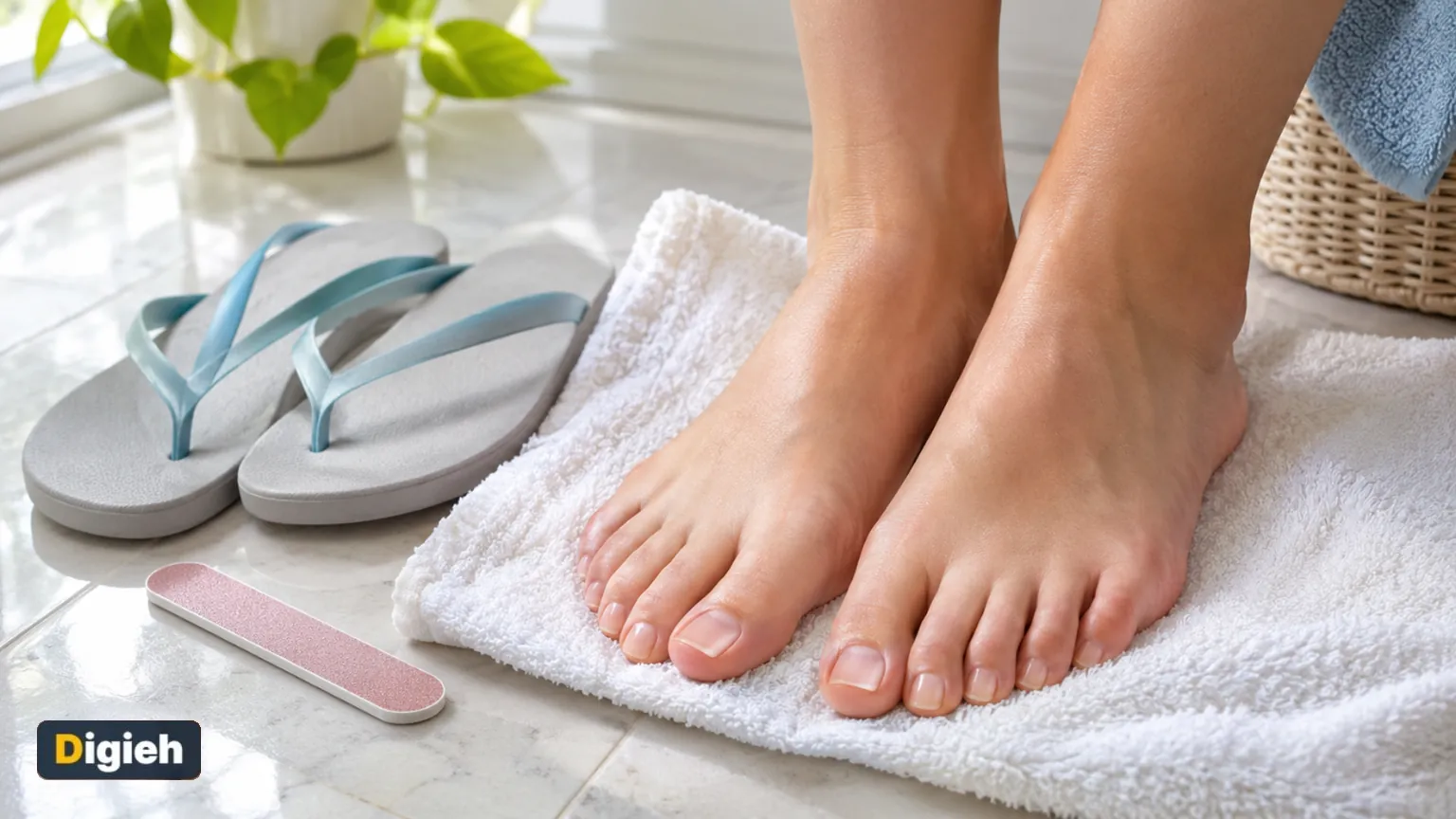
- Wear flip-flops in public showers and pools.
- Do not share towels, nail clippers or shoes.
- Choose shoes that let your feet breathe.
Shoes matter a lot. See our tips on choosing shoes that protect your toes.
Stopping It Coming Back
Fungal nail infections often return, especially on toes. Keep up good foot habits after treatment ends.
- Use an antifungal foot powder in shoes.
- Replace old trainers that may hold fungus.
- Keep treating any athlete’s foot quickly.
How do you know a fungal nail infection is clearing?
- The nail turns white
- Healthy nail grows from the base
- The nail falls off
Clear, healthy nail growing from the base shows the treatment is working.
Fungal Nail Myths
- It goes away by itself. Fungal nail infections rarely clear without treatment.
- Treatment works in weeks. It usually takes many months.
- Only dirty feet get it. Anyone can get it, especially with sweaty feet.
- Nail polish hides it safely. Regular polish can trap moisture, so ask your pharmacist first.
When to Get Help
See a doctor if the infection is severe and treatment has not worked. Also go if it has spread to other nails, the National Health Service advises.
Also see a doctor if you have diabetes or a weak immune system. Get urgent help for a red, hot, swollen toe with fever.
Questions to Ask Your Doctor
- Is this definitely a fungal infection?
- Should a nail sample be tested?
- Are tablets right for me?
- Do I need blood tests during treatment?
- How long should I keep treating?
- How can I stop it coming back?
Frequently Asked Questions
Is nail fungus contagious?
It can spread through shared towels, clippers and damp floors, but it is not highly contagious.
Can I wear nail polish?
Ask your pharmacist. Some treatments allow it, others do not.
Why does it keep coming back?
Fungus can linger in shoes and on skin. Treat athlete’s foot and keep feet dry.
Should I remove the nail?
Rarely. A doctor may suggest it for very painful or stubborn cases.
Sources
- National Health Service: Fungal nail infection
- Guy’s and St Thomas’ hospital: Fungal nail infections
- British Association of Dermatologists: Fungal nail infections leaflet
Conclusion
Fungal nail infections are common, harmless and slow. The right treatment works, but only as fast as your nail grows.
Next step: start a pharmacy nail paint early, treat any athlete’s foot and keep feet dry. See a doctor if it spreads or you have diabetes.
Editor’s Note
This article is accurate as of November 25, 2026. Facts come from the National Health Service, Guy’s and St Thomas’ hospital and the British Association of Dermatologists.
Spot an error in this article? Please contact us at support@digieh.com or read our Corrections Policy.
Keep exploring
Your next read is waiting
 1HealthStye on the Eyelid: Causes, Treatment and Prevention7 min read
 2Beauty & Personal CareDandruff vs Dry Scalp: Signs, Causes and Treatment7 min read
 3Pets & AnimalsFleas on Dogs and Cats: Treatment and Prevention7 min read
 4HealthBunions: Causes, Pain Relief and When Surgery Helps7 min read
 5HealthRestless Legs Syndrome: Symptoms, Causes and Night Relief7 min read
 6HealthBell’s Palsy: Signs, Stroke Check, Treatment and Recovery7 min read
Found this useful?