TRENDING
Ingrown Toenail: Home Care, Prevention and Warning Signs
Ingrown toenail explained: symptoms, causes, a do and do not list, step-by-step home care, how to trim nails, diabetes warnings and when to see a doctor.

7 min read
Last updated November 25, 2026
An ingrown toenail happens when the edge of the nail grows into the skin. It usually affects the big toe. Warm salt water soaks, roomy shoes and letting the nail grow out help most mild cases.
See a doctor if there is pus, spreading redness or a fever, or if you have diabetes.
Health note. This article is for general information only and is not medical advice. People with diabetes or poor circulation should not treat foot problems at home without advice.
Key Takeaways.
- Cutting nails too short or rounding the corners is a common cause.
- Tight or pointed shoes squeeze the toes and push the nail into the skin.
- Teenagers get them more often because sweaty feet soften the nail and skin.
- Do not cut or dig out the nail yourself, the National Health Service advises.
- Cut toenails straight across, level with the tip of the toe.
Jump to a section
- What it is
- Symptoms
- Causes and risk factors
- Do and do not
- Official advice compared
- Should I see a doctor?
- Home care step by step
- How to trim toenails
- If you have diabetes
- Treatment
- When to Get Help
- Questions to Ask Your Doctor
- Frequently Asked Questions
- Sources
- Conclusion
What Is an Ingrown Toenail?
The side or corner of the nail digs into the soft skin next to it. The skin becomes red, sore and swollen, and it can get infected.
It most often affects the big toe, but any toe can be affected, says the National Health Service.
Straight acrossThe right way to cut toenails to help prevent them growing in, according to Mayo Clinic.
Symptoms
- Pain and tenderness along the side of the nail.
- Red, swollen skin.
- The nail edge curving into the skin.
- Signs of infection: pus, warmth, spreading redness, or feeling hot and shivery.
Causes and Risk Factors
- Cutting nails too short or rounding the corners.
- Tight or pointed shoes that crowd the toes.
- Toe injuries, such as stubbing or dropping something on the toe.
- Very curved nails or nail infections.
- Sweaty feet, common in teenagers.
- Running and kicking sports.
- Diabetes or poor circulation.
These come from Mayo Clinic and the National Health Service.
Do and Do Not
| Do | Do not |
|---|---|
| Soak the foot in warm salt water | Cut a V or dig out the nail edge |
| Dry the foot well afterwards | Pick at the toe or nail |
| Wear roomy shoes or open sandals | Wear tight or pointed shoes |
| Use paracetamol or ibuprofen for pain | Use sharp tools on an infected toe |
| Let the nail grow out | Cut the nail shorter to relieve pain |
Source: National Health Service, checked November 25, 2026.
Official Advice Compared
| Question | National Health Service (UK) | Mayo Clinic (US) |
|---|---|---|
| Home care | Warm salt water soaks, roomy shoes, pain relief | Treat at home if mild |
| Cutting the nail | Do not, let it grow out | Trim straight across in future |
| See a doctor | Pus, fever, home care not working, diabetes | Severe pain, pus, spreading redness, diabetes |
| Treatment | Antibiotics, part or all of nail removed by a foot specialist | Lifting or partly removing the nail |
Sources: National Health Service and Mayo Clinic, checked November 25, 2026.
Should I See a Doctor?
Tap the signs you have. The bars show the level of care that fits best. This is a guide, not a diagnosis.
- Mild soreness at the nail edge
- Not better after a week of home care
- Pus around the nail
- Redness spreading up the toe or foot
- Fever or feeling hot and shivery
- I have diabetes or poor circulation
- It keeps coming back
What do you think caused your ingrown toenail?
- Cutting nails too short
- Tight shoes
- A toe injury
- Not sure
Home Care Step by Step
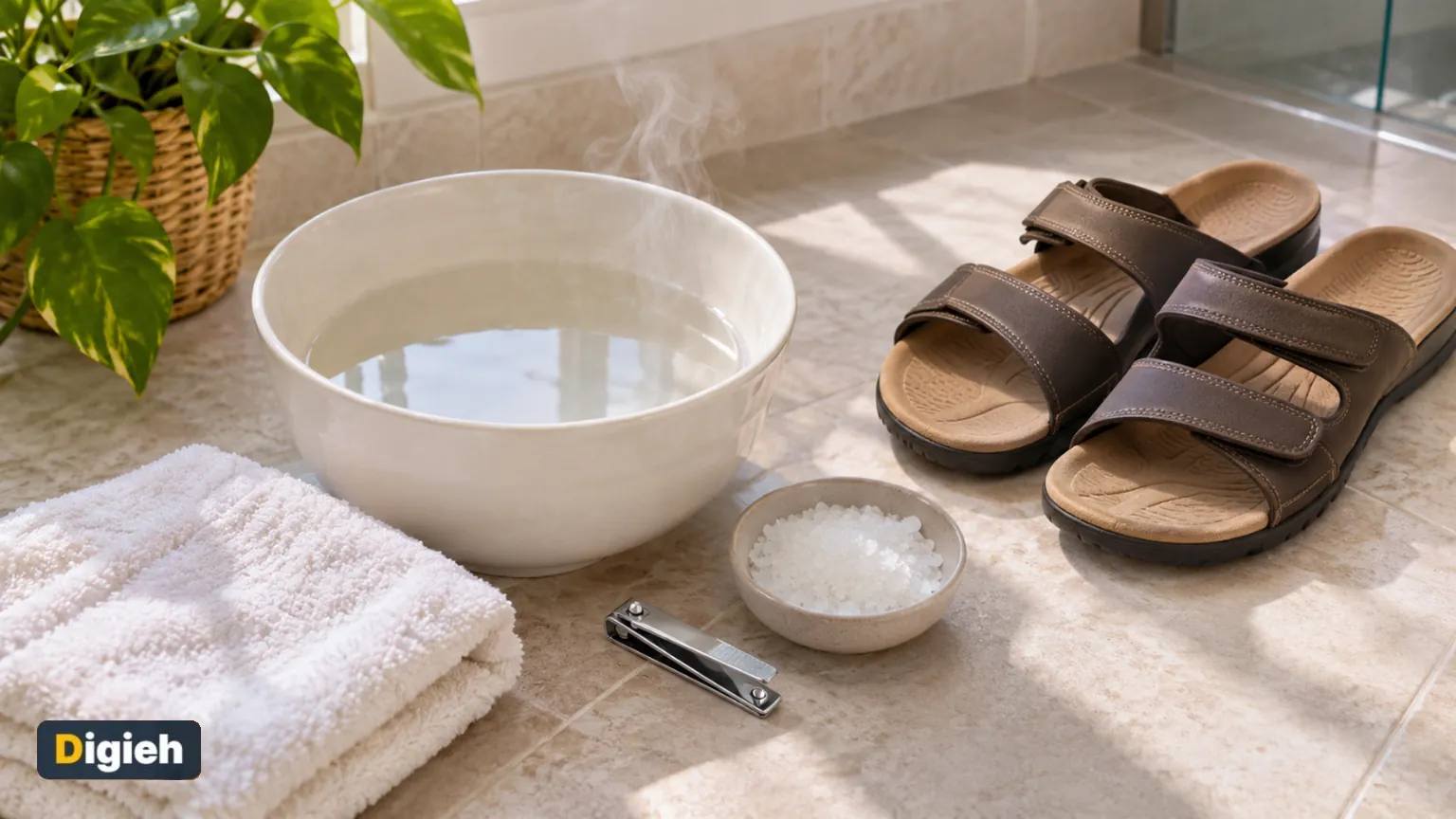
- Soak your foot in warm salt water for 10 to 15 minutes, a few times a day.
- Dry your foot completely, especially between the toes.
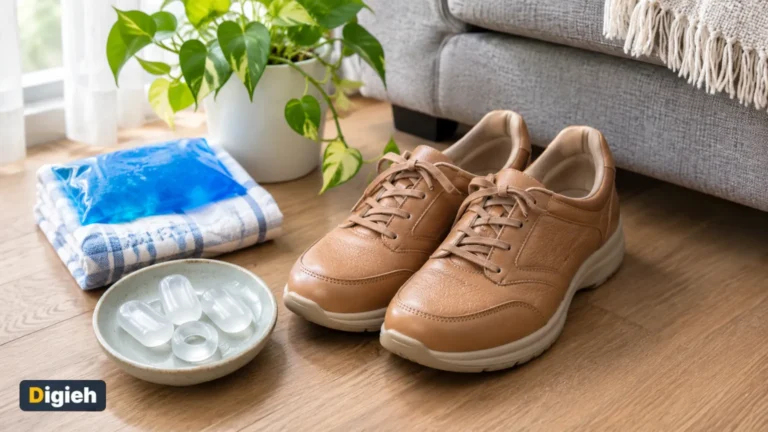
- Wear wide shoes or sandals so nothing presses on the toe.
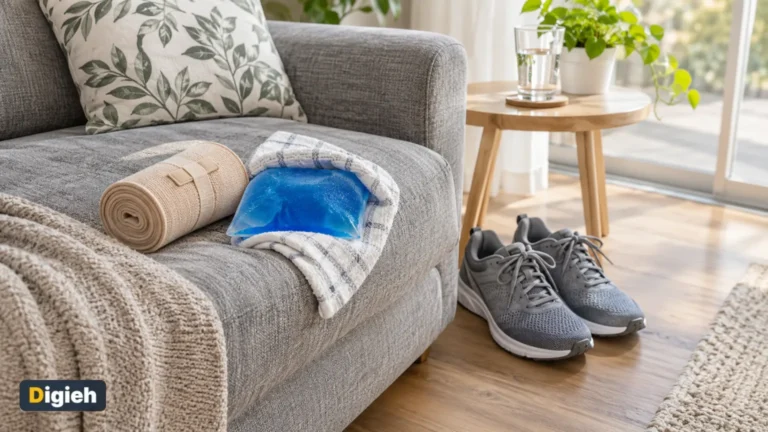
- Take paracetamol or ibuprofen if needed and safe for you.
- Keep the area clean and covered with a loose dressing if it rubs.
- Let the nail grow out past the edge of the toe.
These steps follow the National Health Service advice. Some people place a small piece of clean cotton under the nail edge. Ask a pharmacist first, and stop if it hurts.
Try this today. Tonight, soak your foot in warm salt water for 15 minutes. Then dry it well.
How to Trim Toenails the Right Way
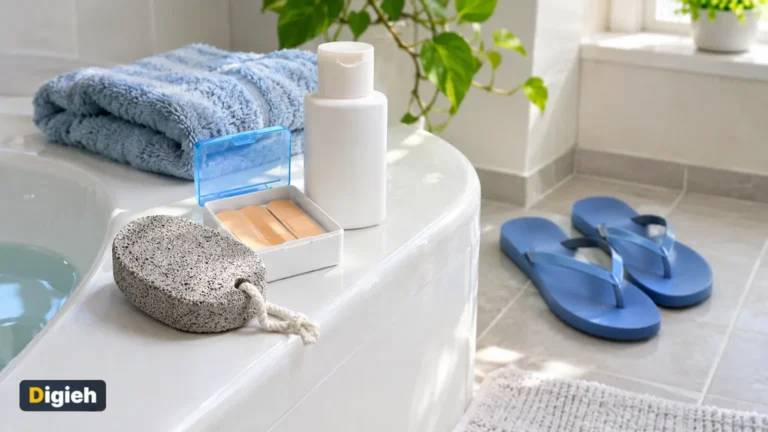
- Use clean, sharp nail clippers.
- Trim after a bath, when nails are softer.
- Cut straight across.
- Keep nails level with the tips of your toes.
- Do not round the corners or cut down the sides.
- File any sharp edges gently.
These tips come from Mayo Clinic. For general nail care, see our winter nail care guide.
If You Have Diabetes
Diabetes can reduce blood flow and feeling in the feet. Small foot injuries can heal slowly and become infected, warns Mayo Clinic.
- Check your feet every day for cuts, redness or swelling.
- Do not treat an ingrown toenail at home without advice.
- See a doctor or foot specialist promptly.
- Ask about regular nail trimming by a foot specialist.
Learn more in our guide to type 2 diabetes symptoms.
A hard, painful spot on the sole may be a verruca instead. Learn more in our warts and verrucas guide.
Free updates
Join the Digieh list
Be the first to know when our weekly brief launches.
No spam. Unsubscribe anytime. Read our Privacy Policy.
Treatment
- Antibiotics: if the toe is infected.
- Partial nail removal: a foot specialist numbs the toe and removes the ingrown edge.
- Full nail removal: for severe or repeat cases.
- Stopping regrowth: sometimes the nail root at the edge is treated so it does not grow back inward.
A doctor may refer you to a podiatrist, a foot specialist, says the National Health Service. The toe is numbed with an injection first.
Dry, cracked skin on your feet can also cause pain. See our guide to fixing dry, cracked heels.
Ingrown Toenails in Teenagers
Teenagers get ingrown toenails often. Feet sweat more during the teen years, which softens the nail and the skin around it. Growth spurts can also mean shoes become too tight quickly, so check fit every few months.
Sports with a lot of running or kicking, tight football boots and cutting nails too short add to the risk. Teach teens to trim straight across and change out of sweaty socks.
Damp shoes also help fungus grow. Learn how to treat and prevent athlete’s foot.
Choosing Shoes That Protect Your Toes
Shoes are one of the biggest causes and one of the easiest fixes. Your toes should be able to wiggle freely.
- Leave about a thumb’s width between your longest toe and the end of the shoe.
- Choose a wide, rounded toe box.
- Shop for shoes later in the day, when feet are slightly larger.
- Avoid high heels that push the toes forward.
- Replace worn shoes that have lost their shape.
Runners need extra toe room too. See our guide to choosing running shoes.
Preventing It From Coming Back
- Trim nails straight across and not too short.
- Wear shoes with enough room for your toes.
- Wear protective footwear for heavy work or sport.
- Keep feet clean and dry.
- Change socks daily, or more often if feet sweat.
How should you cut your toenails to prevent ingrown nails?
- Straight across
- Rounded at the corners
- As short as possible
Cutting straight across and not too short helps stop the nail edge growing into the skin.
When to Get Help
Get urgent care if redness is spreading up the foot. A high temperature or feeling hot and shivery is urgent too. These can be signs of a spreading infection.
See a doctor if home treatment is not working or there is pus, the National Health Service advises. Always get advice quickly if you have diabetes.
Questions to Ask Your Doctor
- Is my toe infected?
- Do I need antibiotics?
- Should I see a foot specialist?
- Would part of the nail need to be removed?
- How do I care for it after treatment?
- How can I stop it coming back?
- How often should I check my feet?
Frequently Asked Questions
Can an ingrown toenail heal on its own?
Mild ones often improve with soaks, roomy shoes and time as the nail grows out.
Should I cut out an ingrown toenail?
No. Cutting or digging at it can make it worse and cause infection.
How long does it take to heal?
Mild cases often improve within a week or two of good care.
Is an ingrown toenail serious?
Usually not, but infection or diabetes can make it serious.
Sources
Conclusion
Ingrown toenails are painful but usually easy to treat and prevent. Good trimming and roomy shoes make the biggest difference.
Next step: soak your toe tonight and switch to looser shoes until it heals. See a doctor if it is not better in a week.
Editor’s Note
This article is accurate as of November 25, 2026. Facts come from the National Health Service, Mayo Clinic and MedlinePlus.
Spot an error in this article? Please contact us at support@digieh.com or read our Corrections Policy.
Keep exploring
Your next read is waiting
 1HealthAdult Acne: Causes, Hormone Triggers and Best Treatments7 min read
 2AI & TechChatGPT Classic Is Retiring: How to Switch Apps4 min read
 3NewsThanksgiving Storm 2026: Where Travel Delays Are Likely4 min read
 4Parenting & FamilyFood Stamp Rule Could Change Free School Meals4 min read
 5Pets & AnimalsCat Urinary Problems: Signs That Need Urgent Care7 min read
 6Finance & MarketsUK Bank Transfer Scam Losses Jump 22 Percent4 min read
Found this useful?