TRENDING
Chilblains: Causes, Treatment and How to Prevent Them
Chilblains explained: itchy red patches on toes and fingers, why cold skin warming too fast causes them, home treatment, prevention and when to see a doctor.

7 min read
Last updated November 25, 2026
Chilblains are small, itchy, red or purple patches on the toes and fingers. They appear after you have been in the cold. They happen when cold skin warms up too quickly.
Most clear on their own within one to three weeks. Keeping feet and hands warm, and warming up slowly, is the best way to treat and prevent them.
Health note. This article is for general information only and is not medical advice. If you have diabetes, get any foot sore checked early.
Key Takeaways.
- Chilblains usually appear hours after being in the cold.
- Warming cold skin too fast, such as by a heater, is a common trigger.
- Most heal within one to three weeks without treatment.
- Do not scratch them, as broken skin can get infected.
- Chilblains are not frostbite, which is far more serious.
Jump to a section
- What chilblains are
- Symptoms
- Causes and risk factors
- Chilblains, frostbite and Raynaud’s
- Should I see a doctor?
- How to treat chilblains
- Things to avoid
- Prevention
- Socks and shoes
- When to Get Help
- Questions to Ask Your Doctor
- Frequently Asked Questions
- Sources
- Conclusion
What Are Chilblains?
When your skin gets cold, the small blood vessels near the surface narrow. If the skin then warms up quickly, these vessels can leak fluid into nearby tissue.
This causes swelling, itching and redness. Chilblains are also called pernio, notes healthdirect Australia.
1 to 3 weeksUsual healing time for chilblains, says healthdirect Australia.
Symptoms
- Small red, purple or dark blue patches.
- Itching that gets worse in a warm room.
- A burning or hot feeling.
- Swelling and tenderness.
- Blisters in some cases.
- Dry, cracked skin as they heal.
Symptoms usually start 12 to 24 hours after cold, says Oxford Health, a UK health service trust. They most often affect toes, fingers, heels, ears and the nose.
Causes and Risk Factors
| Risk factor | Why it raises the risk |
|---|---|
| Cold, damp weather | Skin cools quickly |
| Warming up too fast | Hot water bottles, heaters or hot baths on cold skin |
| Tight shoes | Pressure cuts blood flow to the toes |
| Poor circulation | Blood vessels respond badly to cold |
| Smoking | Nicotine narrows blood vessels |
| Low body weight | Less insulation from the cold |
| Older age or diabetes | Slower blood flow and healing |
Sources: National Health Service and Oxford Health, checked November 25, 2026.
For more on fingers that turn white in the cold, see our guide to Raynaud’s.
Chilblains, Frostbite and Raynaud’s
These three cold-related problems are often confused. They need different care.
| Condition | What happens | How serious |
|---|---|---|
| Chilblains | Itchy red or purple patches hours after cold | Mild, heals on its own |
| Frostbite | Skin and tissue freeze, turning white, grey or black | Serious, needs urgent care |
| Raynaud’s | Fingers turn white then blue then red in the cold, for minutes | Usually mild, see a doctor if new |
Sources: healthdirect Australia and National Health Service, checked November 25, 2026.
Learn the warning signs in our guide to frostbite and hypothermia.
Should I See a Doctor?
Tap the signs you have. The bars show the best next step. This is a guide, not a diagnosis.
- A few itchy patches after the cold
- Very itchy and hard to sleep
- Not better after 2 weeks
- Keep coming back every winter
- Skin broken or blistered
- Signs of infection like pus or spreading redness
- I have diabetes
- Patches in warm weather too
Where do you usually get chilblains?
- Toes
- Fingers
- Heels or ears
- Not sure
How to Treat Chilblains
- Warm the area slowly at room temperature.
- Keep it dry and covered.
- Use a soothing lotion like calamine or witch hazel for itching.
- Ask a pharmacist about creams for itching.
- Cover broken skin with a clean, dry dressing.
- Rest your feet up if they are swollen.
These steps follow National Health Service advice. A doctor may sometimes prescribe a medicine that widens blood vessels.
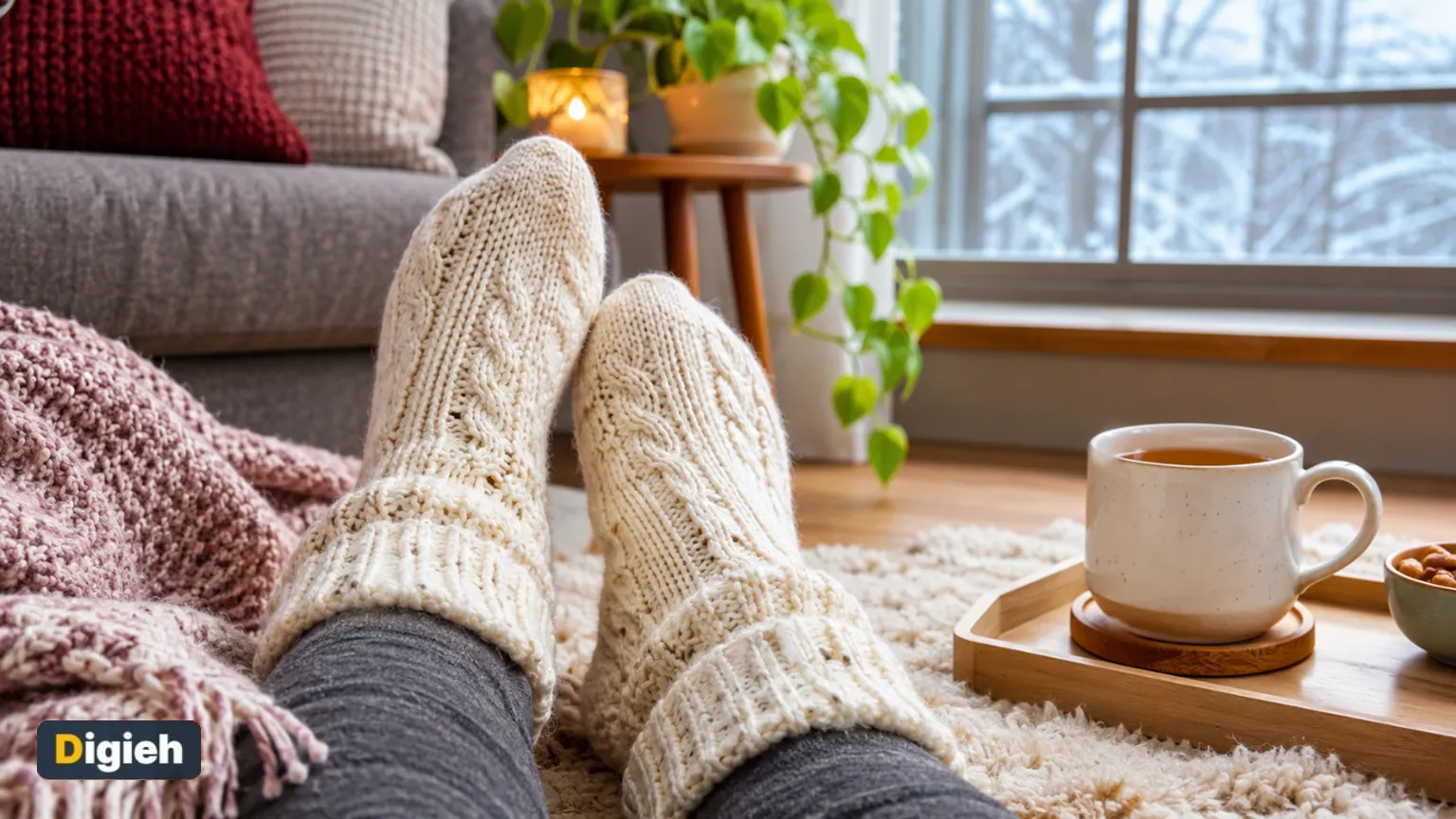
Try this today. After coming in from the cold, wait a few minutes before going near a heater. Let your feet warm up gradually in socks first.
Things to Avoid
- Do not scratch, as the skin breaks easily.
- Do not use hot water bottles on cold feet.
- Do not put cold hands or feet straight into hot water.
- Do not rub or massage the patches hard.
- Do not smoke.
Scratched or broken skin can become infected, warns Oxford Health.
Prevention
There is little proof that medical treatments work well, so prevention matters most, Oxford Health notes.
- Wear gloves, warm socks and a hat in cold weather.
- Keep your whole body warm, not just hands and feet.
- Wear bed socks on cold nights.
- Keep moving to boost blood flow.
- Dry your feet well after washing.
- Stop smoking.
- Eat at least one hot meal a day in winter.
Layers help keep your core warm. See our guide to layering clothes for cold weather.
Socks and Shoes
| Choose | Avoid |
|---|---|
| Warm wool or thermal socks | Thin cotton socks that stay damp |
| Roomy, lined boots | Tight shoes that squeeze toes |
| Waterproof footwear | Wet shoes and socks |
| A spare pair of dry socks | Going barefoot on cold floors |
Source: general advice from Oxford Health, checked November 25, 2026.
For more help, see our guide to choosing winter boots.
Free updates
Join the Digieh list
Be the first to know when our weekly brief launches.
No spam. Unsubscribe anytime. Read our Privacy Policy.
Why Chilblains Itch More at Night
Many people notice chilblains itch most in the evening. Coming indoors to a warm house and getting into a warm bed both speed up blood flow to the skin.
- Keep the bedroom comfortably warm, not hot.
- Wear loose bed socks instead of using a hot water bottle.
- Apply a soothing lotion before bed.
- Keep nails short so scratching in your sleep does less harm.
Chilblains at Work
People who work outdoors or in cold warehouses get chilblains often. Take warm breaks indoors, change into dry socks at lunch and keep spare gloves nearby.
Moving around often keeps blood flowing to your hands and feet. Even short walks and toe wiggles help when you stand in one place for long.
Chilblains on the Fingers
Fingers can get chilblains after outdoor work, cycling or holding cold drinks. Wear warm gloves and warm your hands slowly under lukewarm, not hot, water.
Chilblains in Older Adults
Older people often have slower blood flow and may feel the cold less. Keep the home warm, wear layers indoors and check feet daily for patches or sores.
Chilblains in Children
Children who play outside in the cold and come in with wet socks can get chilblains. Their skin often heals quickly once they stay warm and dry.
- Dress children in layers with a hat and gloves.
- Change wet socks and gloves as soon as they come in.
- Let cold hands and feet warm up slowly.
- Check toes for red patches after snowy days.
If a child gets chilblains often, mention it to their doctor so other causes can be ruled out.
If You Have Diabetes
Diabetes can reduce feeling and slow healing in the feet. A small chilblain sore can become a bigger problem.
See your doctor or foot specialist about any broken skin. Learn more in our guide to type 2 diabetes symptoms.
What is the best way to warm cold feet?
- Put them in hot water
- Warm them slowly at room temperature
- Hold them near a heater
Warming slowly helps blood vessels adjust and lowers the chance of chilblains.
Chilblain Myths
- Heat fixes them fast. Fast heat is a main cause, so warm up slowly.
- They are a sign of frostbite. They are a much milder problem.
- Only old people get them. Anyone can, including children and young adults.
- Rubbing helps. Rubbing can damage the skin.
When to Get Help
See a doctor if chilblains do not improve after two weeks or keep coming back. Also go if the skin looks infected, the National Health Service advises.
Also see a doctor if you have diabetes. Patches in warm weather may point to another condition, so get those checked too.
Questions to Ask Your Doctor
- Are these definitely chilblains?
- Could poor circulation be the cause?
- Do I need any tests?
- Is there a medicine that could help?
- How should I care for broken skin?
- How can I stop them coming back?
Frequently Asked Questions
How long do chilblains last?
Usually one to three weeks if you keep warm.
Should I put heat on chilblains?
Gentle warmth is fine, but avoid direct heat like hot water bottles or heaters.
Are chilblains a sign of poor circulation?
They can be. Frequent or severe chilblains are worth discussing with a doctor.
Can children get chilblains?
Yes. Keep their hands and feet warm and dry in winter.
Sources
- National Health Service: Chilblains
- healthdirect Australia: Chilblains
- Oxford Health: Chilblains leaflet
Conclusion
Chilblains are uncomfortable but usually harmless, and they heal once you stay warm. Slow warming is the key habit to learn.
Next step: wear warm socks and gloves and skip the hot water bottle on cold feet. See a doctor if patches last beyond two weeks.
Editor’s Note
This article is accurate as of November 25, 2026. Facts come from the National Health Service, healthdirect Australia and the UK health service trust Oxford Health.
Spot an error in this article? Please contact us at support@digieh.com or read our Corrections Policy.
Keep exploring
Your next read is waiting
 1HealthVaricose Veins: Causes, Symptoms, Treatment and Relief Tips7 min read
 2Beauty & Personal CareDandruff vs Dry Scalp: Signs, Causes and Treatment7 min read
 3Pets & AnimalsFleas on Dogs and Cats: Treatment and Prevention7 min read
 4HealthKnee Pain: Common Causes, Relief and Warning Signs7 min read
 5HealthRaynaud’s: Cold Fingers, Triggers and When to Worry7 min read
 6HealthPinched Nerve in the Neck: Symptoms and Relief7 min read
Found this useful?