TRENDING
Holiday Fire Safety: Simple Tips to Protect Your Home

8 min read
Last updated November 6, 2026
To keep your home safe from fire during the holidays, never leave cooking, candles or space heaters unattended. Water your Christmas tree daily and keep it at least 3 feet from heat sources. Check light strands for damage, and test your smoke alarms before guests arrive.
Holiday cooking, decorations and heating all raise fire risk at this time of year. These simple habits can protect your family and home.
If a fire starts, get everyone out and call 911. Do not go back inside for belongings.
Key Takeaways
- Stay in the kitchen while you fry, grill or broil food.
- Keep candles away from anything that can burn.
- Water real trees every day and keep them away from heat.
- Turn off decorative lights before bed or leaving home.
- Test smoke alarms and plan two ways out of every room.
On This Page
- Kitchen Fire Safety
- Candle Safety
- Christmas Tree and Lights Safety
- Heating Safety
- Smoke Alarms and Escape Plans
- Why Fire Risk Rises in Winter
- Use Electrical Decorations Safely
- Avoid Overloaded Outlets
- Fireplace and Wood Stove Safety
- Carbon Monoxide Safety
- Know How to Use a Fire Extinguisher
- Plan Safe Holiday Gatherings
- Protect Kids and Pets
- After the Holidays
- What to Do If a Fire Starts
Kitchen Fire Safety
Cooking is a leading cause of home fires, especially on big holiday cooking days. Stay in the kitchen when you fry, grill or broil.
Keep towels, oven mitts and paper away from the stovetop. If a small grease fire starts, slide a lid over the pan and turn off the burner. Never pour water on a grease fire.
3 feetKeep trees, decorations and anything that can burn at least this far from heat sources.
Candle Safety
Keep candles at least 12 inches from anything that can burn. Place them on sturdy holders out of reach of kids and pets.
The National Fire Protection Association (NFPA) shares candle safety tips.
Blow out candles before you leave a room. Battery-operated candles are a safer choice.
Quick tip. Set a phone timer whenever you cook or light a candle. It reminds you to check back.
Christmas Tree and Lights Safety
The Federal Emergency Management Agency (FEMA) shares holiday fire safety tips for trees and decorations.
- Choose a fresh tree with green needles that do not fall off easily.
- Water it every day.
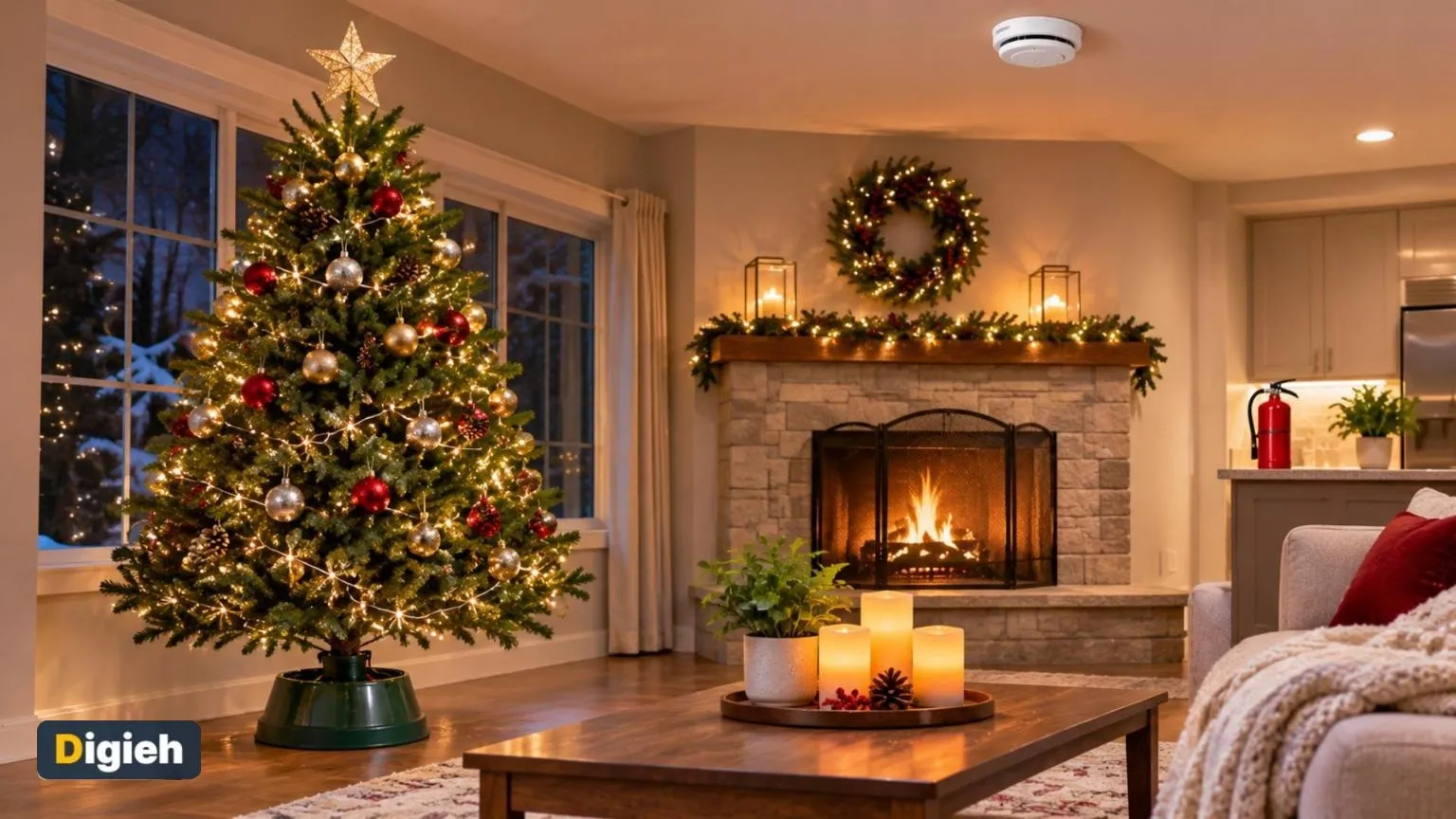
- Keep it at least 3 feet from fireplaces, radiators, candles and heat vents.
- Check lights for frayed wires or broken bulbs.
- Turn off lights before bed or when you leave.
When did you last test your smoke alarms?
- This month
- This year
- Over a year ago
- I am not sure
Heating Safety
Keep anything that can burn at least 3 feet from space heaters and fireplaces. Plug space heaters directly into a wall outlet, not an extension cord.
The Centers for Disease Control and Prevention (CDC) shares a furnace safety fact sheet.
Have your chimney and furnace checked once a year.
Use this calculator to check your home’s fire readiness.
Holiday fire readiness check
Good to know. Keep a fire extinguisher in the kitchen and learn how to use it before you need it.
Smoke Alarms and Escape Plans
Test smoke alarms every month. Replace batteries as needed, and replace alarms that are 10 years old.
The United States Fire Administration explains how to prevent home fires.
Make an escape plan with two ways out of each room. Practice it with your family.
| Item | How often |
|---|---|
| Test smoke alarms | Monthly |
| Water the tree | Daily |
| Check lights | Before hanging |
| Practice escape plan | Twice a year |
- Test smoke alarms
- Water the tree daily
- Check light strands
- Stay in the kitchen while cooking
- Keep candles 12 inches from anything that burns
- Practice an escape plan
Add to calendar
Why Fire Risk Rises in Winter
Home fires become more common during the colder months. Several holiday habits add to the risk.
| Risk | Why It Matters |
|---|---|
| Holiday cooking | Busy kitchens and distracted cooks |
| Space heaters | Placed too close to furniture or bedding |
| Candles | Left burning near decorations |
| Dry trees | Burn very quickly once lit |
| Overloaded outlets | Extra lights and devices on one circuit |
| Fireplaces | Sparks and creosote buildup in chimneys |
Knowing the risks helps you plan ahead. Most home fires are preventable with simple habits.
Use Electrical Decorations Safely
Holiday lights and inflatables add cheer but also draw power. Check them each year.
- Use lights tested by a recognized safety lab.
- Inspect cords for frayed wires and loose bulbs.
- Use outdoor-rated lights and cords outside.
- Do not connect too many strands end to end.
- Avoid running cords under rugs, where they can overheat.
Follow the maker’s directions for how many strands you can connect safely. The label usually lists this limit.
Avoid Overloaded Outlets
Plugging too many devices into one outlet can cause overheating. Spread decorations across different outlets.
Use power strips with built-in surge protection. Never plug one power strip into another.
If an outlet or plug feels hot, unplug it right away. Call an electrician if the problem continues.
Fireplace and Wood Stove Safety
A crackling fire feels cozy, but it needs care. Follow these steps.
- Have your chimney inspected and cleaned before the season.
- Use a sturdy screen to catch sparks.
- Burn only dry, seasoned wood.
- Never burn wrapping paper, cardboard or trash.
- Make sure the fire is fully out before you go to bed.
Store ashes in a metal container with a tight lid. Keep it outside, away from your home.
Wrapping paper can flare up quickly and send sparks up the chimney. Recycle it instead.
Carbon Monoxide Safety
Carbon monoxide is a colorless, odorless gas. It can come from furnaces, gas stoves, fireplaces and cars.
- Install carbon monoxide alarms on every level of your home.
- Test them monthly.
- Never run a car in a closed garage.
- Never use a grill or generator indoors.
- Keep vents and chimneys clear of snow.
Signs of carbon monoxide poisoning include headache, dizziness, weakness and confusion. Get to fresh air and call 911 if you suspect it.
Free updates
Join the Digieh list
Be the first to know when our weekly brief launches.
No spam. Unsubscribe anytime. Read our Privacy Policy.
Know How to Use a Fire Extinguisher
A fire extinguisher can stop a small fire before it spreads. Keep one in the kitchen and near the garage.
Many fire departments teach the Pull, Aim, Squeeze and Sweep (PASS) method for using an extinguisher.
- Pull the pin.
- Aim low at the base of the fire.
- Squeeze the handle.
- Sweep from side to side.
Only fight a small fire if you can do so safely. If the fire grows, get out and call 911.
Plan Safe Holiday Gatherings
Guests can change the routine of your home. Plan ahead for safety.
Keep matches and lighters out of reach of children. Watch candles in rooms where guests gather.
Make sure guests know where the exits are. Keep walkways clear of coats, bags and decorations.
If guests smoke, ask them to smoke outside. Provide a deep, sturdy ashtray.
Protect Kids and Pets
Children and pets are curious about lights, candles and decorations.
- Keep candles high and out of reach.
- Secure the tree so it cannot tip over.
- Hide cords behind furniture.
- Teach kids that matches and lighters are tools for adults.
- Never leave pets alone in a room with a lit candle.
After the Holidays
Fire risk does not end when the holidays do. A dry tree is a serious hazard.
Take down your tree soon after the holidays, especially if it is dropping needles. Recycle it through your town’s program.
Unplug and store lights carefully. Inspect them again before next year.
The United States Fire Administration shares more ways to prevent home fires.
What to Do If a Fire Starts
Fires spread very fast. Knowing what to do can save lives.
- Get out right away and help others leave.
- Close doors behind you to slow the fire.
- Stay low if there is smoke.
- Call 911 once you are safely outside.
- Never go back inside for belongings or pets.
Tell firefighters if anyone is still inside. They have the gear and training to search safely.
Holiday Fire Safety Mistakes
Some holiday habits raise the risk of home fires. Watch out for these common mistakes.
- Leaving cooking unattended
- Placing trees near heat sources
- Overloading outlets with lights
- Forgetting to blow out candles
Stay in the kitchen while frying, boiling or broiling food.
Make a Family Fire Plan
A simple plan helps everyone know what to do in an emergency.
Choose two ways out of each room and a meeting spot outside. Practice the plan with your family.
Test Your Alarms
Test smoke alarms before holiday guests arrive. Replace batteries as needed and keep a fire extinguisher in the kitchen.
Try this today. Press the test button on every smoke alarm in your home today. Replace any battery that does not beep loudly.
Test Yourself
What should you never use on a grease fire?
- A pan lid
- Baking soda
- Water
Water can spread a grease fire. Use a lid instead.
How often should you test smoke alarms?
- Once a year
- Once a month
- Never
Monthly tests make sure alarms work.
Frequently Asked Questions
How far should a Christmas tree be from heat?
Keep it at least 3 feet away from any heat source.
What should I do if a grease fire starts?
Slide a lid over the pan and turn off the heat. Never use water.
How often should I test smoke alarms?
Test them once a month.
Are battery candles safer?
Yes. They give the same glow without an open flame.
What is the Pull, Aim, Squeeze, Sweep (PASS) method?
Pull the pin, Aim low, Squeeze the handle and Sweep side to side.
Can I burn wrapping paper in the fireplace?
No. It can flare up and send sparks up the chimney. Recycle it instead.
Where should I install carbon monoxide alarms?
Install them on every level of your home and test them monthly.
How do I avoid overloading outlets?
Spread decorations across outlets and never plug one power strip into another.
Wrapping Up
Test your smoke alarms this week and set a daily reminder to water your tree. A few safe habits keep the holidays happy.
Keep your tree fresh with our Christmas tree care guide. Decorate safely with our holiday decorating on a budget ideas.
Found this useful?
Editor’s Note
This guide is accurate as of November 6, 2026. Follow your local fire department’s guidance.
Spot an error in this article? Please contact us at support@digieh.com or read our Corrections Policy.
Keep exploring
Your next read is waiting
 1AI & Tech6 Gemini Voice Commands That Make Android Hands-Free4 min read
 2BusinessHow to Work From Home Productively8 min read
 3Home & KitchenHow to Unclog a Drain Naturally Without Chemicals8 min read
 4Beauty & Personal CareSimple Skincare Routine for Oily Skin8 min read
 5Finance & MarketsHow to Cancel Unused Subscriptions and Save8 min read
 6NewsLoon Chicks Are in Decline, Alarming Study Shows4 min read