TRENDING
Traveling With Kids: Tips for Stress-Free Family Trips

8 min read
Last updated November 9, 2026
The best tips for traveling with kids are simple. Plan around their routines, pack snacks and toys in an easy-to-reach bag and leave extra time for every step. Keep young children safely buckled in an approved car seat on the road and, when possible, in the air.
With some preparation, family trips can be fun instead of stressful. This guide covers planning, packing, flights, road trips, hotels and keeping everyone healthy.
Key Takeaways
- Book flights and drives around nap times and meal times when you can.
- The Federal Aviation Administration says an approved child seat is safest on a plane for kids under 2.
- Pack a carry-on with snacks, wipes, a change of clothes and quiet activities.
- Children under 16 need both parents to approve a U.S. passport application.
- Build in rest days and keep plans flexible.
Inside this guide
- Plan the trip around your kids
- Documents and bookings
- What to pack
- Flying with kids
- Road trips with kids
- Choosing where to stay
- Keeping kids healthy and safe
- Tips by age
- Frequently asked questions
Plan the Trip Around Your Kids
Kids do best when travel fits their natural rhythm. A well-timed flight can make the difference between a calm trip and a long one.
- Choose flights or drive times that match naps or bedtime.
- Pick direct flights when the price difference is small.
- Plan one main activity per day, with downtime in between.
- Involve older kids in choosing a few activities.
- Build in a rest day after long travel.
Talk to children about the trip ahead of time. Show them pictures of the place and explain what will happen at the airport or on the road.
Age 2Under this age, the safest place on a plane is an approved child seat, per the aviation agency.
Documents and Bookings
Passports for children
For international trips, every child needs their own passport. The U.S. State Department explains the rules for children under 16.
Children under 16 must apply in person, and both parents or guardians must approve. If one parent cannot attend, they must sign a notarized consent form.
Passports for children under 16 last only 5 years, so check expiry dates well before you book.
Booking tips
- Book seats together early, since some fares do not include seat selection.
- Ask hotels about cribs, rollaway beds and family rooms.
- Check whether your airline lets you check strollers and car seats for free.
- Consider travel insurance that covers cancellations for illness.
Good to know. If only one parent travels abroad with a child, carry a signed consent letter from the other parent. Some countries and airlines ask for one.
Is your own passport close to expiring? See how to renew a passport online before you book.
What to Pack
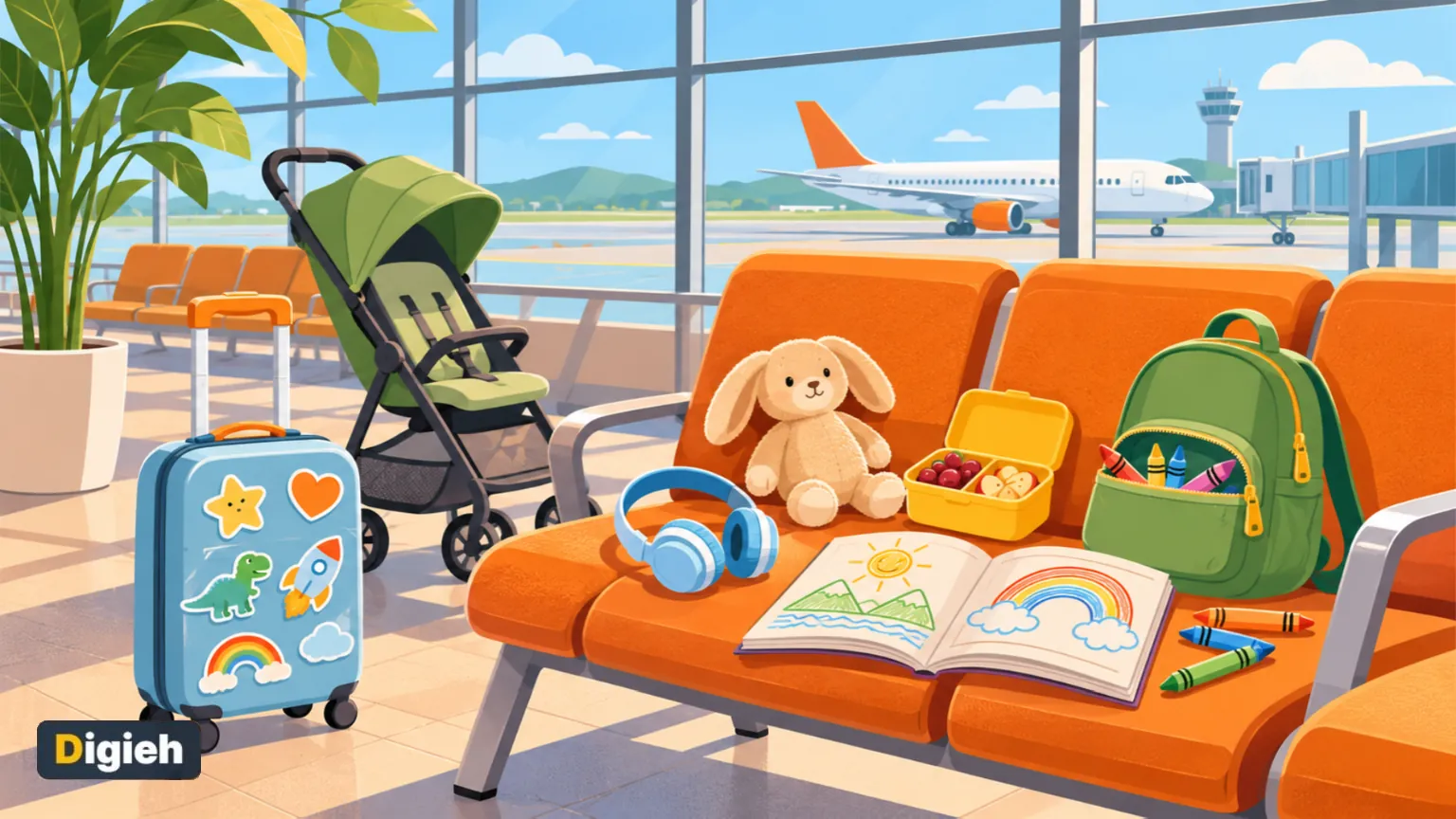
The carry-on survival bag
- Plenty of snacks and an empty water bottle to fill after security
- Wipes, tissues and hand sanitizer
- A full change of clothes for each child, plus a spare shirt for you
- Diapers and supplies for twice as long as the trip should take
- Headphones sized for kids
- Small new toys, stickers, books or a coloring kit
- A charged tablet with downloaded shows and games
- Any medicines your child takes
Checked bag basics
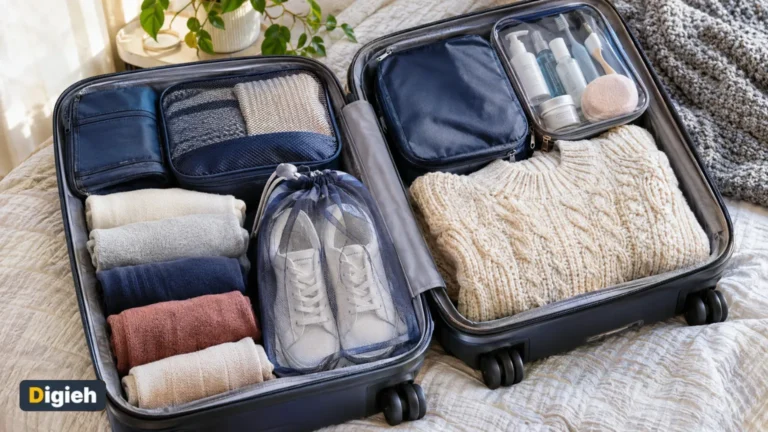
Pack outfits by day in packing cubes, one cube per child. It makes finding clothes in a hotel room much faster.
Traveling somewhere cold? Our full winter packing list has a section on kids’ layers.
Quick tip. Wrap a few small surprise toys and hand them out one at a time during long stretches. Novelty buys a lot of patience.
What is the hardest part of traveling with kids?
- Long flights or drives
- Packing everything
- Sleep in a new place
- Not sure
Flying With Kids
Seats and safety
The aviation agency strongly urges parents to secure young children in an approved restraint for the whole flight. Its guide to flying with children explains the options.
Children under 2 may sit on a parent’s lap, but the agency discourages it. The only way to guarantee a child seat on board is to buy the child a ticket.
If you bring a car seat, look for a label that says certified for use in aircraft. Also make sure your child fits the seat’s weight and height limits.
At the airport
- Arrive early, since everything takes longer with kids.
- Use family security lanes when available.
- Let kids burn energy walking around before boarding.
- Ask the gate agent whether families can board early.
On the plane
Ear pressure can hurt during takeoff and landing. Nursing, a bottle, a pacifier or chewing a snack may help kids swallow and ease the discomfort.
Pace the activities. Bring out one new thing at a time instead of everything at once.
Long-haul trips can upset sleep. Our tips on how to beat jet lag work for kids too.
Road Trips With Kids
Road trips let you stop whenever you need to, but safety comes first.
The National Highway Traffic Safety Administration advises keeping children in the back seat at least through age 12. Its car seat guide explains which seat fits each age and size.
- Keep babies and toddlers rear-facing as long as the seat limits allow.
- Use a booster until the seat belt fits properly, usually around ages 8 to 12.
- Plan stops every two hours for stretching and bathroom breaks.
- Pack a bag of snacks and activities within reach of the back seat.
- Play car games, listen to audiobooks or make a road trip playlist together.
Many locations offer free car seat checks by certified technicians. It is worth a visit before a long drive.
Kids 17 and under can join a member parent in the fast lane. See how to get TSA PreCheck for your family.
Free updates
Join the Digieh list
Be the first to know when our weekly brief launches.
No spam. Unsubscribe anytime. Read our Privacy Policy.
Choosing Where to Stay
- Look for family rooms or suites so kids can sleep while adults stay up.
- Choose places with a kitchen or fridge for snacks and simple meals.
- Check for a pool, laundry and free breakfast.
- Stay near the main sights to cut travel time.
Bring a familiar item from home, such as a blanket, night light or favorite stuffed toy. It helps kids settle in a new room.
Keep bedtime routines as close to normal as you can. A familiar story or song signals that it is time to sleep.
Keeping Kids Healthy and Safe
- Pack a small first aid kit with bandages and a thermometer.
- Wash hands often, especially before eating.
- Keep kids hydrated, since travel days can be dry and busy.
- Write your phone number on a wristband or card in each child’s pocket.
- Take a photo of your kids each morning in case you get separated.
- Agree on a meeting spot in busy places.
For more ideas, see our guide to staying healthy during holiday travel.
Tips by Age
| Age | Biggest challenge | Helpful tip |
|---|---|---|
| Babies | Feeding and sleep | Plan travel around naps and bring extra supplies |
| Toddlers | Sitting still | Pack many small activities and plan movement breaks |
| Young kids | Boredom | Give them a travel journal or simple job, like holding tickets |
| Tweens and teens | Wanting a say | Let them choose some activities and plan free time |
Older kids can carry their own small backpack. It gives them a sense of responsibility and frees up your hands.
Handling Meltdowns on the Go
Every child has a hard moment while traveling. Tiredness, hunger and noise are the usual triggers.
- Offer a snack and a drink first, since hunger is a common cause.
- Find a quieter corner to calm down.
- Stay calm yourself, because kids pick up on stress.
- Use a favorite toy, song or show to help them reset.
Most fellow travelers understand. Focus on your child, not on what strangers might think.
Save Money on Family Trips
- Travel outside school holidays when you can.
- Look for kids eat free deals and family passes.
- Book accommodation with a kitchen to cut meal costs.
- Pack snacks instead of buying them at the airport.
For more ideas, read how to save money on holiday travel.
Your Family Travel Checklist
- Travel times fit naps or bedtime
- Passports and IDs are valid
- We have seats together
- The carry-on has snacks, wipes and spare clothes
- Car seats fit and carry the aircraft approval label
- Each child carries my phone number
Need ways to pass time at your destination? Try our family holiday games.
Try this today. Check the expiry dates on every family passport. Renewals can take weeks, so start early.
Test Yourself
Where does the aviation agency say a child under 2 is safest on a plane?
- On a parent’s lap
- In an approved child restraint seat
- In a baby carrier
The agency strongly urges an approved child restraint for the whole flight.
Through what age should children ride in the back seat of a car?
- Age 5
- Age 8
- At least through age 12
The highway safety agency advises the back seat at least through age 12.
Frequently Asked Questions
What is the best age to travel with kids?
Any age can work with planning. Babies sleep a lot, while older kids enjoy activities more.
Do babies need a passport?
Yes. Every child, including newborns, needs their own passport for international travel.
How do I help my child’s ears on a plane?
Feeding, a pacifier or chewing a snack during takeoff and landing may help them swallow and relieve pressure.
Should I bring a stroller?
A light, foldable stroller helps in airports and cities. Many airlines let you check it at the gate.
Conclusion
Traveling with kids takes more planning, but the memories are worth it. Plan around routines, pack a smart carry-on and keep safety first.
Stay flexible, build in rest and let kids help shape the trip.
Found this useful?
Editor’s Note
This guide is accurate as of November 9, 2026. It draws on official guidance from the Federal Aviation Administration, the U.S. State Department and the National Highway Traffic Safety Administration.
Airline and country rules change, so check with your airline and destination before you go.
Spot an error in this article? Please contact us at support@digieh.com or read our Corrections Policy.
Keep exploring
Your next read is waiting
 1Fruits & VegetablesHow to Ripen Fruit Faster With Kitchen Tricks9 min read
 2MedicinesVitamin B12 Deficiency Signs and Who Needs Supplements9 min read
 3FashionHow to Clean White Sneakers So They Shine9 min read
 4Travel & TourismHow to Pack a Carry-On for a Week9 min read
 5AI & TechHow to Use AI for Smarter Holiday Shopping9 min read
 6Science & DiscoveriesQuadrantid Meteor Shower 2027: Best Time to Watch9 min read