TRENDING
Cat Urinary Problems: Signs That Need Urgent Care
Cat urinary problems explained: emergency blockage signs, blocked vs constipated, common causes, why male cats are at risk, prevention and when to see a vet.

7 min read
Last updated November 25, 2026
Emergency first: a cat straining in the litter box with little or no urine needs an emergency vet now. This is most urgent in male cats. A blocked bladder can kill within a day or two.
Other signs, like peeing often, peeing outside the box or blood in the urine, still need a vet visit soon. This guide explains the causes and how to lower the risk.
Pet health note. This article is general information, not veterinary advice. Do not wait until morning if you think your cat is blocked.
Key Takeaways.
- Straining with little or no urine is an emergency, especially in male cats.
- Cat urinary problems are often grouped as feline lower urinary tract disease.
- Stress-related bladder inflammation is the most common cause in cats under 10.
- Fresh water, some wet food and enough clean litter boxes lower the risk.
- Straining can look like constipation, so do not assume and wait.
Jump to a section
- Does my cat need a vet?
- What cat urinary problems are
- Signs to watch
- Blocked or constipated?
- Common causes
- Why male cats are at risk
- How vets treat it
- Prevention at home
- Lowering stress
- When to Get Help
- Questions to Ask Your Vet
- Frequently Asked Questions
- Sources
- Conclusion
Does My Cat Need a Vet?
Tap every sign your cat has. The bars show how soon your cat needs care. This is a rough guide only. If you are worried, call your vet.
- Peeing outside the litter box
- Peeing often in small amounts
- Blood in the urine
- Crying while peeing
- Licking the genital area a lot
- Straining with little or no urine
- Male cat straining in the box
- Vomiting, hiding or very tired
Source: built by Digieh from American Veterinary Medical Association and University of Illinois advice.
What first made you worried about your cat?
- Straining in the box
- Peeing outside the box
- Blood in urine
- Not sure
What Are Cat Urinary Problems?
Vets often call these problems feline lower urinary tract disease. It affects the bladder and the urethra, the tube that carries urine out. It is an umbrella term, explains the American Veterinary Medical Association.
Different causes can produce the same signs. A vet usually needs a urine test to find the cause.
1 extra boxThe American Veterinary Medical Association advises one more litter box than the number of cats.
Signs to Watch
- Straining in the litter box.
- Peeing often, in small amounts.
- Crying out while peeing.
- Licking the genital area.
- Peeing outside the litter box.
- Blood in the urine.
These signs come from the American Veterinary Medical Association. A cat that is blocked passes little or no urine and becomes more distressed.
Try this today. Check the litter box daily. Fewer, smaller clumps than usual are an early warning sign.
Blocked or Constipated?
| Sign | Urinary blockage | Constipation |
|---|---|---|
| In the litter box | Straining, little or no urine | Straining, little or no stool |
| Clumps in litter | Few or none | Urine clumps normal |
| Pain | Cries, restless, may hide | Mild discomfort |
| Belly | May feel a hard, swollen bladder | Usually soft |
| Urgency | Emergency now | Vet soon |
Sources: University of Illinois and PetMD, checked November 25, 2026. If unsure, treat it as an emergency.
Common Causes
| Cause | What happens | More common in |
|---|---|---|
| Bladder inflammation (idiopathic cystitis) | Bladder becomes inflamed, often linked to stress | Cats under 10 |
| Urinary stones or crystals | Stones irritate or block the bladder or urethra | Any age |
| Urethral blockage | Plugs or stones stop urine flow | Males aged 1 to 10 |
| Urinary tract infection | Bacteria infect the bladder | Older cats, especially females |
| Less common causes | Tumours or injury | Older cats |
Source: American Veterinary Medical Association, checked November 25, 2026.
Middle-aged, overweight indoor cats that get little exercise are most at risk, the American Veterinary Medical Association notes. Changes at home, a house move or living with several cats can add stress.
Why Male Cats Are at Risk
Male cats have a longer, narrower urethra. A small plug or stone can block it. Young males and overweight cats are most likely to be affected, says the University of Illinois.
A blockage raises pressure in the bladder and kidneys. It also upsets blood salts like potassium, which can affect the heart.
How Vets Treat It
- Blockage: pain relief, fluids into a vein and a catheter to empty the bladder, usually in hospital.
- Stones: a special diet to dissolve some types, or surgery for others.
- Infection: antibiotics chosen from a urine culture.
- Stress-related cystitis: no cure, but changes at home, diet and sometimes medicine help.
These treatments are described by the American Veterinary Medical Association and the University of Illinois.
Prevention at Home
- Keep fresh water available at all times.
- Add wet food to help your cat drink more.
- Offer one more litter box than the number of cats.
- Scoop waste twice a day and change litter weekly.
- Keep boxes in quiet spots.
- Play every day and keep a healthy weight.
Wet food raises water intake. One study linked all-dry diets to more blockages, notes the University of Illinois. Compare options in our guide to wet vs dry cat food.
Free updates
Join the Digieh list
Be the first to know when our weekly brief launches.
No spam. Unsubscribe anytime. Read our Privacy Policy.
Lowering Stress
Stress plays a big part in bladder inflammation. A calm, predictable home helps.
- Keep feeding and play times regular.
- Give each cat its own food, water, bed and litter box.
- Provide high perches and hiding spots.
- Leave the carrier out as a safe resting place.
- Introduce changes slowly.
Peeing outside the box can also be a sign of stress. See our guide to a cat not using the litter box.
Helping Your Cat Drink More
Cats often drink less than they need, especially on dry food. Small changes can raise their water intake.
- Place water bowls away from food and litter boxes.
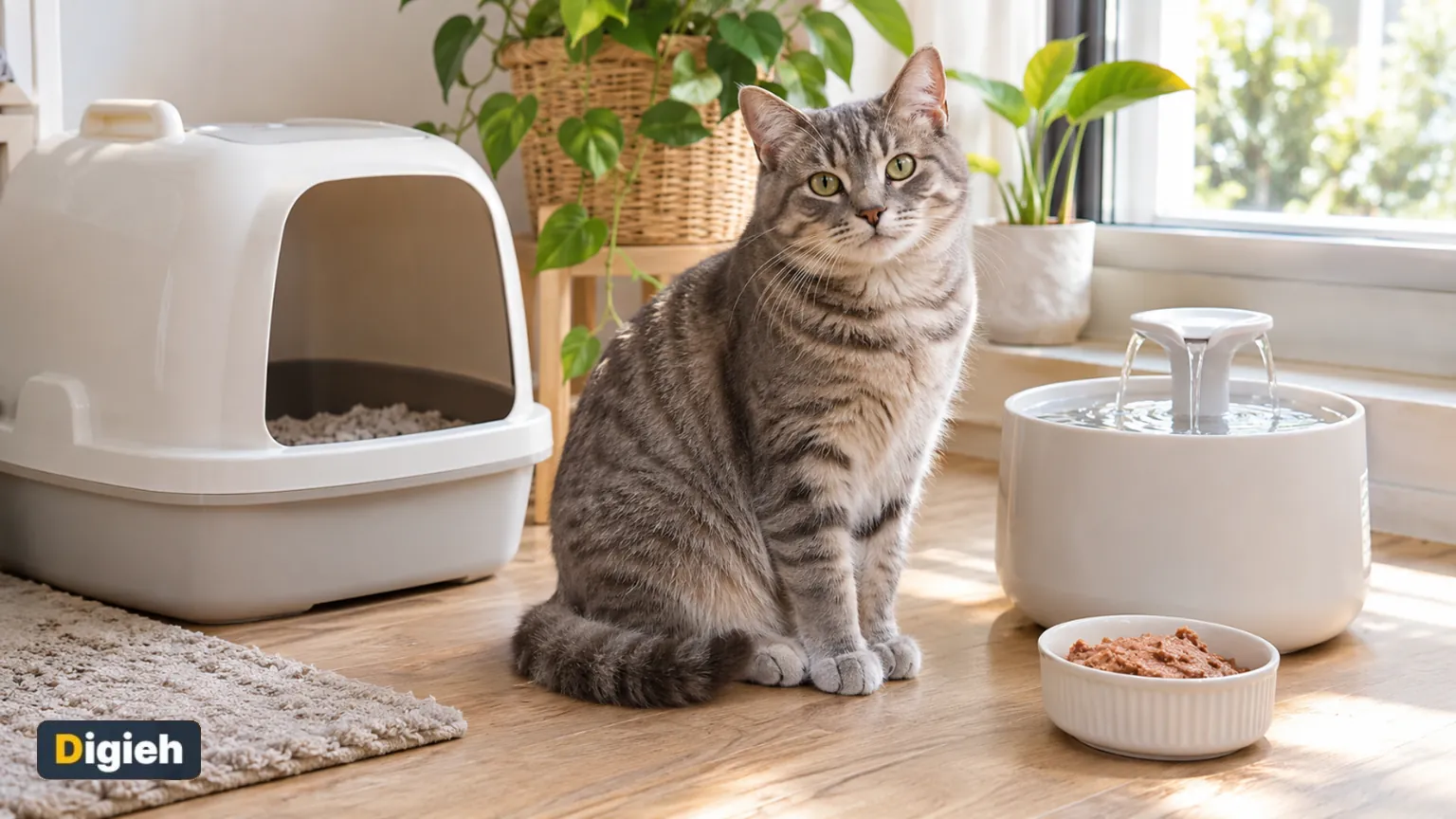
- Try a cat water fountain, as many cats like moving water.
- Use wide, shallow bowls so whiskers do not touch the sides.
- Add a little water to wet food.
- Refresh water at least once a day.
After a Blockage
Cats that have been blocked once can block again. Watch the litter box closely for several weeks after coming home.
- Give all medicines as prescribed.
- Feed any special diet your vet recommends.
- Check clumps in the litter every day.
- Go back to the vet at once if straining returns.
Cost and Planning
Emergency treatment for a blocked cat can be expensive. Pet insurance or a savings fund helps you act fast without hesitating.
Plan ahead with our guide to the cost of owning a cat.
Which sign means a cat needs an emergency vet?
- Straining with little or no urine
- Sleeping more on cold days
- Scratching the sofa
Straining without passing urine can mean a blocked bladder, which is life-threatening, especially in male cats.
Cat Urinary Myths
- A straining cat is just constipated. It can be a blockage, which is an emergency.
- Only old cats get bladder problems. Young male cats are at high risk of blockage.
- Antibiotics fix every case. Infection is only one cause, and is uncommon in young cats.
- Cranberry cures cat bladder problems. There is no good evidence for this in cats, so ask your vet first.
When to Get Help
Go to an emergency vet now if your cat strains with little or no urine. Crying in the box, vomiting or deep tiredness are also urgent. A blockage is a true emergency, warns the University of Illinois.
Book a vet visit soon for blood in the urine, peeing often or peeing outside the box. Bring a note of when the signs started and what you saw.
Questions to Ask Your Vet
- Is my cat blocked?
- What is causing the problem?
- Does my cat need a urine test or X-ray?
- Should my cat eat a special diet?
- How can I help my cat drink more?
- What signs mean I should come back at once?
Frequently Asked Questions
How do I know if my cat is blocked?
Straining with little or no urine is the key sign. Treat it as an emergency.
Can cat bladder problems go away on their own?
Some mild episodes settle, but a vet should always check first.
Are female cats safe from blockages?
Blockages are much rarer in females, but they still get other bladder problems.
Does dry food cause urinary problems?
Dry food alone may raise risk. Adding wet food helps water intake.
Sources
- American Veterinary Medical Association: Feline lower urinary tract disease
- University of Illinois: Blocked cats
- PetMD: Urinary blockage in cats
Conclusion
Cat urinary problems range from stress-related flare-ups to life-threatening blockages. Knowing the warning signs can save your cat’s life.
Next step: check your litter box every day and add more water and wet food. Go to an emergency vet if your cat strains without peeing.
Editor’s Note
This article is accurate as of November 25, 2026. Facts come from the American Veterinary Medical Association, the University of Illinois and PetMD.
Spot an error in this article? Please contact us at support@digieh.com or read our Corrections Policy.
Keep exploring
Your next read is waiting
 1Beauty & Personal CareDandruff vs Dry Scalp: Signs, Causes and Treatment7 min read
 2Pets & AnimalsHow to Choose Dog Food: Reading the Label7 min read
 3HealthEarwax Build-Up: Safe Removal and When to Worry7 min read
 4Finance & MarketsAccess Dental Breach: Who Is Affected, Next Steps5 min read
 5AI & TechChatGPT Classic Is Retiring: How to Switch Apps4 min read
 6SportsPakistan Shaheens Crush Nepal, Reach Asia Cup Semis3 min read
Found this useful?