TRENDING
Real vs Fake Christmas Tree, Which Is Better?

9 min read
Last updated November 7, 2026
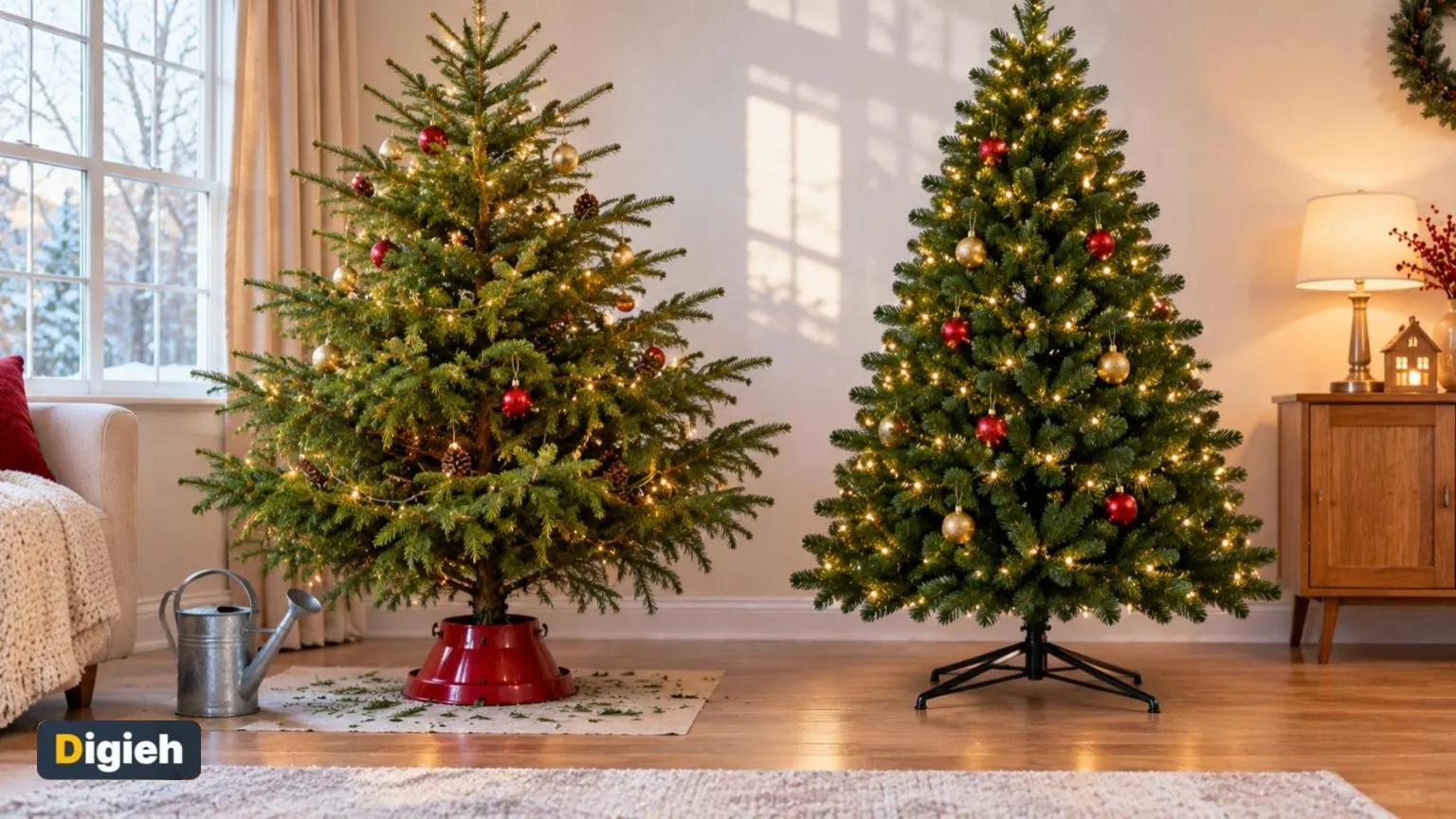
In the real vs fake Christmas tree debate, there is no single winner. A real tree offers fresh scent and natural charm. A fake tree saves money over time and needs less care.
The best choice depends on your budget, space, allergies, schedule and how long you plan to keep an artificial tree. For the environment, an artificial tree used for many years can match or beat buying a real tree every year.
This guide compares both options side by side so you can decide with confidence.
Key Takeaways
- Real trees smell wonderful but need daily watering.
- Fake trees cost more upfront but can be reused for years.
- An artificial tree may match a real tree’s emissions after about 4 to 20 years of use.
- Dry real trees are a fire risk, so water and placement matter.
- Recycling a real tree into mulch is better than sending it to a landfill.
On This Page
- Real vs Fake at a Glance
- Pros and Cons of a Real Tree
- Pros and Cons of a Fake Tree
- Cost Comparison
- Which Is Better for the Environment?
- Safety Differences
- Allergies and Pets
- Space, Storage and Setup
- How to Choose
- Making Either Tree Greener
Real vs Fake at a Glance
| Factor | Real tree | Fake tree |
|---|---|---|
| Scent | Fresh pine or fir smell | None, unless you add scents |
| Upfront cost | Lower each year | Higher at first |
| Long-term cost | Pay every year | Can be cheaper over time |
| Care | Water daily | Little care needed |
| Mess | Falling needles | Very little |
| Setup | Buy and carry home | Assemble and fluff branches |
| Storage | None after disposal | Needs storage space |
| Fire risk | Higher when dry | Lower, but lights still matter |
4 to 20 yearsHow long an artificial tree may need to be used to match a real tree’s emissions, per a forestry scientist.
Pros and Cons of a Real Tree
Many families love the tradition of picking out a real tree. It feels special and connects the holiday to nature.
Pros
- Fresh, natural scent fills your home.
- Every tree has its own unique shape.
- Choosing a tree at a farm or lot can be a fun family outing.
- Trees can be recycled into mulch after the holidays.
Cons
- Needs water every day.
- Drops needles, especially as it dries.
- Can become a fire hazard when dry.
- You buy a new tree every year.
- Can trigger allergies in some people.
For care tips, read our guide on how to keep a Christmas tree fresh.
Quick tip. Shake a real tree gently before you buy it. If lots of green needles fall, it is already drying out.
Pros and Cons of a Fake Tree
Artificial trees have become a favorite for busy households. They offer convenience year after year.
Pros
- Can be reused for many years.
- No watering or needle cleanup.
- Many come pre-lit with built-in lights.
- Easy to put up early in the season.
- Often better for people with tree allergies.
Cons
- Higher upfront cost.
- No natural scent.
- Needs storage space the rest of the year.
- Mostly made from petroleum-based materials.
- Can take hundreds of years to break down in a landfill.
Which tree does your family use?
- Real tree
- Fake tree
- Both, in different rooms
- Not sure
Cost Comparison
A real tree usually costs less each year, but you buy one every season. An artificial tree costs more at first, but you can use it for many years.
The longer you keep a fake tree, the better its value. Use the calculator below to compare yearly costs. Enter the fake tree price and what you usually spend on a real one.
Tree cost calculator
Remember to include extra costs. Real trees may need a stand and delivery, while fake trees may need a storage bag or replacement bulbs.
Prices vary by size, type and location. Offers can change and many vary by location. Confirm before you go.
Which Is Better for the Environment?
This is the trickiest question, and the answer depends on how you use your tree.
A forestry scientist at Mississippi State University studied this question. In his Discover Magazine article, he says a fake tree matches a real one after 4 to 20 years. The range depends on what each study measures.
The Case for Real Trees
Real trees absorb carbon dioxide while they grow. They can be recycled into mulch or wood chips, which is much better than a landfill.
The Case for Fake Trees
Many artificial trees are built to last 30 years or more. The key is reuse, because keeping a fake tree for many years spreads out its impact.
Hidden Factors
About 80% of artificial trees are made in China, according to the same article. Driving long distances to buy a real tree also adds to its footprint.
The article also notes that one long round-trip flight can create far more emissions. That flight beats a typical artificial tree’s whole lifetime. In other words, your tree choice matters, but it is not the biggest part of your carbon footprint.
Good to know. Many towns collect real trees after the holidays and turn them into mulch for parks and gardens.
Safety Differences
Safety is one area where the two options differ clearly.
A dry real tree can catch fire quickly. The U.S. Fire Administration warns that a dry Christmas tree can burn very hot and very fast, on its holiday safety page.
Tests by the National Institute of Standards and Technology (NIST) show the power of water. A tree in a water-filled stand did not catch fire from the same source that lit a dry tree.
Fake trees are less likely to ignite, especially if labeled fire resistant. Still, lights and wiring can cause problems on any tree.
No matter which tree you choose, keep it at least 3 feet from heat sources. Turn off the lights when you leave home or go to bed.
- Keep the tree 3 feet from heat
- Water a real tree daily
- Check lights for damage
- Turn lights off at night
- Recycle or donate your tree when done
Allergies and Pets
Some people sneeze or feel itchy around real trees. Mold and pollen on the branches can cause these reactions.
If someone in your home has allergies, an artificial tree may be more comfortable. Wipe it down before decorating, since dust can build up in storage.
Pets can be curious about both types. Cats may climb trees, and dogs may drink water from a real tree stand. Keep the stand covered and place fragile ornaments up high.
Space, Storage and Setup
Think about where you live and how much space you have.
Real trees need no storage after the holidays, which helps in small homes. However, you need a way to bring one home and dispose of it later.
Fake trees need a closet, attic or garage spot for most of the year. Our guide on how to store holiday decorations can help.
Setup is different, too. A real tree goes straight into the stand, while an artificial tree needs assembly and branch fluffing.
What makes a real Christmas tree a bigger fire risk?
- Being dry
- Having too many ornaments
- Its height
Dry trees catch fire easily, so daily watering is important.
Free updates
Join the Digieh list
Be the first to know when our weekly brief launches.
No spam. Unsubscribe anytime. Read our Privacy Policy.
How to Choose
Ask yourself a few simple questions to find the right fit.
- Do you love the smell of a fresh tree?
- Do you have time to water a tree every day?
- Does anyone in your home have tree allergies?
- Do you have room to store a tree all year?
- Will you keep an artificial tree for many years?
- Do you like to decorate early in November?
If you answered yes to the first two, a real tree may suit you. If allergies, storage and early decorating matter most, a fake tree may be the better pick.
Planning when to decorate? See our guide to the best time to put up Christmas decorations.
Making Either Tree Greener
Whichever tree you choose, you can lower its impact.
For Real Trees
Buy from a local farm to reduce travel. After the holidays, recycle your tree through a local program instead of throwing it away.
For Fake Trees
Keep it as long as possible. When you are done with it, donate it if it is still in good shape. Look for trees made with recycled content or polyethylene foliage, which may have a lower impact than older materials.
For Both
Use LED lights, which use less energy, and set a timer so lights turn off at night. Reuse ornaments year after year, and choose sturdy ones that will not break easily.
What is the best way to lower a fake tree’s environmental impact?
- Replace it every year
- Keep using it for many years
- Throw it away after Christmas
Reusing an artificial tree for many years spreads out its impact.
Add to calendar
Popular Real Tree Types
If you choose a real tree, the type matters. Different trees have different scents, shapes and needle strength.
Fraser Fir
Known for strong branches that hold heavy ornaments and a pleasant scent. Its needles tend to stay on well.
Balsam Fir
Famous for its rich, classic Christmas smell. It has a soft, full look.
Douglas Fir
Soft needles and a sweet scent make it a family favorite. It is often more affordable.
Scotch Pine
Sturdy branches and good needle hold make it a long-lasting choice.
Ask your tree lot which types were cut most recently. A fresh tree of any kind will last longer.
Noble Fir
Stiff, layered branches give it a neat, elegant look. It is a good choice for showing off large ornaments.
White Pine
Long, soft needles give it a gentle look, though its thin branches suit lighter ornaments best.
Tips for Buying a Fake Tree
If you choose an artificial tree, a few features make a big difference.
Look for a sturdy metal stand and hinged branches, which make setup easier. Check the branch tip count, since more tips usually mean a fuller look.
Pre-lit trees save time, but check whether bulbs can be replaced if one strand fails. Choose a size that fits your ceiling height, leaving room for a tree topper.
Other Options to Consider
You are not limited to the two classic choices. A few other ideas offer the best of both worlds.
Living Potted Trees
Some families buy a small living tree in a pot. After the holidays, it can be planted outside if your climate allows.
Tabletop Trees
A small tree on a table works well in apartments and dorm rooms.
Rental Trees
In some areas, companies rent live potted trees and pick them up after the holidays.
Try this today. Check your tree stand or artificial tree box now. Replace broken parts before the holiday rush.
Frequently Asked Questions
Is a real or fake Christmas tree better for the environment?
It depends. A fake tree may match a real tree’s emissions after about 4 to 20 years. Long-term reuse is the key.
Which is cheaper, a real or fake tree?
A fake tree usually costs more upfront but can be cheaper over many years.
Are real Christmas trees a fire hazard?
Dry real trees can burn quickly. Water daily and keep the tree away from heat sources.
Are fake trees better for allergies?
Often yes. Real trees can carry pollen and mold that bother some people.
How long does an artificial tree last?
Many are built to last for decades with good care and storage.
Conclusion
Real vs fake Christmas tree comes down to what matters most to your family. Real trees bring scent and tradition, while fake trees bring convenience and long-term value.
Whichever you choose, care for it well, keep it safe and enjoy the glow all season long.
Found this useful?
Editor’s Note
This guide is accurate as of November 7, 2026. Environmental facts come from a Mississippi State University forestry scientist, and safety tips come from the U.S. Fire Administration and NIST.
Spot an error in this article? Please contact us at support@digieh.com or read our Corrections Policy.
Keep exploring
Your next read is waiting
 1Food & LifestyleFun Thanksgiving Trivia Questions for the Whole Family9 min read
 2Finance & MarketsHSA Limits for 2027 and Smart Saving Tips9 min read
 3HealthCarbon Monoxide Poisoning Signs Every Family Should Know10 min read
 4NewsWhat Day Is Christmas 2026? The Simple Answer9 min read
 5EntertainmentBest Thanksgiving Movies to Watch With the Family9 min read
 6TechnologyHidden iPhone Features That You Should Try Now9 min read