TRENDING
An Easy Prime Rib Recipe for Christmas Dinner

9 min read
Last updated November 7, 2026
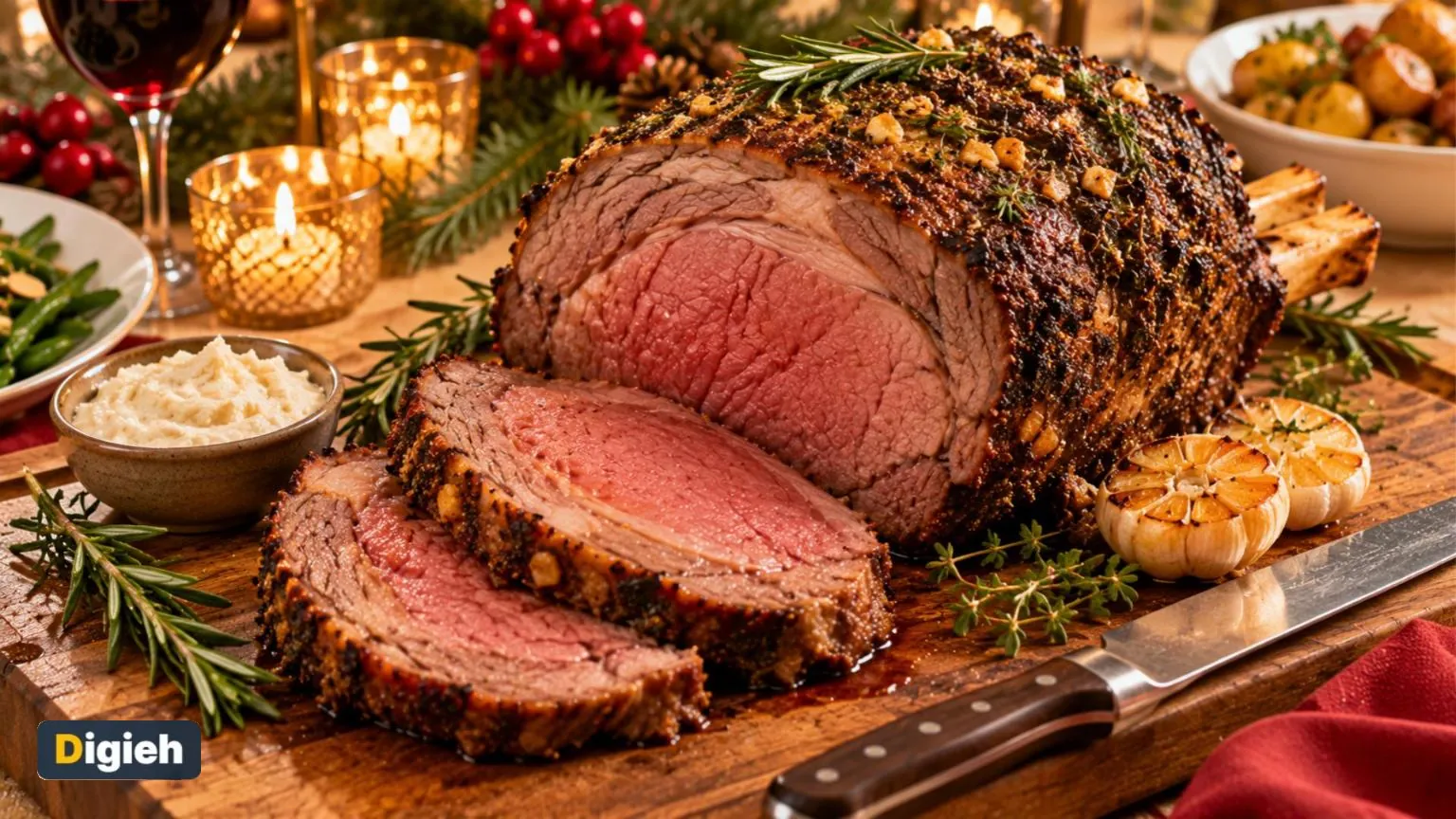
This easy prime rib recipe gives you a juicy, tender roast with a golden garlic herb crust. Season the beef, roast it at 325 degrees and use a meat thermometer to know exactly when it is ready.
Prime rib, also called a standing rib roast, looks impressive but needs very little hands-on work. Most of the time, the oven does the job while you prepare the sides.
Key Takeaways
- Plan on roughly one rib bone for every two guests.
- Roast at 325 degrees for even, gentle cooking.
- The U.S. Department of Agriculture (USDA) says beef roasts should reach 145 degrees, then rest at least 3 minutes.
- Let the roast rest before carving so the juices stay inside.
- A food thermometer is the only reliable way to check doneness.
On This Page
- What Is Prime Rib?
- How Much Prime Rib to Buy
- Ingredients
- How to Make Prime Rib
- Roasting Times and Temperatures
- Doneness Guide
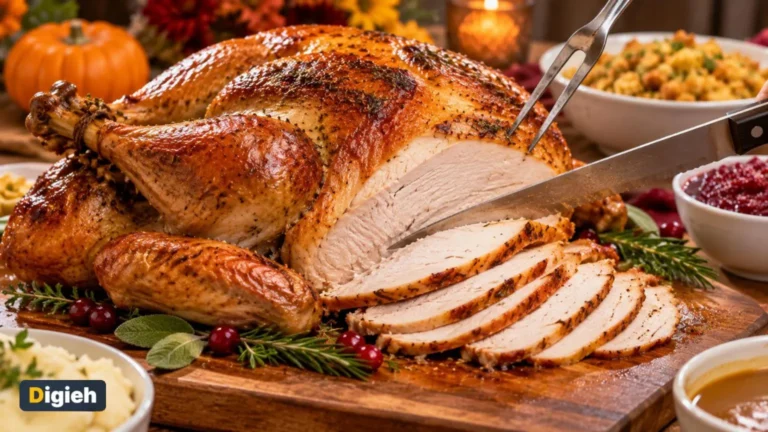
- How to Carve Prime Rib
- Easy Sauces and Sides
- Make-Ahead Tips
- Leftovers
What Is Prime Rib?
Prime rib comes from the rib section of the cow. It is a large, well-marbled roast that stays tender and flavorful when roasted.
You may also see it called a standing rib roast or rib roast. It is “standing” because it rests on its own rib bones in the pan.
The word prime often refers to the cut, but it can also mean the highest beef grade. Many stores sell choice-grade rib roasts, which still taste wonderful.
145 degreesThe safe minimum inside temperature for beef roasts, followed by a 3-minute rest, per the agency.
How Much Prime Rib to Buy
Buying the right size keeps everyone fed without too much waste.
A common rule is one rib bone for every two guests. For boneless roasts, many cooks plan about 1/2 to 3/4 pound per person.
Use the calculator below to estimate the size you need. Ask your butcher to trim the roast and tie it for even cooking.
Servings scaler
This uses the common estimate of one rib bone for every two guests.
Quick tip. Ask the butcher to cut the bones off and tie them back on. It makes carving much easier later.
Ingredients
This recipe works for a 4- to 8-pound bone-in rib roast.
| Ingredient | Amount |
|---|---|
| Bone-in rib roast | 4 to 8 pounds |
| Olive oil or softened butter | 3 tablespoons |
| Garlic, minced | 6 cloves |
| Fresh rosemary, chopped | 2 tablespoons |
| Fresh thyme, chopped | 1 tablespoon |
| Kosher salt | 1 tablespoon |
| Black pepper | 2 teaspoons |
Salt the roast the night before if you can. It seasons the meat more deeply and helps form a better crust.
Tools You Will Need
The right tools make roasting prime rib much easier. You probably already own most of them.
- A heavy roasting pan with low sides
- An instant-read or probe meat thermometer
- A long, sharp carving knife
- A large cutting board with a groove for juices
- Kitchen twine, if the butcher did not tie the roast
- Foil for resting
A probe thermometer with an alarm is especially handy. It lets you track the temperature without opening the oven door.
How to Make Prime Rib
Follow these steps for a simple, reliable roast.
1. Bring the Roast Out Early
Take the roast out of the fridge about 1 hour before cooking so it cooks more evenly. Do not leave it out longer than 2 hours.
2. Make the Herb Rub
Mix the oil or butter with garlic, rosemary, thyme, salt and pepper into a thick paste.
3. Season the Roast
Pat the roast dry with paper towels. Rub the herb paste over the top and sides.
4. Set Up the Pan
Place the roast bone side down in a roasting pan. The bones act as a natural rack.
5. Roast
Heat the oven to 325 degrees. Roast until a thermometer in the thickest part reads at least 145 degrees.
6. Rest
Move the roast to a cutting board and cover it loosely with foil. Let it rest for at least 3 minutes, and up to 20 minutes for large roasts.
What is your Christmas dinner main dish?
- Prime rib
- Ham
- Turkey
- Not sure
Roasting Times and Temperatures
Cooking time depends on the weight and whether the roast has bones. The agency gives these times at 325 degrees, in its holiday meats guide.
| Roast type | Weight | Minutes per pound |
|---|---|---|
| Bone-in rib roast | 4 to 8 pounds | 23 to 30 |
| Boneless rib roast | About 4 pounds | 39 to 43 |
For a 6-pound bone-in roast, that means about 2 hours and 18 minutes to 3 hours. Start checking the temperature early, since ovens vary.
The agency says beef roasts should reach 145 degrees inside, followed by at least a 3-minute rest. Always place the thermometer in the thickest part, away from the bone.
Good to know. The roast’s temperature keeps rising a few degrees while it rests on the cutting board.
Doneness Guide
The inside color of prime rib changes as it cooks. Here is a simple guide.
| Doneness | Inside look |
|---|---|
| Medium-rare | Warm pink center |
| Medium | Light pink center |
| Medium-well | Mostly brown with a hint of pink |
| Well-done | Brown throughout |
The agency’s safe minimum for beef roasts is 145 degrees with a 3-minute rest. That gives a warm pink center, which many people love for prime rib.
The temperature will rise a few degrees while the roast rests. Plan for this so your roast does not overcook.
How to Carve Prime Rib
Carving is easier than it looks. Use a long, sharp knife and a sturdy cutting board.
First, cut along the bones to remove them in one piece. Set the bones aside for a rich soup later.
Turn the roast so the fat side is up. Slice across the grain into thick slices, about 1/2 to 1 inch thick.
Serve the slices right away on a warm platter.
- Order the roast early
- Salt it the night before
- Make the herb rub
- Roast at 325 degrees
- Check for 145 degrees
- Rest before carving
Easy Sauces and Sides
Prime rib shines with simple sauces and classic sides.
Horseradish Cream
Mix sour cream with prepared horseradish, a squeeze of lemon and a pinch of salt. It adds a bright, peppery bite.
Au Jus
Pour off most of the fat from the roasting pan. Add beef broth and scrape up the browned bits, then simmer for a few minutes.
Gravy
If your family prefers gravy, see our easy homemade gravy recipe.
Classic Sides
Roasted potatoes, green beans, Yorkshire pudding and a crisp salad all pair well. Want a second main for a big crowd? Our easy honey glazed ham recipe works alongside prime rib.
What is the federal safe minimum temperature for a beef roast?
- 120 degrees
- 145 degrees
- 180 degrees
The agency says beef roasts should reach 145 degrees, then rest at least 3 minutes.
Free updates
Join the Digieh list
Be the first to know when our weekly brief launches.
No spam. Unsubscribe anytime. Read our Privacy Policy.
Rub and Crust Ideas
The garlic herb crust is a classic, but you can switch it up to match your menu.
Peppercorn Crust
Press coarsely cracked black, green and pink peppercorns into the roast with a little salt. It gives a bold, spicy bite.
Mustard and Herb
Brush the roast with Dijon mustard before adding the herbs. The mustard helps the seasoning stick and adds tang.
Smoky Paprika
Mix smoked paprika, garlic powder, brown sugar and salt for a gentle, smoky crust.
Horseradish Butter
Blend softened butter with prepared horseradish and chives. Spread it on in the last half hour for a sharp, savory finish.
A Simple Christmas Day Timeline
Planning backward from dinnertime keeps the day calm. Here is a sample plan for a 6-pound roast and a 6 p.m. dinner.
| Time | Task |
|---|---|
| 1.30 p.m. | Take the roast out of the fridge |
| 2.30 p.m. | Season and place in a 325-degree oven |
| 4.45 p.m. | Start checking the temperature |
| 5.15 p.m. | Remove when it reaches 145 degrees, then rest |
| 5.30 p.m. | Warm rolls and finish sides |
| 6.00 p.m. | Carve and serve |
Adjust the times for your roast’s weight and your oven. The thermometer, not the clock, decides when it is done.
Make-Ahead Tips
A little prep the day before makes Christmas Day calmer.
Salt the roast and refrigerate it uncovered overnight. This dries the surface and helps build a crisp crust.
Make the herb rub and horseradish sauce a day early. Store them covered in the fridge.
Plan your oven schedule so the roast finishes about 30 minutes before dinner. Use the resting time to warm rolls and finish sides.
Food Safety Tips
Big holiday meals need careful handling. Keep raw meat away from ready-to-eat foods and wash your hands after touching raw beef.
The agency explains the four steps of clean, separate, cook and chill, on its food safety basics page. Do not leave cooked meat at room temperature for more than 2 hours.
Read more in our guide on how to prevent holiday food poisoning.
Why should prime rib rest before carving?
- To keep the juices inside
- To make it colder
- To shrink the fat
Resting lets the juices settle so they stay in the meat.
Add to calendar
Leftovers
Leftover prime rib makes some of the best next-day meals. Refrigerate leftovers within 2 hours.
Cooked beef leftovers keep about 3 to 4 days in the fridge, based on the FoodSafety.gov cold storage chart. You can also freeze slices for longer storage.
Leftover Ideas
- Prime rib sandwiches with horseradish cream
- Steak and egg breakfast
- Beef and vegetable stir-fry
- Hearty beef and barley soup using the bones
To reheat, warm slices gently in a covered pan with a splash of broth. High heat can dry them out.
Common Mistakes to Avoid
Prime rib is easy, but a few mistakes can affect the result.
Cooking straight from the fridge can lead to uneven doneness. Let the roast sit out briefly first.
Skipping the thermometer is risky with an expensive cut. Check the temperature in more than one spot.
Slicing right away lets the juices run out. Always rest the roast first.
Shopping Tips
Order your rib roast a week or two before Christmas. Butchers and stores get busy, and popular sizes can sell out.
Look for good marbling, which means thin streaks of fat through the meat. This keeps the roast tender and juicy.
Ask whether the roast is bone-in or boneless, and whether it is already trimmed and tied. Offers can change and many vary by location. Confirm before you go.
Planning the full holiday? Check our guide to what day Christmas 2026 falls on.
Try this today. Call your butcher and ask when to place a Christmas roast order.
Frequently Asked Questions
What temperature should prime rib be cooked to?
The agency says beef roasts should reach at least 145 degrees, then rest for at least 3 minutes.
How long do you cook a prime rib per pound?
At 325 degrees, a 4- to 8-pound bone-in roast takes about 23 to 30 minutes per pound.
How much prime rib do I need per person?
Plan about one rib bone for every two guests, or 1/2 to 3/4 pound of boneless roast per person.
Should prime rib rest before carving?
Yes. Resting keeps the juices inside the meat and makes slicing easier.
Can I make prime rib ahead of time?
You can season it the night before. For best results, roast it on the day you serve it.
Conclusion
Prime rib is a showstopping Christmas dinner that is easier than it looks. Season it well, roast it gently and trust your thermometer.
Let it rest, slice it thick and enjoy a delicious centerpiece with family and friends.
Found this useful?
Editor’s Note
This recipe is accurate as of November 7, 2026. Roasting times and safe temperatures are based on federal guidance. Ovens vary, so always use a food thermometer.
Spot an error in this article? Please contact us at support@digieh.com or read our Corrections Policy.
Keep exploring
Your next read is waiting
 1Finance & MarketsSmart Furnace Maintenance Tips That Save You Money10 min read
 2BusinessEssential Holiday Staffing Tips for Small Business Owners10 min read
 3TechnologySmart Ways to Protect Packages From Porch Pirates10 min read
 4HealthMindfulness Meditation for Beginners: Easy Steps to Start10 min read
 5EntertainmentUgly Christmas Sweater Party Ideas Guests Will Love10 min read
 6Food & LifestyleEasy Pot Roast Recipe That Turns Out Tender10 min read