TRENDING
Easy Cornbread Recipe That Turns Out Perfectly Moist

9 min read
Last updated November 8, 2026
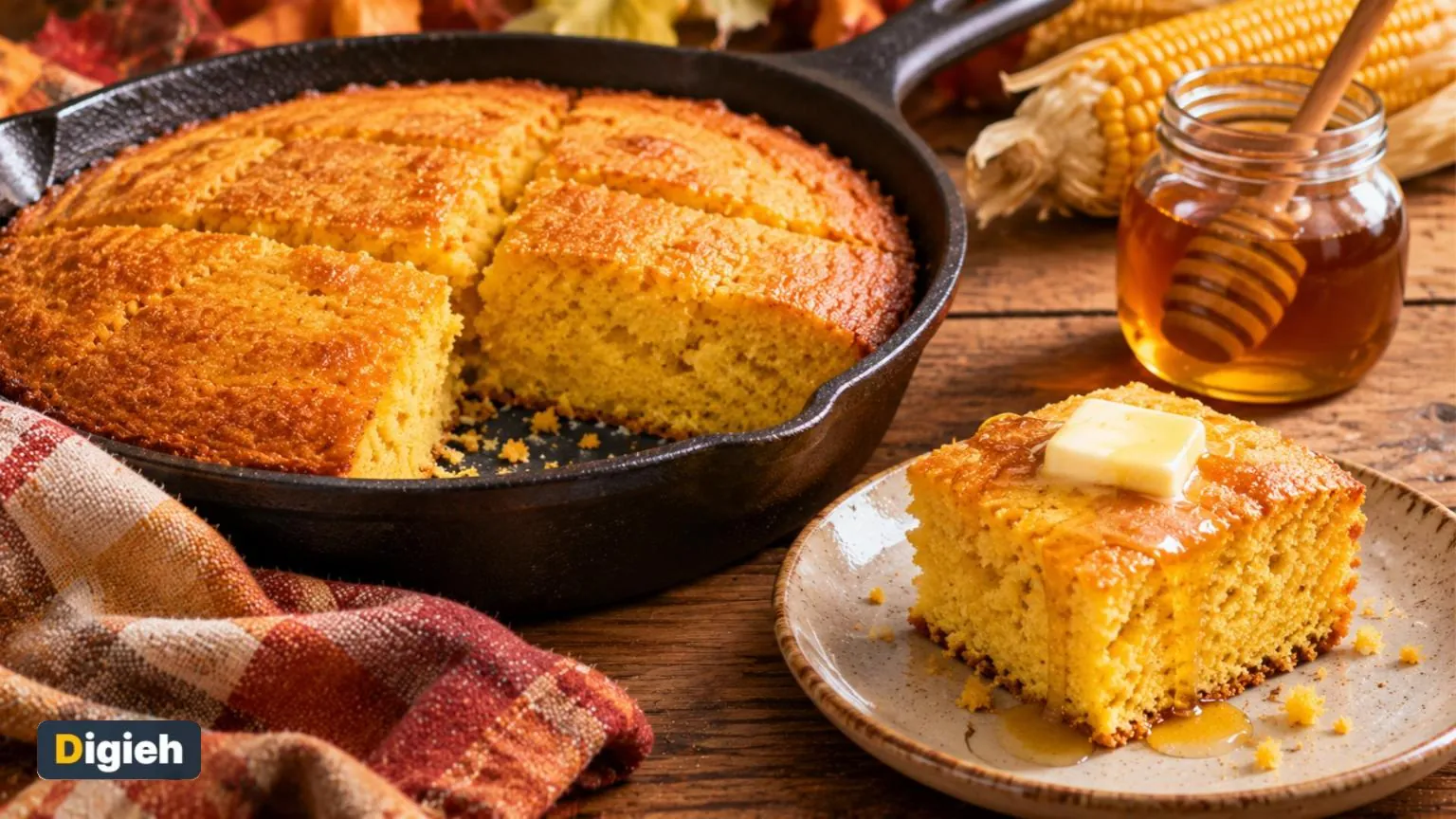
This easy cornbread recipe bakes in about 25 minutes and needs only one bowl. It comes out golden on the edges, soft in the middle and moist enough to eat without butter. You will want butter anyway.
Cornbread is a classic side for chili, soups, barbecue and holiday dinners. Best of all, you probably have every ingredient in your kitchen right now.
Key Takeaways
- Stir the batter just until combined to keep the crumb tender.
- A hot cast iron skillet gives the crispiest edges.
- Buttermilk and melted butter keep the bread moist.
- Bake at 425 degrees for about 20 to 25 minutes.
- Wrapped cornbread keeps for up to three days.
On This Page
- Sweet or Savory? Pick Your Style
- What You Need
- Step-by-Step Instructions
- Why Cast Iron Makes Better Cornbread
- Turn It Into Muffins
- Flavor Add-Ins
- Storing and Reheating
- Mistakes That Make Cornbread Dry
- What to Do With Leftovers
Sweet or Savory? Pick Your Style
Cornbread sparks friendly arguments at many dinner tables. Southern-style cornbread often uses little or no sugar and leans on buttermilk for tang. Northern-style cornbread tends to be sweeter and more cake-like.
This recipe sits in the middle. It uses a small amount of sugar and honey. So it pairs well with savory dishes but still tastes a little sweet.
Want it fully savory? Skip the sugar and honey.
Prefer a dessert-like bread? Double the sugar.
Which cornbread style do you prefer?
- Sweet and cake-like
- Savory with little sugar
- Somewhere in the middle
- Not sure
What You Need
This batch fills a 10-inch skillet or a 9×9-inch pan and makes about 9 to 12 pieces.
Dry ingredients
- 1 cup yellow cornmeal
- 1 cup all-purpose flour
- 1/4 cup granulated sugar
- 1 tablespoon baking powder
- 1/2 teaspoon baking soda
- 3/4 teaspoon salt
Wet ingredients
- 1 1/4 cups buttermilk
- 2 large eggs
- 6 tablespoons melted butter, plus 1 tablespoon for the pan
- 2 tablespoons honey
No buttermilk? Stir 1 tablespoon of lemon juice or white vinegar into 1 1/4 cups of milk. Let it sit for 5 minutes before using.
Feeding a crowd? The scaler below tells you how many batches to make.
Servings scaler
One batch makes about 10 pieces.
Quick tip. Let the eggs and buttermilk sit out for 15 minutes. Room-temperature ingredients mix more evenly with the melted butter.
Choosing Your Cornmeal
The cornmeal you buy changes the texture of your bread.
Fine-ground cornmeal gives a smooth, tender crumb. It works well if you like soft, cake-like cornbread.
Medium-ground cornmeal is the most common choice. It gives a light crunch without feeling gritty.
Stone-ground cornmeal keeps more of the whole kernel. It has a rich corn flavor and a rustic, slightly coarse bite.
Yellow or white? Yellow cornmeal has a bolder corn taste and a golden color.
White cornmeal is milder and popular in parts of the South. Both work in this recipe.
Stone-ground meal contains more natural oils, so it can spoil faster. Keep it in the fridge or freezer if you do not use it often.
Step-by-Step Instructions
Step 1. Heat the oven and the skillet
Place your cast iron skillet in the oven and preheat it to 425 degrees. Heating the pan first gives the bread a crisp crust.
Step 2. Mix the dry ingredients
In a large bowl, whisk the cornmeal, flour, sugar, baking powder, baking soda and salt.
Step 3. Mix the wet ingredients
In a separate bowl, whisk the buttermilk, eggs, melted butter and honey until smooth.
Step 4. Combine gently
Pour the wet mixture into the dry mixture. Stir with a spatula only until no dry streaks remain. A few small lumps are fine.
Step 5. Grease the hot pan
Carefully remove the skillet with an oven mitt. Add 1 tablespoon of butter and swirl it around until it melts.
Step 6. Pour and bake
Pour the batter into the hot skillet. It should sizzle. Bake for 20 to 25 minutes, until the top is golden and a toothpick in the center comes out clean.
Step 7. Rest briefly
Let the cornbread cool in the pan for 10 minutes before slicing. This helps the pieces hold together.
Times and temperatures match common extension recipes. The University of Illinois Extension bakes its cornbread at 425 degrees. So does the University of Missouri Extension, for roughly 20 to 25 minutes.
425 degreesThe baking temperature used in cornbread recipes from the University of Illinois Extension.
Why Cast Iron Makes Better Cornbread
Cast iron holds heat very well. When cold batter hits a hot, buttered skillet, the outside starts cooking right away.
That quick sear creates crunchy, golden edges and a darker bottom crust. Many cooks say those edges are the best part.
A metal or glass baking dish still works. Your cornbread will be lighter in color and a bit softer around the sides. Grease the dish well and skip the preheating step for glass, since sudden heat changes can crack it.
Need help caring for your pan after baking? Read our guide on how to clean cast iron so it stays seasoned for years.
Turn It Into Muffins
Cornbread muffins are perfect for lunch boxes and buffet tables.
Grease a 12-cup muffin tin or line it with paper liners. Fill each cup about two-thirds full.
Bake at 425 degrees for about 15 to 20 minutes. The Missouri guide suggests filling greased cups halfway and baking for that same time range.
Muffins bake faster than skillet bread, so start checking them early. They are done when the tops spring back lightly.
Flavor Add-Ins
Plain cornbread is great, but add-ins make it feel new. The University of Maine Cooperative Extension suggests shredded cheese, chopped jalapenos or fresh herbs.
Fold in your add-ins at the very end. Use no more than about 1 cup in total, so the bread still rises well.
| Add-In | Amount | Best With |
|---|---|---|
| Shredded cheddar | 3/4 cup | Chili and soups |
| Diced jalapenos | 1 to 2 peppers | Barbecue |
| Corn kernels | 3/4 cup | Fried chicken |
| Crumbled cooked bacon | 1/2 cup | Breakfast |
| Chopped green onions | 1/4 cup | Beans and greens |
Cheese and jalapeno together make a crowd-pleasing combo. For a sweeter twist, brush the warm top with extra honey butter.
Good to know. Cast iron handles get very hot. Always use a thick oven mitt when you move the skillet.
Storing and Reheating
Cornbread tastes best the day it is baked, but it keeps well.
The Illinois extension suggests a double layer of foil around the cornbread. Then place it in a plastic bag.
Keep it in a cool, dark spot or in an airtight container in the fridge. Either way, it lasts up to three days.
For longer storage, wrap individual pieces tightly and freeze them. Thaw at room temperature or warm them straight from the freezer.
To reheat, wrap slices in foil and warm them in a 350-degree oven for about 10 minutes. A quick toast in a buttered skillet also brings back crisp edges.
Store leftover cornmeal in a cool, dry, dark place. The Missouri guide notes it can also go in the freezer in airtight containers.
What makes cornbread dense and tough?
- Overmixing the batter
- Using buttermilk
- A hot skillet
Too much stirring builds gluten and makes the crumb dense.
Free updates
Join the Digieh list
Be the first to know when our weekly brief launches.
No spam. Unsubscribe anytime. Read our Privacy Policy.
Mistakes That Make Cornbread Dry
Overmixing the Batter
Too much stirring builds gluten in the flour. The Maine extension notes that overmixing makes cornbread dense. Stop as soon as the batter looks combined.
Baking Too Long
Even two or three extra minutes can dry out the crumb. Check early and pull the pan once a toothpick comes out clean.
Skipping the Fat
Butter and buttermilk add moisture and flavor. Cutting them too much leads to a crumbly, dry bread.
Using Old Baking Powder
Baking powder loses strength over time. If yours has been open for many months, test a spoonful in warm water. It should bubble right away.
Slicing Too Soon
Hot cornbread crumbles easily. A short rest helps it firm up.
- Preheat the skillet in the oven
- Whisk dry and wet separately
- Stir just until combined
- Butter the hot pan
- Bake 20 to 25 minutes
- Rest 10 minutes before slicing
Easy Swaps for Special Diets
Cornbread is simple to adapt for different needs.
Gluten-free. Replace the all-purpose flour with a cup-for-cup gluten-free flour blend. Check that your cornmeal is labeled gluten-free, since some brands are processed near wheat.
Dairy-free. Use unsweetened oat or soy milk mixed with 1 tablespoon of lemon juice in place of buttermilk. Swap the butter for a neutral oil or plant-based butter.
Less sugar. Leave out the sugar and keep only the honey. The bread will taste more savory, with crisp, golden edges.
Egg-free. Mix 2 tablespoons of ground flaxseed with 5 tablespoons of water. Let it thicken for 5 minutes, then use it in place of the eggs.
Each swap changes the texture slightly. Expect a denser crumb with gluten-free and egg-free versions.
What to Serve With Cornbread
Cornbread fits almost any comfort-food meal.
Serve it next to a big bowl of our easy slow cooker chili. It also works well with soups, stews, pulled pork and collard greens.
During the holidays, add it to the table with our favorite Thanksgiving side dishes. A pan of warm cornbread disappears fast.
How long does wrapped cornbread keep?
- One day
- Up to three days
- Two weeks
Well-wrapped cornbread keeps for up to three days.
What to Do With Leftovers
Day-old cornbread is not a problem. In fact, slightly dry cornbread is perfect for some dishes.
Cornbread stuffing. Cube and dry leftover pieces, then use them in place of some bread cubes. Our easy homemade stuffing recipe shows the basic method.
Breakfast bowls. Warm a square, then top it with a fried egg and salsa.
Cornbread croutons. Toss cubes with olive oil and bake until crunchy. Sprinkle them over soups or salads.
Quick dessert. Toast a slice, then add berries, whipped cream and a drizzle of honey.
Add to calendar
Cornbread for a Crowd
Hosting a potluck or big family dinner? A few tricks make large batches easy.
Bake two batches side by side instead of one giant pan. Thick batter in an oversized pan can stay gummy in the center while the edges overbake.
A half-sheet pan also works for a thin, crispy style. Spread a double batch evenly and start checking it after 15 minutes.
Cut the cornbread into small squares for buffets. Guests often take a piece of everything, so smaller portions go further.
Keep a basket of warm pieces covered with a clean towel. Refill it from a low oven as the meal goes on.
Make It Ahead for Busy Days
Planning a big dinner? Mix the dry ingredients a day ahead and store them in a covered bowl.
On serving day, whisk the wet ingredients, combine and bake. Fresh cornbread takes less than 30 minutes from start to finish.
You can also bake it in the morning and warm it in foil just before dinner. The crust softens a little, but the flavor stays great.
Try this today. Bake one batch with cheddar and one plain. Let your family vote on the winner.
Frequently Asked Questions
Why is my cornbread dry?
The most common causes are overmixing, overbaking and too little fat. Stir gently and check the bread early.
Can I make cornbread without buttermilk?
Yes. Mix 1 tablespoon of lemon juice or vinegar into regular milk and let it sit for 5 minutes.
What temperature should I bake cornbread at?
Bake it at 425 degrees for about 20 to 25 minutes in a skillet or square pan.
How long does cornbread last?
Wrapped well, cornbread keeps for up to three days at room temperature or in the fridge.
Can I freeze cornbread?
Yes. Wrap pieces tightly and freeze them, then reheat in foil in a warm oven.
Conclusion
This easy cornbread recipe gives you crisp edges, a soft center and plenty of flavor in under 30 minutes. Heat your skillet, mix gently and pull the pan as soon as it tests done.
Serve it warm with butter and honey, or pair it with chili for a cozy fall meal.
Found this useful?
Editor’s Note
This recipe is accurate as of November 8, 2026. Baking times and storage tips come from three university extension services in Illinois, Missouri and Maine. Oven times can vary.
Spot an error in this article? Please contact us at support@digieh.com or read our Corrections Policy.
Keep exploring
Your next read is waiting
 1Food & LifestyleThe Best Time to Put Up Christmas Decorations9 min read
 2NewsWinter Storm Watch vs Warning The Key Difference9 min read
 3Finance & Markets401(k) Limit for 2027 Could Hit a Record9 min read
 4HealthWinter Allergies vs Cold Symptoms and Simple Fixes10 min read
 5TechnologyBest Time to See the November Beaver Moon9 min read
 6EntertainmentBest Thanksgiving Movies to Watch With the Family9 min read