TRENDING
Best Homemade Cinnamon Rolls With Cream Cheese Icing

9 min read
Last updated November 8, 2026
Few things beat the smell of cinnamon rolls baking on a slow weekend morning. Soft swirls of dough, a gooey brown sugar center and tangy cream cheese icing make them hard to resist.
Yeast dough can look scary at first. In reality, it needs only simple steps and a little patience while the dough rises.
This recipe makes 12 big rolls in a 9-by-13-inch pan. You can bake them the same day or prep them the night before.
Key Takeaways
- Warm the milk to about 110 degrees so the yeast wakes up.
- Let the dough rise until doubled, usually about an hour.
- Roll the dough tightly for neat, even swirls.
- Ice the rolls while they are still warm.
- Never taste raw dough, since raw flour and eggs can carry germs.
110 to 115°FThe liquid temperature that helps yeast work well, according to New Mexico State University.
Your Baking Timeline
Most of the time here is hands-off rising. Plan ahead and the process feels easy.
| Stage | Time | What You Do |
|---|---|---|
| Mix and knead | About 15 minutes | Make a smooth, soft dough |
| First rise | About 1 hour | Let the dough double |
| Roll, fill and cut | About 20 minutes | Shape 12 rolls |
| Second rise | 30 to 45 minutes | Let the rolls puff up |
| Bake | 22 to 28 minutes | Bake until golden |
| Ice and serve | 5 minutes | Spread on the icing |
Total time is roughly three hours from start to finish. The overnight method splits that across two days.
How do you like your cinnamon rolls?
- Cream cheese icing
- Simple sugar glaze
- Sticky pecan topping
- Not sure
What You Need
For the Dough
- 1 cup whole milk, warmed to about 110 degrees
- 2 1/4 teaspoons instant or active dry yeast (one packet)
- 1/4 cup granulated sugar
- 1/3 cup unsalted butter, melted and slightly cooled
- 2 large eggs, at room temperature
- 1 teaspoon salt
- 4 to 4 1/2 cups all-purpose flour
For the Filling
- 1/2 cup unsalted butter, very soft
- 3/4 cup packed light brown sugar
- 2 tablespoons ground cinnamon
- A pinch of salt
For the Icing
- 4 ounces cream cheese, softened
- 1/4 cup unsalted butter, softened
- 1 1/2 cups powdered sugar
- 1 teaspoon vanilla extract
- 1 to 2 tablespoons milk, as needed
Hosting a brunch? Use the scaler to see how many pans to bake.
Servings scaler
One pan makes 12 rolls.
Step-by-Step Directions
Step 1. Wake Up the Yeast
Warm the milk until it feels like a warm bath, about 110 degrees. Stir in the yeast and a spoon of the sugar.
If you use active dry yeast, wait about 10 minutes until it looks foamy. Instant yeast can go straight into the flour without this step.
Step 2. Mix the Dough
Add the rest of the sugar, the melted butter, the eggs and the salt. Stir in 3 1/2 cups of flour until a shaggy dough forms.
Add more flour a little at a time until the dough pulls away from the bowl. It should feel soft and slightly tacky, not dry.
Step 3. Knead
Turn the dough onto a lightly floured counter. Knead for about 8 to 10 minutes until it feels smooth and stretchy.
A stand mixer with a dough hook works too. Mix on medium-low speed for about 6 to 8 minutes.
Step 4. Let It Rise
Place the dough in a greased bowl and cover it. Set it in a warm spot away from drafts until doubled, usually about 1 hour.
Press a floured finger into the dough. If the dent stays, it is ready.
Step 5. Roll and Fill
Roll the dough into a rectangle about 16 by 12 inches. Spread the soft butter all the way to the edges.
Mix the brown sugar, cinnamon and salt, then sprinkle it evenly over the butter. Press it down lightly with your hands.
Step 6. Roll Up and Cut
Starting from a long side, roll the dough into a tight log. Pinch the seam closed.
Cut the log into 12 even slices with unflavored dental floss or a sharp knife. Floss slides under the log and cuts cleanly without squashing the swirls.
Step 7. Second Rise
Arrange the rolls in a greased 9-by-13-inch pan. Cover and let them rise for 30 to 45 minutes until puffy and touching.
Heat the oven to 350 degrees while they rise.
Step 8. Bake
Bake for 22 to 28 minutes until the tops are golden brown. The centers should look set, not doughy.
If the tops brown too fast, lay a sheet of foil loosely over the pan. Let the rolls cool for about 10 minutes before icing.
Step 9. Ice and Serve
Beat the cream cheese and butter until smooth. Add the powdered sugar and vanilla, then thin with milk until spreadable.
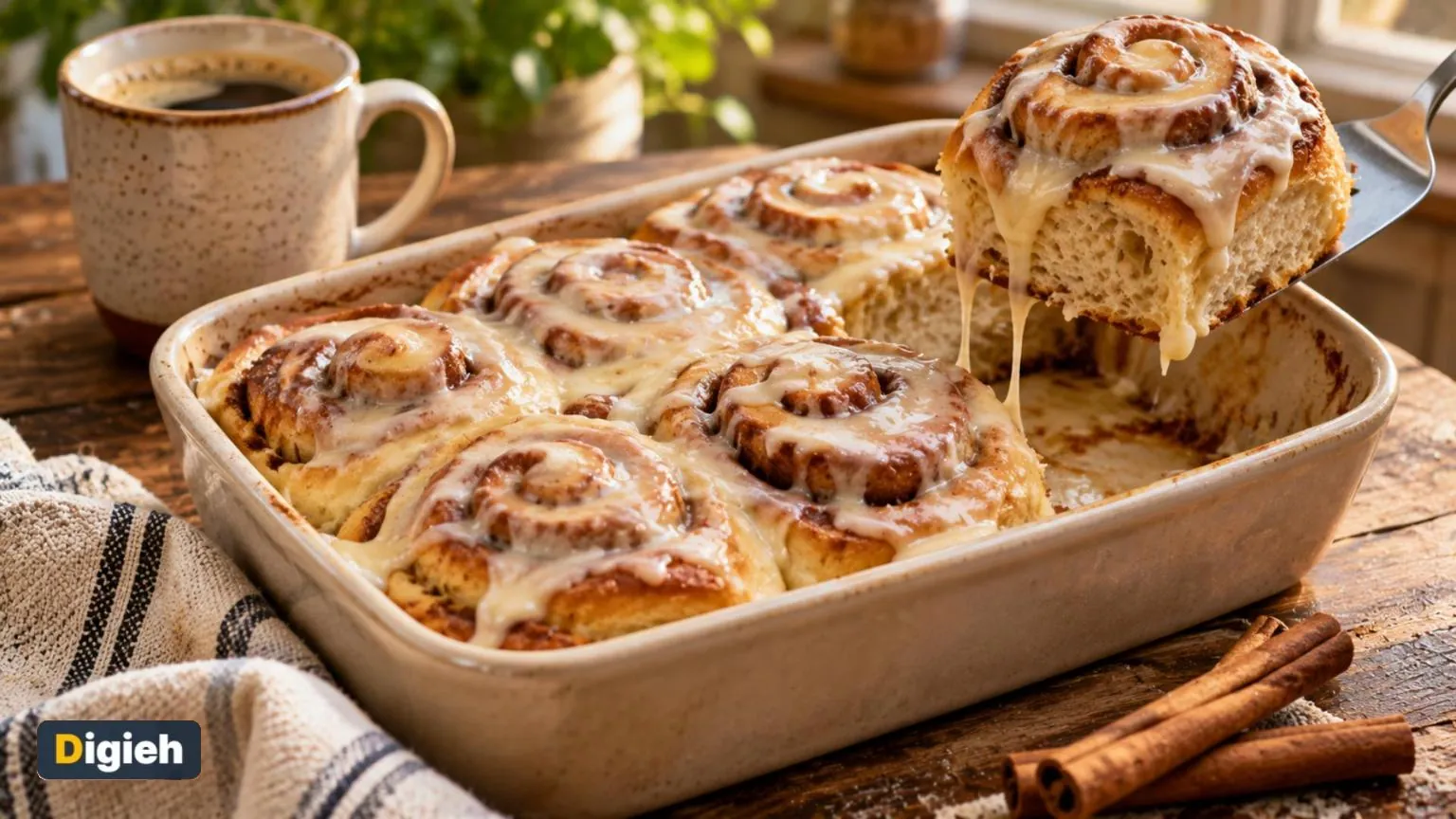
Spread the icing over the warm rolls so it melts into every swirl. Serve right away.
Save a little icing in a small bowl if you like extra. Guests can add more at the table, and leftover icing keeps well in the fridge.
Quick tip. Use unflavored dental floss to slice the log. Slide it under the dough, cross the ends over the top and pull.
The Overnight Shortcut
Want warm rolls without waking up at dawn? Do most of the work the night before.
Follow the steps through cutting the rolls and placing them in the pan. Cover tightly and refrigerate overnight.
The New Mexico State University bread guide describes a cool-rise method. Shaped dough rests in the fridge for 2 to 24 hours. In the morning, let the rolls sit at room temperature while the oven heats, then bake as usual.
Cold rolls may need a few extra minutes in the oven. Watch for that golden top.
Yeast Made Simple
Yeast is a living ingredient, so temperature matters. Liquid that is too hot can kill it, and liquid that is too cold slows it down.
According to the bread guide from New Mexico State University, liquids around 110 to 115 degrees work well. The yeast guide from King Arthur Baking notes that water above roughly 139 degrees will kill yeast.
Active dry and instant yeast can be swapped one for one. Active dry yeast is a bit slower, so allow an extra 15 to 20 minutes of rise time.
Store opened yeast in an airtight container in the freezer. It can stay fresh for up to a year that way.
Good to know. Heat degrades yeast quickly. Keep packets away from the stove and use them before the date on the label.
Keep Raw Dough Off the Menu
It is tempting to sneak a taste of the sugary filling or dough. Food safety experts say to skip it.
Raw flour can carry germs like E. coli, and raw eggs can carry salmonella. Baking kills these germs, according to this Ohio State University article on raw dough.
Wash your hands, bowls and counters with warm, soapy water after handling raw dough. Keep little helpers from licking the spoon too.
Our guide to preventing holiday food poisoning shares more kitchen safety habits.
- Check the yeast date
- Warm milk to about 110 degrees
- Soften butter for the filling
- Grease a 9-by-13-inch pan
- Skip tasting raw dough
- Wash hands and counters after
Free updates
Join the Digieh list
Be the first to know when our weekly brief launches.
No spam. Unsubscribe anytime. Read our Privacy Policy.
Troubleshooting Common Problems
| Problem | Likely Cause | Fix |
|---|---|---|
| Dough did not rise | Milk too hot or old yeast | Test yeast in warm water first |
| Rolls are dry | Too much flour | Stop adding flour once dough is tacky |
| Filling leaked out | Butter was melted | Use very soft, not melted, butter |
| Swirls unraveled | Loose rolling | Roll tightly and pinch the seam |
| Raw centers | Underbaked | Bake a few more minutes under foil |
Kitchen temperature changes rise times a lot. A cool winter kitchen may need longer, so watch the dough, not the clock.
What is the most common reason yeast dough fails to rise?
- Too much cinnamon
- The wrong pan
- Liquid that is too hot or old yeast
Very hot liquid can kill yeast, and old yeast loses strength.
Smart Ingredient Swaps
Out of something? These easy swaps keep baking day on track.
Milk
Whole milk gives the softest crumb, but 2 percent works fine. Unsweetened oat or almond milk can stand in for a dairy-free dough.
Butter
Salted butter works if that is all you have. Just skip the pinch of salt in the filling.
Flour
Bread flour makes slightly chewier rolls with a taller rise. Measure by spooning flour into the cup and leveling it, so you do not pack in too much.
Brown sugar
Dark brown sugar gives a deeper, more caramel-like filling. White sugar mixed with a spoon of molasses also works.
Choosing the Right Pan
A metal 9-by-13-inch pan gives golden, evenly baked rolls. Glass and ceramic pans hold heat longer, so check the rolls a few minutes early.
For smaller batches, use two 9-inch round pans. Freeze one pan before the second rise for a future breakfast.
Leave a little space between rolls when you place them. They will grow together during the second rise and stay soft on the sides.
Flavor Twists to Try
Once you master the basics, it is easy to play with flavors. Here are a few favorites.
Apple pie rolls
Scatter finely diced apple over the filling before rolling. A pinch of nutmeg adds a cozy note.
Orange rolls
Add orange zest to the filling and the icing. Swap the milk in the icing for fresh orange juice.
Pecan sticky buns
Pour a buttery brown sugar sauce and chopped pecans into the pan first. Flip the rolls onto a platter after baking.
Pumpkin spice rolls
Mix pumpkin pie spice into the filling. A drizzle of maple in the icing makes them taste like fall.
Storing and Reheating
Cinnamon rolls taste best on the day they are baked. Still, leftovers can be just as tasty with a little care.
Because the icing contains cream cheese, store iced rolls covered in the refrigerator. Warm a roll in the microwave for 15 to 20 seconds to bring back the softness.
To freeze, wrap un-iced baked rolls tightly and place them in a freezer bag. Thaw them overnight in the fridge, warm them, and add fresh icing.
What to Serve With Cinnamon Rolls
Cinnamon rolls shine at brunch next to savory dishes. Scrambled eggs, bacon and fresh fruit balance the sweetness.
A mug of coffee or our homemade hot chocolate makes a cozy pairing. For a bigger bread basket, add our homemade dinner rolls or a loaf of easy banana bread.
Try this today. Check the date on your yeast and flour. Add fresh packets to your shopping list before baking day.
Frequently Asked Questions
Can I use instant yeast instead of active dry yeast?
Yes. Swap them one for one, and skip the foaming step with instant yeast.
Why are my cinnamon rolls hard?
Too much flour or overbaking usually causes tough rolls. Keep the dough slightly tacky and pull the pan once the tops are golden.
Can I make cinnamon rolls ahead of time?
Yes. Shape them the night before, refrigerate, and bake in the morning.
Do I have to use cream cheese icing?
No. A simple glaze of powdered sugar, milk and vanilla works well too.
How do I know the dough has risen enough?
It should look about doubled in size. A floured finger poked into the dough should leave a dent that stays.
Conclusion
Homemade cinnamon rolls take a little time, but the steps are simple. Warm milk, a good rise and a tight roll set you up for soft, gooey results.
Finish them with cream cheese icing while they are still warm. Bake them for a holiday morning, a brunch or any lazy weekend.
Found this useful?
Editor’s Note
This recipe is written for home kitchens and is accurate as of November 8, 2026. Rise times vary with room temperature. Food safety tips draw on Ohio State University Extension and federal health guidance.
Spot an error in this article? Please contact us at support@digieh.com or read our Corrections Policy.
Keep exploring
Your next read is waiting
 1HealthNew Year Resolutions That Stick With Simple Habits10 min read
 2EntertainmentWhite Elephant Gift Ideas Everyone Will Fight Over10 min read
 3Finance & MarketsWhen to Book Christmas Flights Before Prices Jump10 min read
 4Food & LifestyleClassic French Onion Soup With Golden Melted Cheese9 min read
 5SportsCrown Jewel 2026 Results and the Biggest Moments5 min read
 6BusinessEssential Holiday Staffing Tips for Small Business Owners10 min read