TRENDING
Smart Winter Pet Safety Tips for Cold Days

10 min read
Last updated November 8, 2026
Winter brings snowy walks, cozy nights and holiday treats. It also brings hidden dangers for dogs and cats.
Cold air, icy sidewalks, road salt and festive foods can all harm pets. Many of these risks are easy to miss.
The good news is that a few simple habits keep pets safe and comfortable. This guide covers cold weather care, holiday hazards and the signs that mean it is time to call the vet.
Key Takeaways
- Shorten walks and watch your pet closely in very cold weather.
- Wipe paws, legs and belly after walks to remove salt and chemicals.
- Clean up antifreeze spills right away.
- Keep chocolate, xylitol, grapes and fatty scraps away from pets.
- Call your vet if your pet shivers hard or seems very tired after the cold.
888-426-4435The ASPCA Animal Poison Control Center number to call if your pet eats something harmful.
Know Your Pet’s Cold Limits
Every pet handles cold differently. Coat type, size, age and health all play a role.
The American Veterinary Medical Association (AVMA) cold weather guide suggests learning your pet’s limits and adjusting to them. Shorten walks when temperatures drop sharply.
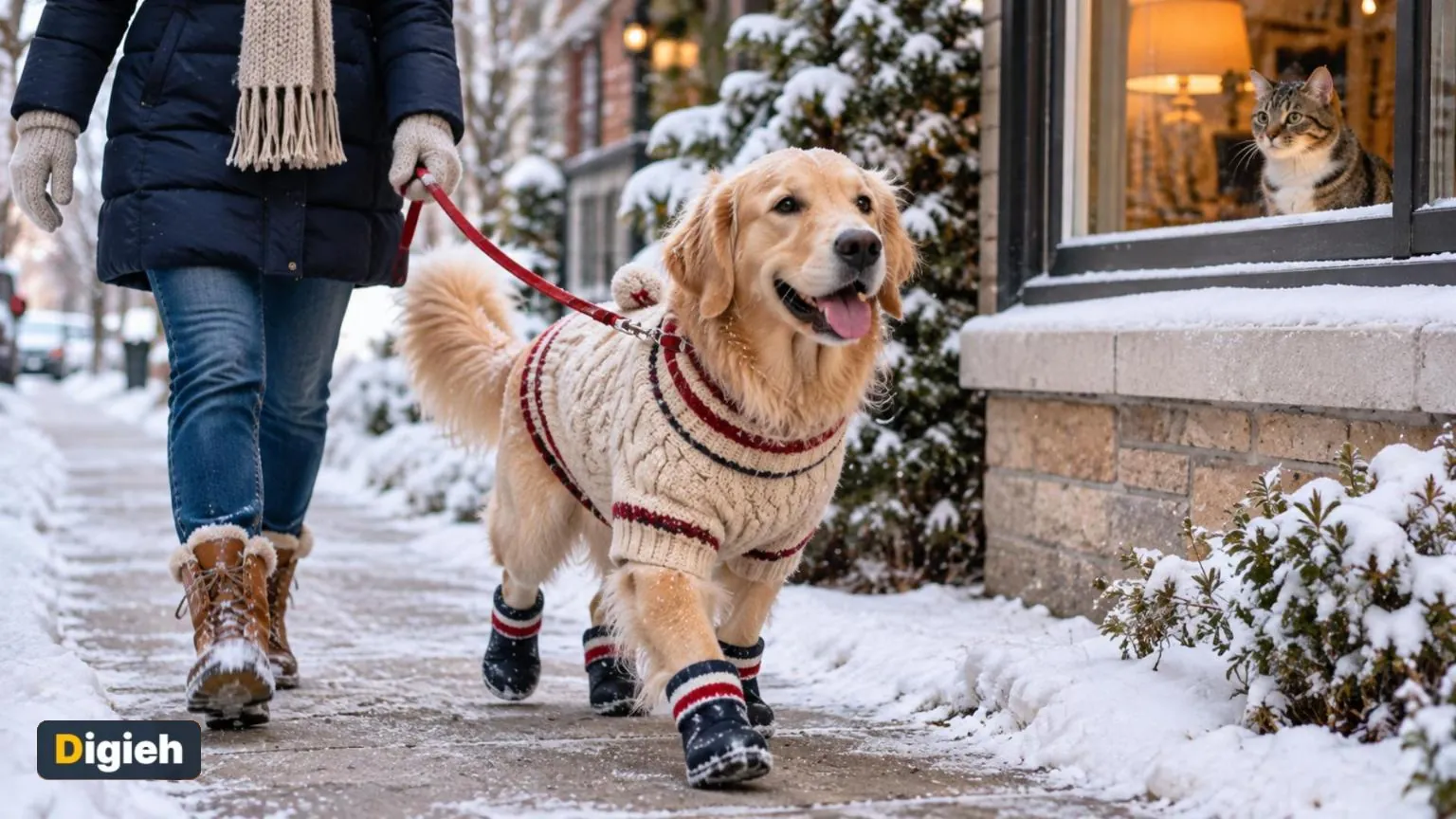
Short-haired dogs and pets that seem bothered by the cold may benefit from a sweater or coat. Make sure it fits well and does not rub.
Talk with your veterinarian about your pet’s specific risks. Older pets and those with health problems may need extra care.
Watch your pet’s body language outside. Lifting paws, whining, slowing down or looking for shelter are signs it is time to head inside.
Puppies and kittens lose heat faster than adult pets. Keep their outdoor time very short until they grow.
Does your dog wear a coat or booties in winter?
- Yes, both
- Just a coat
- Neither
- Not sure
Protect Those Paws
Check Paws Often
Snow, ice and salt can irritate paw pads. Look for cracks, redness or bleeding after each walk.
If your dog wears booties, make sure they fit properly. Loose booties can slip off or rub.
Wipe After Every Walk
Wipe or wash your pet’s feet, legs and belly when you come inside. This removes snow, ice, salt and de-icing chemicals.
Pets often lick their paws, so this step keeps them from swallowing harmful chemicals. Keep a towel by the door to make it a habit.
Use Pet-Safe De-Icers
Choose pet-safe ice melt products for your own steps and walkway. The AVMA recommends them to protect pets.
Quick tip. Keep a towel and a bowl of warm water by the door. Rinse and dry paws after every winter walk.
Beware of Antifreeze
Antifreeze is a serious danger for pets. It can be deadly if swallowed.
Clean up any spills quickly and completely, as the AVMA advises. Store containers tightly closed and out of reach.
Check your garage and driveway for drips. Keep pets away from areas where cars are serviced.
Car Safety in Winter
Cats and small animals sometimes curl up near warm car engines. Before you start your car, check underneath, bang on the hood and honk the horn.
Never leave your pet alone in a car. Cars can get dangerously cold in winter, just as they get hot in summer.
Only bring pets on car trips when necessary. Use a harness or carrier to keep them secure.
Good to know. Pets often lick their paws after walks. That is how salt and chemicals end up in their stomachs.
Shelter for Outdoor Pets
The best place for most pets in winter is inside with the family. In extreme cold, even outdoor pets should come indoors.
Outdoor animals need an insulated shelter that blocks wind. They also need fresh water that does not freeze.
Keep pets away from frozen ponds, lakes and streams. Ice can break under their weight.
Special Care for Senior Pets
Older pets often feel the cold more. Stiff joints can make icy walks painful and slippery.
Give senior pets a warm, padded bed away from drafts. Raised beds keep them off cold floors.
Walk carefully on icy paths and keep outings short. Watch for limping or reluctance to move.
Ask your vet about joint comfort during winter. Regular checkups catch problems before they get worse.
Keeping Cats Safe and Warm
Indoor cats are safest in winter. Outdoor cats face cold, cars and fewer places to shelter.
Cats love warm spots, including laundry machines and car engines. Check your dryer before you start it, and bang the hood before driving.
Give cats cozy places to nap, like a fleece blanket in a sunny window. A heated pet bed made for animals can help older cats.
Keep litter boxes clean and easy to reach. Cats may avoid a box in a cold basement or garage.
Small Pets and Birds
Rabbits, guinea pigs, hamsters and birds are sensitive to temperature swings. Keep their cages away from cold windows and doors.
Avoid placing cages right next to heaters or fireplaces. Sudden heat can stress small animals too.
Check water bottles daily so they do not freeze in cool rooms. Add extra bedding for warmth.
Holiday Food Dangers
Holiday tables are full of foods that can harm pets. It is best to keep people food away from them.
Foods to Keep Away
According to Cornell University’s canine health center, these foods are risky for dogs.
- Chocolate, coffee and caffeine, with dark chocolate the most dangerous
- Xylitol, a sweetener found in many sugar-free products
- Raisins and grapes, which can cause kidney failure
- Fatty foods like meat trimmings, gravy and cheese
- Bones, which can cause choking or blockages
The AVMA also lists onions and unbaked yeast dough as hazards. Yeast dough can cause painful bloating.
Safer Ways to Share
Offer pet treats made for your dog or cat. Ask guests not to feed pets from the table.
Clear plates from counters and secure the trash. Pets love to raid garbage full of bones and wrappers.
- No chocolate or coffee
- No sugar-free sweets with xylitol
- No grapes or raisins
- No fatty scraps or bones
- No onions or raw dough
- Trash secured
Decorations and Plants
Decorations
Tinsel, ribbon and garland can cause choking or intestinal blockage if swallowed. Broken ornaments can cut mouths and paws.
Secure your Christmas tree so it cannot tip over. The AVMA advises skipping water additives if pets might drink from the stand.
Chewed electrical cords can cause burns. Unplug lights and decorations when you are away.
Never leave pets alone near lit candles. A wagging tail can knock one over quickly.
Holiday Plants
Several festive plants can be dangerous if eaten. The AVMA holiday pet safety page lists poinsettia, amaryllis, mistletoe, holly, pine and cedar.
Cornell notes that lilies are highly toxic and can cause kidney failure. Keep them out of homes with cats entirely.
Choose artificial plants or place real ones well out of reach.
Which holiday flower is highly toxic to pets and can cause kidney failure?
- Sunflower
- Rose
- Lily
Lilies are highly toxic and can lead to kidney failure, according to Cornell.
Gifts and Wrapping Hazards
Holiday gifts can hide dangers for curious pets. Batteries, small toy parts and ribbons are common problems.
Open presents in a room where pets cannot grab wrapping scraps. Clean up paper, bows and string right away.
Never leave food gifts under the tree. Dogs can sniff out wrapped chocolate or treats through paper.
If you give your pet a new toy, choose one made for its size. Remove tags and small pieces before play.
Free updates
Join the Digieh list
Be the first to know when our weekly brief launches.
No spam. Unsubscribe anytime. Read our Privacy Policy.
Holiday Guests and Parties
Busy gatherings can stress pets. Give nervous animals a quiet room or crate away from the noise.
Watch doors so pets do not slip outside. Make sure they wear identification tags and have an up-to-date microchip.
Tell guests about your pets ahead of time. Some visitors may have allergies or fears.
Traveling With Pets
Planning a holiday trip with your pet? A little preparation helps.
Pack food, medicines, medical records and a first aid kit. Bring identification information too.
Some trips across state lines require a health certificate. Check the rules for your destination and talk with your vet before flying.
Prepare for Winter Storms
Severe weather and power outages can happen fast. Keep an emergency kit with your pet’s supplies.
Include several days of food and water, medicines and a warm blanket. Add a leash, carrier and copies of vaccine records.
Our guide to space heater safety helps keep warm rooms safe for curious pets.
When to Call the Vet
Call your veterinarian if your pet is shivering or very tired after time in the cold. These can be signs of trouble.
Contact your vet or an emergency clinic right away if your pet eats something harmful. Watch for vomiting, diarrhea, pain, loss of appetite or unusual behavior.
You can also call a pet poison hotline for help.
The American Society for the Prevention of Cruelty to Animals (ASPCA) Animal Poison Control Center is at 888-426-4435. The Pet Poison Helpline is at 855-764-7661. Fees may apply.
Know where your nearest 24-hour emergency vet is before you need it. Save the number in your phone.
This article shares general pet safety information, not veterinary advice. Ask your veterinarian about your own pet.
What should you do before starting your car on a cold morning?
- Bang the hood and honk the horn
- Turn on the radio
- Open the trunk
Cats may hide near warm engines, so bang the hood and honk first.
Winter Grooming Tips
Dry indoor air can leave pets with flaky, itchy skin. A humidifier can make your home more comfortable for everyone.
Avoid bathing pets too often in winter. Frequent baths strip natural oils that protect the skin.
Keep the fur between paw pads trimmed. Long fur collects ice balls that hurt to walk on.
Do not shave long-haired dogs down to the skin in winter. Their coat helps keep them warm.
Food and Water Needs in Winter
Active outdoor pets may burn more energy staying warm. Indoor pets that exercise less may need less food.
Watch your pet’s weight through the season. Ask your vet if you are unsure how much to feed.
Fresh water matters in winter too. Heated homes are dry, and pets still need to drink often.
Indoor Enrichment Ideas
Long, cold days can leave pets bored. Boredom can lead to chewing, barking or other unwanted habits.
Rotate toys every few days so they feel new. Puzzle feeders turn mealtime into a fun brain game.
Teach a new trick with short, positive training sessions. Ten minutes a day keeps minds busy and builds your bond.
Fun and Safe Winter Activities
Pets still need exercise and play in winter. Try indoor games like hide-and-seek with treats or a puzzle feeder.
Short, brisk walks during the warmest part of the day work well. Bright reflective gear helps drivers see you in the early dark.
Keep up with grooming too. Our tips on how to remove pet hair make cleanup easier during shedding season.
Try this today. Save your vet’s number and the pet poison hotline in your phone. Find your nearest 24-hour emergency vet too.
Frequently Asked Questions
How cold is too cold for a dog?
It depends on the dog’s coat, size, age and health. Shorten walks in very cold weather and watch for shivering or discomfort.
Is road salt bad for dogs’ paws?
Salt and de-icing chemicals can irritate paws. Wipe your dog’s feet, legs and belly after walks.
Are poinsettias poisonous to pets?
Poinsettias can irritate the mouth and stomach. They may cause drooling, vomiting or diarrhea if eaten.
What should I do if my dog eats chocolate?
Call your vet, an emergency clinic or a pet poison hotline right away. Dark chocolate is the most dangerous.
Do dogs need coats in winter?
Short-haired dogs and dogs bothered by the cold may benefit from a well-fitting sweater or coat.
Conclusion
Winter can be wonderful for pets with a little extra care. Know your pet’s cold limits, protect paws and clean up antifreeze.
Keep holiday foods, plants and decorations out of reach. If something goes wrong, call your vet or a pet poison hotline right away.
Read next. Poinsettia Care Tips to Keep Plants Bright Longer
Found this useful?
Editor’s Note
This article is accurate as of November 8, 2026. It draws on guidance from the American Veterinary Medical Association and Cornell University College of Veterinary Medicine. It is general information, not veterinary advice.
Spot an error in this article? Please contact us at support@digieh.com or read our Corrections Policy.
Keep exploring
Your next read is waiting
 1Food & LifestyleWhich Holiday Foods Can You Fly With Safely10 min read
 2Finance & MarketsSmart Year-End Charitable Giving Tax Tips for 20269 min read
 3SportsCrown Jewel 2026 Results and the Biggest Moments5 min read
 4HealthHoliday Heartburn Relief: Simple Tips That Really Work10 min read
 5EntertainmentWhite Elephant Gift Ideas Everyone Will Fight Over10 min read
 6BusinessEssential Holiday Staffing Tips for Small Business Owners10 min read