TRENDING
Poinsettia Care Tips to Keep Plants Bright Longer

9 min read
Last updated November 8, 2026
Few plants say holiday season like a bright red poinsettia. Those colorful tops brighten tables, windowsills and front porches all through December.
Many poinsettias drop their leaves within a few weeks, though. Usually the cause is simple, like too much water, cold drafts or not enough light.
With a little care, your plant can stay beautiful well into the new year. This guide covers choosing, watering, placement and even how to make it bloom again.
Key Takeaways
- Choose a plant with stiff stems and green leaves all the way down.
- Give it at least six hours of bright, indirect light each day.
- Keep it away from cold drafts, heat vents and fireplaces.
- Water when the soil surface feels dry, and never let it sit in water.
- Reblooming takes about 14 hours of darkness each night starting in fall.
6 hoursThe minimum daily bright, indirect light poinsettias need, according to Clemson Cooperative Extension.
Choosing a Healthy Poinsettia
A good plant starts at the store. According to Clemson Cooperative Extension, look for these signs.
- Fully colored bracts, which are the colorful leaves on top
- Dark green leaves all the way down the stems
- A full, balanced shape
- Stiff stems with no wilting or drooping
- Small yellow flower buds in the center that are not fully open
Those tiny yellow buds are the real flowers. The colorful parts are actually modified leaves called bracts.
How long does your poinsettia usually last?
- A few weeks
- Until the new year
- I keep it all year
- Not sure
A Quick History of the Holiday Favorite
Poinsettias are native to Mexico, where they grow as large shrubs. In warm climates, they can grow taller than a person.
Over time, they became a beloved holiday plant in the United States. Today, they are one of the most popular potted plants of the season.
Plant breeders have created many colors and patterns. Red is still the classic choice, but white, pink and marbled types are popular too.
Bringing It Home
Poinsettias are sensitive to cold. Even a short trip through freezing air can damage the leaves.
Ask the store to wrap or sleeve the plant for the ride home. Do not leave it sitting in a cold car while you run other errands.
Once home, unwrap it promptly and find it a bright, warm spot. Give it a day to settle before you judge how it looks.
Light Needs
Poinsettias love bright light. Clemson recommends at least six hours of bright, indirect light each day.
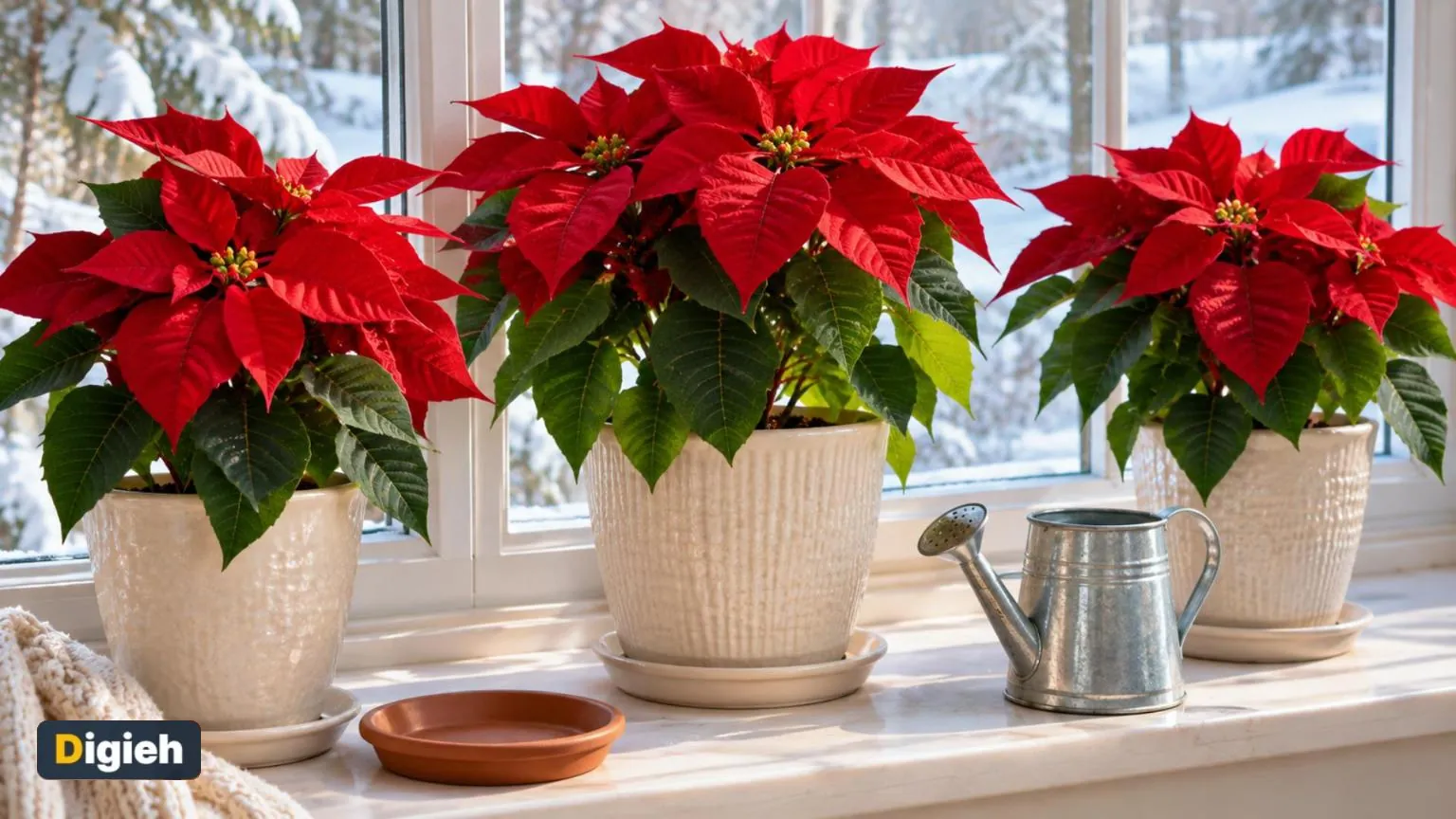
A spot near a sunny window works well. Direct sun can fade the bracts, so use a sheer curtain if the light is strong.
Rotate the pot every few days so all sides get even light.
If your home is dim in winter, choose the brightest room you have. A plant tucked in a dark corner will fade faster.
Keep leaves from touching cold window glass. The chill can damage the bracts overnight.
Quick tip. Lift the pot to check moisture. A light pot usually means it is time to water.
The Right Temperature
Keep daytime temperatures at or below 70 degrees, Clemson advises. Cooler rooms help the color last longer.
Mississippi State University Extension suggests days around 65 to 70 degrees and nights around 60 to 65 degrees.
Avoid cold drafts from doors and windows. Also keep the plant away from heat vents, radiators and fireplaces.
Temperatures below 50 degrees can make leaves drop early. Keep plants off cold windowsills on frosty nights.
How to Water a Poinsettia
Watering is where most people go wrong. Too much and too little water both cause problems.
Check the Soil
Water when the surface of the soil feels dry. Mississippi State suggests checking the top 1 to 2 inches.
Clemson warns never to let the potting mix dry out completely. A dry plant wilts quickly and drops leaves.
Remove the Foil
Many poinsettias come wrapped in decorative foil or plastic sleeves. These covers trap water at the bottom.
Remove the decorative cover before watering, as Clemson advises. Water until it drains from the hole, then let it drain fully.
Never let the plant sit in standing water. Soggy roots can rot.
Use room-temperature water instead of cold tap water. Cold water can shock the roots of tropical plants.
A small plant in a warm room may need water every few days. Larger pots dry out more slowly, so always check before watering.
If you want to keep the foil for looks, poke holes in the bottom. Set the pot on a saucer to catch extra water.
- Bright, indirect light
- Away from drafts and vents
- Water when the surface is dry
- Remove or poke holes in the foil
- Empty the saucer after watering
- No fertilizer while blooming
Boost Humidity
Indoor heat makes winter air dry. Poinsettias appreciate a bit of extra moisture.
Mississippi State suggests setting the pot on a tray of pebbles with water. Make sure the pot itself does not sit in the water.
Light misting can also help in very dry homes.
Grouping several plants together also raises humidity around them. Plants release moisture as they breathe, which helps their neighbors.
Avoid placing poinsettias right next to a running humidifier, though. Constant dampness on the leaves can invite disease.
Do Not Fertilize While It Blooms
Skip fertilizer during the holiday season. Clemson says not to fertilize while the plant is in bloom.
Start feeding again after the holidays if you plan to keep the plant. Use a balanced fertilizer as directed on the label. Too much fertilizer can burn roots, so follow the label closely.
Good to know. The colorful parts of a poinsettia are not petals. They are modified leaves called bracts.
Are Poinsettias Poisonous?
Poinsettias have a scary reputation, but the truth is milder. Clemson says they are not considered toxic.
The milky sap tastes bad, so pets and children rarely eat much. Still, eating the leaves can cause an upset stomach.
The sap may also irritate skin or eyes. Wash skin with soap and water, and rinse eyes with water if sap gets in them.
It is still smart to keep plants out of reach of curious pets and toddlers. Our guide to winter pet safety tips covers other holiday plants to watch.
What should you do with the decorative foil before watering?
- Fill it with water
- Remove it so water can drain
- Tape it tighter
Foil traps water. Remove it so excess water drains away from the roots.
Common Problems and Fixes
| Problem | Likely Cause | Fix |
|---|---|---|
| Leaves dropping | Cold drafts or temperature swings | Move away from doors and vents |
| Wilting | Soil too dry | Water thoroughly and let drain |
| Yellow leaves | Too much water | Let soil dry slightly and remove foil |
| Faded bracts | Too much direct sun | Filter light with a sheer curtain |
| Leggy growth | Not enough light | Move to a brighter spot |
A few dropped leaves are normal after a move. If many fall, check the temperature and watering first.
Free updates
Join the Digieh list
Be the first to know when our weekly brief launches.
No spam. Unsubscribe anytime. Read our Privacy Policy.
Keeping Your Poinsettia After the Holidays
You can keep your poinsettia as a houseplant all year. Many people enjoy the challenge.
Mississippi State suggests cutting the plant back to about 6 inches above the soil in late winter or early spring. Remove any damaged leaves.
When outdoor temperatures stay above 60 degrees, you can move it outside. Start in partial shade and slowly increase sun over a week or so.
Illinois Extension notes that the plant should come back inside when nighttime temperatures drop to about 40 degrees.
How to Make a Poinsettia Rebloom
Poinsettias are short-day plants. They change color when nights get long.
The Darkness Schedule
Starting in early October, give the plant about 14 hours of total darkness each night. A closet or a lightproof box works well.
During the day, give it 6 to 8 hours of bright light, Clemson advises. Continue for about 8 to 10 weeks.
Even small amounts of light during the dark period can stop the color change. Be consistent every night.
What to Expect
Bracts should begin to color in late November or December. Illinois Extension notes that reblooming is not guaranteed, so enjoy the process.
Once the color appears, move the plant back to a sunny window and enjoy it through the holidays.
Mark the start date on your calendar so you remember each night. Setting a phone reminder for the move into darkness helps you stay on schedule.
Keep the plant at steady temperatures during this period. Illinois Extension suggests nights in the low 60s during the dark treatment.
How many hours of darkness each night help a poinsettia rebloom?
- 2 hours
- 6 hours
- About 14 hours
About 14 hours of uninterrupted darkness each night starting in early October triggers color.
Repotting and Pruning Through the Year
Poinsettias you keep need a little care through the seasons. Illinois Extension offers a simple timeline.
In mid-February, check for insects such as whiteflies. Prune leggy stems back to about 5 to 6 inches.
In March, remove dried and faded leaves. Move the plant to a bright, sunny spot.
In May, pinch or prune branch tips to encourage bushy side growth. Repot into a slightly larger container with fresh, sterile potting mix.
Keep the soil consistently moist but well drained all year. Regular checks keep the plant healthy for fall.
Watch for Pests
Indoor plants can attract small pests. Whiteflies and fungus gnats are common on poinsettias.
Check the undersides of leaves when you water. Tiny white insects that fly up when disturbed are often whiteflies.
Fungus gnats usually mean the soil is staying too wet. Let the top of the soil dry a bit more between waterings.
Isolate a plant with pests from your other houseplants. Ask a local garden center or extension office about safe treatments.
Poinsettias as Gifts
A poinsettia makes a thoughtful, affordable holiday gift. Teachers, neighbors and hosts all appreciate them.
Choose a healthy plant and protect it from cold on the way. Remove price tags and add a ribbon around the pot.
Include a small card with simple care tips. A note about light, water and drafts helps the plant last longer.
Decorating With Poinsettias
Poinsettias come in red, white, pink, cream and speckled varieties. Mixing colors creates a striking display.
Group several plants together on a staircase or entry table. Small plants make great centerpieces and hostess gifts.
Place plants where people can enjoy them but not bump them. Busy doorways and drafty halls are hard on delicate leaves.
Use matching pots or baskets for a polished look. Just make sure each container lets water drain.
Our ideas for holiday decorating on a budget show more ways to add festive color. For other seasonal tips, see how to keep a Christmas tree fresh.
Try this today. Check your poinsettia’s foil wrap and remove it or poke drainage holes. Move the plant away from any drafty spots.
Frequently Asked Questions
How often should I water a poinsettia?
Water when the soil surface feels dry. Do not let it dry out completely or sit in standing water.
Why is my poinsettia dropping leaves?
Cold drafts, temperature swings, too much water or too little water are the most common causes.
Can poinsettias live outside?
In warm months, yes. Bring them inside before nights drop to about 40 degrees.
Are poinsettias poisonous to cats and dogs?
They are not considered highly toxic, but eating them may cause an upset stomach. Keep them out of reach.
How do I make my poinsettia turn red again?
Give it about 14 hours of total darkness each night starting in early October, plus bright light during the day.
Conclusion
Poinsettias can stay bright for weeks with the right care. Give them bright, indirect light, steady temperatures and careful watering.
Remove the foil wrap, avoid drafts and keep them away from curious pets. With patience, you can even make your poinsettia bloom again next year.
Found this useful?
Editor’s Note
This article is accurate as of November 8, 2026. It draws on guidance from Clemson, Mississippi State and University of Illinois extension services.
Spot an error in this article? Please contact us at support@digieh.com or read our Corrections Policy.
Keep exploring
Your next read is waiting
 1HealthHoliday Heartburn Relief: Simple Tips That Really Work10 min read
 2Food & LifestyleBest Homemade Cinnamon Rolls With Cream Cheese Icing9 min read
 3TechnologyHow to Choose the Best Home Wi-Fi Router10 min read
 4EntertainmentWhite Elephant Gift Ideas Everyone Will Fight Over10 min read
 5Finance & MarketsSmart Year-End Charitable Giving Tax Tips for 20269 min read
 6SportsIce Fishing for Beginners: Essential Safety and Gear10 min read