TRENDING
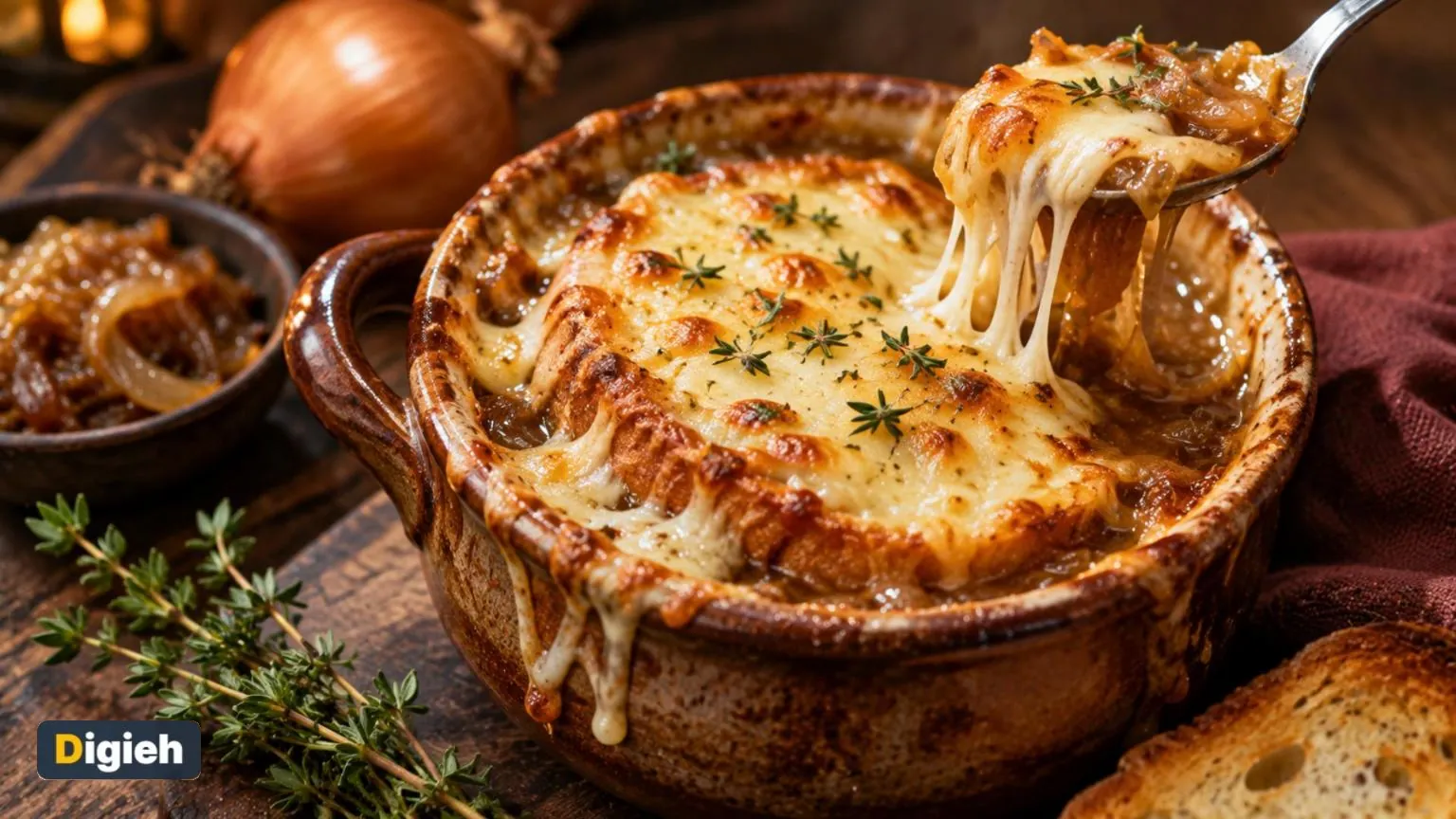
Classic French Onion Soup With Golden Melted Cheese

9 min read
Last updated November 8, 2026
French onion soup turns a few humble onions into something magical. Slow cooking draws out their natural sugars until they turn deep brown and sweet.
Add rich broth, toasted bread and bubbling cheese. The result is one of the coziest bowls of winter. It feels like a restaurant treat, yet it costs very little to make.
The only real secret is patience with the onions. This recipe walks you through every stage, from slicing to broiling.
Key Takeaways
- Caramelizing onions on low heat takes time, so plan for it.
- Slice onions about the width of a pencil so they cook evenly.
- Use oven-safe bowls under the broiler and handle them with mitts.
- Gruyere or Swiss cheese gives the classic stretchy top.
- The soup base freezes well, so make a double batch.
3 monthsHow long broth-based soups taste best in the freezer, according to Iowa State University.
At a Glance
Serves 6
Active time About 30 minutes
Total time About 1 hour 45 minutes
Skill level Easy, but slow
Equipment Large heavy pot, baking sheet and oven-safe soup bowls
How often do you make soup at home in winter?
- Every week
- A few times a month
- Rarely
- Not sure
Shopping List
Produce and Pantry
- 3 pounds yellow onions (about 5 large)
- 3 tablespoons olive oil or butter
- 1 teaspoon salt, plus more to taste
- 2 garlic cloves, minced
- 2 tablespoons all-purpose flour
- 1/2 cup dry white wine or extra broth
- 6 cups beef broth
- 2 bay leaves
- 4 sprigs fresh thyme or 1 teaspoon dried
- 1 teaspoon Worcestershire sauce
- Black pepper to taste
For the Topping
- 6 thick slices of baguette or rustic bread
- 2 cups shredded Gruyere or Swiss cheese
- 1/4 cup grated Parmesan (optional)
Want leftovers or a bigger crowd? The scaler shows how much to make.
Servings scaler
One batch makes about 6 bowls.
Stage One. Caramelize the Onions
This stage builds almost all of the soup’s flavor. Do not rush it.
Slice evenly
Trim, peel and halve the onions. Slice them about the width of a pencil, as Mississippi State University Extension suggests, since thinner slices can burn.
Start low and slow
Heat the oil in a wide, tall-sided pot over low heat. Add the onions and sprinkle with salt.
Cover at first
Put the lid on for the first 15 minutes so the onions soften in their own steam. A covered pot holds in moisture and helps prevent burning.
Stir and keep going
Remove the lid and keep cooking, stirring often. Expect about 40 to 60 minutes in total, until the onions are deep golden brown and jammy.
Loosen the browned bits
Keep a small glass of water nearby. Add a splash whenever brown bits stick to the bottom, then scrape them up.
Those browned bits are pure flavor. Scraping them back into the onions makes the soup richer.
Quick tip. Chill the onions in the fridge before slicing. Cold onions tend to bring fewer tears.
How to Tell When They Are Ready
| Color | Time on Low Heat | What It Means |
|---|---|---|
| Pale and soft | About 10 to 15 minutes | Just sweated, not ready |
| Light gold | About 25 minutes | Getting there |
| Deep amber brown | About 40 to 60 minutes | Perfect for soup |
| Dark with black edges | Too long or too hot | Scorched and bitter |
Times vary with your stove and pot. Trust color and smell more than the clock.
Why Low Heat Matters
High heat browns the outside of the onions before the inside softens. The result tastes bitter instead of sweet.
Low heat gives the natural sugars time to change slowly. That slow change creates the deep, rich flavor this soup is famous for.
A heavy pot also helps. Thick metal spreads heat evenly and reduces hot spots that scorch the onions.
A Budget-Friendly Classic
Onions are one of the cheapest vegetables in the store. Three pounds can feed a family of six.
Day-old bread works perfectly for the topping, so nothing goes to waste. You can stretch pricey cheese by mixing it with a milder, cheaper one.
Homemade broth lowers the cost even more. It also lets you control the salt.
Stage Two. Build the Soup
Stir the garlic into the onions and cook for one minute. Sprinkle the flour over the top and stir for another minute.
Pour in the wine and scrape the bottom of the pot. Let it bubble until most of the liquid cooks off.
Add the broth, bay leaves, thyme and Worcestershire sauce. Bring to a gentle boil, then lower the heat and simmer uncovered for 30 minutes.
Remove the bay leaves and thyme stems. Taste and season with salt and pepper.
- Onions are deep amber brown
- Browned bits scraped up
- Broth simmered 30 minutes
- Bay leaves removed
- Bread toasted until crisp
- Oven-safe bowls on a baking sheet
Stage Three. Toast and Broil
Toast the Bread
Heat the oven to 400 degrees. Lay the bread slices on a baking sheet and toast for about 8 to 10 minutes until dry and crisp.
Toasted bread holds up better in the soup. Soft bread turns soggy quickly.
Assemble the Bowls
Set oven-safe bowls on a rimmed baking sheet. Ladle in the hot soup, leaving a little room at the top.
Float a slice of toast on each bowl. Pile the cheese on top, letting some hang over the edges.
Broil to Golden
Turn on the broiler and slide the sheet onto a rack a few inches below the heat. Broil for 2 to 4 minutes until the cheese bubbles and browns in spots.
Watch closely the whole time. Cheese can go from golden to burned in seconds.
Good to know. Broilers vary a lot. Stay by the oven and pull the bowls as soon as the cheese browns.
Bowl and Broiler Safety
Broiling adds a dramatic finish, but it brings real heat. A few precautions keep everyone safe.
Use only bowls marked oven-safe or broiler-safe. Regular dishes can crack or shatter under high heat.
Always move bowls on a baking sheet, never one by one. Wear thick oven mitts and set the bowls on heat-proof plates or chargers before serving.
Warn guests that the bowls are very hot. Keep little hands well away until the soup cools a bit.
No oven-safe bowls? Melt the cheese onto the toast on a baking sheet under the broiler. Then float the cheesy toast on top of each serving.
Troubleshooting Common Problems
Even simple soups can go sideways. Here is how to fix the most common issues.
The onions are burning
The heat is too high. Turn it down, add a splash of water and scrape the bottom right away.
The onions are still pale after an hour
Your heat may be too low or the pot too crowded. Raise the heat slightly and spread the onions out.
The soup tastes flat
It likely needs more salt or acid. Add salt a pinch at a time, or stir in a few drops of vinegar.
The soup is too sweet
Very sweet onions can tip the balance. A little extra salt, black pepper or a dash of Worcestershire sauce brings it back.
The bread sank and turned mushy
The toast was too thin or not dry enough. Use thick slices and toast them until crisp all the way through.
Free updates
Join the Digieh list
Be the first to know when our weekly brief launches.
No spam. Unsubscribe anytime. Read our Privacy Policy.
Tips for a Perfect Cheese Crust
The bubbly top is the best part for many people. A few small tricks make it even better.
Let the cheese come to room temperature before broiling. It melts faster and more evenly.
Pile the cheese a little past the bread so it touches the bowl rim. Those edges brown into crispy, chewy bits.
Finish with a pinch of fresh thyme or cracked pepper. It adds color and a fresh aroma.
Choosing the Right Cheese
| Cheese | Flavor | Melt |
|---|---|---|
| Gruyere | Nutty and rich | Smooth and stretchy |
| Swiss | Mild and slightly sweet | Very stretchy |
| Provolone | Mild and buttery | Melts well |
| Mozzarella | Very mild | Stretchy but less flavor |
| Parmesan | Salty and sharp | Best mixed with others |
A mix of Gruyere and a little Parmesan gives a deep, savory crust. Shred cheese from a block for the smoothest melt.
Which cheese is the traditional topping for French onion soup?
- Gruyere
- Cheddar
- Feta
Gruyere melts smoothly and adds a nutty, rich flavor.
Make-Ahead Plan
French onion soup is perfect for planning ahead. The flavor often tastes even better the next day.
Caramelize the onions up to two days ahead and keep them covered in the fridge. You can also make the full soup base and chill it.
When ready to serve, reheat the soup to a full boil. Then toast the bread and broil the bowls.
Storing Leftovers Safely
Cool leftover soup quickly. According to Texas A&M AgriLife’s Dinner Tonight program, leftovers should go into the fridge within two hours.
Divide big batches into shallow containers so they chill faster. Leftovers keep about three to four days in the refrigerator.
Bring soups to a rolling boil when reheating. Store the bread and cheese separately so the bread does not get soggy.
Freezing French Onion Soup
The soup base freezes beautifully. Freeze it without the bread and cheese.
Leave about half an inch of headspace in pint containers and one inch in quarts. That advice comes from the Iowa State University guide to freezing soup. It says broth-based soups taste best within three months.
Thaw frozen soup overnight in the refrigerator. Reheat it gently, then add fresh toast and cheese before broiling.
Easy Variations
Vegetarian version
Use a rich mushroom or vegetable broth instead of beef broth. A splash of soy sauce adds savory depth.
Mixed onions
Combine yellow onions with a few sweet onions or shallots. Each one adds a slightly different sweetness.
Slow cooker onions
Some cooks caramelize onions in a slow cooker to save stovetop time. Stir occasionally and finish the soup on the stove.
Mini bowls for parties
Serve the soup in small oven-safe cups with bite-size toasts. They make a cozy starter for a holiday dinner.
What to Serve With It
A crisp green salad with a tangy vinaigrette balances the rich soup. Roasted vegetables or a simple roast chicken turn it into a full meal.
For more cozy soups, try our easy vegetable soup or start with our homemade chicken broth. Our easy roast chicken pairs well for a bigger dinner.
Try this today. Check your soup bowls for an oven-safe or broiler-safe mark on the bottom. Set aside the ones you can use.
Frequently Asked Questions
How long does it take to caramelize onions?
Plan for about 40 to 60 minutes on low heat. Rushing with high heat burns the outside before the onions turn sweet.
What is the best onion for French onion soup?
Yellow onions are the classic choice. They balance sweetness and savory flavor.
Can I make French onion soup without wine?
Yes. Use extra broth with a small splash of vinegar for brightness.
What cheese goes on French onion soup?
Gruyere is traditional. Swiss and provolone also melt well.
Can I freeze French onion soup?
Yes. Freeze the soup base without bread or cheese for up to about three months.
Conclusion
French onion soup rewards patience with incredible flavor. Low, slow caramelized onions are the heart of the dish.
Simmer them in rich broth, top with toast and cheese, and broil until golden. Handle the hot bowls with care, and enjoy a cozy bowl on a cold night.
Found this useful?
Editor’s Note
This recipe is written for home kitchens and is accurate as of November 8, 2026. Cooking times vary by stove and pot. Food safety and storage tips draw on university extension guidance.
Spot an error in this article? Please contact us at support@digieh.com or read our Corrections Policy.
Keep exploring
Your next read is waiting
 1HealthHoliday Heartburn Relief: Simple Tips That Really Work10 min read
 2Food & LifestyleEasy Shrimp Cocktail With Zesty Homemade Cocktail Sauce9 min read
 3TechnologyEasy Ways to Transfer Data to a New Phone10 min read
 4Finance & MarketsSmart Year-End Charitable Giving Tax Tips for 20269 min read
 5SportsVital Sledding Safety Tips Every Parent Should Know10 min read
 6EntertainmentUgly Christmas Sweater Party Ideas Guests Will Love10 min read