TRENDING
Your Nutcracker Ballet Guide: Magical Tips for First-Timers

10 min read
Last updated November 8, 2026
For many families, the holidays are not complete without a trip to The Nutcracker. The music, costumes and snowfall on stage make it pure seasonal magic.
If you have never been, the ballet can feel a little mysterious. You may wonder about the story, the dress code and whether it suits young kids.
This guide answers those questions and more. You will learn the story, a bit of history and practical tips for a smooth first visit.
Key Takeaways
- The Nutcracker tells the story of a girl, a magical toy and a dreamlike journey.
- Tchaikovsky wrote the music, and the ballet premiered in Russia in 1892.
- Many performances run about two hours, including one intermission.
- Dress codes are usually relaxed, so wear what feels comfortable.
- Prepare kids by sharing the story and music before the show.
1892The year The Nutcracker premiered at the Imperial Mariinsky Theatre in Saint Petersburg, according to Atlanta Ballet.
The Story in Simple Words
The Nutcracker has no spoken words. The dancers tell the story through movement and music.
Knowing the plot ahead of time helps you follow along. Details vary by production, but the main story is similar.
Act One
The ballet opens at a family Christmas Eve party. A young girl, often named Clara or Marie, receives a wooden nutcracker as a gift from her mysterious godfather.
After the party, she sneaks back to check on her new toy. At midnight, the room grows, the tree soars and toy soldiers come to life.
The nutcracker leads the soldiers in a battle against a band of mice and their king. With the girl’s help, the nutcracker wins and transforms into a prince.
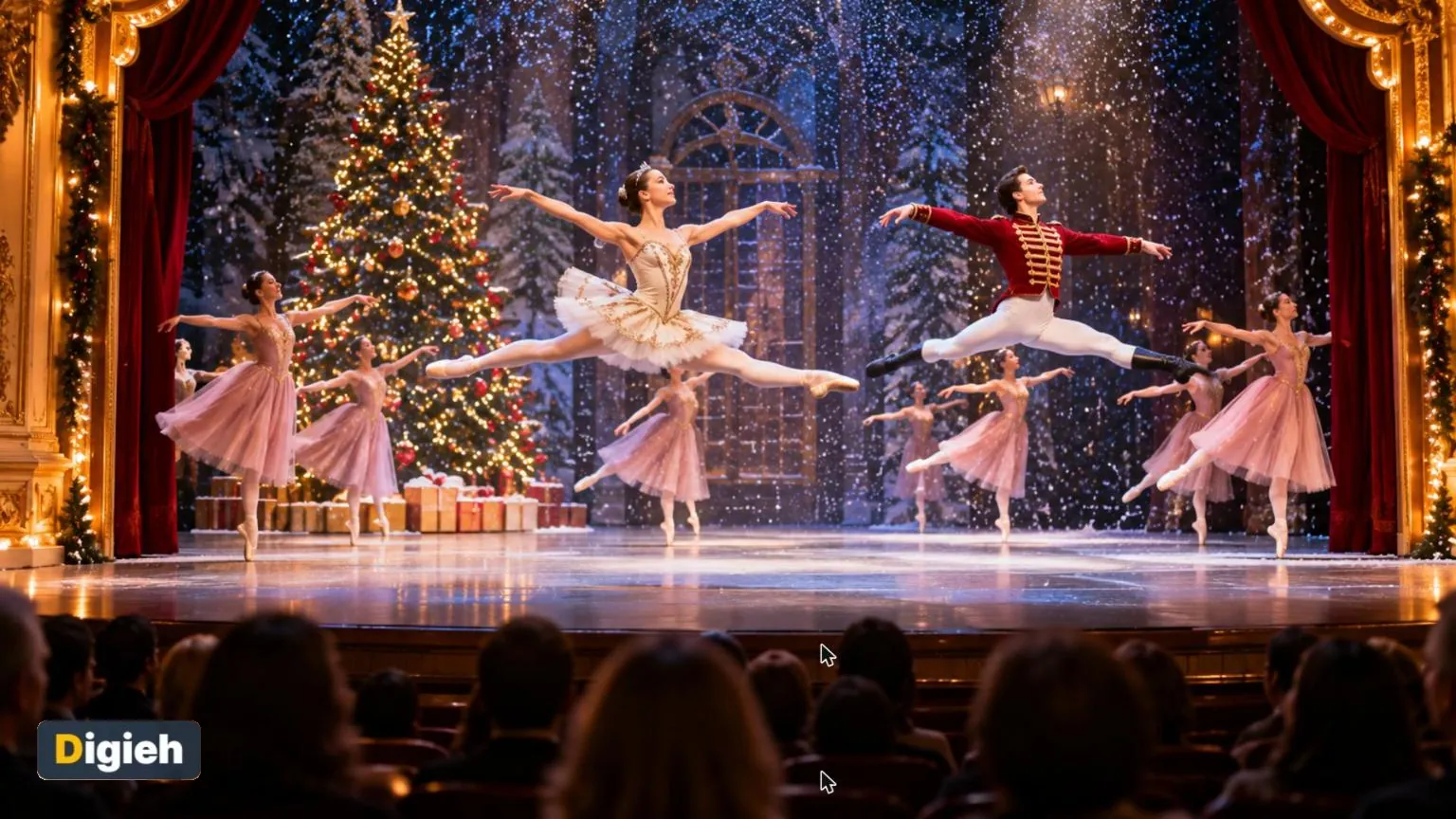
The prince then guides her through a sparkling snowy forest. Snowflakes dance around them as the first act ends.
Act Two
The second act takes place in the Land of Sweets. The Sugar Plum Fairy welcomes the visitors to her magical kingdom.
A series of colorful dances celebrates sweets and treats from around the world. Each one has its own music, costumes and style.
The act builds to a grand duet, often performed by the Sugar Plum Fairy and her partner. Many productions end with the girl waking up, wondering if it was all a dream.
Have you ever seen The Nutcracker live?
- Yes, many times
- Once
- Never
- Not sure
A Short History of The Nutcracker
The ballet began as a story. According to Atlanta Ballet, Ernst Theodor Amadeus Hoffmann published the tale The Nutcracker and the Mouse King in 1816.
French author Alexandre Dumas later adapted it. Atlanta Ballet notes his version renamed the girl Clara and introduced the Sugar Plum Fairy.
The director of Russia’s Imperial Mariinsky Theatre commissioned composer Pyotr Ilyich Tchaikovsky to write the score in 1891. It was the last of his three ballet scores.
Choreographer Marius Petipa began the dances but fell ill. His colleague Lev Ivanov finished the work, and the ballet premiered in Saint Petersburg in 1892.
How It Became an American Tradition
The ballet took decades to catch on in the United States. Illinois Public Media reports that the first full American production opened in San Francisco on Christmas Eve 1944.
In 1954, choreographer George Balanchine created a version for the New York City Ballet. It became hugely influential and featured children throughout.
Television broadcasts in the late 1950s grew its popularity. By the 1960s, The Nutcracker had become a holiday staple across the country.
Good to know. Every company stages its own version. Names, costumes and even parts of the story can change from one production to another.
How Long Is The Nutcracker?
Running times vary by company. Many productions last about two hours, including a 20-minute intermission.
Richmond Family Magazine describes local performances lasting about two hours with one 20-minute break. Check your theater’s website for exact times.
Plan to arrive 20 to 30 minutes early. That leaves time for parking, finding seats and a restroom stop.
Many theaters do not seat latecomers until a natural break in the music. Arriving on time means you will not miss the opening party scene.
Some companies offer short pre-show talks about the production. These are a fun way to learn what makes their version special.
Doors usually open well before curtain time. Use those minutes to browse the lobby and look through the program.
What to Wear
Many first-timers worry about dressing up. In most theaters, the dress code is relaxed.
Richmond Family Magazine notes that comfortable clothes are fine and dressing up is optional. Many families still enjoy wearing holiday outfits for the occasion.
Theaters can be cool or warm, so layers are smart. Choose comfortable shoes, especially if you will walk from a parking garage.
- Tickets printed or on your phone
- Arrival time planned
- Comfortable layers
- Phone set to silent
- Snacks for intermission
- Story reviewed with kids
Taking Kids to The Nutcracker
The Nutcracker is one of the most family-friendly ballets. The story, bright costumes and short dances keep many children engaged.
Some theaters require tickets for every child above a certain age. Richmond’s ballet, for example, requires a ticket for everyone age 4 and older.
Matinees are popular with families and often sell out fast. Book early for the best seats.
Prepare Kids Before the Show
- Read a picture book version of the story together.
- Play the music at home during the weeks before.
- Talk about the characters and what happens in each act.
- Explain that dancers tell the story without talking.
- Mention that the battle scene can be loud but is not scary in a real way.
Richmond Family Magazine suggests warning sensitive kids about the Mouse King and the loud battle. A little preparation helps them enjoy the show.
Choosing Seats With Kids
Aisle seats near an exit make bathroom trips easier. They also help if a little one needs a short break.
Balcony seats can offer a great view of the stage patterns. Booster seats are often available, so ask the ushers.
Quick tip. Bring a small snack for kids to eat at intermission. Lobby lines for treats can be long.
Sensory-Friendly and Relaxed Performances
Some children and adults find loud music and dark theaters overwhelming. Relaxed performances offer a gentler option.
These shows usually keep house lights partly on and lower the volume. Guests can move, talk quietly or step out without judgment.
Many theaters also provide quiet rooms, fidget items or visual story guides. Check the company website or call the box office to ask.
Getting There and Parking
Downtown theaters can be busy on show nights, especially in December. Plan your route before you leave home.
Look up parking garages and their rates ahead of time. Some theaters offer prepaid parking or partner lots nearby.
Public transit or rideshares can save stress in crowded areas. Leave extra time for winter weather and holiday traffic.
Theater Manners for First-Timers
A few simple habits help everyone enjoy the performance.
- Silence your phone and keep it put away.
- Do not take photos or videos during the show.
- Unwrap snacks or cough drops before the curtain rises.
- Whisper only if necessary, and keep it brief.
- Stay seated until intermission unless you truly need to leave.
When to Clap
Clapping is part of the fun at the ballet. Audiences often applaud after big solos and at the end of each act.
If you are not sure, wait until others start clapping. You will soon pick up the rhythm.
At the end, dancers come out for bows. Stay and cheer to thank them for their hard work.
Who composed the music for The Nutcracker?
- Mozart
- Beethoven
- Tchaikovsky
Pyotr Ilyich Tchaikovsky wrote the score in the early 1890s.
Free updates
Join the Digieh list
Be the first to know when our weekly brief launches.
No spam. Unsubscribe anytime. Read our Privacy Policy.
Famous Moments to Watch For
Some scenes are favorites year after year. Watch for these highlights.
- The growing tree. The Christmas tree rises dramatically at midnight.
- The battle. Toy soldiers face off against the mice.
- The snow scene. Dancers swirl as snow falls from above.
- The Land of Sweets dances. Each dance has its own flavor and music.
- The grand duet. A showcase of skill near the end of the ballet.
You likely know some of the music already. Tchaikovsky’s melodies appear in movies, commercials and holiday playlists.
Where did the first full American production open?
- San Francisco
- Chicago
- Boston
The first full production in the United States opened in San Francisco on Christmas Eve 1944.
Music to Know Before You Go
Tchaikovsky’s score is one of the most famous in ballet. Listening ahead makes the performance feel familiar.
The opening overture is light and bright, setting a playful mood. The party scene features lively dances and a cheerful march.
The snow scene builds into a sweeping waltz, often with a children’s choir. In the second act, the Sugar Plum Fairy’s dance uses the celesta, a keyboard instrument with a bell-like sound.
Tchaikovsky was among the first composers to feature the celesta in a major work. Its twinkling tone gives the music its magical feel.
Behind the Scenes Fun Facts
Big productions involve hundreds of costumes, props and crew members. Many companies cast dozens of local children in roles like party guests, mice and angels.
Dancers may perform the same roles many times in a single season. Larger companies often stage dozens of shows each holiday season.
The snow on stage is usually made of paper or plastic flakes. Crews sweep it up after every performance.
Ideas for Adults and Teens
The Nutcracker is not just for little kids. Many adults go for the music, the dancing and the festive atmosphere.
Make it a date night with dinner before the show. Friends can turn it into a holiday outing with dessert afterward.
Teens who study dance or music often enjoy watching technique up close. Seats closer to the stage reveal the athletic skill involved.
Finding a Performance Near You
The Nutcracker is everywhere during the holidays. Illinois Public Media cites a federal arts agency estimate of more than 750 American productions in a single season.
Major ballet companies offer grand, large-scale shows. Local dance schools and community theaters often stage charming, affordable versions.
Some theaters also offer sensory-friendly performances. These shows use softer sound and lighting and welcome movement in the audience.
Search your local arts calendar or ballet company website. Many companies post dates by late fall.
Saving Money on Tickets
Tickets for big productions can be pricey. A few strategies help families save.
- Choose weekday or early-season performances.
- Look for student, senior or group discounts.
- Consider balcony or upper-level seats.
- Check community and school productions.
- Watch for special offers on ballet company email lists.
Our holiday budget guide can help you plan for seasonal outings.
Make It a Holiday Tradition
Many families return to The Nutcracker every year. Kids love watching new details as they grow.
Some families pair the show with dinner, hot cocoa or a holiday lights tour. Our homemade hot chocolate recipe is a cozy way to end the evening.
Prefer a night in? Our guide to classic Christmas movies offers more seasonal favorites to enjoy at home.
Try this today. Play the Nutcracker music during dinner tonight. See which melodies your family already recognizes.
Frequently Asked Questions
How long is The Nutcracker ballet?
Many productions run about two hours, including one intermission. Check your theater for exact times.
Is The Nutcracker good for young children?
Yes, it is one of the most family-friendly ballets. Preparing kids with the story helps.
What should I wear to The Nutcracker?
Comfortable clothes are fine. Many people enjoy dressing up, but it is usually optional.
Who wrote the music for The Nutcracker?
Pyotr Ilyich Tchaikovsky composed the score, which premiered in 1892.
Can I take photos during the show?
Most theaters do not allow photos or videos during the performance.
Conclusion
The Nutcracker is a wonderful introduction to ballet for all ages. Knowing the story and a few simple tips makes the experience even more magical.
Book early, prepare young viewers and arrive with time to spare. Then sit back and let the music, snow and dancing carry you away.
Found this useful?
Editor’s Note
This article is accurate as of November 8, 2026. It draws on information from Atlanta Ballet, Illinois Public Media and Richmond Family Magazine. Details vary by production, so check with your local theater.
Spot an error in this article? Please contact us at support@digieh.com or read our Corrections Policy.
Keep exploring
Your next read is waiting
 1TechnologyEasy Ways to Free Up Phone Storage Fast10 min read
 2HealthSinus Infection vs Cold: Simple Ways to Tell10 min read
 3SportsBudget Home Gym Setup: Simple Guide for Beginners11 min read
 4EntertainmentHoliday Volunteering Ideas: Meaningful Ways to Give Back10 min read
 5Finance & MarketsSmart Furnace Maintenance Tips That Save You Money10 min read
 6Food & LifestyleEasy Swedish Meatballs Recipe With Rich Creamy Gravy9 min read