TRENDING
Kwanzaa 2026 Dates and Traditions: A Meaningful Guide

9 min read
Last updated November 8, 2026
Kwanzaa is a week-long celebration of African American culture, family and community. Each night brings a candle, a principle to reflect on and time together.
In 2026, Kwanzaa begins on Saturday, December 26, and ends on Friday, January 1, 2027. The dates are the same every year.
This guide explains where Kwanzaa came from, its seven principles and symbols, and simple ways to celebrate. Whether you observe it or simply want to learn, you are welcome here.
Key Takeaways
- Kwanzaa runs from December 26 through January 1 each year.
- Dr. Maulana Karenga created it in 1966.
- Each of the seven days honors one of the Nguzo Saba, or seven principles.
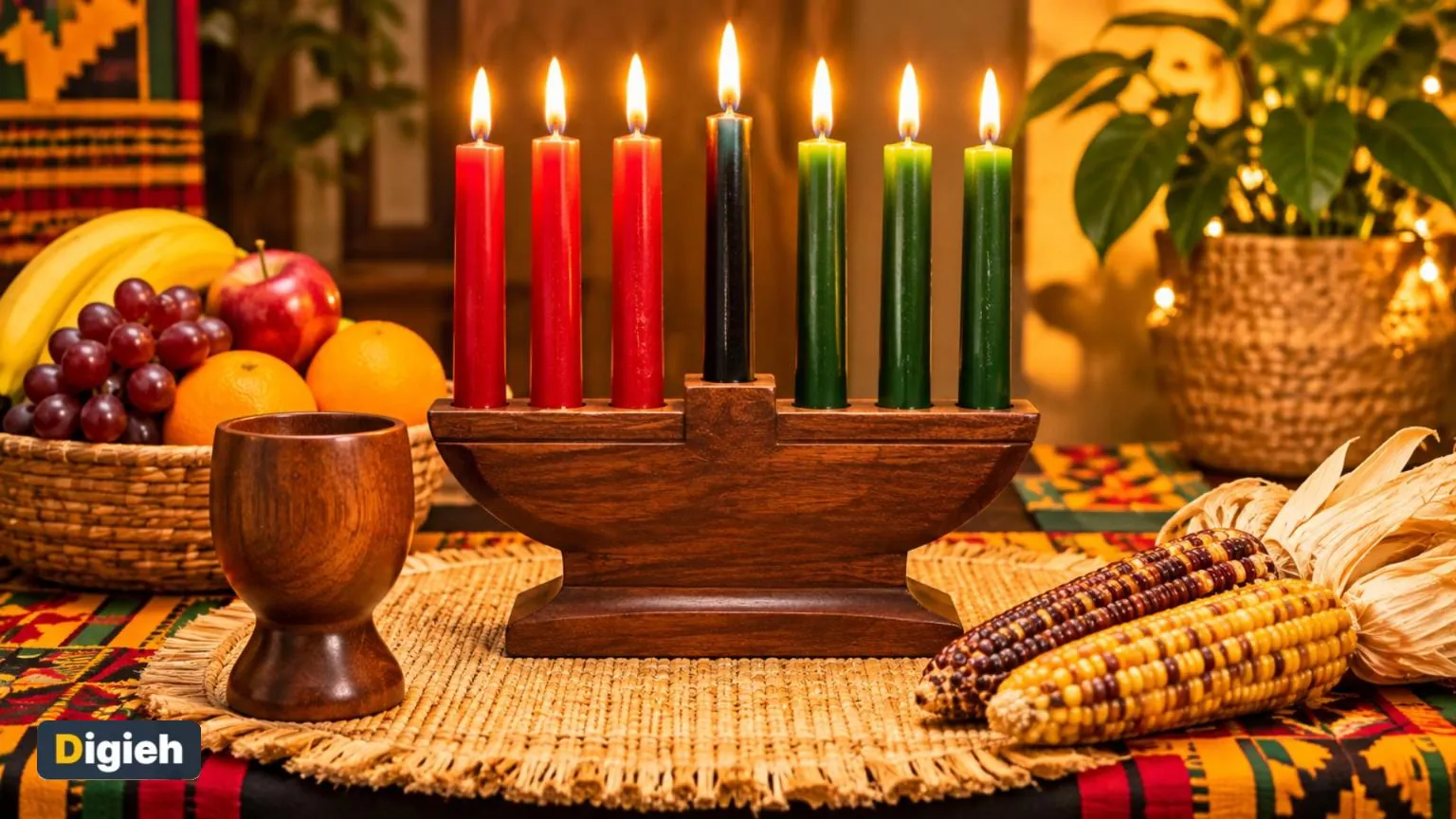
- The kinara holds seven candles, one black, three red and three green.
- The Karamu feast takes place on December 31.
Dec. 26 to Jan. 1The dates of Kwanzaa every year, with 2026 ending on January 1, 2027, according to History.com.
Kwanzaa 2026 Dates
Kwanzaa always starts on December 26 and lasts seven days. According to History.com, Kwanzaa 2026 runs from Saturday, December 26, through Friday, January 1, 2027.
| Date | Day | Principle |
|---|---|---|
| Saturday, Dec. 26 | Day 1 | Umoja, unity |
| Sunday, Dec. 27 | Day 2 | Kujichagulia, self-determination |
| Monday, Dec. 28 | Day 3 | Ujima, collective work and responsibility |
| Tuesday, Dec. 29 | Day 4 | Ujamaa, cooperative economics |
| Wednesday, Dec. 30 | Day 5 | Nia, purpose |
| Thursday, Dec. 31 | Day 6 | Kuumba, creativity |
| Friday, Jan. 1 | Day 7 | Imani, faith |
Which Kwanzaa principle speaks to you most?
- Umoja, unity
- Kuumba, creativity
- Imani, faith
- Not sure
The History of Kwanzaa
Dr. Maulana Karenga created Kwanzaa in 1966. He was a professor and chair of Black Studies at California State University, Long Beach, History.com notes.
He designed the holiday to help African Americans reconnect with their African heritage and build community. The first celebrations took place in 1966 and 1967, according to the New World Encyclopedia.
The name comes from a Swahili phrase, “matunda ya kwanza,” meaning “first fruits.” It reflects harvest festivals celebrated across Africa.
A Cultural, Not Religious, Holiday
Kwanzaa is a cultural celebration, not a religious one. A North Carolina news report adds that people can observe it alongside other holidays.
Many families celebrate Kwanzaa as well as Christmas, Hanukkah or other traditions. It adds a time of reflection and togetherness to the season.
How Kwanzaa Has Grown
Since its start in the 1960s, Kwanzaa has spread to homes, schools and community centers across the country. Many cities now host public celebrations each December.
Kwanzaa is also celebrated by people of African descent in other countries. Each community adds its own music, food and customs.
Over the decades, the holiday has become a time for families to share stories and pass down history. Elders often play an important role in these gatherings.
Quick tip. Write each of the seven principles on a card. Read one aloud each night as the candle is lit.
The Seven Principles
The heart of Kwanzaa is the Nguzo Saba, or seven principles. Each day focuses on one value.
Umoja (Unity)
Unity means staying together as a family, community, nation and race. The first day sets the tone for the whole week.
Kujichagulia (Self-Determination)
Self-determination means defining, naming and speaking for ourselves. It encourages pride and independence.
Ujima (Collective Work and Responsibility)
This principle means building and maintaining community together. Neighbors help solve problems as a group.
Ujamaa (Cooperative Economics)
Cooperative economics means building and supporting shared businesses. Many families shop at Black-owned businesses during Kwanzaa.
Nia (Purpose)
Purpose means working to restore and develop the community. It encourages setting meaningful goals.
Kuumba (Creativity)
Creativity means leaving the community more beautiful and useful than before. Art, music and crafts often shine on this day.
Imani (Faith)
Imani falls on January 1, the final day. The New World Encyclopedia describes it as believing in one’s people, leaders and the righteousness of their struggle.
Good to know. The name Kwanzaa comes from the Swahili phrase for first fruits, linking it to harvest celebrations.
The Seven Symbols
Kwanzaa uses seven key symbols, usually arranged on a table. History.com lists them as follows.
- Mazao. Crops, such as fruits, nuts and vegetables.
- Mkeka. A mat on which the other symbols rest.
- Muhindi or vibunzi. Ears of corn, often one for each child in the family.
- Mishumaa saba. The seven candles.
- Kinara. The candleholder.
- Kikombe cha umoja. The unity cup.
- Zawadi. Gifts.
Some families also display the bendera, a red, black and green flag. The New World Encyclopedia lists it as a supplemental symbol.
- Mkeka, a woven mat
- Kinara, the candleholder
- Seven candles
- Mazao, fruits and vegetables
- Ears of corn
- Unity cup
- Zawadi, meaningful gifts
Lighting the Kinara
The kinara holds seven candles. There is one black candle, three red candles and three green candles.
The black candle sits in the center and represents the people. The red candles stand for their struggle, and the green ones for the future and hope. That meaning comes from the New World Encyclopedia.
The black candle is lit first, on the first night. One more candle is lit each evening until all seven glow on the final night.
Children often help light the candles, History.com notes. Families may discuss the day’s principle as each candle is lit.
Always keep lit candles away from curtains, decorations and young hands. Never leave burning candles unattended, and blow them out before everyone goes to bed. Simple safety steps keep the celebration joyful for guests of all ages.
Many families also keep a fire extinguisher nearby during the holiday season.
Which Kwanzaa candle is lit on the first night?
- A red candle
- The black candle in the center
- A green candle
The black candle in the center, representing the people, is lit first.
The Karamu Feast
The Karamu is a festive feast held on December 31, according to History.com. Many families consider it the highlight of the week.
Families and communities gather to share food, music, dance and storytelling. Many feature dishes inspired by African, Caribbean and Southern traditions.
The New World Encyclopedia notes that the Karamu can follow drumming, readings and candle lighting. It celebrates community and togetherness.
Planning a Kwanzaa Gathering
Hosting a Kwanzaa gathering can be simple and heartfelt. Start by choosing which night or nights you will celebrate together.
Set up the table with the seven symbols before guests arrive. Invite each guest to share a story, poem or memory connected to the day’s principle.
Play music by African and African American artists in the background. Drumming, jazz, gospel and Afrobeat are all popular choices.
Ask older relatives to share family history. Their stories connect younger generations to the past.
End the evening with food, gratitude and a toast from the unity cup. Simple moments often become the most treasured memories.
Free updates
Join the Digieh list
Be the first to know when our weekly brief launches.
No spam. Unsubscribe anytime. Read our Privacy Policy.
Gifts During Kwanzaa
Gifts, called zawadi, are part of the celebration. History.com explains that they encourage growth, achievement and success.
The North Carolina report adds that gifts are often educational or celebrate African heritage. Books, handmade crafts and art are popular choices.
Many families give gifts on the final day. Homemade gifts reflect the principle of Kuumba, or creativity.
Good gift ideas include books about African history, art supplies, musical instruments or handmade jewelry. Gifts that support learning fit the spirit of the holiday best.
Buying from Black-owned shops and artists also honors the principle of Ujamaa. It puts cooperative economics into action.
Ways to Celebrate Kwanzaa
Whether you are new to Kwanzaa or have celebrated for years, there are many ways to take part.
- Set up a table with the seven symbols.
- Light the kinara each evening and talk about the day’s principle.
- Read books by African and African American authors.
- Support local Black-owned businesses.
- Attend a community Kwanzaa event or museum program.
- Cook a special meal for the Karamu feast.
- Make handmade gifts with your children.
Families can adapt traditions to fit their own values. The focus is on reflection, community and joy.
You do not need to do everything at once. Even lighting the candles and sharing a meal can make the week meaningful.
Some families keep a Kwanzaa journal, writing a few lines each night. Over the years, it becomes a treasured family record.
Reflection Ideas for Each Day
Many families use each principle as a conversation starter. Here are simple questions to discuss around the kinara.
Umoja. How can our family stay close and support one another this year?
Kujichagulia. What makes us proud of who we are and where we come from?
Ujima. What problem in our neighborhood could we help solve together?
Ujamaa. Which local businesses can we support in the year ahead?
Nia. What goal will each of us work toward this year?
Kuumba. What can we create or improve to make our community more beautiful?
Imani. Who are the people we believe in, and why?
Write down answers and revisit them next Kwanzaa. It is a meaningful way to see how your family grows.
Decorating for Kwanzaa
Kwanzaa decorations often feature red, black and green. These colors appear in the candles and the flag.
Use African-inspired fabrics, like kente cloth, as table runners or wall hangings. Baskets of fruit and vegetables add warmth and color.
Display children’s artwork about the principles. Handmade decorations reflect the spirit of creativity.
Foods for the Karamu Feast
There is no single required menu for the Karamu. Families often serve dishes that honor their heritage and personal traditions.
Popular choices include dishes inspired by West Africa, the Caribbean and the American South. Think jollof rice, black-eyed peas, collard greens, cornbread and sweet potato pie.
Many hosts invite guests to bring a dish to share. A potluck reflects the principle of collective work and responsibility.
Our easy cornbread recipe makes a warm addition to any feast.
Kwanzaa in Communities
Many museums, libraries, schools and community centers host Kwanzaa events. These often include music, dance, storytelling and candle lighting.
Attending a public event is a wonderful way to learn more. Visitors of all backgrounds are often welcome.
Check local event listings in early December. Some programs fill up quickly.
Kwanzaa With Kids
Kwanzaa offers wonderful lessons for children. Each principle can become a simple activity.
On the day of Ujima, plan a family project, like cleaning up a park or helping a neighbor. On the day of Kuumba, create art or music together.
Let children help arrange the symbols and light the candles with supervision. Small roles make them feel part of the tradition.
Our ideas for easy holiday crafts for kids can inspire creative projects.
Try this today. Look up a Kwanzaa event at a local museum, library or community center. Add it to your December calendar.
Frequently Asked Questions
When is Kwanzaa 2026?
Kwanzaa 2026 runs from Saturday, December 26, 2026, through Friday, January 1, 2027.
Who created Kwanzaa?
Dr. Maulana Karenga created Kwanzaa in 1966.
Is Kwanzaa a religious holiday?
No. Kwanzaa is a cultural holiday, and people of many faiths celebrate it.
What do the Kwanzaa candle colors mean?
The black candle represents the people, the red candles their struggle and the green candles the future and hope.
What is the Karamu?
The Karamu is a feast held on December 31 with food, music and celebration.
Conclusion
Kwanzaa is a meaningful week of culture, reflection and community. In 2026, it begins on December 26 and ends on January 1, 2027.
Light the kinara, explore the seven principles and gather for the Karamu feast. For more holiday traditions, see our guide to Hanukkah 2026.
Found this useful?
Editor’s Note
This article is accurate as of November 8, 2026. It draws on History.com, the New World Encyclopedia and local news reporting. Families may observe Kwanzaa traditions in different ways.
Spot an error in this article? Please contact us at support@digieh.com or read our Corrections Policy.
Keep exploring
Your next read is waiting
 1SportsVital Sledding Safety Tips Every Parent Should Know10 min read
 2EntertainmentFun Winter Reading Challenge Ideas for Every Reader10 min read
 3Food & LifestyleSmart Winter Pet Safety Tips for Cold Days10 min read
 4Finance & MarketsSmart Furnace Maintenance Tips That Save You Money10 min read
 5TechnologySimple Steps to Set Up a Password Manager10 min read
 6HealthFrostbite and Hypothermia Warning Signs You Must Know10 min read