TRENDING
Dog Scared of Fireworks on New Year’s Eve?

9 min read
Last updated November 16, 2026
If your dog is scared of fireworks, plan for New Year's Eve now. Give your dog a quiet, closed room, mask the bangs with steady sound and keep every door shut.
Severe fear needs a vet visit weeks ahead, since some dogs need prescription help. This guide turns advice from four official animal groups into one simple New Year's Eve plan.
Pet health note. This guide shares general information, not veterinary advice. Ask your own vet before giving your dog any calming product or medicine.
Key Takeaways
- About one in four dogs in a large Finnish study feared fireworks.
- A closed, quiet room with steady background sound helps many dogs cope.
- Fearful dogs can bolt, so check tags and microchip details before the night.
- Never scold a scared dog. Stay calm and let it hide if it wants.
- Vets can prescribe medicine for severe noise fear, but plan weeks ahead.
Inside this guide
- Why fireworks frighten dogs
- Signs your dog is scared
- What four animal groups advise
- Your New Year's Eve timeline
- Build a safe room
- What to do during the bangs
- Stop your dog from running away
- Calming products and medicine
- When to get help
- Frequently asked questions
Why Fireworks Frighten So Many Dogs
Fireworks are loud, sudden and impossible for a dog to predict. Each bang arrives without warning, and flashes of light add to the shock.
Dogs also hear a wider range of sounds than people do. Loud bangs can even harm their hearing.
That warning comes from the Royal Society for the Prevention of Cruelty to Animals, a British animal charity. Its fireworks advice for pet owners covers dogs, cats and small pets.
New Year's Eve makes things harder. Fireworks often start before dark, peak at midnight and keep going in the small hours.
26%Share of 13,700 pet dogs that feared fireworks in a 2020 Finnish study, reported by the University of Helsinki.
The same study found that 32 percent of dogs feared at least one type of noise. In other words, your dog is far from alone.
Signs Your Dog Is Scared of Fireworks
Some dogs panic loudly. Others go quiet and freeze, which owners can easily miss.
Watch for these common signs, based on guidance from the American Kennel Club and the British charity.
- Shaking, trembling or panting hard
- Hiding under furniture or in a closet
- Pacing, whining, howling or barking
- Clinging to you or trying to escape
- Refusing food or treats
- Frequent yawning or staring at the ceiling
A dog that freezes still feels fear. Treat quiet signs as seriously as loud ones.
What Four Animal Groups Advise, Side by Side
We compared the fireworks advice from four well-known animal organizations. Each one covers slightly different steps, so the table pulls them into one place.
| Step | American Veterinary Medical Association | American Society for the Prevention of Cruelty to Animals | American Kennel Club | British animal charity |
|---|---|---|---|---|
| Keep dogs indoors, away from displays | Yes | Yes | Yes | Yes |
| Quiet room or crate | Yes, escape-proof | Yes, no windows | Yes, inner room | Yes, always open to the dog |
| Background sound | Not listed | Soft music | White noise | Music or TV |
| Chew toy or puzzle | Not listed | Yes | Yes | Offer, never force |
| Current tags and microchip | Yes | Not listed | Yes | Yes |
| Ask a vet about medicine | Yes | Yes, with a practice dose | Yes, well ahead | Yes |
| Sound training over time | Behavior therapy | Not listed | Yes | Yes |
The first two columns come from the veterinary association's holiday safety page and the animal welfare group's anxiety tips.
The last two come from the kennel club's calming guide and the British charity's advice.
Every group agrees on two things. Keep your dog inside, and give it a safe, quiet space.
Your New Year's Eve Timeline
Good preparation starts long before December 31. Use this plan to spread the work out.
Six weeks before
- Book a vet visit if your dog panicked last year.
- Start sound training with quiet firework recordings and treats.
- Check that your dog's collar tag shows your current phone number.
One week before
- Pick the safe room and let your dog nap there.
- Test any medicine your vet prescribed, as the animal welfare group suggests.
- Confirm your microchip contact details with the registry.
December 31, daytime
- Take a long walk in daylight, on a leash.
- Feed dinner a little earlier than usual.
- Close curtains and set up the sound and chews in the safe room.
Evening through midnight
- Stay home with your dog, or leave it with someone calm it trusts.
- Keep doors closed and warn guests to watch for a slipping dog.
- Take any bathroom break in a fenced yard, still on a leash.
New Year's Day morning
- Check the yard for spent fireworks before letting your dog out.
- Note what helped and what did not, for next year.
Add to calendar
How to Build a Safe Room for Your Dog
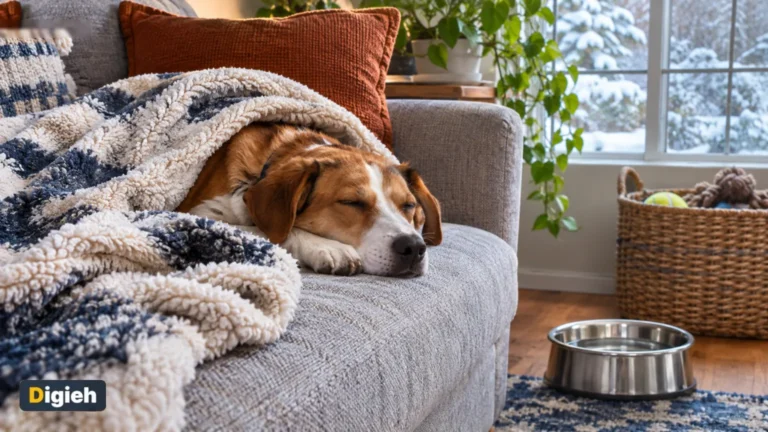
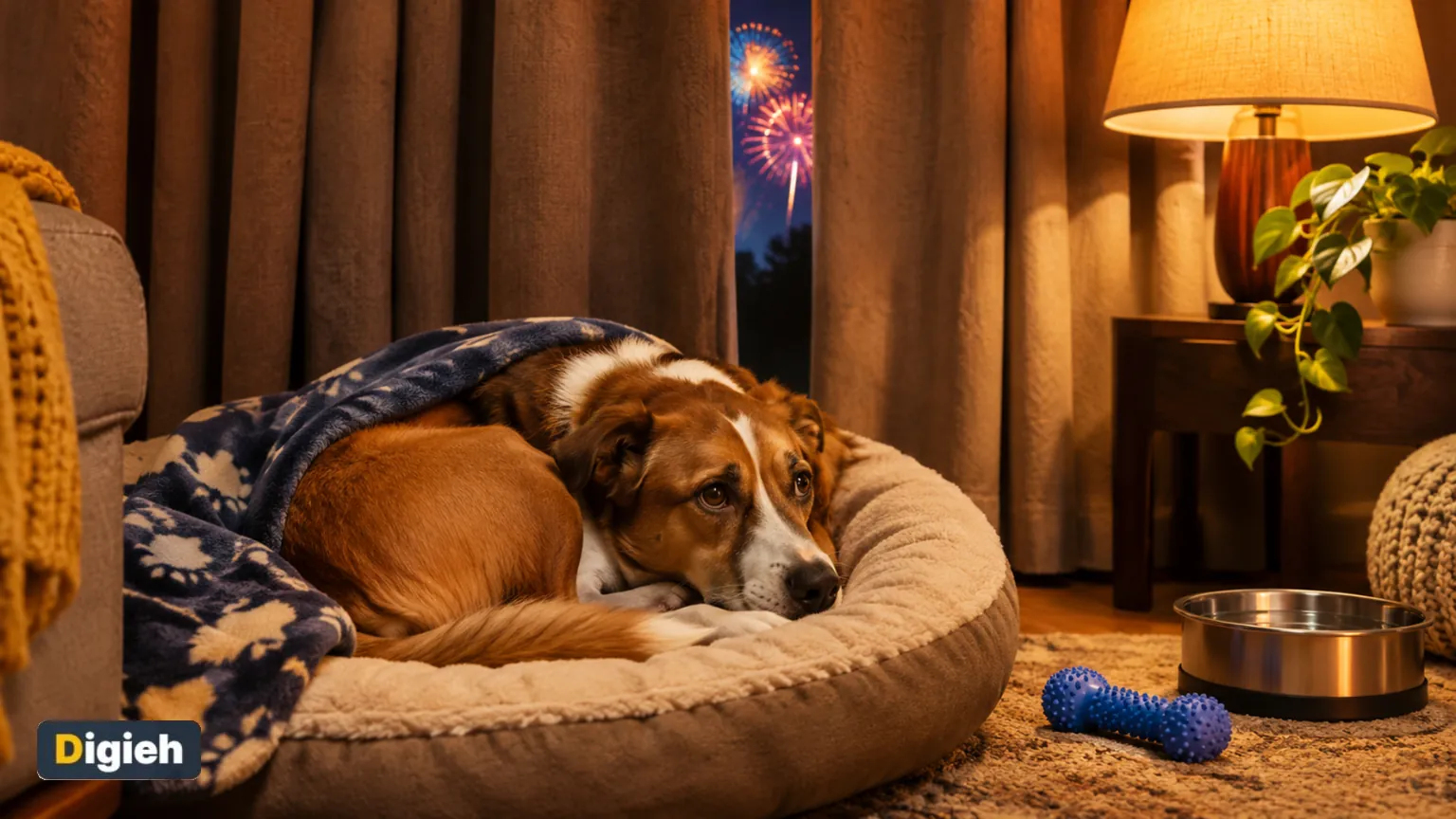
Choose an inner room with few or no windows. A bathroom, walk-in closet or quiet bedroom often works well.
- Add your dog's bed, a favorite blanket and water.
- Leave a crate door open if your dog likes its crate.
- Close curtains or blinds to block the flashes.
- Play steady background sound, such as a fan, soft music or a TV.
- Give a long-lasting chew or a treat-filled toy.
Let your dog use the room in the days before. A space that feels normal will feel safer on the big night.
Quick tip. Turn the background sound on before the first bang. Starting it mid-panic works less well than a calm, steady hum.
What to Do During the Bangs
Your mood matters. Dogs read your tone and body language, so act normally and speak softly.
Comfort your dog if it comes to you. The kennel club suggests slow, firm strokes instead of frantic fussing.
If your dog prefers to hide, let it. The British charity advises against pulling a scared dog out of its hiding spot.
Never shout at or punish a frightened dog. Fear is not bad behavior, and scolding only adds stress.
How does your dog react to fireworks?
- Hides and shakes
- Barks or howls
- Barely notices
- Not sure
How to Stop Your Dog From Running Away
Panicked dogs can bolt through an open door or leap a fence. The veterinary association warns that frightened pets may run off during loud celebrations.
- Keep your dog inside while fireworks are likely.
- Use a leash for every outdoor trip that night, even in a fenced yard.
- Check that the collar or harness fits snugly.
- Put a note on outside doors asking guests to keep them shut.
- Keep a clear, recent photo of your dog on your phone.
A microchip only helps if the registry has your current details. Our guide on why to microchip your pet explains how it works.
Free updates
Join the Digieh list
Be the first to know when our weekly brief launches.
No spam. Unsubscribe anytime. Read our Privacy Policy.
Sound Training Before Next Season
Sound training teaches your dog that firework noise predicts good things. It takes weeks, so start early.
- Play firework sounds at a very low volume.
- Give a treat or play a game while the sound plays.
- Stop before your dog shows any fear.
- Raise the volume a little over many short sessions.
The British charity recommends a sound therapy pack with recordings and a guide. A certified trainer or behavior expert can also help.
Calming Products and Medicine
Some owners try a snug anxiety vest. The animal welfare group notes that a close-fitting T-shirt can work as a stand-in.
Ask your vet about pheromone diffusers and calming treats too. Results vary from dog to dog.
For severe fear, vets can prescribe medicine. One gel, called dexmedetomidine, has federal approval for noise aversion in dogs.
That gel requires a prescription. Its label says to give the first dose about 30 to 60 minutes before the noise starts.
Good to know. Never share a pet's medicine with another animal, and never give your dog human calming pills. Only use what your vet prescribes.
Facts at a Glance
| Fact | Detail | Source |
|---|---|---|
| Dogs that feared fireworks | 26%% of 13,700 dogs | University of Helsinki, 2020 |
| Dogs that feared any noise | 32%% | University of Helsinki, 2020 |
| Prescription gel timing | 30 to 60 minutes before noise | Product label on DailyMed |
| Pet poison help line | (888) 426-4435 | Animal poison control center |
Helping Older Dogs and Puppies
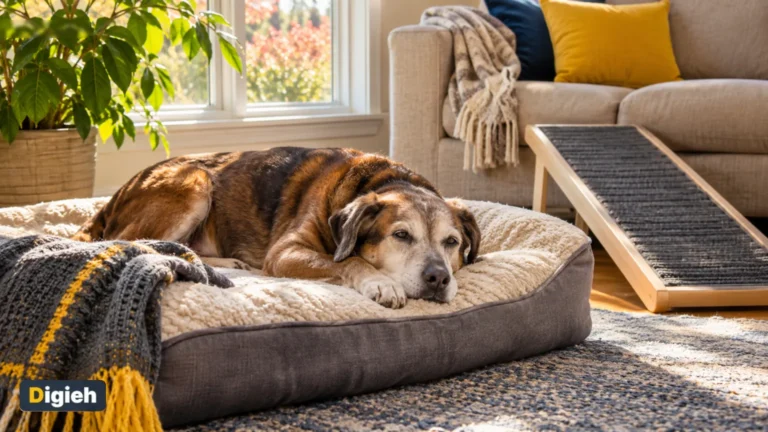
Senior dogs may have stiff joints or weaker hearing, but loud noise can still upset them. Keep their safe room warm and easy to reach.
Our senior dog care tips cover comfort for older pets in winter.
Puppies learn fast. A calm first New Year's Eve, with treats and quiet sound, can set up better reactions for life.
Hosting a Party With a Dog at Home
Guests, music and open doors can overwhelm a nervous dog. Settle your dog in its safe room before guests arrive.
Keep party food and drinks out of reach. Holiday decorations also pose risks, so read our list of holiday plants that harm pets.
Planning the evening? See our ideas for a New Year's Eve party at home.
When to Get Help
Call your vet or an emergency animal clinic if you notice any of these.
- Your dog ate fireworks debris or party food that may be toxic
- Your dog hurt itself trying to escape
- Bleeding, limping or cuts after bolting
- Panic that does not settle long after the fireworks stop
- Vomiting, weakness or collapse
For suspected poisoning, you can also call the animal poison control center at (888) 426-4435.
Your Fireworks Night Checklist
- Update collar tag and microchip details
- Set up a quiet safe room with water and a bed
- Walk your dog in daylight
- Close curtains and start background sound early
- Keep doors shut and use a leash outside
- Check the yard for debris on New Year's Day
Free printable. Download our Fireworks Night Card (PDF). It has this checklist plus space for your vet's number. Stick it on your fridge.
Try this today. Open your phone and confirm the number on your dog's tag still reaches you. Then check the microchip registry details too.
Test Yourself
Your dog hides under the bed during fireworks. What should you do?
- Pull it out to comfort it
- Let it stay where it feels safe
- Take it outside for fresh air
Animal welfare experts advise letting a scared dog hide rather than forcing it out.
When should you start sound training for fireworks?
- On New Year's Eve
- The day after fireworks
- Several weeks before the season
Sound training works slowly, so it needs weeks of short, calm sessions.
Frequently Asked Questions
Should I comfort my dog during fireworks?
Yes. Calm comfort will not make fear worse. Use a soft voice and slow strokes, and avoid frantic fussing.
Can I give my dog something to calm down for New Year's Eve?
Only give medicine your vet prescribes. Book the visit weeks ahead so you can test it first.
Do anxiety vests work for dogs?
Some dogs seem calmer in a snug vest, but results vary. Try it on a quiet day first.
Is it safe to walk my dog on New Year's Eve?
Walk early, in daylight, on a leash. Avoid walks after dark when fireworks are likely.
Conclusion
A scared dog needs a plan, not a quick fix. Set up the safe room, check the tag and talk to your vet early.
Your next step is simple. Pick the safe room today, then read our winter dog walking safety tips for the cold weeks ahead.
Found this useful?
Editor’s Note
This guide is accurate as of November 16, 2026. It draws on the American Veterinary Medical Association and the American Kennel Club.
It also uses guidance from two animal welfare charities, one in the United States and one in Britain.
Product availability and labels can change. Always follow your own vet's advice.
Spot an error in this article? Please contact us at support@digieh.com or read our Corrections Policy.
Keep exploring
Your next read is waiting
 1Education & CareersFollow-Up Email After an Interview, With Free Templates8 min read
 2InsuranceHealth Insurance Terms Explained Simply With Real Examples8 min read
 3GamingHow to Spot and Avoid Gaming Scams Fast8 min read
 4TechnologyHow to Convert a PDF to PowerPoint Slides4 min read
 5Parenting & FamilyHow to Talk to Kids About Online Safety8 min read
 6Fitness & ExerciseHow to Exercise Safely Outside in Cold Weather8 min read