TRENDING
Winter Dog Walking Safety: Smart Tips for Owners

11 min read
Last updated November 8, 2026
Dogs still need daily walks when the snow starts to fall. Fresh air and exercise keep them healthy and happy all winter.
Cold weather brings new risks, though. Ice, road salt, freezing wind and short days all call for extra care.
This guide shares practical tips for safe winter walks. You will learn how long to stay out, how to protect paws and which warning signs need a veterinarian.
Key Takeaways
- If it feels cold to you, it is likely colder for your dog.
- Small, older, young and thin-coated dogs need the most protection.
- Wipe paws after every walk to remove salt and ice melt.
- Shorter, more frequent walks work best in very cold weather.
- Know the signs of frostbite and hypothermia.
5 minutesTime outside at minus 20 degrees Celsius that can cause frostbite on paws, a veterinarian told the Canadian Broadcasting Corporation.
How Cold Is Too Cold?
Every dog handles cold differently. Size, coat, age and health all play a role.
Dr. Serge Chalhoub of the University of Calgary shared a simple rule with the Canadian Broadcasting Corporation. If it is cold for you, it is likely colder for your dog.
He warned that at minus 20 degrees Celsius, about minus 4 Fahrenheit, five minutes outside can cause frostbite on paws. Extreme cold calls for very short trips.
General Time Guidelines
A veterinary surgeon quoted by PetMD suggests aiming for temperatures above freezing for longer walks. The same article recommends keeping cold-weather walks to about half an hour or less.
Plan walks during the warmest part of the day when you can. Late morning and early afternoon are usually best.
On days with wind warnings or extreme cold alerts, keep outings brief. Dr. Shane Bateman of the Ontario Veterinary College advises shortening trips on those days.
Does your dog wear booties or a coat in winter?
- Both
- Just a coat
- Neither
- Not sure
Which Dogs Are Most at Risk?
Some dogs need extra protection in winter. The Cornell University College of Veterinary Medicine lists small, older, thin-coated, underweight and young dogs as most vulnerable.
Small dogs lose body heat quickly because they sit close to the cold ground. Thin-coated breeds have less natural insulation.
Thick double-coated breeds like Siberian Huskies handle cold much better. Even so, they still need paw care and supervision.
Senior Dogs
Older dogs often have stiff joints that worsen in cold weather. Shorter, more frequent walks keep them moving without strain.
The Canadian Broadcasting Corporation report suggests moving older dogs’ beds to warmer spots and adding extra padding. Comfort at home helps them recover after walks.
Puppies
Puppies have less body fat and smaller bodies, so they chill quickly. PetMD lists puppies among the dogs most at risk of frostbite and hypothermia.
Keep early winter outings short and playful. Several quick potty trips are better than one long walk.
Use winter as a chance to practice leash manners indoors. Hallways and garages make good training spaces on bitter days.
Good to know. Dogs can lose heat quickly through wet fur. Dry your dog fully after snowy walks, especially the belly and legs.
Protecting Your Dog’s Paws
Paws take the most punishment on winter walks. Ice, salt and frozen ground can crack and cut paw pads.
The Cornell guide recommends checking paws often. Look for cracks, redness or ice balls between the toes.
Wipe Paws After Every Walk
Road salt and ice melt can irritate paws. If your dog licks them, these chemicals can upset the mouth and stomach.
Keep a towel by the door. Wipe your dog’s paws, legs and belly after every walk.
Dry paws with a towel rather than a hair dryer. The Canadian Broadcasting Corporation report notes that a blow dryer can be too hot.
Paw Balms and Booties
A paw balm or petroleum jelly can protect dry pads. Apply a thin layer before heading out.
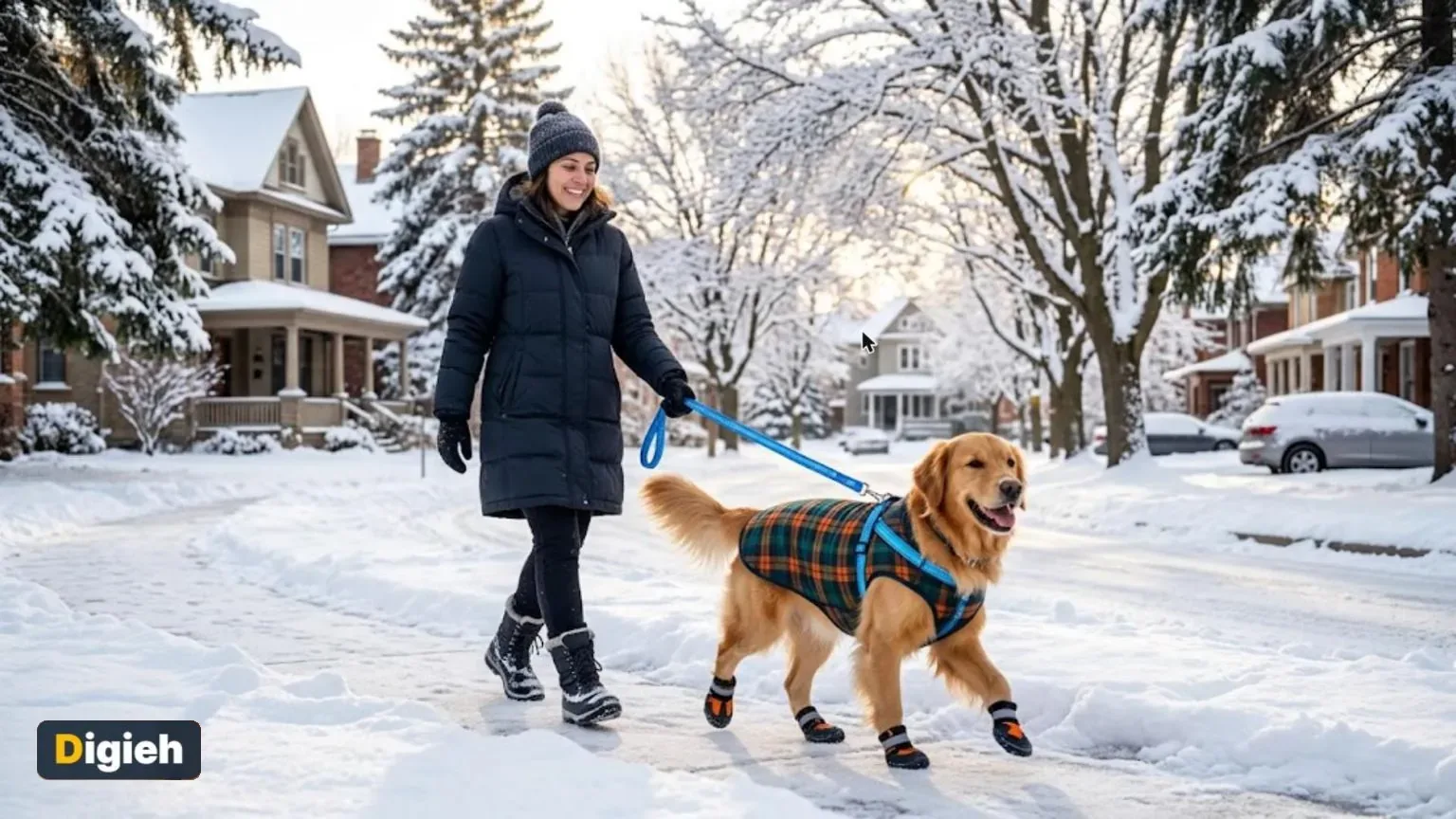
Dog booties offer the best protection from salt, ice and cold. Many dogs need time to get used to them, so start with short sessions indoors.
If your dog refuses booties, keep walks short. Avoid salted sidewalks when you can.
Trim the Fur Between Toes
Long fur between paw pads collects snow and ice. These ice balls can hurt and make walking uncomfortable.
Ask your groomer to trim this fur during winter. Keep the rest of the coat full for warmth.
- Check the temperature and wind
- Put on a coat if needed
- Apply paw balm or booties
- Use a reflective leash
- Bring a flashlight
- Avoid frozen water
- Wipe paws after the walk
Choosing a Dog Coat
A coat or jacket helps many dogs stay warm. The Cornell guide suggests a jacket that covers the belly and chest.
A veterinarian quoted by PetMD recommends a coat that covers the chest and back without limiting movement. Waterproof coats work best in wet snow or sleet.
Check the fit before each season. A coat that is too tight can rub, while a loose one lets cold air in.
Avoid Short Winter Haircuts
Your dog’s natural coat is its best insulation. The Cornell guide advises against clipping the coat too short in winter.
Regular brushing keeps the coat healthy and free of mats. Mats can trap moisture and leave cold spots.
Quick tip. Keep a small bowl of warm water and a towel by the door. Dip and dry each paw after walks to remove salt quickly.
Watch Out for Winter Hazards
Winter sidewalks hide dangers that are easy to miss. Stay alert on every walk.
Antifreeze
Antifreeze tastes sweet to dogs and is deadly in small amounts. The Cornell guide warns that products with ethylene glycol can be fatal.
Keep dogs away from puddles in driveways and parking lots. Get veterinary care right away if your dog may have licked antifreeze.
Frozen Ponds and Lakes
Ice may look solid but break under a dog’s weight. The Cornell guide advises keeping dogs off frozen ponds and lakes.
Keep your dog leashed near water. If your dog falls through ice, call for help rather than going onto the ice yourself.
Slippery Sidewalks
Icy paths raise the risk of falls for both of you. Dogs with arthritis are especially at risk.
The Cornell guide suggests a front-clip harness and a fixed-length leash on icy paths. Retractable leashes can make slips more likely.
Wear boots with good grip yourself. A fall on the ice can injure you and leave your dog loose.
Why should you wipe your dog’s paws after a winter walk?
- To make them smell better
- To remove salt and ice melt
- To warm them up quickly
Salt and ice melt can irritate paws and upset the stomach if your dog licks them.
Walking After a Snowstorm
Fresh snow can be fun, but it hides hazards. Broken glass, sharp sticks and trash may lie beneath the surface.
Stick to cleared paths when you can. Deep drifts tire dogs quickly and can hide holes or curbs.
Snowbanks near roads often contain salt and chemicals from plows. Keep your dog from eating snow along busy streets.
Shovel a Potty Spot
Clear a small patch of yard for bathroom breaks. Dogs with short legs will thank you.
A cleared spot also makes cleanup easier. Pick up waste promptly, since it freezes into the snow fast.
Staying Visible in the Dark
Winter days are short, so many walks happen in darkness. Drivers may not see you or your dog.
The Cornell guide recommends reflective gear and a flashlight. The Canadian Broadcasting Corporation report adds a light-up collar as another option.
Wear a reflective vest or jacket yourself. Bright colors help drivers spot you sooner.
Free updates
Join the Digieh list
Be the first to know when our weekly brief launches.
No spam. Unsubscribe anytime. Read our Privacy Policy.
Signs of Frostbite
Frostbite most often affects ears, paws and the tip of the tail. The Cornell guide notes that signs may take days to fully appear.
Skin may look pale, gray or blue at first. Later it may turn red, swollen or painful.
PetMD adds blistering and darkened skin as warning signs. Excessive licking or chewing at a spot may also signal pain.
Call your veterinarian right away if you suspect frostbite. Do not rub the area, since that can cause more damage.
Signs of Hypothermia
Hypothermia happens when body temperature drops too low. It can be life threatening.
The Cornell guide lists shivering, whining, a tucked tail, hunched posture and lifting paws as warning signs. Reluctance to walk or sudden anxiety can also signal trouble.
PetMD adds lethargy, pale gums and stiffness. Move your dog to a warm, dry place, wrap them in a blanket and call a veterinarian.
Our guide to frostbite and hypothermia warning signs explains how cold affects people too.
Which leash is safest on icy sidewalks?
- A retractable leash
- No leash at all
- A fixed-length leash with a front-clip harness
Cornell veterinarians suggest a fixed-length leash and front-clip harness to reduce slips.
Indoor Exercise on Very Cold Days
Some days are simply too cold for long walks. Indoor play can keep your dog active and happy.
Try hide and seek with treats around the house. Puzzle toys and short training sessions work the mind as well as the body.
PetMD suggests indoor games and obstacle courses as alternatives. A tired dog is usually a calm dog.
Watch Weight and Food
Dogs often move less in winter. The Canadian Broadcasting Corporation report suggests tracking weight and adjusting food if needed.
Talk with your veterinarian before making big diet changes. Every dog’s needs are different.
Making Winter Walks Fun
Cold weather does not have to mean boring walks. A few changes can keep your dog excited to head out.
Try a new route to give your dog fresh smells to explore. Sniffing is mental exercise and helps tire dogs out.
Bring a favorite toy for a quick game of fetch in a fenced, cleared area. Short bursts of play warm muscles and lift spirits.
Driving to Winter Trails
Groomed trails can offer safer footing than icy sidewalks. The Canadian Broadcasting Corporation report notes that groomed trails carry lower risk for winter hikes.
Secure your dog in the car with a harness or crate. Never leave your dog alone in a cold parked car.
Keep Your Dog Hydrated
Dogs still need plenty of water in winter. Dry indoor heat and cold air can both lead to dehydration.
Do not count on snow as a water source. Eating snow can chill your dog and may expose them to chemicals.
Refresh water bowls often, and check that outdoor bowls have not frozen solid. A heated bowl can help if your dog spends time outside daily.
Build a Winter Walk Kit
A small kit by the door makes winter walks easier. Keep everything in one basket or bag.
Include a towel, paw balm, booties, a reflective leash and a flashlight. Add waste bags and a few treats.
For longer outings, PetMD suggests carrying a waterproof blanket, fresh water and basic first aid supplies.
Dogs Who Love the Snow
Some dogs adore snow and want to play for hours. Their excitement can hide early signs of cold.
Set a timer so playtime does not stretch too long. Call your dog inside for warm-up breaks every so often.
Check paws and ears during breaks. Snow clumps and chilled ear tips are easy to miss in the fun.
Keep Identification Up to Date
Snow can hide familiar scents, and dogs can get lost more easily in winter. Make sure your dog wears a collar with current tags.
The Canadian Broadcasting Corporation report recommends a microchip as backup. A chip stays in place even if a collar slips off.
Our guide to winter pet safety tips covers more ways to protect pets at home.
Try this today. Put together a small winter walk basket by your door with a towel, paw balm and a reflective leash.
Frequently Asked Questions
How long should I walk my dog in cold weather?
Many experts suggest about 30 minutes or less in cold weather. In extreme cold, keep walks to a few minutes.
Do dogs need coats in winter?
Small, older, young and thin-coated dogs often benefit from a coat. Thick-coated breeds may not need one.
How do I protect my dog’s paws from salt?
Use booties or paw balm before walks. Wipe paws, legs and belly with a towel after every walk.
What are signs my dog is too cold?
Watch for shivering, whining, lifting paws, a tucked tail or reluctance to walk. Head inside right away if you see these signs.
Is ice melt dangerous for dogs?
Many ice melt products irritate paws and can upset the stomach if licked. Use pet-friendly products at home and wipe paws after walks.
Conclusion
Winter walks can be safe and fun with a little planning. Keep walks short in extreme cold, protect paws and watch for warning signs.
Gear like booties, coats and reflective leashes makes a big difference. A quick paw wipe after each walk prevents many problems.
Bundle up, stay visible and enjoy the snowy days with your best friend.
Found this useful?
Editor’s Note
This article is accurate as of November 8, 2026. It draws on guidance from veterinary experts at Cornell University, PetMD and Canadian veterinary colleges. It is general pet care information, so contact your veterinarian about your dog’s needs.
Spot an error in this article? Please contact us at support@digieh.com or read our Corrections Policy.
Keep exploring
Your next read is waiting
 1EntertainmentFun Winter Reading Challenge Ideas for Every Reader10 min read
 2BusinessEssential Holiday Staffing Tips for Small Business Owners10 min read
 3TechnologyHow to Choose the Best Home Wi-Fi Router10 min read
 4HealthSinus Infection vs Cold: Simple Ways to Tell10 min read
 5Food & LifestyleEasy Pot Roast Recipe That Turns Out Tender10 min read
 6Finance & MarketsRenters Insurance Explained: Simple Guide to Smart Coverage10 min read