TRENDING
How to Childproof Your Home, Room by Room

7 min read
Last updated November 17, 2026
To childproof your home, anchor heavy furniture, lock away medicines and cleaners, and add gates at stairs. Cover outlets, use cordless window blinds and fit smoke and carbon monoxide alarms.
The best way to start is to get down to your child’s eye level and look for hazards. This room-by-room guide follows advice from the US Consumer Product Safety Commission.
Key Takeaways
- Anchor dressers, bookcases and TVs to the wall.
- Lock cabinets that hold medicines, cleaners and sharp objects.
- Use hardware-mounted gates at the top of stairs.
- Replace corded window blinds with cordless ones.
- Save the Poison Control number, 1-800-222-1222, in your phone.
Jump to a section
- Where to start
- Living room
- Kitchen
- Bathroom
- Bedrooms and nursery
- Stairs, windows and outdoors
- Fire safety for families
Where to Start
Childproofing works best before your baby starts crawling. Children move fast once they can roll, crawl and climb.
Get down on your hands and knees in each room. Look for anything a small child could pull, climb, open or swallow.
The US Consumer Product Safety Commission (CPSC) lists safety devices that help prevent common home injuries. The table below summarizes them.
| Device | What it helps prevent |
|---|---|
| Furniture and TV anchors | Crushing injuries from tip-overs |
| Cabinet latches and locks | Poisoning and cuts from sharp objects |
| Safety gates | Falls on stairs |
| Cordless window coverings | Strangulation on cords |
| Window guards | Falls from windows |
| Outlet covers | Electric shock |
| Anti-scald devices | Burns from hot water |
| Smoke and carbon monoxide alarms | Fire and gas poisoning |
Good to know. No device replaces watching your child. Safety products buy you time, but supervision is still the most important step.
Living Room
The living room is full of heavy furniture and tempting items. Focus first on anything that could fall.
Anchor furniture and TVs
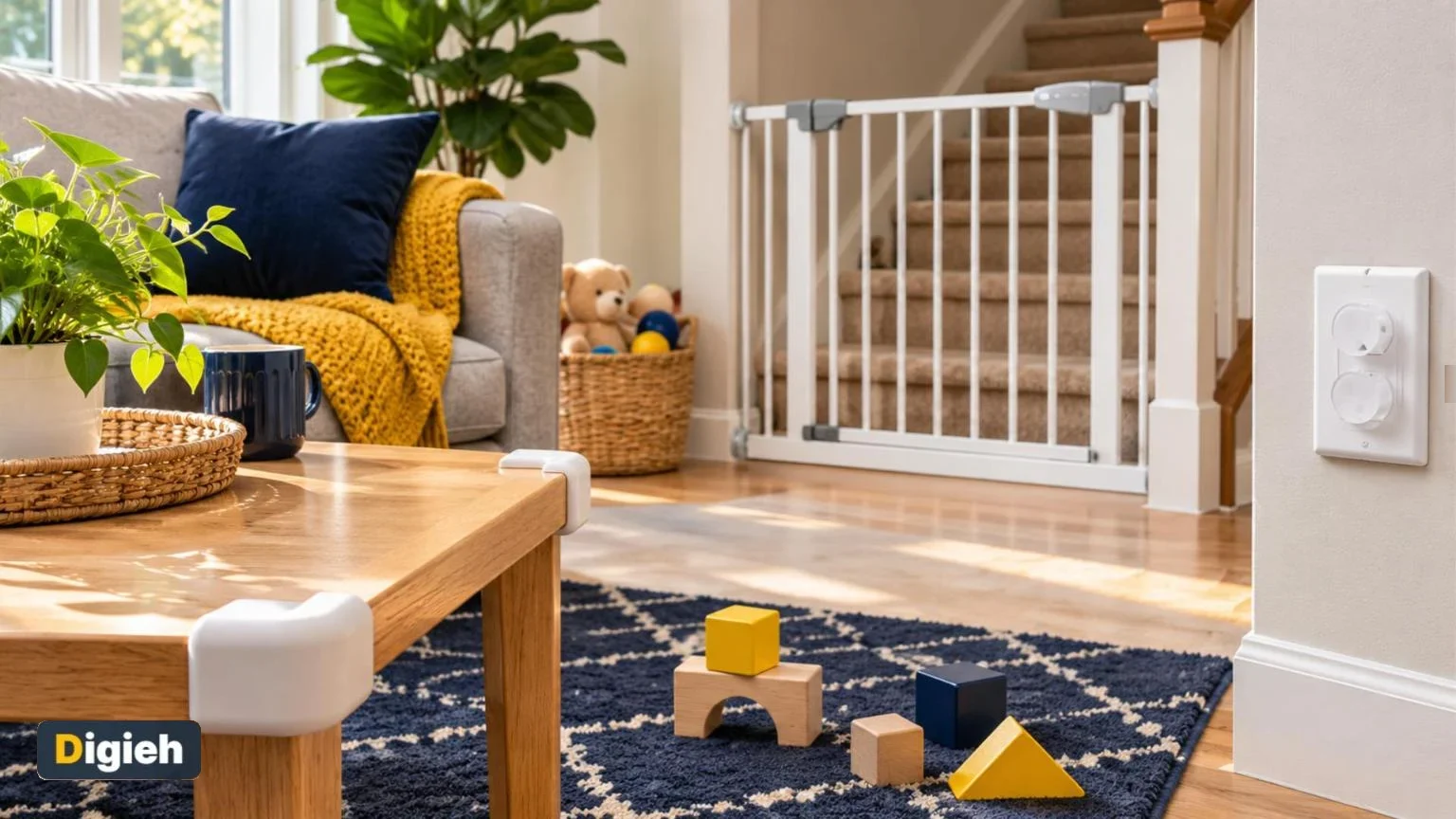
The CPSC recommends anchoring furniture and appliances to prevent tip-overs. Use the straps or brackets that come with the furniture, or buy anchor kits.
Mount flat-screen TVs on the wall, or strap them to a sturdy, low stand.
Cover outlets and edges
- Use outlet covers or tamper-resistant outlets.
- Add soft bumpers to sharp table corners and fireplace edges.
- Keep cords from lamps and chargers out of reach.
- Store small items, like coins and batteries, up high.
Quick tip. Button batteries in remotes and small gadgets are a hidden danger. Tape battery covers shut if they do not have a screw.
Which room in your home feels hardest to childproof?
- Kitchen
- Living room
- Bathroom
- Not sure
Kitchen
Kitchens hold heat, sharp tools and cleaning products. A few changes make a big difference.
- Fit safety latches on cabinets with cleaners, knives and matches.
- Store dishwasher pods and detergent up high and locked away.
- Turn pot handles toward the back of the stove.
- Use back burners when you can.
- Install an anti-tip bracket on a freestanding range.
The CPSC notes that anti-tip brackets on ranges also help prevent scalding.
Keep products in their original containers
Never store cleaners in cups or drink bottles. A child may think the liquid is safe to drink.
Bathroom
Bathrooms combine water, medicines and slippery floors. Keep the door closed when not in use.
- Lock medicines, vitamins and cosmetics in a high cabinet.
- Set your water heater to 120 degrees Fahrenheit or lower.
- Consider anti-scald devices on faucets and shower heads.
- Never leave a child alone in or near the bath.
- Use a toilet lock for curious toddlers.
The 120-degree setting and close bath supervision both come from the CPSC childproofing guide.
For more on storing pills safely, see our guide on how to store medicines at home. Clear out expired ones using our tips on disposing of old medicines.
120 FMaximum recommended water heater setting to help prevent scalds, says the CPSC.
Bedrooms and Nursery
Children spend many hours in their rooms, often alone. Make these spaces especially safe.
- Anchor every dresser and bookcase to the wall.
- Use cordless blinds or curtains.
- Keep cribs away from windows and cords.
- Fit a smoke alarm inside each bedroom.
Safe sleep for babies
Babies should sleep on their backs, alone, on a firm, flat surface. Safe to Sleep advises keeping pillows, blankets and toys out of the crib.
Window cords
The CPSC recommends cordless window coverings to prevent strangulation. If you cannot replace them, cut cords short and use tension devices.
Stairs, Windows and Outdoors
Falls and drowning are serious risks for young children. These areas deserve extra attention.
Stairs
Use safety gates at the top and bottom of stairs. The CPSC says top-of-stairs gates should screw into the wall, not rely on pressure.
Avoid pet gates and old V-shaped gates, which can trap a child’s head.
Windows
Window screens keep bugs out but do not stop falls. Fit window guards or stops so windows open no more than four inches.
Keep at least one window per room usable as a fire escape for adults.
Pools
The CPSC notes that most toddler drownings happen in home backyard pools. Use fences, self-latching gates, alarms and covers.
- Anchor furniture and TVs
- Lock medicines and cleaners
- Install stair gates
- Cover outlets
- Switch to cordless blinds
- Test smoke and CO alarms
Free updates
Join the Digieh list
Be the first to know when our weekly brief launches.
No spam. Unsubscribe anytime. Read our Privacy Policy.
Laundry Room and Garage
These rooms often hold the most dangerous products in the home. Keep doors closed and locked if you can.
- Store laundry pods and detergents in a high, locked cabinet.
- Keep paint, fuel, pesticides and car fluids out of reach.
- Lock away tools, ladders and sharp garden equipment.
- Unplug and store power tools after each use.
The CPSC lists detergent among the products that cabinet locks help protect. Small hands can open pods in seconds.
Fire Safety for Families
Working alarms give your family the time it needs to get out safely. The CPSC offers clear guidance.
- Put smoke alarms on every level of your home.
- Fit one inside each bedroom and outside sleeping areas.
- Test alarms every month.
- Change batteries yearly, or use sealed ten-year alarms.
- Add carbon monoxide alarms near sleeping areas.
Make a simple escape plan and practice it with your children. Show them two ways out of every room.
Visiting Other Homes
Grandparents and friends may not have childproofed their homes. A quick check on arrival keeps visits relaxed.
- Ask hosts to move medicines and handbags up high.
- Check for loose cords, low glass tables and open stairs.
- Bring a few portable outlet covers and a travel gate.
- Keep cleaning products and pet food out of reach.
Be kind and specific when you ask. Most hosts are happy to help once they know what to look for.
Hotels and holiday rentals need the same quick sweep. Check balconies, windows and pool gates before your child explores.
Childproofing as Your Child Grows
Hazards change as your child learns new skills. Review your home every few months, and again whenever your child learns a new skill.
| Stage | New skills | Focus on |
|---|---|---|
| Rolling and crawling | Reaching low objects | Outlets, cords and small items on the floor |
| Pulling up and cruising | Grabbing table edges | Corner guards, anchors and tablecloths |
| Walking and climbing | Opening doors and drawers | Gates, latches and window guards |
| Preschool years | Opening bottles and doors | Locked medicines and pool barriers |
Climbing toddlers can reach surprising heights. Move chairs and stools away from counters and windows.
When to Get Help
Call Poison Control at 1-800-222-1222 if you think your child swallowed something harmful. Keep the number saved in every caregiver’s phone.
Does your child collapse, have a seizure, struggle to breathe or not wake up? Call your local emergency number right away.
Poison Control warns that swallowed batteries can cause serious injuries quickly. Get medical help at once, even if your child seems fine.
Test smoke and carbon monoxide alarms every month. Our guide to carbon monoxide poisoning signs explains the warning symptoms.
Good to know. This article is for information only and is not medical advice. In an emergency, always call your local emergency number first.
Try this today. Crawl through one room at your child’s height and fix the first three hazards you find.
Test Yourself
What type of gate is safest at the top of stairs?
- A pressure-mounted gate
- A pet gate
- A gate screwed into the wall
The CPSC says top-of-stairs gates should be hardware-mounted to the wall.
What is the US Poison Control number?
- 1-800-222-1222
- 1-800-911-0000
- 1-888-123-4567
You can call Poison Control at 1-800-222-1222.
Frequently Asked Questions
When should I start childproofing?
Ideally before your baby starts crawling, often around six months. Start with the biggest hazards first.
Do I need to childproof every room?
Focus on rooms your child uses. Keep doors closed to rooms you have not childproofed.
Are window screens enough to stop falls?
No. Screens are not strong enough. Use window guards or stops instead.
How often should I check my childproofing?
Review it every few months as your child grows and learns new skills like climbing.
Conclusion
Childproofing turns your home into a safer place to explore. Anchor, lock, gate and cover, then keep watching closely.
Your next step is to anchor your heaviest furniture and save the Poison Control number today.
Found this useful?
Editor’s Note
This guide is accurate as of November 17, 2026. It draws on the US Consumer Product Safety Commission, Poison Control and Safe to Sleep.
Product standards and advice can change. Check the CPSC website for recalls and updates.
Spot an error in this article? Please contact us at support@digieh.com or read our Corrections Policy.
Keep exploring
Your next read is waiting
 1Education & CareersHow to Make a Study Timetable That Works7 min read
 2TechnologyHow to Convert a PDF to Markdown for Notes and AI4 min read
 3Fitness & ExerciseHow Much Exercise Per Week? A Simple Guide7 min read
 4NewsHow Long Can a Blackout Last? Real Cases5 min read
 5GamingGaming Eye Strain and the 20-20-20 Rule Explained7 min read
 6Parenting & FamilySafe Sleep for Babies, a Simple Parent Checklist8 min read