TRENDING
DASH Diet: Eating Plan to Lower Blood Pressure
DASH diet explained: daily servings at 2,000 calories, what counts as a serving, the two salt levels, a sample day, easy swaps and common food questions.

7 min read
Last updated November 22, 2026
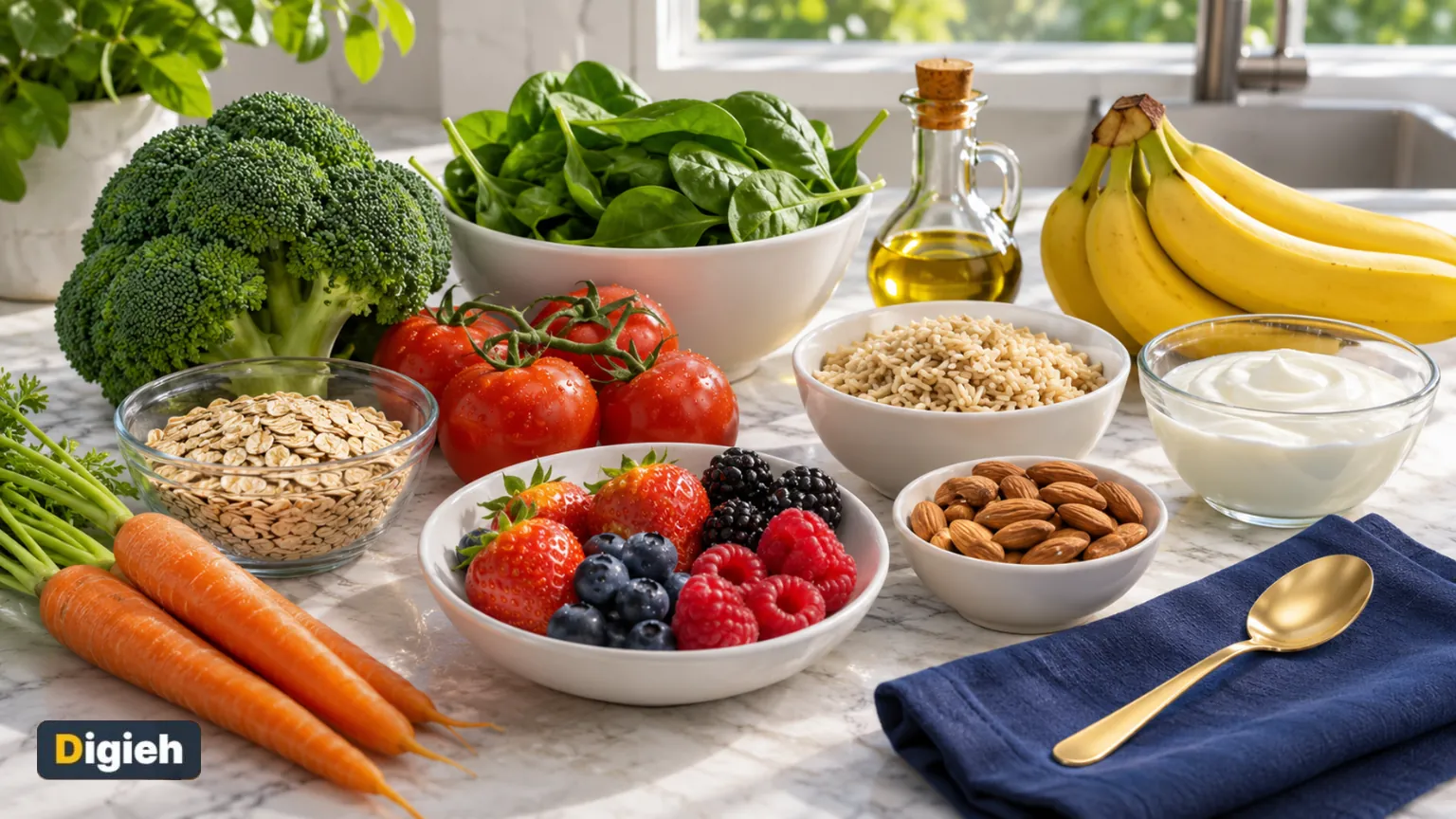
The DASH diet is an eating plan built to lower blood pressure. It fills your plate with vegetables, fruit, whole grains and low-fat dairy, and cuts back on salt.
It needs no special foods. You just aim for a set number of servings from each food group each day.
Health note. This article is for general information only and is not medical advice. Talk to your doctor before changing your diet, especially if you take blood pressure medicine or have kidney disease.
Key Takeaways.
- DASH stands for Dietary Approaches to Stop Hypertension.
- The standard plan limits sodium to 2,300 milligrams a day, about 1 teaspoon of salt.
- A lower-salt version at 1,500 milligrams lowers blood pressure even more.
- Studies link the plan to a 5.2 point drop in top blood pressure numbers, says the British Heart Foundation.
- At 2,000 calories, aim for 4 to 5 servings each of vegetables and fruit daily.
Jump to a section
- What the DASH diet is
- Daily servings
- What counts as a serving
- Official advice compared
- The two salt levels
- A sample day
- Easy swaps
- How to start
- Common food questions
- When to Get Help
- Questions to Ask Your Doctor
- Frequently Asked Questions
- Sources
- Conclusion
What the DASH Diet Is
The National Heart, Lung, and Blood Institute calls it a flexible and balanced eating plan for a heart-healthy life. It sets daily and weekly food goals instead of strict rules.
The plan is rich in potassium, calcium and magnesium. These minerals help control blood pressure, says Mayo Clinic.
It also limits foods high in salt, saturated fat and added sugar. Mayo Clinic says it may lower bad cholesterol too.
5.2 pointsAverage drop in top blood pressure numbers in a 2019 review. Source: the British Heart Foundation.
The same review linked the plan to a 20 percent lower risk of heart and blood vessel disease.
Daily Servings at 2,000 Calories
These are the targets from the National Heart, Lung, and Blood Institute for someone eating 2,000 calories a day.
| Food group | Servings |
|---|---|
| Grains, mostly whole grains | 6 to 8 a day |
| Vegetables | 4 to 5 a day |
| Fruit | 4 to 5 a day |
| Low-fat or fat-free dairy | 2 to 3 a day |
| Lean meat, poultry and fish | 6 or fewer a day |
| Fats and oils | 2 to 3 a day |
| Nuts, seeds, beans and peas | 4 to 5 a week |
| Sweets and added sugar | 5 or fewer a week |
| Sodium | 2,300 milligrams a day |
Source: National Heart, Lung, and Blood Institute, updated February 25, 2026. Your needs change with your calorie level.
What Counts as a Serving
Servings are smaller than many people think. Here are examples from Mayo Clinic, with metric sizes from the British Heart Foundation.
| Food group | One serving |
|---|---|
| Grains | 1 slice of bread, or half a cup of cooked rice or pasta |
| Vegetables | 1 cup of raw leafy greens, or half a cup of cooked vegetables |
| Fruit | 1 medium fruit, or half a cup of fresh or frozen fruit |
| Dairy | 1 cup (235 milliliters) of milk or yogurt |
| Meat, poultry or fish | 1 ounce (30 grams) cooked, or 1 egg |
| Nuts and beans | A third of a cup of nuts, or half a cup of cooked beans |
| Fats | 1 teaspoon of vegetable oil |
| Sweets | 1 tablespoon of sugar, jam or jelly |
Source: Mayo Clinic and British Heart Foundation.
Official Advice Compared
| Question | National Heart, Lung, and Blood Institute | Mayo Clinic | British Heart Foundation |
|---|---|---|---|
| Sodium limit? | 2,300 milligrams, or 1,500 for a bigger drop | 2,300 standard, 1,500 lower version | 2,300 milligrams, about 6 grams of salt |
| Whole grains? | 6 to 8 servings a day | 6 to 8 servings a day | 7 to 8 servings a day |
| Alcohol? | Not covered on this page | One or fewer drinks a day, not daily | Fewer than 1 drink a day, 14 units a week |
| Special foods? | None needed | None needed | None needed |
Sources: National Heart, Lung, and Blood Institute, Mayo Clinic and British Heart Foundation, checked November 22, 2026.
Want to track your intake? Use the sodium tracker in our guide to daily salt intake.
The Two Salt Levels
The standard DASH plan limits sodium to 2,300 milligrams a day. That is about 1 teaspoon of table salt, says Mayo Clinic.
The lower-salt version allows 1,500 milligrams a day. The National Heart, Lung, and Blood Institute says this lowers blood pressure even further.
Ask your doctor which level suits you. Most salt comes from packaged and restaurant food, not the salt shaker.
What is the hardest part of eating less salt for you?
- Eating out
- Packaged food
- Missing the taste
- Not sure
A Sample DASH Day
This sample day shows how the servings can fit together. Adjust portions for your own calorie needs.
| Meal | Example |
|---|---|
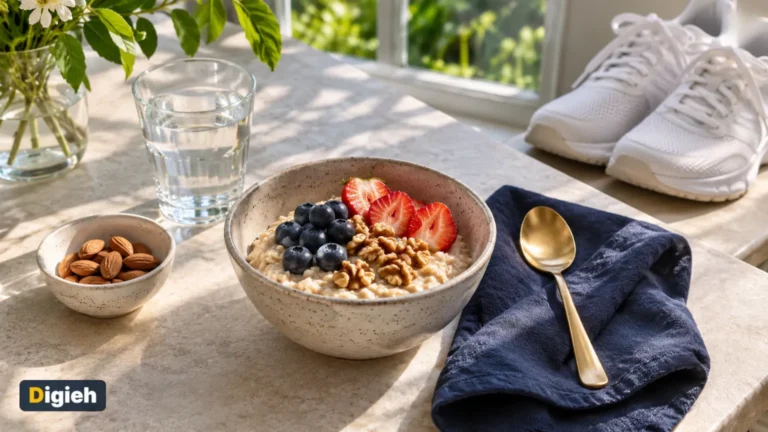
| Breakfast | Oatmeal with low-fat milk, a banana and a handful of unsalted walnuts |
| Lunch | Whole-wheat wrap with grilled chicken, salad leaves, tomato and an apple |
| Snack | Plain low-fat yogurt with berries |
| Dinner | Baked salmon, brown rice, steamed broccoli and carrots with a teaspoon of olive oil |
| Snack | Raw vegetable sticks with hummus, or a pear |
Example built from National Heart, Lung, and Blood Institute serving targets.
Try this today. Tomorrow, add one extra serving of vegetables to lunch and one piece of fruit as a snack. That is two steps toward your daily target.
Free updates
Join the Digieh list
Be the first to know when our weekly brief launches.
No spam. Unsubscribe anytime. Read our Privacy Policy.
Easy Swaps
| Instead of | Try |
|---|---|
| Salted chips | Unsalted nuts or air-popped popcorn |
| White bread | Whole-wheat bread |
| Full-fat cheese | Low-fat cheese, in small amounts |
| Fried chicken | Grilled or baked skinless chicken |
| Sugary soda | Water with lemon or sparkling water |
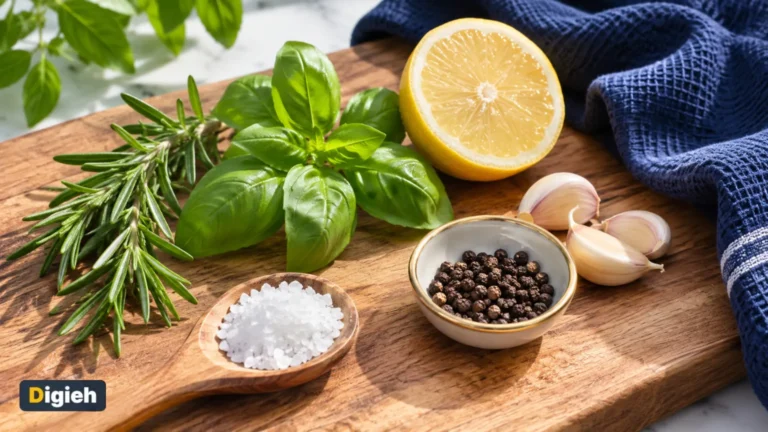
| Salt in cooking | Herbs, garlic, lemon juice or salt-free spice blends |
Based on salt and food tips from Mayo Clinic.
Potassium-rich foods are a big part of the plan. See our lists of potassium-rich fruits and vegetables and high-fiber foods.
How to Start
- Add one serving of vegetables or fruit to each meal.
- Switch to whole grains for at least half your grain servings.
- Read food labels and choose low-salt or no-salt-added products.
- Do not add salt when cooking rice, pasta or hot cereal.
- Use herbs and spices instead of salt.
- Eat out less, and ask for less salt when you do.
- Add fiber slowly and drink water to avoid bloating.
Mayo Clinic says your taste buds may take time to adjust to less salt.
Alcohol and caffeine
Even moderate drinking can raise blood pressure in some people. Mayo Clinic suggests one or fewer drinks a day, and not every day.
The DASH plan does not cover caffeine. If you have high blood pressure, ask your doctor about cutting back.
Common Food Questions
- Are eggs allowed? Yes. Mayo Clinic counts one egg as one serving of protein.
- Is Greek yogurt OK? Yes, choose plain low-fat or fat-free yogurt. It counts as dairy.
- Can I eat bananas? Yes. Bananas are rich in potassium and count as one fruit serving. See our guide to banana nutrition.
- Is coffee allowed? The plan does not ban it, but ask your doctor if your blood pressure is high.
- Can vegetarians follow it? Yes. Swap meat for beans, lentils, tofu and nuts.
DASH and Other Health Goals
The DASH plan can help with weight control, cholesterol and heart health. Our guide to lowering cholesterol without medicine covers more food steps.
Blood pressure often rises in cold weather. Read our tips on blood pressure in winter.
The British Heart Foundation notes the Mediterranean diet is a similar, more flexible choice with extra oily fish.
What is the daily sodium limit on the standard DASH diet?
- 2,300 milligrams
- 5,000 milligrams
- No limit
The standard plan limits sodium to 2,300 milligrams a day, about 1 teaspoon of salt.
When to Get Help
Talk to your doctor before starting if you take blood pressure medicine. Your dose may need changing as your numbers improve. See our guide to blood pressure medicines.
People with kidney disease should ask before eating more potassium. The National Heart, Lung, and Blood Institute plan may need adjusting.
Get urgent care for a very high reading with chest pain, a bad headache, confusion or vision changes.
Questions to Ask Your Doctor
- Is the DASH diet right for me?
- Should I aim for 2,300 or 1,500 milligrams of sodium?
- How many calories should I eat each day?
- Is extra potassium safe with my kidneys and medicines?
- How often should I check my blood pressure at home?
- Could I see a dietitian?
Frequently Asked Questions
How fast does the DASH diet lower blood pressure?
Results vary from person to person. Check your readings at home and share them with your doctor.
Is the DASH diet good for weight loss?
It can help, because it is high in fiber and low in sugar. You may need to lower calories too.
Do I have to give up meat?
No. You can eat up to 6 small servings of lean meat, poultry or fish a day.
Can I follow DASH if I do not have high blood pressure?
Yes. It is a healthy eating plan for most adults and can help prevent high blood pressure.
Sources
- National Heart, Lung, and Blood Institute: DASH eating plan
- Mayo Clinic: DASH diet
- British Heart Foundation: DASH diet
Conclusion
The DASH diet is a simple, proven way to eat for lower blood pressure. More plants, less salt and steady habits make the biggest difference.
Next step: track your servings for three days, then add one more vegetable serving each day.
Editor’s Note
This article is accurate as of November 22, 2026. Facts come from a federal heart institute, Mayo Clinic and the British Heart Foundation.
Spot an error in this article? Please contact us at support@digieh.com or read our Corrections Policy.
Keep exploring
Your next read is waiting
 1Finance & MarketsChase Vendor Data Breach: What Customers Should Do4 min read
 2HealthGout Attack: Causes, Trigger Foods and Fast Relief7 min read
 3TechnologyHow to Convert MP4 to Animated WebP, Tested7 min read
 4Pets & AnimalsDog Vomiting: Causes, Home Care and Vet Signs7 min read
 5AI & TechGoogle Homepage Redesign: AI Chats Replace Search Button4 min read
 6NewsVerstappen Wins 2026 Las Vegas Grand Prix: Results4 min read
Found this useful?