TRENDING
Blood Pressure in Winter: Why It Goes Up
Why blood pressure rises in winter: cold narrows blood vessels. What studies show, who is most affected, home monitoring tips, safe activity and warning signs.

7 min read
Last updated November 21, 2026
Blood pressure often goes up in winter because cold air makes blood vessels narrow for a while. The heart then has to push harder to move blood through them.
The rise is usually small, but it can matter if your blood pressure is already high. Checking at home and staying active can help.
Key Takeaways.
- Cold makes blood vessels tighten, which raises blood pressure for a while.
- In one large study, top blood pressure numbers rose up to 1.7 points in winter.
- Blood pressure control dropped by nearly 5 percent in winter compared with summer.
- Never change your medicine dose on your own. Talk to your doctor first.
Jump to a section
- Why it happens
- How big the change is
- Numbers explained
- Who is most affected
- Winter habits that add to it
- Checking at home
- Staying active safely
- Food and drinks
- Medicines in winter
- When to Get Help
- Questions to Ask Your Doctor
- Frequently asked questions
- Sources
- Conclusion
Why Blood Pressure Rises in Winter
Low temperatures cause blood vessels to narrow temporarily. More pressure is needed to force blood through the tighter vessels, says Mayo Clinic.
Sudden weather changes can also affect blood pressure. Shifts in air pressure, humidity, wind and cloud cover can have a similar effect.
1.7 pointsWinter rise in the top number for treated patients, per a study reported by the American Medical Association.
How Big the Change Is
Researchers looked at health records of 60,676 adults being treated for high blood pressure. The data ran from 2018 to 2023 at six health centers in the United States.
| Finding | Result |
|---|---|
| People studied | 60,676 adults treated for high blood pressure |
| Years | July 2018 to June 2023 |
| Top number in winter | Up by as much as 1.7 points |
| Control rate | Down by up to 5 percent in winter versus summer |
| Control goal used | Below 140 over 90 |
Source: American Heart Association newsroom, research presented at its 2023 hypertension meeting. It was a conference abstract, not a full journal paper.
A few points may not sound like much. Across millions of people, small rises can mean more heart attacks and strokes.
Blood Pressure Numbers Explained
Blood pressure has two numbers. The top number shows pressure when the heart beats. The bottom number shows pressure between beats.
| Category | Top number | Bottom number |
|---|---|---|
| Normal | Less than 120 | Less than 80 |
| Elevated | 120 to 129 | Less than 80 |
| Stage 1 high | 130 to 139 | 80 to 89 |
| Stage 2 high | 140 or higher | 90 or higher |
| Crisis, needs care | Higher than 180 | Higher than 120 |
Source: American Heart Association, understanding blood pressure readings.
If your readings sit near the top of a range, a winter rise can push you into the next one. That is why regular checks matter more in cold months.
Who Is Most Affected
- Adults aged 65 and older.
- People who already have high blood pressure.
- People with heart disease.
- People who spend long periods in the cold.
Older adults have weather-related changes more often than younger people, says Mayo Clinic.
Winter Habits That Add to It
- Moving less because it is cold or dark.
- Gaining weight over the holidays.
- Eating more salty and rich food at parties.
- Drinking more alcohol.
- Sleeping poorly or feeling more stressed.
Mayo Clinic lists weight gain, holiday salt and less activity as winter factors. Holiday stress plays a part too, so see our guide on managing holiday stress.
Do you check your blood pressure at home?
- Yes, regularly
- Only sometimes
- No, only at the doctor
- Not sure
Checking Blood Pressure at Home
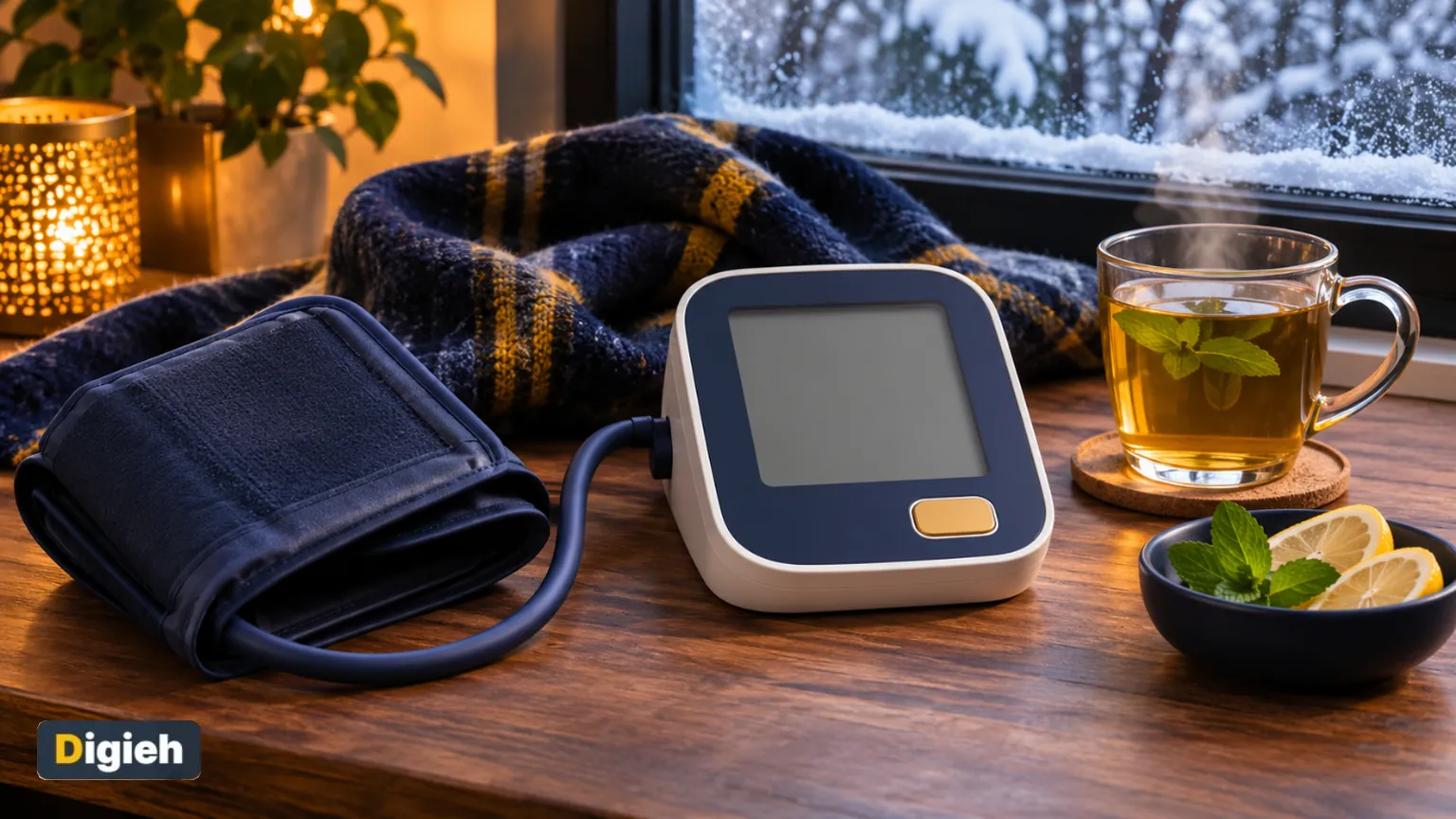
Home checks help you and your doctor see real patterns. The American Medical Association says automatic upper-arm monitors are best for home use.
- Use a validated upper-arm cuff, not a wrist or finger device.
- Sit quietly for 5 minutes before you measure.
- Keep your feet flat and your arm supported at heart level.
- Measure at the same times each day, such as morning and evening.
- Take two readings a minute apart and write both down.
- Bring your log to every doctor visit.
Check that your device is on the US validated device list, the American Medical Association advises.
Common home reading mistakes
- Measuring right after coffee, exercise or a cigarette.
- Talking during the reading.
- Using a cuff that is too small or too big.
- Measuring over a thick sleeve.
- Checking only when you feel unwell.
Each of these can push a reading up or down. Fixing them gives your doctor numbers they can trust and use with confidence.
Keep your home warm
Staying warm indoors helps too. Keep living areas comfortably heated, wear warm layers and avoid sitting in cold rooms for long periods.
If heating bills are a worry, our guide to space heater safety covers safe ways to warm one room.
Staying Active Safely in Cold Weather
Exercise helps keep blood pressure down all year. In winter, warm up longer and dress in layers.
- Walk indoors at a mall or gym on very cold days.
- Wear a hat, gloves and a scarf over your mouth.
- Take breaks during heavy outdoor work.
- Ask someone else to clear heavy snow if you have heart disease.
Heavy shoveling strains the heart in the cold, warns Harvard Health. See our tips on shoveling snow safely and exercising in cold weather.
Free updates
Join the Digieh list
Be the first to know when our weekly brief launches.
No spam. Unsubscribe anytime. Read our Privacy Policy.
Food and Drinks in Winter
- Choose soups and stews with less added salt.
- Fill half your plate with vegetables.
- Eat potassium-rich foods like beans, potatoes and oranges.
- Limit alcohol at holiday events.
- Drink water instead of sugary drinks.
Find good choices in our list of potassium-rich fruits and vegetables.
Blood Pressure Medicines in Winter
Some people may need a dose change in winter, but only your doctor should decide that. Do not adjust medicine on your own, says Mayo Clinic.
Some cold and flu medicines can raise blood pressure. Ask a pharmacist before taking them. Learn more in our guide to blood pressure medicines.
When to Get Help
A reading above 180 over 120 needs attention, says the National Heart, Lung, and Blood Institute. If you have no symptoms, wait 5 minutes and check again.
Call 911 if the second reading is still that high and you have any of these signs.
- A sudden, severe headache.
- Trouble breathing.
- Sudden severe pain in the chest, belly or back.
- Numbness or weakness.
- A sudden change in vision.
- Trouble speaking.
Do not wait to see if it comes down on its own. Numbness, vision changes or speech trouble can also be stroke signs, so learn the BE FAST check.
Information only, not medical advice. This article is for general information and is based on research and guidance from major health organizations. It does not replace advice from your doctor.
Questions to Ask Your Doctor
- Should I check my blood pressure more often in winter?
- What reading should make me call you?
- Do I need a different dose in cold months?
- Which cold medicines are safe for me?
- Is my home monitor accurate?
- How much exercise is safe for me in winter?
Try this today. Start a simple blood pressure log today. Note the reading, the time and how cold it was outside.
Test Yourself
Why does cold weather raise blood pressure?
- Blood gets thinner
- Blood vessels narrow for a while
- The heart slows down
Cold makes blood vessels narrow temporarily, so more pressure is needed to move blood, says Mayo Clinic.
Frequently Asked Questions
Does cold weather raise blood pressure?
Yes, for many people. Cold narrows blood vessels for a while, which raises pressure.
How much does blood pressure go up in winter?
In one large study, the top number rose up to 1.7 points on average.
Should I change my medicine in winter?
Only if your doctor says so. Never change your dose on your own.
What time of day is blood pressure highest?
Many people have higher readings in the morning. Measure at the same times each day so readings compare fairly.
Is shoveling snow safe with high blood pressure?
Heavy shoveling can strain the heart. Take breaks, or ask someone else if you have heart disease.
Sources
- Mayo Clinic, Blood pressure and cold weather
- American Heart Association, Cold weather and blood pressure control (2023)
- American Medical Association, Winter blood pressure readings
- National Heart, Lung, and Blood Institute, High blood pressure symptoms
- Harvard Health, Cold-weather cautions
Conclusion
Blood pressure tends to rise in winter because cold narrows blood vessels and habits change. The change is small but worth watching.
Your next step is to check your blood pressure at home this week and share the log with your doctor.
Editor’s Note
This article is accurate as of November 21, 2026. Facts come from Mayo Clinic, the American Heart Association and the American Medical Association. We also used the National Heart, Lung, and Blood Institute. This article is for information only.
Spot an error in this article? Please contact us at support@digieh.com or read our Corrections Policy.
Keep exploring
Your next read is waiting
 1BusinessUS Chip Export Rule: Five Countries Need Licenses4 min read
 2HealthAnal Fistula: Causes, Symptoms and Latest Treatment Options7 min read
 3NewsWill the Grid Hold This Winter? NERC Explained5 min read
 4TechnologyReceipt to Spreadsheet: Track Holiday Spending From Photos7 min read
 5Food & LifestyleWhy You Get Static Shocks in Winter, Fixed8 min read
 6AI & TechKindle vs iPad for Reading: Which to Buy7 min read
Found this useful?