TRENDING
Why Constipation Happens: Main Causes and Latest Research
Why constipation happens: how slow stool loses water, the main causes, who gets it most, what 2025 diet guidelines say works and warning signs to see a doctor.

7 min read
Last updated November 21, 2026
Constipation happens when stool moves too slowly through the large bowel. The bowel keeps pulling water out, so the stool turns hard, dry and difficult to pass.
The most common reasons are low fiber, too little fluid, little movement, some medicines and life changes. It affects about 16 in 100 adults in the United States.
Key Takeaways.
- Slow-moving stool loses water and becomes hard. That is the core of constipation.
- About 1 in 3 adults aged 60 and older has symptoms.
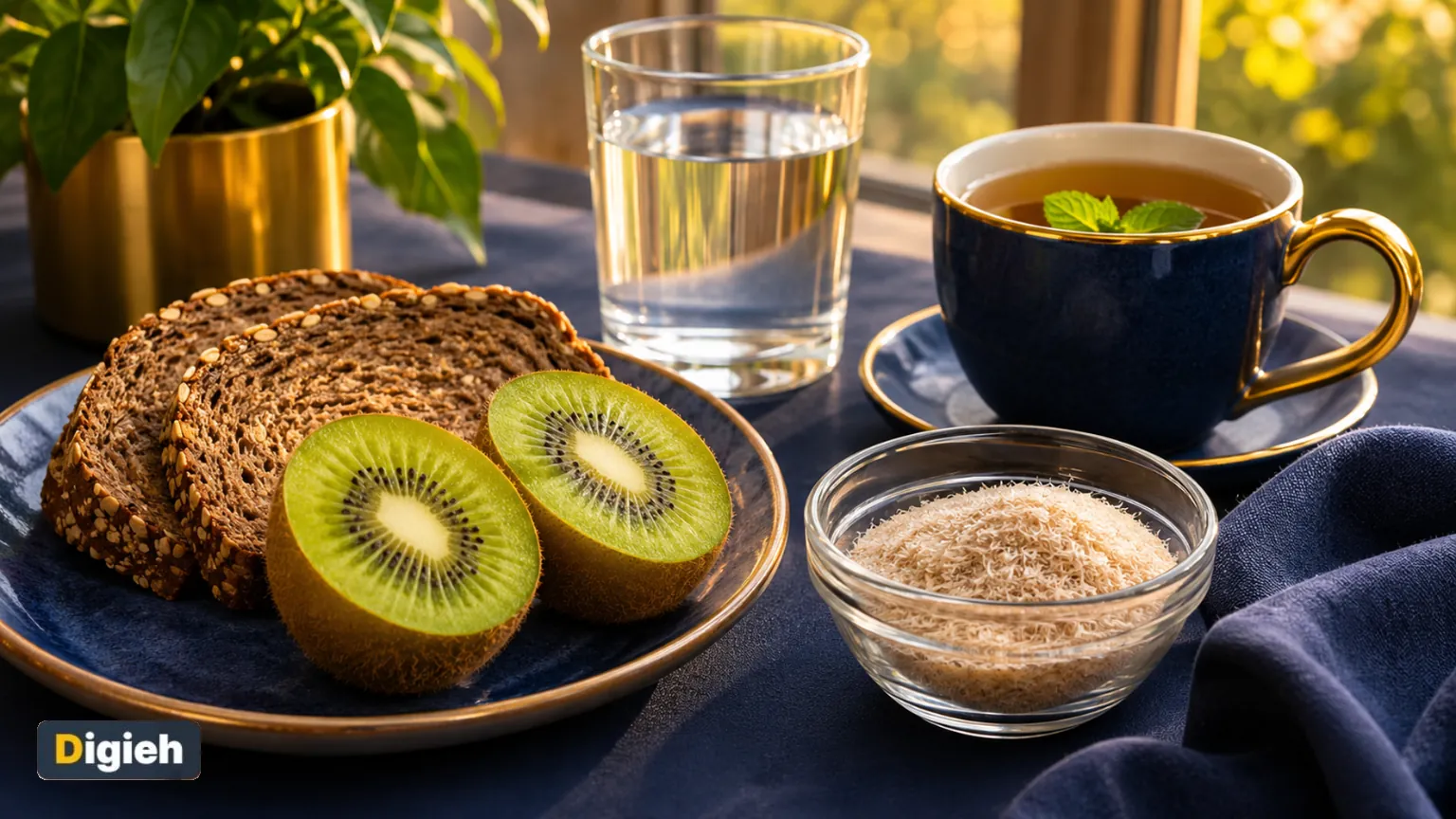
- New 2025 diet guidelines back kiwifruit, rye bread, mineral-rich water and psyllium.
- Blood in stool, weight loss or constant belly pain need a doctor quickly.
Jump to a section
- What counts as constipation
- How constipation happens
- Main causes
- Who gets it most
- What the latest research says
- Self-help that works
- Laxatives
- Complications
- When to Get Help
- Questions to Ask Your Doctor
- Frequently asked questions
- Sources
- Conclusion
What Counts as Constipation?
Doctors usually mean fewer than three bowel movements a week. Stools are hard or lumpy, painful to pass, or you feel you have not fully emptied.
Normal habits vary a lot from person to person. Constipation is not a disease. It can be a sign of another problem, says the National Institute of Diabetes and Digestive and Kidney Diseases.
A quick self-check
- Do you go fewer than three times a week?
- Do you strain or feel pain most times?
- Are your stools hard, dry or lumpy?
- Do you often feel you did not finish?
If you answer yes to two or more, you likely have constipation. Read on to find the cause.
How Constipation Happens Inside the Body
- Food waste enters the large bowel as a soft, wet mix.
- The bowel absorbs water as muscle waves push waste along.
- If the waves slow down, waste sits in the bowel longer.
- More water is pulled out, so the stool dries and hardens.
- Hard stool is harder to push out, which can slow things even more.
A second type happens at the very end. The pelvic floor muscles do not relax properly, so stool cannot leave easily even when it is soft. This is more common in women.
Main Causes of Constipation
Constipation often has more than one cause at once, says the national institute. The causes fall into four groups.
1. Daily habits
- Eating little fiber from fruit, vegetables and whole grains.
- Not drinking enough fluids.
- Sitting or lying down for long periods.
- Often ignoring the urge to go.
2. Medicines and supplements
- Strong pain medicines called opioids.
- Iron supplements.
- Some antacids that contain aluminum or calcium.
- Some antidepressants and seizure medicines.
- Some blood pressure medicines and water pills.
Do not stop a prescribed medicine on your own. Ask your doctor or pharmacist if it could be the cause, the National Health Service advises.
3. Life changes
- Pregnancy and the weeks after giving birth.
- Getting older.
- Travel and changes in routine.
- Stress, anxiety or low mood.
4. Health conditions
- Irritable bowel syndrome.
- An underactive thyroid.
- Diabetes.
- Parkinson’s disease and other nerve problems.
- Celiac disease.
- Rarely, a blockage or bowel cancer.
| Cause group | Examples | Source |
|---|---|---|
| Daily habits | Low fiber, low fluids, little activity | National institute |
| Medicines | Opioids, iron, some antacids | National institute |
| Life changes | Pregnancy, aging, travel, stress | National Health Service |
| Conditions | Irritable bowel, thyroid, diabetes | National institute |
Who Gets Constipation Most?
About 16 in 100 adults in the United States have symptoms. The number roughly doubles to 33 in 100 among adults aged 60 and older.
Women are more likely to be affected, especially in pregnancy and after childbirth. People who eat very little fiber are also at higher risk, per the national institute.
8 to 12%Share of people in the United States with long-term constipation and no clear cause, per the 2023 gastroenterology guideline.
What the Latest Research Says
2025: the first diet guidelines for constipation
In October 2025, researchers at King’s College London released diet guidelines for adults with long-term constipation. The British Dietetic Association endorsed them.
The panel reviewed over 75 clinical trials and made 59 recommendations, says the university announcement.
| Backed by the 2025 guidelines | Weak or not enough evidence |
|---|---|
| Kiwifruit | A general high-fiber diet |
| Rye bread | Senna supplements |
| Water high in minerals | |
| Psyllium fiber supplements | |
| Magnesium oxide supplements | |
| Certain probiotic strains |
Source: King’s College London, October 13, 2025, summarizing guidelines in two nutrition and gut journals.
The surprise is fiber. The lead author said there is not enough evidence that a general high-fiber diet helps constipation specifically. Specific foods did better than general advice.
2023: guidance on constipation medicines
In 2023, two large United States gut doctor groups issued a joint guideline on medicines. It strongly backed polyethylene glycol, an osmotic laxative, and some stimulant laxatives for short-term use.
Fiber got a weaker, conditional recommendation, per the published guideline. Several prescription medicines also have strong support for people who need more help.
What helps your digestion most?
- Fruit like kiwi or prunes
- More water
- Daily walks
- Not sure
Free updates
Join the Digieh list
Be the first to know when our weekly brief launches.
No spam. Unsubscribe anytime. Read our Privacy Policy.
Self-Help That Works
- Add fiber slowly, such as oats, linseed, kiwifruit or rye bread.
- Drink plenty of fluids through the day.
- Take a daily walk or other activity.
- Go to the toilet at a regular time, and never ignore the urge.
- Rest your feet on a low stool so your knees are above your hips.
- Cut back on alcohol.
Diet changes can take a few days to a few weeks to work, says the National Health Service.
Read more in our guides to kiwi health benefits, high-fiber fruits and vegetables and constant bloating.
Laxatives
If self-help does not work, a pharmacist can suggest a laxative. Most work within three days and are meant for short-term use.
Types include bulk-forming fiber, osmotic laxatives that draw water into the bowel, stool softeners and stimulant laxatives. Follow the label or your pharmacist on how much to take.
Complications of Long-Term Constipation
- Swollen veins around the anus, called hemorrhoids.
- Small tears in the anus, called fissures.
- Hard stool stuck in the bowel, called impaction.
- Part of the rectum pushing out, called prolapse.
These are listed by Mayo Clinic. A sign of impaction can be leaking, runny stool, the National Health Service notes. Read about another painful anal problem in our anal fistula guide.
When to Get Help
See a doctor right away if constipation comes with any of these signs, says the national institute.
- Bleeding from the rectum or blood in your stool.
- Constant belly pain.
- Not being able to pass gas.
- Vomiting or fever.
- Lower back pain.
- Losing weight without trying.
Also see a doctor if self-help does not work, or if you have a family history of bowel cancer.
Information only, not medical advice. This article is for general information and is based on research from major health bodies and medical journals. It does not replace advice from your doctor or pharmacist.
Questions to Ask Your Doctor
- What is causing my constipation?
- Could any of my medicines be the reason?
- Do I need any tests?
- Which laxative, if any, is right for me, and for how long?
- Would kiwifruit, psyllium or magnesium help in my case?
- When should I come back if it does not improve?
Try this today. Keep a seven-day bowel diary. Note what you ate, how much you drank and when you went. Bring it to your doctor.
Test Yourself
Why does stool get hard in constipation?
- It moves too fast
- The bowel pulls out too much water
- It has too much fat
When stool moves slowly, the large bowel keeps absorbing water, so the stool dries out and hardens.
Frequently Asked Questions
What is the main cause of constipation?
Most often it is a mix of low fiber, too little fluid and too little movement. Medicines are another common cause.
How many days without a bowel movement is too long?
Fewer than three a week usually counts as constipation. See a doctor if it lasts or comes with warning signs.
Does fiber always help?
Not always. The 2025 guidelines found better evidence for specific foods like kiwifruit and rye bread than for general fiber advice.
Is it safe to use laxatives every day?
Most are meant for short-term use. Ask a doctor before using them regularly.
Sources
- National Institute of Diabetes and Digestive and Kidney Diseases, Definition and facts
- National Institute of Diabetes and Digestive and Kidney Diseases, Symptoms and causes
- National Health Service, Constipation
- American Gastroenterological Association and American College of Gastroenterology guideline, Gastroenterology 2023
- King’s College London, 2025 dietary guidelines for chronic constipation
- Mayo Clinic, Constipation
Conclusion
Constipation happens when stool moves slowly and loses too much water. Habits, medicines, life changes and some conditions all play a part.
Your next step is to try kiwifruit, more water and a daily walk for two weeks. See a doctor if it does not improve.
Editor’s Note
This article is accurate as of November 21, 2026. Facts come from the National Institute of Diabetes and Digestive and Kidney Diseases, the National Health Service and Mayo Clinic. We also used a 2023 medical guideline and the 2025 dietary guidelines. This article is for information only.
Spot an error in this article? Please contact us at support@digieh.com or read our Corrections Policy.
Keep exploring
Your next read is waiting
 1Food & LifestyleChristmas Lights Cost Calculator: LED vs Old Bulbs7 min read
 2HealthBlood Pressure in Winter: Why It Goes Up7 min read
 3AI & TechApple AI Agent for Mac: What We Know4 min read
 4TechnologyBusiness Card to Contact: Save Cards From Photos7 min read
 5NewsSchool Phone Bans: What Two New Studies Found5 min read
 6Pets & AnimalsCost of Owning a Cat: Yearly Budget, Calculator7 min read
Found this useful?