TRENDING
Umbilical Granuloma in Babies: Causes and Salt Treatment
Umbilical granuloma in babies: why it forms, what research says about table salt, step-by-step hospital method, other treatments and when to see a doctor.

7 min read
Last updated November 21, 2026
An umbilical granuloma is a small, soft, pink lump in a baby’s belly button. It forms after the cord stump falls off and is usually harmless.
Many hospitals now suggest plain table salt as a first home treatment. Research shows it clears most granulomas within a few days, with no serious side effects reported.
Key Takeaways.
- Umbilical granulomas affect about 4 to 7 percent of newborns.
- In a review of trials, salt cleared over 90 percent of granulomas in five studies.
- Salt is put on for about 30 minutes, then washed off. It is never left on all day.
- See a doctor if there is redness, a bad smell, fever, or no change after 5 days.
Jump to a section
- What it is
- Why it happens
- Signs
- What research says about salt
- How hospitals use salt
- Salt schedules compared
- Other treatments
- Daily belly button care
- When it may be something else
- When to Get Help
- Questions to Ask Your Doctor
- Frequently asked questions
- Sources
- Conclusion
What Is an Umbilical Granuloma?
It is an overgrowth of healing tissue at the belly button. It looks like a moist pink or red lump, often 3 to 10 millimeters wide.
It is not painful because the tissue has no nerve endings. It may ooze a little clear or yellow fluid.
4 to 7%Share of newborns who get an umbilical granuloma, says Cleveland Clinic.
Why Does It Happen?
The exact cause is not known. When the cord falls off, the wound heals with new tissue. Sometimes this tissue grows too much instead of closing flat.
Things linked to a higher chance
- Being born early or with a low birth weight.
- The cord stump taking longer than usual to fall off.
- A belly button that stays wet or damp.
- Something rubbing or sitting in the belly button.
These risk factors are listed by Cleveland Clinic. Without treatment, a granuloma can take months to go away, says Children’s Health Queensland.
Signs of an Umbilical Granuloma
- A soft, moist pink, red or grey lump in the belly button.
- A small amount of clear or yellow fluid.
- Some crusting around the lump.
- Slight bleeding now and then, often from rubbing.
What Research Says About Salt
Salt pulls water out of the extra tissue. The lump then shrinks, dries and falls away. The baby usually feels nothing.
The evidence
- A 2021 review looked at 11 trials with 890 babies. Salt cleared over 90 percent of granulomas in five studies.
- In two other studies, salt worked in 54 to 80 percent of babies.
- None of those trials reported side effects from salt.
- A 2025 study treated 25 babies with salt. All 25 cleared, in about 2.5 days on average.
The review appeared in Australian Journal of General Practice. The 2025 study is in Frontiers in Pediatrics.
Good to know. Most salt studies are small, and experts call the overall evidence low quality. Doctors still use it because it is cheap, simple and appears safe.
How Hospitals Tell Parents to Use Salt
Always check with your doctor, nurse or midwife before you start. This is the method from the Sydney Children’s Hospitals Network.
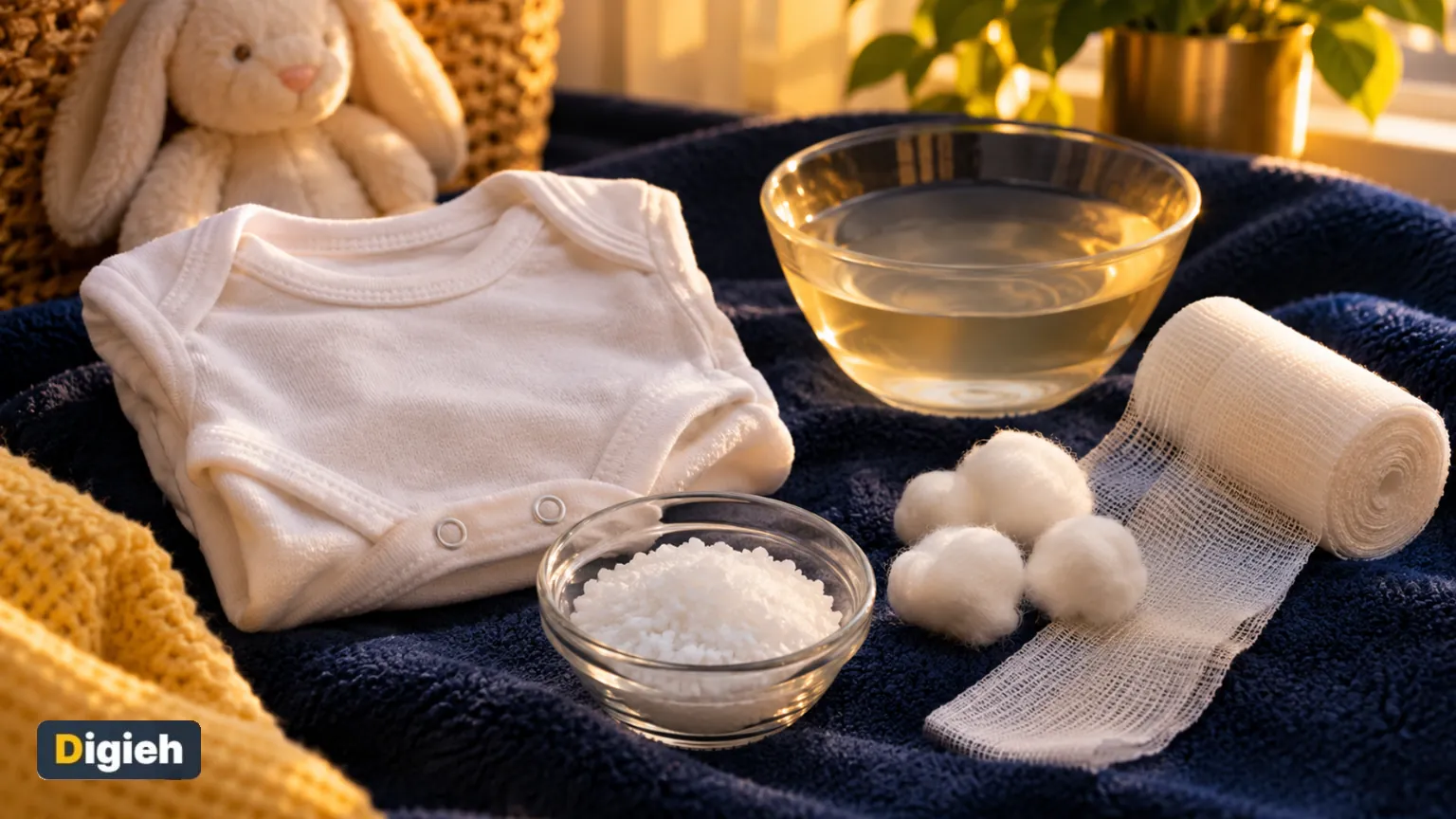
- Wash your hands. Clean the belly button with warm water and pat it dry.
- Gently press the skin around it so the lump is easy to see.
- Put a small pinch of table salt only on the lump.
- Cover with clean gauze and hold it with tape.
- Leave it for 30 minutes.
- Remove the gauze and wash all the salt away with warm water and mild soap.
- Dry the area well and keep it dry until the next session.
Repeat twice a day for 3 to 5 days, or as your health worker says. By day 3 the lump is often smaller and a different color.
Important safety step. Do not leave salt on the belly button for hours or days. Salt left too long can irritate the skin around it. Wash it off after each session.
Salt Schedules Compared
| Source | Time on | How often | For how long |
|---|---|---|---|
| Sydney Children’s Hospitals Network | 30 minutes | Twice a day | 3 to 5 days |
| Children’s Health Queensland | 30 minutes | Twice a day | 5 days |
| One trial in the 2021 review | 10 or 30 minutes | Twice a day | 7 days |
| Many UK hospitals, per the review | Short sessions | Twice a day | 2 days |
Sources: Sydney Children’s Hospitals Network, Children’s Health Queensland and the 2021 review. Follow the plan your own doctor gives you.
Had you heard of salt for umbilical granuloma before?
- Yes, a doctor told us
- Yes, from family
- No, this is new
- Not sure
Other Treatments Doctors Use
Silver nitrate
A doctor or nurse touches the lump with a chemical stick. It usually needs only a few visits. In the United States it is often the first treatment, says Cleveland Clinic.
It can burn the healthy skin around the lump, so trained staff apply it. A 2025 study saw skin burns in two babies treated this way.
Steroid cream
A doctor may prescribe a mild steroid cream for a short time. Use it only as prescribed.
Tying off the lump
If nothing else works, a doctor can tie a thread around the base so it falls off. Surgery is rarely needed.
Free updates
Join the Digieh list
Be the first to know when our weekly brief launches.
No spam. Unsubscribe anytime. Read our Privacy Policy.
Daily Belly Button Care
- Keep the belly button clean and dry.
- Fold the diaper down below the belly button.
- Let it air out when you can.
- Wash with warm water and mild soap if urine or stool touches it.
- Do not use alcohol wipes or powders unless told to.
- Do not pick at or pull the lump.
For more newborn basics, read our guides to safe sleep for babies and the newborn vitamin K shot.
When It May Be Something Else
Not every belly button lump is a granuloma. A doctor should check if any of these happen.
- Fluid that looks or smells like urine leaks from the navel.
- Stool or green fluid comes from the navel.
- The lump is firm, large or does not shrink with treatment.
- The belly button bulges more when the baby cries.
Urine or stool from the navel can mean a birth channel that stayed open, per the 2021 review. A soft bulge that grows with crying may be a hernia instead.
Keeping your baby safe at home matters too. See our childproofing guide and our guide to respiratory virus symptoms in kids.
When to Get Help
See your doctor or nurse soon if any of these happen, says Children’s Health Queensland.
- The belly button is swollen, red, smelly or leaking pus.
- Your baby has a fever of 38 degrees Celsius (100.4 degrees Fahrenheit) or higher.
- Your baby is unusually sleepy, floppy or hard to settle.
- There is no improvement after 5 days of salt treatment.
- Redness spreads onto the tummy, or red streaks appear.
Redness spreading from the belly button needs urgent care, because infection can spread fast in newborns, warns Cleveland Clinic.
Information only, not medical advice. This article is for general information and is based on published research and children’s hospital guidance. Always ask your baby’s doctor, nurse or midwife before starting any treatment.
Questions to Ask Your Doctor
- Is this an umbilical granuloma, or something else?
- Is salt treatment safe for my baby?
- How long should the salt stay on, and how many days?
- What signs mean I should stop and come back?
- Would silver nitrate or another treatment be better?
- What should I do if it comes back?
Try this today. Take a clear photo of the belly button each morning during treatment. It helps you and your doctor see if it is shrinking.
Test Yourself
How long is salt usually left on before washing it off?
- About 30 minutes
- All day
- Three days
Hospital guides say about 30 minutes, then wash the salt off and dry the area.
Frequently Asked Questions
Does salt hurt my baby?
It is usually painless, because the granuloma has no nerve endings. Keep salt off the skin around it.
How fast does salt work?
Many granulomas shrink within 2 to 3 days. Studies report most clear within a week.
Can I use any salt?
Hospital guides say ordinary table or cooking salt. Keep the salt clean and dry.
Will it go away on its own?
Sometimes, if the area stays clean and dry. It can take months, so many parents choose treatment.
Sources
- Australian Journal of General Practice, Management of umbilical granuloma in infants (2021 review)
- Frontiers in Pediatrics, 25 cases treated with common salt (2025)
- Pediatric Health, Medicine and Therapeutics, salt case report (2020)
- Sydney Children’s Hospitals Network, Umbilical granuloma factsheet
- Children’s Health Queensland, Umbilical granuloma
- Cleveland Clinic, Umbilical granuloma
Conclusion
An umbilical granuloma is common and usually harmless. Short sessions of table salt clear most of them within days, according to research.
Your next step is to ask your baby’s health worker if salt treatment suits your baby.
Editor’s Note
This article is accurate as of November 21, 2026. Facts come from published studies and children’s hospital guidance listed in the Sources section. This article is for information only.
Spot an error in this article? Please contact us at support@digieh.com or read our Corrections Policy.
Keep exploring
Your next read is waiting
 1TechnologyTable Photo to Excel: Convert Printed Tables Free7 min read
 2Food & LifestyleElectric Blanket vs Space Heater: Which Costs Less?7 min read
 3HealthPink Eye: Why It Happens and Best Treatments9 min read
 4BusinessUS Chip Export Rule: Five Countries Need Licenses4 min read
 5Pets & AnimalsCost of Owning a Cat: Yearly Budget, Calculator7 min read
 6AI & TechAirPods 5 vs AirPods Pro 3: Which Wins?7 min read
Found this useful?