TRENDING
How to Deep Clean Your Fridge in 8 Easy Steps

8 min read
Last updated November 6, 2026
To deep clean your fridge, unplug it or turn it off and empty everything out. Toss expired food, then wash shelves and drawers in warm, soapy water. Wipe the inside with a mix of baking soda and warm water.
A clean fridge makes room for holiday groceries and leftovers. It also helps food stay fresh and safe.
Key Takeaways
- Clean your fridge a few days before a big grocery trip.
- Keep perishables in a cooler while you clean.
- Baking soda and water clean without harsh smells.
- Keep your fridge at 40 degrees Fahrenheit or below.
- Store raw meat on the bottom shelf.
On This Page
- What You Need
- How to Deep Clean Your Fridge Step by Step
- How to Organize Your Fridge
- How to Remove Odors
- Keep It Clean All Season
- Check Your Fridge Temperature
- Know How Long Leftovers Last
- Clean the Freezer Too
- Clean the Outside and Handles
- Clean the Coils
- Prevent Spills and Messes
- Reduce Food Waste
- Watch for Signs of a Problem
- Power Outage Tips
- Make Fridge Cleaning a Family Job
What You Need
Gather a cooler with ice packs, trash bags and dish soap. You also need baking soda, soft cloths and a sponge.
An old toothbrush helps with seals and corners. Skip harsh cleaners that leave strong smells.
40 degrees FahrenheitThe highest safe temperature for your refrigerator.
How to Deep Clean Your Fridge Step by Step
1. Empty the Fridge
Take out all food and drinks. Place perishables in a cooler with ice packs.
2. Toss Old Food
Check dates and throw away anything expired or spoiled. Be honest about old leftovers.
3. Remove Shelves and Drawers
Take out removable parts. Let glass shelves reach room temperature before washing so they do not crack.
Quick tip. Snap a photo of your fridge before you empty it. It helps you put shelves and bins back in the right spots.
4. Wash the Parts
Wash shelves and drawers in warm, soapy water. Rinse them and let them dry fully.
5. Clean the Inside
Mix 2 tablespoons of baking soda with 1 quart of warm water. Wipe all walls, the ceiling and the floor of the fridge.
6. Scrub the Door Seals
Use a toothbrush on the rubber seals. Crumbs and sticky spills hide in the folds.
How often do you clean your fridge?
- Every month
- Every few months
- Once a year
- Only when it smells
7. Dry and Reassemble
Dry every surface with a clean towel. Put shelves and drawers back in place.
8. Restock Smartly
Wipe jars and bottles before you return them. Put the oldest food in front so you use it first.
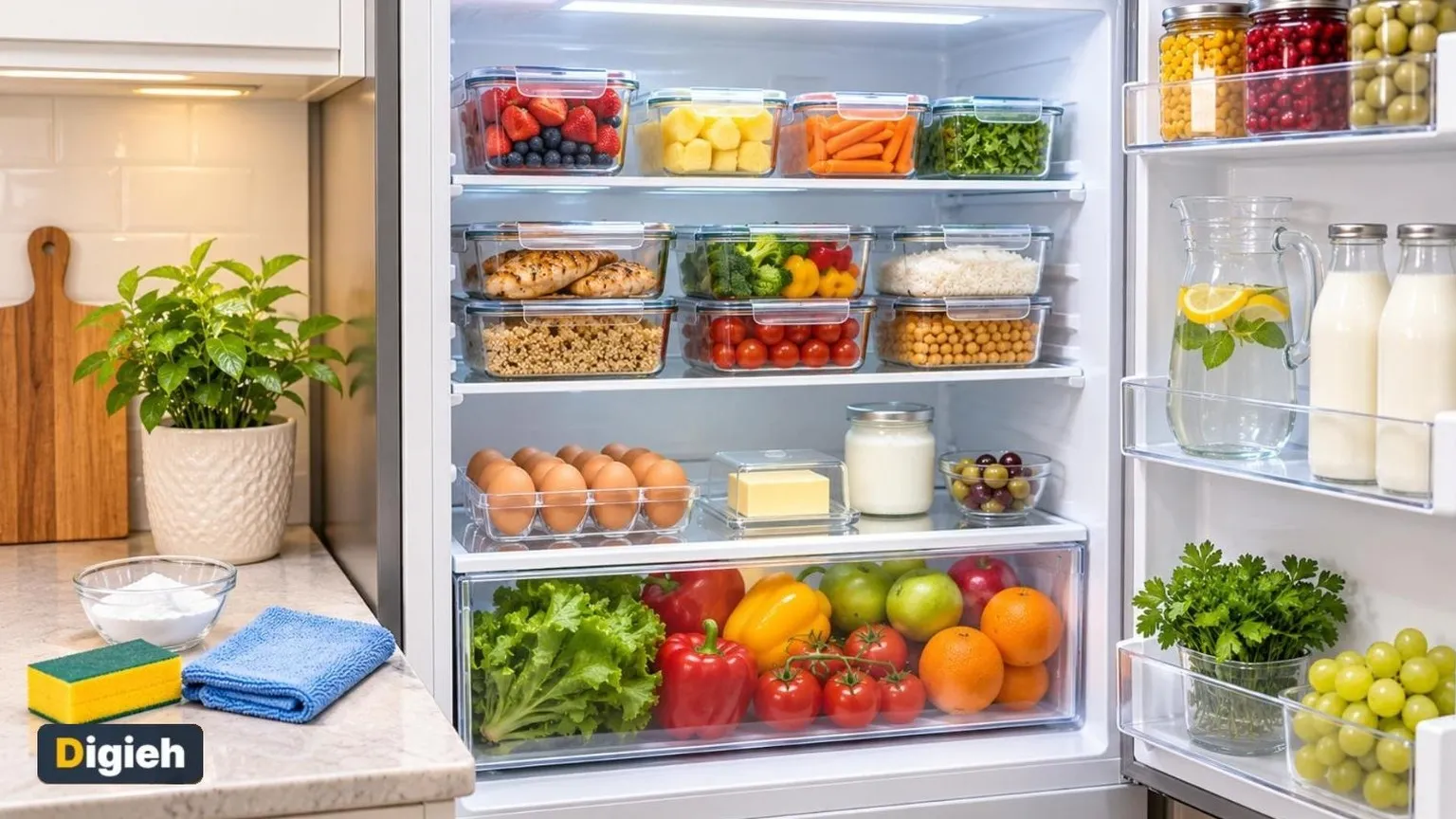
How to Organize Your Fridge
The United States Department of Agriculture (USDA) explains safe fridge temperatures.
| Fridge zone | What to store there |
|---|---|
| Top shelves | Leftovers, drinks and ready-to-eat foods |
| Middle shelves | Dairy and eggs |
| Bottom shelf | Raw meat, poultry and seafood |
| Crisper drawers | Fruits and vegetables |
| Door | Condiments and juices |
Raw meat goes on the bottom shelf so juices cannot drip onto other foods. FoodSafety.gov shares cold storage times for common foods.
- Cooler with ice packs
- Toss expired food
- Wash shelves and drawers
- Wipe with baking soda and water
- Scrub door seals
- Raw meat on the bottom shelf
How to Remove Odors
Place an open box of baking soda on a shelf. Replace it about every three months.
The United States Department of Agriculture (USDA) explains how to remove fridge odors.
A bowl of dry coffee grounds or activated charcoal also absorbs smells. Find and toss the source of any bad odor first.
Use this calculator to see when to replace your baking soda.
Baking soda reminder
Good to know. Used baking soda still works for scrubbing sinks or drains.
Keep It Clean All Season
Wipe spills right away before they dry. Do a quick weekly check for old leftovers.
The United States Department of Agriculture (USDA) explains how to use a fridge thermometer.
Line crisper drawers with paper towels. They catch moisture and are easy to swap out.
Add to calendar
Check Your Fridge Temperature
The right temperature keeps food safe and fresh. Many fridges run warmer than people think.
| Appliance | Safe Temperature |
|---|---|
| Refrigerator | 40 degrees Fahrenheit or below |
| Freezer | 0 degrees Fahrenheit or below |
Place an appliance thermometer on a middle shelf. Check it after a few hours and adjust the dial if needed.
The United States Department of Agriculture (USDA) explains how to use appliance thermometers.
Know How Long Leftovers Last
Leftovers do not last forever, even in the fridge. A simple guide helps you decide what to keep.
Most cooked leftovers last three to four days in the fridge. Freeze them if you cannot eat them in that time.
Label containers with the date you made the food. A strip of masking tape and a marker work well.
The cold food storage chart lists safe storage times for many foods.
Clean the Freezer Too
Freezers need cleaning, though less often than fridges. A clean freezer works better and wastes less food.
- Move frozen food to a cooler with ice packs.
- Toss items with heavy frost or freezer burn.
- Wipe shelves with warm, soapy water.
- Dry everything before you return the food.
If ice builds up thickly, your freezer may need defrosting. Follow the maker’s instructions.
Clean the Outside and Handles
Fridge handles get touched many times a day. They collect fingerprints and germs.
Wipe handles and the door with warm, soapy water. Dry them with a clean cloth to avoid streaks.
For stainless steel, wipe in the direction of the grain. Use a cleaner made for stainless steel if needed.
Free updates
Join the Digieh list
Be the first to know when our weekly brief launches.
No spam. Unsubscribe anytime. Read our Privacy Policy.
Clean the Coils
Dusty condenser coils make your fridge work harder. Clean coils can help it run more efficiently.
Unplug the fridge first. Find the coils on the back or behind a grill at the bottom.
Use a coil brush or vacuum attachment to remove dust. Do this once or twice a year.
Prevent Spills and Messes
A few habits keep your fridge cleaner between deep cleans.
- Store raw meat in a container or on a plate.
- Use clear bins to group small items.
- Put lids on all leftovers.
- Wipe sticky jars before putting them back.
- Place a tray under drippy items like berries.
Bins make cleaning easier. You can pull one out and wash it instead of cleaning a whole shelf.
Reduce Food Waste
An organized fridge helps you waste less food. You can see what you have and use it in time.
Keep an “eat first” bin for food you need to use soon. Check it before you cook.
Plan meals around what is already in your fridge. Shop with a list to avoid buying duplicates.
Freeze bread, meat and leftovers you will not use in time. Frozen food stays safe much longer, though quality can slowly drop.
Watch for Signs of a Problem
Some fridge issues need repair. Call a technician if you notice these signs.
- Food spoils faster than usual.
- The fridge feels warm inside.
- Water pools under or inside the fridge.
- The motor runs constantly or makes loud noises.
A failing fridge can put food safety at risk. Keep a thermometer inside to catch problems early.
Power Outage Tips
Power outages can put food at risk. Keep the doors closed as much as possible.
A full freezer usually keeps food frozen longer than a half-empty one. The Food Safety During Power Outage guide explains what to keep and what to toss.
Make Fridge Cleaning a Family Job
Cleaning goes faster with help. Give each family member a simple task.
Kids can sort condiments, wipe jars and check dates with an adult. Older kids can wash shelves and drawers.
Set a timer and make it a race. A clean fridge in under an hour feels like a win for everyone in the house, and the job feels lighter.
Fridge Cleaning Mistakes to Avoid
Some cleaning habits can damage your fridge or leave germs behind. Watch out for these common mistakes.
- Putting cold glass shelves into hot water
- Using harsh cleaners that leave strong smells
- Leaving food out too long while you clean
- Forgetting to clean door seals
Let glass shelves warm to room temperature before washing them. Sudden temperature changes can crack glass.
Make Fridge Cleaning Quick and Easy
A few habits make deep cleaning faster when the time comes. Small daily steps help.
Wipe spills as soon as they happen. Line produce drawers with paper towels you can swap out.
Do a quick check before each grocery trip. Toss old items so new food has room.
Keep It Fresh Between Cleanings
An open box of baking soda helps absorb odors. Replace it every few months for the best results.
Try this today. Put an appliance thermometer on the middle shelf today. Check that it reads 40 degrees Fahrenheit or below.
Test Yourself
Where should raw meat go in the fridge?
- Top shelf
- Door
- Bottom shelf
It keeps juices from dripping on other food.
Why let glass shelves warm up before washing?
- So they do not crack
- So soap works better
- So they dry faster
Sudden temperature changes can crack cold glass.
Frequently Asked Questions
How often should I deep clean my fridge?
Every three to four months, plus quick weekly wipe-downs.
What temperature should my fridge be?
Keep it at 40 degrees Fahrenheit or below.
Can I use bleach inside my fridge?
It is better to use mild soap or baking soda. Strong cleaners can leave smells on food.
Where should raw meat go?
Store it on the bottom shelf in a sealed container or plate.
How long do leftovers last in the fridge?
Most cooked leftovers last three to four days.
What temperature should my freezer be?
Keep it at 0 degrees Fahrenheit or below.
How often should I clean the fridge coils?
Once or twice a year, with the fridge unplugged.
What should I do with food after a power outage?
Keep doors closed and check official food safety guidance before eating anything.
Wrapping Up
Set aside an hour this week to clean out your fridge. You will be ready for holiday groceries and leftovers.
Prep the rest of your home with our Thanksgiving cleaning checklist. Make your oven sparkle with our guide to clean an oven with baking soda.
Found this useful?
Editor’s Note
This guide is accurate as of November 6, 2026. Check your fridge manual for model-specific care.
Spot an error in this article? Please contact us at support@digieh.com or read our Corrections Policy.
Keep exploring
Your next read is waiting
 1BusinessHow to Write a Cover Letter: Simple Guide8 min read
 2NewsLoon Chicks Are in Decline, Alarming Study Shows4 min read
 3Food & LifestyleHow to Store Fresh Herbs So They Last8 min read
 4EntertainmentHow to Start Drawing as a Beginner8 min read
 5AI & TechClaude Personal Finance Tool Now Analyzes Your Spending4 min read
 6HealthRaw or Powdered Turmeric? What the Science Says4 min read