TRENDING
Norovirus Symptoms and Simple Ways to Stop It

9 min read
Last updated November 7, 2026
Norovirus symptoms usually start suddenly, with vomiting, diarrhea, nausea and stomach pain. Most people feel better within 1 to 3 days, but the virus spreads very easily.
The best way to stop it is simple. Wash your hands with soap and water, clean surfaces well and stay home while you are sick.
This article is for information only and is not medical advice. Talk to a health care provider about your own health.
Key Takeaways
- Symptoms usually begin 12 to 48 hours after exposure.
- Most people recover within 1 to 3 days.
- You can still spread the virus for 2 weeks or more after feeling better.
- Soap and water work better than hand sanitizer against norovirus.
- Watch for dehydration, especially in young children and older adults.
On This Page
- What Is Norovirus?
- Common Norovirus Symptoms
- How Long Does Norovirus Last?
- How Norovirus Spreads
- Signs of Dehydration
- How to Care for Yourself at Home
- How to Stop Norovirus From Spreading
- How to Clean After Someone Is Sick
- Norovirus vs the Flu
- When to Get Help
What Is Norovirus?
Norovirus is a very contagious virus that causes vomiting and diarrhea. Doctors call this illness acute gastroenteritis.
People often call it the stomach flu, but it has nothing to do with influenza. It is the top cause of vomiting, diarrhea and foodborne illness in the United States. That comes from the Centers for Disease Control and Prevention (CDC).
Anyone can get norovirus, and you can get it more than once. That is because there are many different types of the virus.
12 to 48 hrsHow long after exposure norovirus symptoms usually begin, per federal health officials.
Common Norovirus Symptoms
Norovirus symptoms tend to hit fast and hard. Many people say they felt fine one moment and very sick the next.
Most Common Symptoms
- Diarrhea
- Vomiting
- Nausea
- Stomach pain or cramps
Other Possible Symptoms
- Fever
- Headache
- Body aches
The most common symptoms are listed on the federal symptoms page. Symptoms can be mild for some people and much stronger for others.
Good to know. Norovirus is not related to influenza, so a flu shot does not protect you from it.
How Long Does Norovirus Last?
Symptoms usually start 12 to 48 hours after you come into contact with the virus. Most people get better within 1 to 3 days.
Feeling better does not mean you are no longer contagious. You can still spread the virus for 2 weeks or more after your symptoms stop.
Federal health officials advise staying home for 48 hours after symptoms end. This helps protect coworkers, classmates and family.
How Norovirus Spreads
Norovirus spreads very easily, and only a small amount can make someone sick. It can spread in several ways.
Close Contact
Caring for or sharing food with a sick person can pass the virus to you.
Contaminated Food and Drinks
Food can become contaminated when a sick person handles it. Raw or undercooked shellfish, like oysters, can also carry the virus.
Contaminated Surfaces
The virus can live on surfaces like doorknobs, counters and phones. Touching them and then your mouth can make you sick.
Outbreaks often happen in places where people are close together, like cruise ships, schools, nursing homes and day care centers.
Quick tip. Keep a box of disposable gloves and a bleach-based cleaner in your bathroom during cold and flu season.
Signs of Dehydration
The biggest risk with norovirus is dehydration. Vomiting and diarrhea cause your body to lose a lot of fluid quickly.
Watch for these signs, based on federal health guidance.
- Peeing less than usual
- Dry mouth and throat
- Feeling dizzy when standing up
- Crying with few or no tears
- Unusual sleepiness or fussiness
Young children, older adults and people with other health problems are more likely to become dehydrated. Keep a close eye on them.
How do you usually clean your hands when you are out?
- Soap and water
- Hand sanitizer
- Both, depending on the place
- Not sure
How to Care for Yourself at Home
There is no specific medicine for norovirus. Antibiotics do not help, because they work on bacteria, not viruses.
Most people can recover at home with rest and fluids. These tips can help you feel more comfortable.
Sip Fluids Often
Take small sips of water, broth or oral rehydration drinks. Small amounts are easier to keep down than big gulps.
Rest
Your body needs energy to fight the virus. Stay home and sleep as much as you can.
Eat Simple Foods When Ready
When your stomach settles, start with bland foods, like toast, rice, bananas or crackers. Go back to your normal diet slowly.
Avoid Certain Drinks
Skip alcohol and very sugary drinks while you are sick. They can make dehydration worse.
For more ways to stay hydrated, see our winter hydration tips.
- Sip fluids often
- Rest at home
- Wash hands with soap and water
- Stay out of the kitchen
- Clean with a bleach solution
- Stay home 48 hours after symptoms stop
How to Stop Norovirus From Spreading
Norovirus is tough, but a few habits can stop it in its tracks.
Wash Your Hands Well
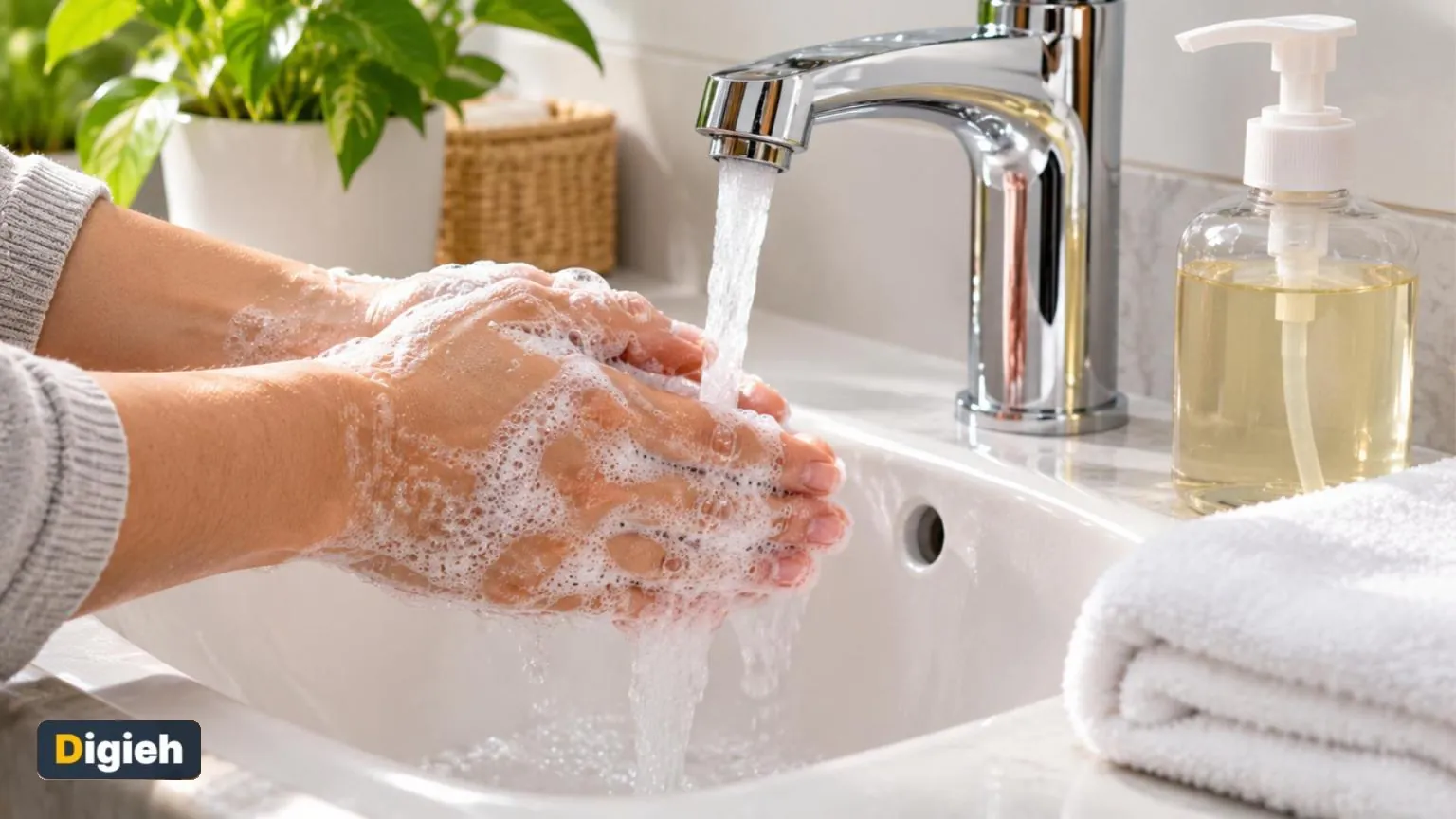
Wash with soap and water for at least 20 seconds, especially after using the toilet and before eating or cooking. Our guide on how to wash your hands properly shows each step.
Do Not Rely on Hand Sanitizer Alone
Alcohol-based hand sanitizers do not work as well against norovirus as soap and water, says Mayo Clinic. Use sanitizer only when soap is not available.
Do Not Cook for Others While Sick
Stay out of the kitchen while you are sick and for at least 2 days after symptoms stop.
Wash Fruits and Vegetables
Rinse produce well before eating. Cook oysters and other shellfish thoroughly.
Stay Home
Keep sick children home from school or day care. Adults should stay home from work, too.
What works best for cleaning hands against norovirus?
- Soap and water
- Hand sanitizer alone
- A quick rinse with water
Soap and water work better than alcohol-based sanitizers against norovirus.
How to Clean After Someone Is Sick
Norovirus can survive on surfaces and resist many cleaners. Careful cleaning makes a big difference.
Wear disposable gloves when cleaning up vomit or diarrhea. Wipe up the mess with paper towels and throw them away in a sealed bag.
Disinfect the area with a chlorine bleach solution or a cleaner labeled as effective against norovirus. Follow the product directions carefully.
Wash soiled clothes and bedding right away in hot water. Handle them gently to avoid spreading germs.
Wash your hands well with soap and water when you are done, even if you wore gloves. Open windows or run a fan to air out the room afterward.
Free updates
Join the Digieh list
Be the first to know when our weekly brief launches.
No spam. Unsubscribe anytime. Read our Privacy Policy.
Norovirus vs the Flu
Norovirus and the flu are both common in the colder months, but they are very different illnesses.
| Feature | Norovirus | Flu |
|---|---|---|
| Main symptoms | Vomiting, diarrhea, stomach pain | Fever, cough, sore throat, body aches |
| Body area | Stomach and gut | Nose, throat and lungs |
| Start | Sudden | Often sudden |
| Vaccine | None available | Yearly flu vaccine |
For a deeper look at breathing illnesses, read our guide on flu vs cold vs COVID symptoms.
How long should you stay home after norovirus symptoms stop?
- No time at all
- 2 hours
- 48 hours
Staying home 48 hours after symptoms end helps stop the spread.
Norovirus and Holiday Gatherings
Holiday parties and big family meals can help norovirus spread. Shared food, crowded rooms and travel all raise the risk.
If you feel sick, it is kind to skip the gathering. Offer to join by video call instead.
Hosts can help by setting out soap and paper towels in the bathroom. Use serving spoons for every dish so hands do not touch shared food.
Traveling soon? See our tips to stay healthy during holiday travel.
Norovirus at School and Day Care
Children pick up and spread norovirus easily. They touch many surfaces and do not always wash their hands well.
Teach kids to wash their hands with soap after using the bathroom and before eating. Singing a short song can help them scrub for at least 20 seconds.
Keep sick children home until 48 hours after their symptoms stop. Let the school know, so staff can clean shared spaces.
Pack a small bottle of water in your child’s bag. Staying hydrated helps if they start to feel unwell.
Norovirus on Cruise Ships and Trips
Cruise ships, hotels and resorts can see norovirus outbreaks because many people share the same spaces and food.
Wash your hands with soap often, especially before meals and after using shared bathrooms. Use a paper towel to open restroom doors when you can.
If you get sick on a trip, tell the staff and stay in your room. Many cruise lines ask sick guests to stay in their cabins to protect others.
Pack a few oral rehydration packets in your travel bag. They are light and can help if you cannot reach a store.
Myths About Norovirus
A few common myths can slow down recovery or help the virus spread.
Myth 1. It Is Just Food Poisoning
Norovirus often spreads through food, but it also spreads from person to person and from surfaces.
Myth 2. You Are Safe Once You Feel Better
You can still spread the virus for 2 weeks or more after symptoms stop. Keep washing your hands carefully.
Myth 3. Antibiotics Will Help
Antibiotics do not work on viruses. Rest and fluids are the main treatment.
Myth 4. A Flu Shot Protects You
The flu vaccine protects against influenza, not norovirus. There is currently no vaccine for norovirus, so handwashing and cleaning are your best tools.
Protecting Babies and Older Adults
Babies, young children and older adults face a higher risk of serious dehydration. Extra care helps protect them.
Wash your hands before feeding a baby or preparing bottles. Clean changing tables and toys often during an outbreak.
For older relatives, check in often if they are sick. Make sure they can drink fluids and get to the bathroom safely.
When to Get Help
Call a doctor or seek care for any of these warning signs. They are based on federal health guidance and Mayo Clinic.
- Signs of serious dehydration, such as very little urine, dizziness or extreme sleepiness
- A child crying with few or no tears, or unusually fussy or sleepy
- Bloody stools
- Severe vomiting that does not stop
- Diarrhea that lasts more than several days
- Severe stomach pain
Severe dehydration may need treatment in a hospital with fluids given through a vein, called intravenous (IV) fluids.
Try this today. Check that every sink in your home has soap and clean towels. It is the easiest way to block stomach bugs.
Frequently Asked Questions
How long does norovirus last?
Most people feel better within 1 to 3 days, though they can spread the virus for 2 weeks or more.
How soon do norovirus symptoms start?
Symptoms usually start 12 to 48 hours after exposure.
Does hand sanitizer kill norovirus?
Sanitizer is not as effective as soap and water. Wash your hands with soap whenever possible.
When can I go back to work after norovirus?
Federal health officials advise staying home for 48 hours after symptoms stop.
Can you get norovirus more than once?
Yes. There are many types of norovirus, so you can get sick again.
Conclusion
Norovirus hits fast, but most people recover in a few days. The real danger is dehydration, so sip fluids and watch for warning signs.
Wash your hands with soap and water, clean carefully and stay home until 48 hours after symptoms end.
Found this useful?
Editor’s Note
This article is accurate as of November 7, 2026, and is based on federal health guidance and Mayo Clinic. It is for general information only and does not replace advice from a health care provider.
Spot an error in this article? Please contact us at support@digieh.com or read our Corrections Policy.
Keep exploring
Your next read is waiting
 1Food & LifestyleEasy Thanksgiving Appetizers That Your Guests Will Love9 min read
 2Finance & Markets401(k) Limit for 2027 Could Hit a Record9 min read
 3NewsWhat Day Is Christmas 2026? The Simple Answer9 min read
 4HealthWinter Dry Eyes Causes and Simple Relief Tips10 min read
 5TechnologyHidden iPhone Features That You Should Try Now9 min read
 6EntertainmentBest Thanksgiving Movies to Watch With the Family9 min read