TRENDING
Easy Pot Roast Recipe That Turns Out Tender

10 min read
Last updated November 8, 2026
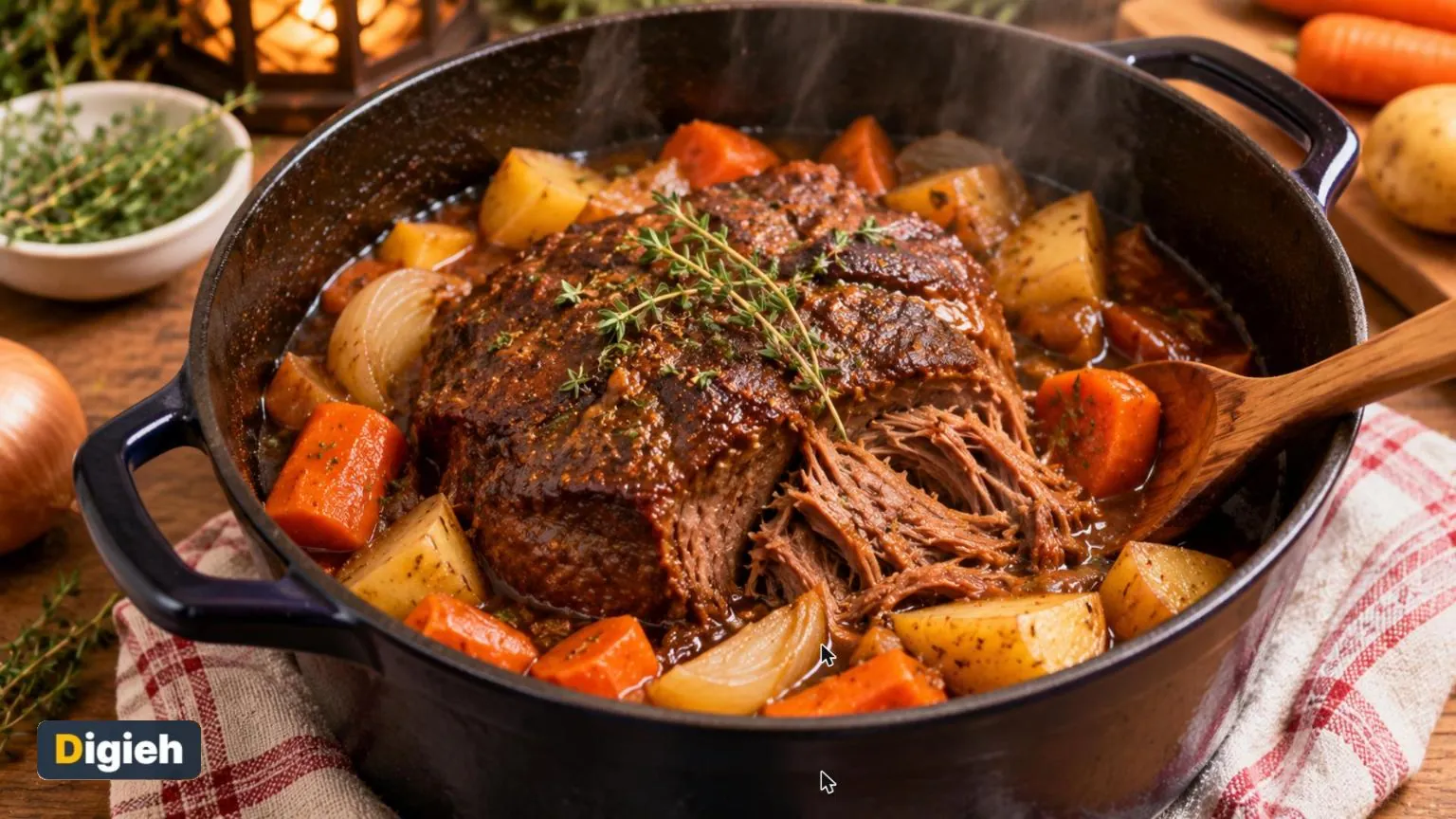
Few meals feel as cozy as a pot roast on a cold evening. The beef turns fork-tender, the vegetables soak up flavor and the kitchen smells amazing for hours.
The best part is that pot roast is mostly hands-off. A little prep in the morning or afternoon gives you a hearty dinner with leftovers.
This recipe works three ways. You can use your oven, a slow cooker or a pressure cooker, depending on your schedule.
Key Takeaways
- Chuck roast is the best cut for tender, juicy pot roast.
- Browning the meat first adds deep, rich flavor.
- Low, slow cooking breaks down tough connective tissue.
- Never put frozen meat in a slow cooker.
- Refrigerate leftovers within two hours.
20-30 minExtra cooking time added each time you lift a slow cooker lid, according to Texas A and M AgriLife Dinner Tonight.
Choose Your Cooking Method
Pick the method that fits your day. All three give tender results with the same basic ingredients.
| Method | Active Time | Total Time | Best For |
|---|---|---|---|
| Oven braise | 25 minutes | About 3 to 3 1/2 hours | Weekend dinners and richest flavor |
| Slow cooker | 20 minutes | 8 to 10 hours on low | Busy workdays |
| Pressure cooker | 20 minutes | About 1 1/2 hours | Fast weeknight meals |
The oven method gives the deepest browning and flavor. The slow cooker is the easiest for busy schedules.
A pressure cooker saves the most time. It still makes the meat tender in a fraction of the usual time.
Which pot roast method do you prefer?
- Oven
- Slow cooker
- Pressure cooker
- Not sure
Why Chuck Roast Works Best
The cut you choose makes or breaks pot roast. Chuck roast is the classic choice.
According to Chowhound, chuck comes from the hardworking shoulder and has plenty of connective tissue and fat. Slow braising turns that tissue into gelatin, which makes the meat tender and juicy.
Chowhound notes that round roast is leaner and can turn out tougher. Bottom round works, but it often needs a longer cook.
Look for a chuck roast with good marbling, or thin white streaks of fat. A 3-pound roast feeds about six people.
Chuck roast may be labeled as chuck eye, shoulder roast or arm roast. Any of these work well for braising.
Boneless roasts are easiest to slice and shred. Bone-in roasts add flavor but need a little extra cooking time.
Ask the butcher to tie an uneven roast with kitchen string. A compact shape cooks more evenly.
If you are feeding a crowd, cook two smaller roasts instead of one huge one. They fit pots better, finish sooner and give everyone tender slices from the same batch of gravy and vegetables.
Ingredients
These ingredients work for all three methods.
- 3-pound boneless chuck roast
- 1 1/2 teaspoons salt
- 1 teaspoon black pepper
- 2 tablespoons oil
- 1 large onion, cut into wedges
- 4 garlic cloves, smashed
- 2 tablespoons tomato paste
- 2 cups beef broth
- 1 tablespoon Worcestershire sauce
- 4 large carrots, cut into chunks
- 1 1/2 pounds small potatoes, halved
- 3 sprigs fresh thyme or 1 teaspoon dried thyme
- 2 bay leaves
For the gravy, you will also need 2 tablespoons of cornstarch mixed with 2 tablespoons of cold water.
Roast size calculator
This assumes about half a pound of raw boneless roast per person, with some leftovers.
Prep Steps for Every Method
Thaw the Meat Safely
Start with a fully thawed roast. The Texas A and M AgriLife Extension Dinner Tonight program warns never to add frozen meat to a slow cooker.
Frozen meat takes too long to reach a safe temperature, which lets bacteria grow. Thaw the roast in the refrigerator for a day or two before cooking.
Season and Brown
Pat the roast dry with paper towels. Rub it all over with salt and pepper.
Heat the oil in a large pot or skillet over medium-high heat. Brown the roast for 4 to 5 minutes per side until deeply golden.
This step builds flavor and color. Do not skip it, even for the slow cooker method.
Build the Flavor Base
Remove the roast and lower the heat to medium. Add the onion and garlic and cook for 2 to 3 minutes.
Stir in the tomato paste and cook for 1 minute. Pour in the broth and Worcestershire sauce, scraping up browned bits from the pan.
Good to know. Pot roast becomes tender because long cooking melts connective tissue into gelatin. Rushing it leaves the meat chewy.
Method 1. Oven-Braised Pot Roast
Heat the oven to 325 degrees Fahrenheit. Use a Dutch oven or heavy oven-safe pot with a lid.
Return the roast to the pot with the broth mixture. Add the thyme and bay leaves.
Cover and bake for 2 hours. Then add the carrots and potatoes around the meat.
Cover again and bake for another 1 to 1 1/2 hours. The roast is ready when it pulls apart easily with a fork.
Method 2. Slow Cooker Pot Roast
Place the potatoes and carrots in the bottom of the slow cooker. Dinner Tonight suggests putting slower-cooking vegetables like these at the bottom.
Set the browned roast on top and pour the broth mixture over it. Add the thyme and bay leaves.
Dinner Tonight advises filling the cooker about halfway to two-thirds full. Liquid should nearly cover the ingredients.
Cover and cook on low for 8 to 10 hours or on high for 4 to 5 hours. The roast should be fork-tender.
Keep the lid on while cooking. Dinner Tonight notes that each peek drops the temperature and adds 20 to 30 minutes of cooking time.
The warm setting is only for holding food that is already cooked. Always cook raw meat on low or high.
- Fully thawed chuck roast
- Brown the meat well
- Vegetables on the bottom
- Fill cooker halfway to two-thirds
- Keep the lid on
- Refrigerate leftovers within 2 hours
Method 3. Pressure Cooker Pot Roast
Use the saute function to brown the roast and build the flavor base right in the pot. Scrape the bottom well to prevent burn warnings.
Cut the roast into two or three large pieces for faster, even cooking. Return the meat and add the herbs.
Seal and cook on high pressure for about 60 minutes. Let the pressure release naturally for 15 minutes.
Carefully release the remaining pressure. Add the carrots and potatoes, then seal and cook on high for 4 more minutes.
Always follow your pressure cooker’s manual. Models vary in timing and safety features.
Make the Gravy
Remove the meat and vegetables to a platter and cover with foil. Discard the bay leaves and thyme stems.
Skim fat from the cooking liquid if you like. Bring the liquid to a simmer on the stove or using the saute setting.
Stir in the cornstarch mixture and simmer for 1 to 2 minutes until thickened. Taste and adjust the salt and pepper.
Quick tip. Let the roast rest for 10 minutes before slicing. The juices settle back into the meat.
Food Safety Notes
The University of Maine Cooperative Extension lists a safe minimum for beef roasts. It is 145 degrees Fahrenheit plus a 3-minute rest. Pot roast cooks far beyond that, which is what makes it tender.
Use a food thermometer to check the thickest part of the meat. Pot roast is usually most tender at a much higher internal temperature.
Wash hands, boards and knives after handling raw beef. Hot, soapy water works well for most kitchen tools, cutting boards and nearby counter surfaces. Keep raw meat away from vegetables that will not be cooked.
Which cut is best for pot roast?
- Tenderloin
- Chuck roast
- Sirloin steak
Chuck has fat and connective tissue that become tender with slow cooking.
Free updates
Join the Digieh list
Be the first to know when our weekly brief launches.
No spam. Unsubscribe anytime. Read our Privacy Policy.
Sunday Dinner Timeline
This oven-method timeline puts dinner on the table at 6 p.m.
| Time | Task |
|---|---|
| 2:15 p.m. | Season and brown the roast |
| 2:45 p.m. | Build the flavor base and start baking |
| 4:45 p.m. | Add carrots and potatoes |
| 5:45 p.m. | Check tenderness and make the gravy |
| 6:00 p.m. | Slice or shred and serve |
For the slow cooker, start by 9 a.m. for a 6 p.m. dinner on low.
Serving Ideas
Pot roast is a complete meal on its own, but a few sides make it special.
- Crusty bread or warm rolls for the gravy
- A crisp green salad
- Steamed green beans or roasted Brussels sprouts
- Buttered egg noodles instead of potatoes
Slice against the grain for neat pieces, or shred with two forks for a rustic look.
Why should you avoid putting frozen meat in a slow cooker?
- It takes too long to reach a safe temperature
- It makes the gravy too thick
- It cooks too fast
Frozen meat stays in the unsafe temperature range too long, allowing bacteria to grow.
Leftovers and Storage
Pot roast leftovers taste even better the next day. Dinner Tonight recommends refrigerating cooked food within two hours.
Store meat and gravy together in shallow, covered containers. Do not store leftovers in the slow cooker insert.
Reheat leftovers to 165 degrees Fahrenheit before serving, as Dinner Tonight advises. Use the stove, microwave or oven, then keep warm if needed.
Easy Leftover Ideas
- Pot roast sandwiches with melted cheese
- Beef tacos with pickled onions
- Hearty beef and vegetable soup
- Shepherd’s pie topped with mashed potatoes
Our hearty beef stew is another cozy slow-cooked favorite. For a lighter Sunday dinner, try our easy roast chicken.
Easy Flavor Variations
Once you master the basic recipe, try a new twist. Small changes can make it feel like a brand-new meal.
- Herb and garlic. Add rosemary and extra garlic for a fragrant roast.
- Mushroom. Stir in sliced mushrooms with the carrots for an earthy flavor.
- Balsamic. Add a splash of balsamic vinegar to the broth for gentle tang.
- Root vegetable mix. Swap some potatoes for parsnips or turnips.
- Red wine style. Replace some broth with an alcohol-free red wine alternative for deeper color.
Taste the gravy at the end and adjust. Extra herbs or a pinch of salt can brighten the whole dish.
Make-Ahead Tips
Pot roast is perfect for busy weeks. You can cook it a day ahead and reheat it gently.
Chill the cooked roast in its liquid overnight. The fat rises and hardens, so it is easy to lift off.
Reheat slices in the gravy over low heat until hot all the way through. The meat stays moist and flavorful.
You can also freeze cooked pot roast in gravy for up to three months. Thaw it in the refrigerator overnight before reheating.
Troubleshooting Tips
If your roast is tough, it likely needs more time. Keep cooking until it shreds easily.
If the gravy is thin, simmer longer or add a bit more cornstarch mixture. If it is too thick, stir in a splash of broth.
Bland flavor usually means it needs more salt. Season the gravy at the end and taste as you go.
Our French onion soup makes a cozy starter before the main course.
Try this today. Move a chuck roast from the freezer to the refrigerator. It will be thawed and ready for a cozy dinner in a day or two.
Frequently Asked Questions
What is the best cut of beef for pot roast?
Chuck roast is the best choice. Its fat and connective tissue break down into tender meat.
Why is my pot roast tough?
It probably needs more cooking time. Keep cooking until the meat pulls apart easily.
Can I put a frozen roast in the slow cooker?
No. Thaw it first in the refrigerator so it reaches a safe temperature quickly.
Do I need to brown the meat first?
It is not required, but browning adds much deeper flavor and color.
How long do pot roast leftovers last?
Refrigerated leftovers usually keep for three to four days in a covered container.
Conclusion
Pot roast is a simple, comforting meal that cooks itself while you relax. Choose chuck roast, brown it well and cook it low and slow.
Pick the oven, slow cooker or pressure cooker based on your schedule. Then serve with rich gravy and enjoy the leftovers all week.
Found this useful?
Editor’s Note
This article is accurate as of November 8, 2026. It draws on food safety guidance from two university extension programs and cut advice from Chowhound. Cooking times may vary by equipment and roast size.
Spot an error in this article? Please contact us at support@digieh.com or read our Corrections Policy.
Keep exploring
Your next read is waiting
 1Finance & MarketsRenters Insurance Explained: Simple Guide to Smart Coverage10 min read
 2HealthDry Cracked Hands in Winter: Easy Proven Fixes11 min read
 3TechnologyEasy Ways to Free Up Phone Storage Fast10 min read
 4SportsBudget Home Gym Setup: Simple Guide for Beginners11 min read
 5BusinessEssential Holiday Staffing Tips for Small Business Owners10 min read
 6EntertainmentYour Nutcracker Ballet Guide: Magical Tips for First-Timers10 min read