TRENDING
How to Remove Salt Stains From Shoes and Boots

8 min read
Last updated November 9, 2026
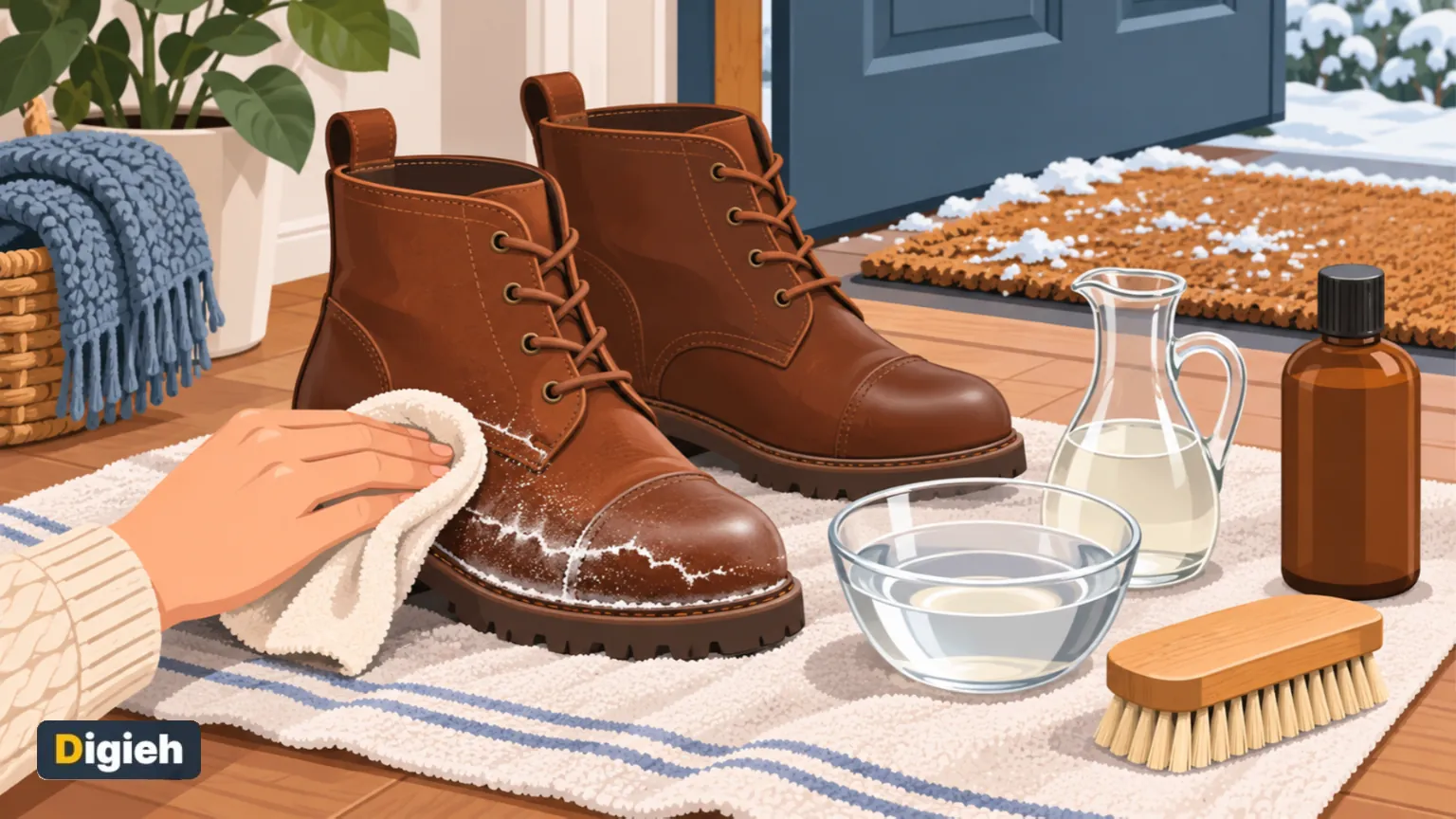
To remove salt stains from leather shoes, let them dry and brush off loose salt. Then wipe the marks with a cloth dampened in equal parts white vinegar and water. Let them air dry, then condition the leather.
Suede, fabric and sneakers need slightly different methods. This guide covers each material, how to prevent salt damage and what to do when stains will not budge.
Key Takeaways
- Road salt pulls moisture from leather and leaves white tide marks.
- A 50/50 mix of white vinegar and cold water lifts salt from smooth leather.
- Never use heat to dry wet or salty shoes.
- Condition leather after every salt cleaning.
- Use a suede eraser and brush instead of vinegar on suede.
Inside this guide
- Why salt damages shoes
- Leather shoes and boots
- Suede and nubuck
- Fabric shoes and sneakers
- Conditioning and polishing
- How to prevent salt stains
- When to see a shoe repair pro
- Frequently asked questions
Why Salt Damages Shoes
Cities and homeowners spread salt to melt ice on roads and sidewalks. When slush splashes your shoes, the salty water soaks into the material.
As the water dries, salt crystals stay behind as white lines. Salt also draws natural oils out of leather, which can leave it dry, stiff and cracked.
The sooner you clean salt off, the less damage it does. A quick wipe after each outing goes a long way.
Have salt stains ruined a pair of your shoes before?
- Yes, more than once
- Yes, one pair
- No, I clean them quickly
- Not sure
How to Remove Salt Stains From Leather
Smooth leather boots and shoes respond well to a simple vinegar solution. A salt stain guide from shoemaker John White recommends equal parts distilled white vinegar and cold water.
What you need
- Distilled white vinegar
- Cold water
- A small bowl
- Two soft, lint-free cloths
- A soft brush
- Leather conditioner and matching polish
Steps
- Let the shoes dry fully at room temperature, away from heaters and direct sun.
- Brush off dry salt crystals with light strokes in one direction.
- Mix equal parts white vinegar and cold water in a bowl.
- Dampen a cloth, but do not soak it.
- Work over the stain in gentle circles, from the center of the mark outward.
- Blend the edges into the surrounding leather to avoid a new water line.
- Let the shoes air dry for at least 30 minutes.
- Repeat if needed, then condition the whole shoe.
Important. Use distilled white vinegar, not malt or apple cider vinegar. Darker vinegars can stain light leather.
50/50Mix of distilled white vinegar and cold water recommended for lifting salt from smooth leather.
Why Vinegar Works
Road salt is alkaline, while vinegar is a mild acid. The vinegar helps dissolve the salt crystals so you can wipe them away.
Diluting it with water keeps it gentle on leather. Too much vinegar, or rubbing too hard, can dry out the surface.
How to Clean Salt From Suede and Nubuck
Do not use vinegar on suede or nubuck. Liquid can darken and flatten the soft surface.
- Let the shoes dry completely.
- Brush gently with a suede brush to lift the nap and loosen salt.
- Rub stubborn marks with a suede eraser.
- Use a cleaner made for suede for remaining stains, following the label.
- Brush again once dry to restore the texture.
The same shoemaker guide warns against vinegar on suede, nubuck and patent leather. Patent leather usually only needs a damp cloth and a quick buff.
How to Clean Fabric Shoes and Sneakers
- Knock off dry salt and dirt outside.
- Mix a small amount of mild dish soap in warm water.
- Scrub gently with a soft brush or old toothbrush.
- Wipe away soap with a clean, damp cloth.
- Stuff with paper towels and let them air dry.
Check the care label before putting sneakers in the washing machine. Many athletic shoes do better with hand cleaning.
Light vs. Dark Leather
Light leathers, like tan and cream, show water marks easily. Use very little liquid and blend the edges carefully.
Dark leathers hide marks better but can look dull after cleaning. A matching cream polish restores the rich color.
Always test your solution on a hidden spot, like the inside of the heel, before treating the whole shoe.
A Quick Fix on the Go
Caught out in the slush without supplies? Do what you can until you get home.
- Wipe shoes with a damp paper towel to remove fresh salt.
- Pat them dry instead of rubbing.
- Keep a small cloth and a travel-size leather wipe in your bag.
- Clean them properly as soon as you are home.
Conditioning and Polishing Leather
Salt and vinegar both remove moisture from leather. Conditioning puts it back.
- Apply conditioner to the whole shoe, not just the cleaned spot.
- Let it soak in for 10 to 15 minutes.
- Follow with a cream or wax polish that matches the color.
- Buff with a clean cloth for shine and protection.
The John White guide suggests conditioning about every four weeks in winter. That is more often than in milder seasons.
How to Prevent Salt Stains
- Spray shoes with a water-repellent treatment before winter.
- Keep a layer of wax polish on leather all season.
- Wipe shoes with a damp cloth after walking on salted sidewalks.
- Rotate between two pairs so each can dry fully.
- Use cedar shoe trees to absorb moisture and hold the shape.
- Wear rubber boots or overshoes on the slushiest days.
Waterproofing helps a lot. Read our guide on how to waterproof boots for step-by-step help.
Best Shoe Materials for Salty Streets
| Material | How it handles salt |
|---|---|
| Rubber | Very resistant, just rinse and dry |
| Treated leather | Good with regular cleaning and conditioning |
| Synthetic waterproof fabric | Good, wipe with soapy water |
| Suede and nubuck | Easily stained, best kept for dry days |
| Canvas | Absorbs salty water, dries slowly |
Save delicate shoes for dry days or indoor events. Wear sturdy boots for slushy commutes and change shoes at work.
Free updates
Join the Digieh list
Be the first to know when our weekly brief launches.
No spam. Unsubscribe anytime. Read our Privacy Policy.
A Weekly Winter Shoe Care Routine
- Each evening, wipe off salt and slush with a damp cloth.
- Stuff wet shoes with paper and let them dry overnight.
- Once a week, brush off dried residue and check for marks.
- Treat any salt lines with the vinegar mix.
- Every few weeks, condition and polish leather.
A few minutes a day keeps winter shoes looking sharp. Pair it with waterproofing at the start of the season.
How to Dry Wet Winter Shoes
Never put wet shoes next to a radiator, fireplace or space heater. Heat can crack leather and weaken glue.
- Remove insoles and loosen laces.
- Stuff shoes with newspaper or paper towels.
- Replace the paper when it becomes damp.
- Let them dry at room temperature, ideally overnight.
- Use a fan nearby to speed things up.
Do Not Forget Your Pets and Floors
Salt tracked indoors can scratch floors and irritate pets’ paws. Place a sturdy mat at every entrance and wipe shoes before walking inside.
Wipe your dog’s paws after walks too. Our winter pet safety tips share more ways to protect pets from road salt.
Clean Your Winter Gear Too
Salt splashes coat hems and pant cuffs as well. Wipe them with a damp cloth before the salt dries.
Dressing for the cold? See how to layer clothes for cold weather and how to choose a winter coat.
Kids’ Winter Boots
Children stomp through every puddle and snowbank. Choose rubber or treated boots that wipe clean easily.
Teach kids to stamp off snow at the door and leave boots on a tray to dry. A quick wipe each night prevents crusty salt buildup.
Salt on Car Mats and Floors
Salt does not just stain shoes. It also leaves white crust on car mats and entryway floors.
- Vacuum dry salt first to remove loose crystals.
- Wipe floors with warm water and a little white vinegar.
- Scrub car mats with the same mix, then let them dry fully.
- Use rubber mats in winter for easy cleanup.
When to See a Shoe Repair Pro
Some damage needs expert help. Visit a cobbler if stains stay after two or three treatments.
- Leather feels stiff or cracked
- The color looks faded or blotchy
- Soles are separating from the upper
- Expensive or delicate shoes need careful work
A professional can deep clean, recolor and recondition leather. It often costs less than a new pair.
Storing Shoes After Winter
Before you put winter shoes away, give them one final cleaning. Leftover salt can keep damaging leather in storage.
- Clean, condition and polish leather pairs.
- Let every pair dry completely.
- Insert shoe trees or stuff with paper.
- Store in breathable bags in a cool, dry closet.
Check them again early in the fall, and refresh the waterproofing before the first snow arrives. That way they are ready the very moment winter returns.
Common Mistakes
- Drying shoes next to a heater
- Soaking leather with too much liquid
- Using vinegar on suede
- Skipping conditioner after cleaning
- Waiting weeks to clean salt off
Test Yourself
What mix helps lift salt stains from smooth leather?
- Bleach and water
- Equal parts white vinegar and cold water
- Dish soap and hot water
A 50/50 vinegar and water mix dissolves salt without harsh chemicals.
How should you dry wet leather shoes?
- On a radiator
- With a hair dryer on high
- At room temperature with paper inside
Heat can crack leather, so dry shoes slowly at room temperature.
Frequently Asked Questions
Does vinegar damage leather?
Not when diluted and used lightly. Always condition afterward.
Can I use baby wipes on salt stains?
They can help with fresh marks, but follow up with conditioner.
How do I get salt off suede shoes?
Use a suede brush and eraser, then a suede cleaner if needed.
Will salt stains come back?
They can if salt remains deep in the leather. Repeat gently.
Conclusion
Salt stains do not have to ruin your favorite shoes. Brush off dry salt, wipe leather with a mild vinegar solution and always condition afterward.
Prevent stains with waterproofing, quick wipes and slow drying, and your shoes will last many winters.
Found this useful?
Editor’s Note
This guide is accurate as of November 9, 2026. It draws on leather care advice from shoemaker John White.
Test any cleaner on a hidden spot first, and follow your shoe maker’s care instructions.
Spot an error in this article? Please contact us at support@digieh.com or read our Corrections Policy.
Keep exploring
Your next read is waiting
 1Food & LifestyleHow to Make Fluffy Pancakes From Scratch8 min read
 2Finance & MarketsIndex Fund Investing for Beginners: A Simple Guide8 min read
 3SportsHow to Do a Plank: Perfect Form, Hold Times and a 4-Week Plan8 min read
 4HealthHow to Stop Coughing at Night: Simple Tips That Help8 min read
 5Travel & TourismREAL ID Explained: What You Need to Fly in 20268 min read
 6Fruits & VegetablesHow to Tell If an Avocado Is Ripe (and Ripen It Faster)8 min read