TRENDING
Generic vs. Brand-Name Medicines: Are They the Same?

8 min read
Last updated November 9, 2026
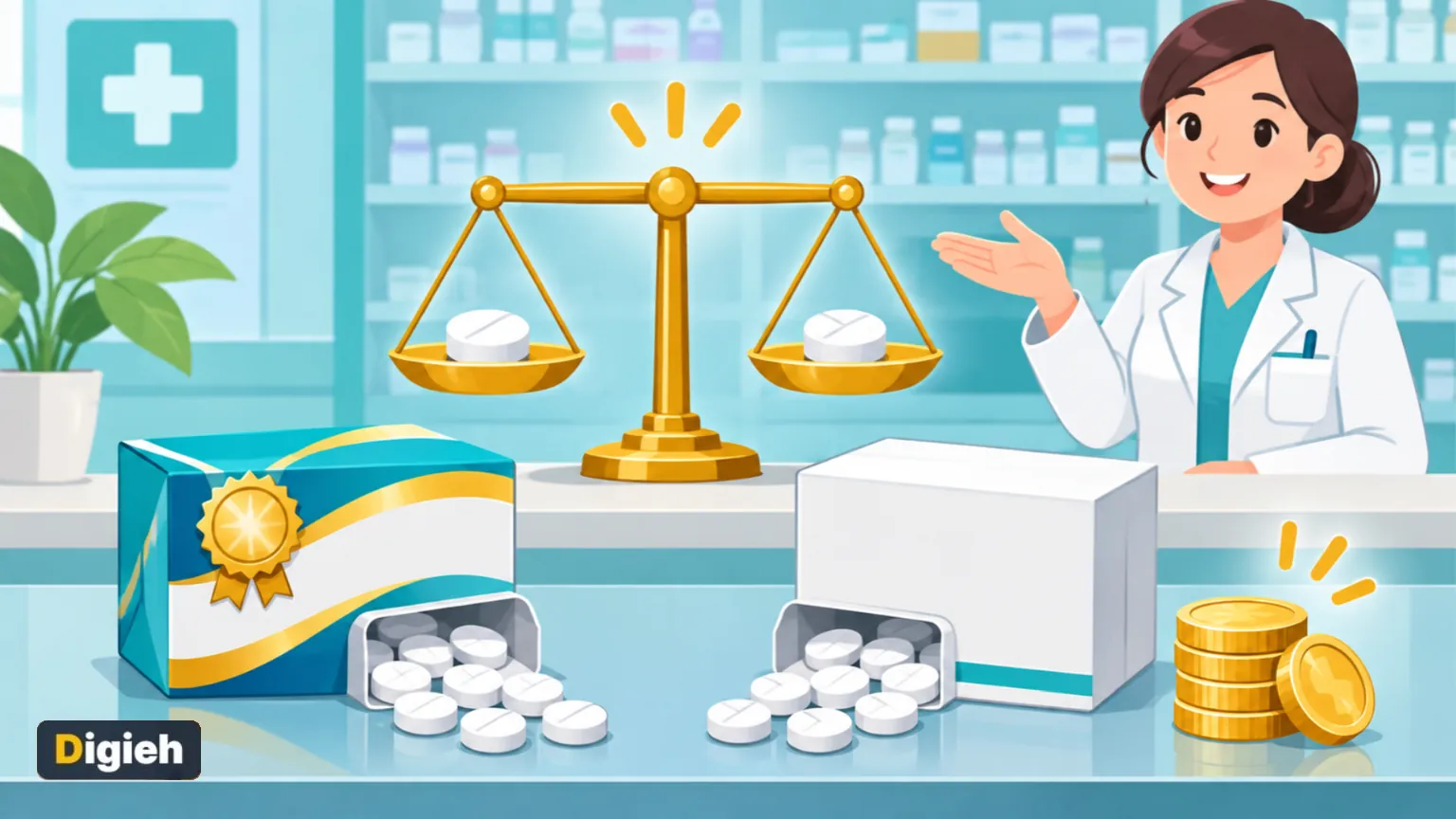
Generic medicines contain the same active ingredient as their brand-name versions and work the same way in the body. They must match the brand in strength, dosage form and how you take them.
The biggest difference is usually price. Generics often cost far less, and competition can push prices down even further.
This guide explains how generics earn approval and why they look different. It also covers when a brand-name drug might still matter.
Health note. This article is general information, not medical advice. Talk to your doctor or pharmacist before switching any medicine.
Key Takeaways
- Generics have the same active ingredient, strength and form as the brand.
- They must work in the body the same way as the brand-name drug.
- One generic competitor can cut prices by about 30 percent.
- Generics may look different because of trademark rules.
- Inactive ingredients can differ, which matters for some allergies.
Inside this guide
- What is a generic medicine?
- What must be the same
- How generics earn approval
- How much you can save
- Why generics look different
- Store brands at the pharmacy
- When brand name might matter
- Questions to ask
- Frequently asked questions
What Is a Generic Medicine?
When a company invents a new drug, it usually gets a patent. During that time, only that company can sell the medicine, often under a catchy brand name.
When the patent ends, other companies can make the same medicine. People call these versions generics, and they usually use the drug’s chemical name.
Most prescriptions in the United States are now filled with generics. They are a big part of how people afford their medicines.
A Brief History of Generics
The modern system for approving generics in the United States began with a 1984 law, often called the Hatch-Waxman Act. It created a faster path for generics while protecting brand-name inventors for a set time.
Since then, generics have grown from a small share of prescriptions to the vast majority seen today.
What Must Be the Same
According to the Food and Drug Administration, a generic medicine must match the brand-name drug in several key ways.
| Feature | Must match the brand? |
|---|---|
| Active ingredient | Yes |
| Strength | Yes |
| Dosage form, like tablet or injection | Yes |
| Route, like by mouth or on the skin | Yes |
| How the body absorbs it | Yes, it must be bioequivalent |
| Color, shape and flavor | No |
| Inactive ingredients | Not always |
Bioequivalent means the generic delivers the same amount of active ingredient into the bloodstream at about the same rate. In plain terms, it works the same way.
Do you usually choose generic or brand-name medicines?
- Generic
- Brand name
- It depends
- Not sure
How Generics Earn Approval
Generic makers do not have to repeat the large clinical trials that the original company ran. Instead, they must prove their version is equivalent.
- The company shows the active ingredient is the same.
- It proves the strength, form and route match.
- It runs studies showing the body absorbs it the same way.
- Regulators review manufacturing to confirm quality.
- The agency approves the generic for sale.
Generic factories must meet the same quality standards as brand-name factories. Many brand-name companies also make generics.
How Much You Can Save
The agency notes that a single generic competitor can lead to price drops of about 30 percent. When five generics compete, prices can fall by nearly 85 percent.
Those savings add up across the country. The agency cites an estimate that generics saved the health care system $2.2 trillion from 2009 to 2019.
85%Possible price drop when five generic versions of a medicine compete, according to the federal drug agency.
- Ask your pharmacist if a generic is available.
- Compare prices at different pharmacies.
- Check your insurance plan’s list of covered drugs.
- Look into pharmacy discount programs for generics.
Saving on medicine helps your health budget. If you have a qualifying health plan, see the 2027 health savings account limits too.
Generics and Your Insurance
Most insurance plans sort drugs into tiers. Generics usually sit in the lowest tier, with the smallest copay.
- Check your plan’s drug list, often called a formulary.
- Ask whether a generic is available before filling a brand-name prescription.
- Compare your copay with the cash price, since some generics cost less without insurance.
- Use a 90-day supply for long-term medicines if your plan allows it.
Why Generics Look Different
Trademark rules usually keep generics from looking exactly like the brand. So a generic pill may have a different color, shape, size or marking.
The look does not change how the medicine works. Still, a new appearance can confuse people, especially those who take several medicines.
- Check the label if your pill looks different.
- Ask your pharmacist if you are unsure.
- Keep an updated list of your medicines with pictures if helpful.
Good habit. If your refill looks different, ask the pharmacist before you take it. A quick check prevents mix-ups.
Choosing a pain reliever? Learn how acetaminophen vs. ibuprofen differ.
Store Brands at the Pharmacy
Generics are not only for prescriptions. Store-brand over-the-counter medicines often contain the same active ingredient as famous brands.
Compare the active ingredient and strength on the Drug Facts label. If they match, the store brand should work the same way for most people. Learn how to read a Drug Facts label.
When a Brand Name Might Matter
For most people, generics work just as well. In some situations, your doctor may prefer you stay on one version.
- You have an allergy to an inactive ingredient, like a dye or filler.
- You take a medicine where tiny changes in blood levels matter, such as some thyroid, seizure or blood-thinning drugs.
- You notice new side effects after switching.
- No generic exists yet because the patent is still active.
If your doctor writes “dispense as written” on a prescription, the pharmacy will usually fill the brand. Ask about cost before you decide.
Authorized Generics
Sometimes the brand-name company sells its own medicine under a generic name. This is an authorized generic.
It is the exact same product as the brand, including inactive ingredients, often at a lower price. Ask your pharmacist if one exists for your medicine.
Free updates
Join the Digieh list
Be the first to know when our weekly brief launches.
No spam. Unsubscribe anytime. Read our Privacy Policy.
What About Biosimilars?
Some medicines, called biologics, come from living cells. Examples include certain treatments for arthritis, diabetes and cancer.
Nobody can copy these complex drugs exactly, so their lower-cost versions go by the name biosimilars. Regulators require biosimilars to have no meaningful differences in safety or effectiveness from the original.
Biosimilars can also bring big savings. Ask your doctor whether one is right for you.
Generic vs. Brand Name at a Glance
| Feature | Generic | Brand name |
|---|---|---|
| Active ingredient | Same | Same |
| Effectiveness | Same | Same |
| Quality standards | Same | Same |
| Look | Often different | Familiar look |
| Price | Usually much lower | Usually higher |
Reading Your Prescription Label
Your pharmacy label often lists the generic name first. Sometimes it also says which brand the generic replaces.
- Find the drug name and strength at the top.
- Check the directions and how many refills remain.
- Look for the description of the pill’s color and shape.
- Read any warning stickers on the side.
Knowing both the generic and brand names helps you avoid taking two versions of the same medicine by accident.
Talking to Your Doctor About Cost
Many people skip doses or never fill prescriptions because of cost. Your doctor wants to know if price is a problem.
- Ask if a generic or lower-cost alternative would work for you.
- Request a 90-day prescription for long-term medicines.
- Ask about samples or patient assistance programs for brand-only drugs.
- Tell your doctor if you have stopped taking anything due to cost.
Being open about money helps your care team find a plan you can stick with.
Tips for Older Adults
Older adults often take several medicines, so switching between generics can cause confusion. A pharmacist can help keep things straight.
Use a pill organizer and keep an updated list. Ask the pharmacy to note any changes in appearance on your receipt.
Safety Tips for Any Medicine
- Take medicines exactly as directed.
- Store them safely, out of reach of children.
- Dispose of old medicines properly.
- Check for food and drug interactions.
Learn how to store medicines at home and how to dispose of old medicines. Also check for grapefruit and medicine interactions.
Remember that antibiotics only help bacterial infections. Read do antibiotics cure colds or flu to learn more.
Questions to Ask Your Pharmacist
- Is there a generic version of this medicine?
- Will the generic cost less with my insurance?
- Are the inactive ingredients different?
- Why does my refill look different this time?
- Is this a medicine where I should stay on one version?
Common Myths
- Myth, generics are weaker. Fact, they contain the same active ingredient and strength.
- Myth, generics come from lower-quality factories. Fact, they must meet the same standards.
- Myth, cheaper means less effective. Fact, generics cost less mainly because makers skip expensive original research.
- Myth, all generics are identical to each other. Fact, inactive ingredients and looks can vary by maker.
Test Yourself
What must a generic medicine share with the brand-name drug?
- The same color and shape
- The same active ingredient and strength
- The same box design
Generics must match the active ingredient, strength, dosage form and route.
Why might a generic pill look different?
- It is weaker
- It has passed its expiration date
- Trademark rules prevent copying the look
Trademark rules usually stop generics from copying a brand-name pill’s appearance.
Frequently Asked Questions
Are generic medicines as safe as brand names?
Yes. They must meet the same quality and safety standards.
Why are generics cheaper?
Makers do not repeat costly original research, and competition lowers prices.
Can I ask for a generic?
Yes. Ask your doctor or pharmacist if one is available.
Do generics take longer to work?
No. They must absorb into the body at about the same rate.
Conclusion
Generic medicines offer the same active ingredient and effect as brand names, usually at a much lower price. They may look different, and inactive ingredients can vary.
Ask your pharmacist about generics, compare prices and talk to your doctor before switching sensitive medicines.
Found this useful?
Editor’s Note
This guide is accurate as of November 9, 2026. It draws on generic drug facts from the Food and Drug Administration.
It is general information, not medical advice. Talk to a health professional about your own medicines.
Spot an error in this article? Please contact us at support@digieh.com or read our Corrections Policy.
Keep exploring
Your next read is waiting
 1Home & KitchenHomemade Christmas Ornaments: 10 Easy Ideas to Make8 min read
 2Science & DiscoveriesWinter Bird Feeding Guide: Best Foods, Feeders and Tips8 min read
 3Food & LifestyleHot Toddy Recipe: The Classic Winter Warmer and Easy Twists8 min read
 4FashionHow to Remove Salt Stains From Shoes and Boots8 min read
 5HealthHow to Stop Coughing at Night: Simple Tips That Help8 min read
 6MedicinesAcetaminophen vs. Ibuprofen: How They Differ and Which to Use8 min read