TRENDING
Grapefruit and Medicine: Which Drugs Interact and Why

8 min read
Last updated November 9, 2026
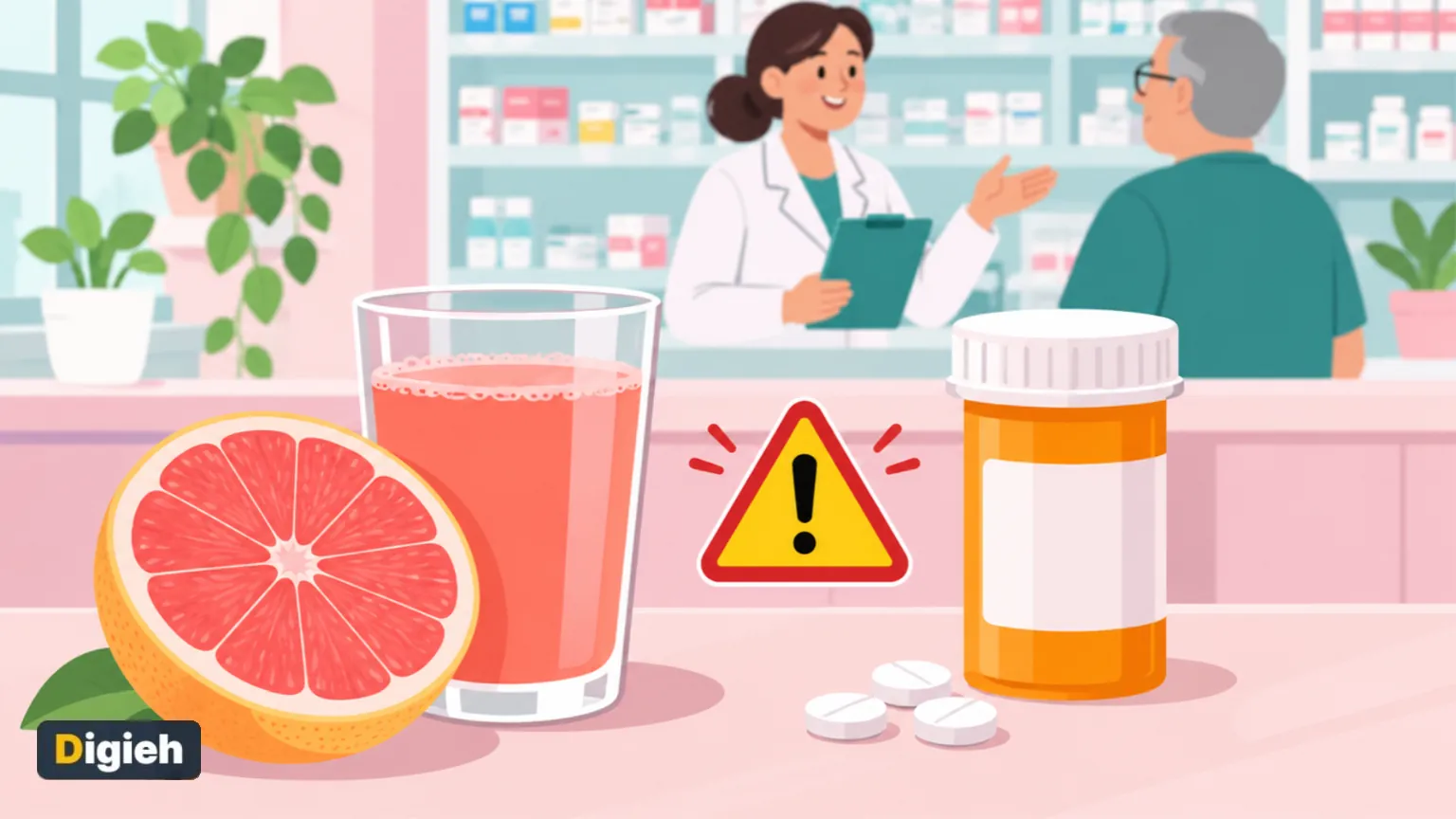
Grapefruit and grapefruit juice can interfere with some medicines. Sometimes they let too much of a drug build up in your blood. Other times they make a drug work less well.
Grapefruit does not affect every medicine, and the effect varies from person to person. This guide explains how the interaction works and which types of drugs it involves. It also covers what to ask your pharmacist.
Health note. This article is general information, not medical advice. Never stop or change a medicine without talking to your doctor or pharmacist.
Key Takeaways
- Grapefruit can raise or lower the amount of some drugs in your body.
- Affected drugs include some statins, blood pressure drugs and others.
- Seville oranges, pomelos and tangelos may have a similar effect.
- The effect differs between people and between drugs.
- Always ask your pharmacist if your medicine interacts with grapefruit.
Inside this guide
- How grapefruit affects medicines
- Types of drugs involved
- Other citrus fruits
- Who should be most careful
- How to check your medicines
- Does timing help?
- Safer fruit swaps
- Everyday tips
- Frequently asked questions
How Grapefruit Affects Medicines
Too much drug in your blood
An enzyme in your gut called CYP3A4 breaks down many medicines. According to the Food and Drug Administration, grapefruit juice can block this enzyme.
When that happens, more of the drug enters your bloodstream than intended. Higher levels can increase side effects, sometimes seriously.
Too little drug in your blood
Grapefruit can also affect proteins that carry some drugs into your body. The agency notes that for one allergy drug, fexofenadine, grapefruit juice can lower the amount that reaches the blood.
With less medicine in your system, the drug may not work as well as it should.
CYP3A4The gut enzyme that grapefruit juice can block, letting more of some drugs reach the bloodstream, per the agency.
Types of Drugs Involved
The agency lists several examples of medicines that can interact with grapefruit. It also stresses that grapefruit does not affect every drug in these groups.
| Drug type | Examples named by the agency |
|---|---|
| Some cholesterol drugs (statins) | Simvastatin, atorvastatin |
| Some blood pressure drugs | Nifedipine |
| Some organ transplant drugs | Cyclosporine |
| Some anti-anxiety drugs | Buspirone |
| Some corticosteroids | Budesonide |
| Some heart rhythm drugs | Amiodarone |
| Some antihistamines | Fexofenadine |
For statins, too much drug in the blood can raise the risk of liver and muscle damage. That is why the warning matters.
Many other cholesterol and blood pressure drugs are not affected. Your pharmacist can tell you about your exact medicine.
Did you know grapefruit can affect some medicines?
- Yes, I knew
- I had heard something
- No, this is new to me
- Not sure
Other Citrus Fruits to Watch
Grapefruit is not the only fruit with this effect. The agency says Seville oranges, pomelos and tangelos may act the same way.
- Seville oranges are often used in marmalade.
- Pomelos are large, mild citrus fruits popular in winter.
- Tangelos are a cross between tangerines and grapefruit or pomelos.
If your medicine interacts with grapefruit, avoid these fruits too unless your pharmacist says otherwise.
Sweet oranges, like navel and Valencia oranges, are generally not a concern. Still, check with your pharmacist if you are unsure.
Who Should Be Most Careful
- Older adults, who often take several medicines
- People taking heart, cholesterol or blood pressure drugs
- People who have had an organ transplant
- Anyone who drinks grapefruit juice daily
- Anyone starting a new prescription
The agency explains that the interaction depends on the person, the drug and how much juice you have. People have different amounts of the CYP3A4 enzyme, so effects vary.
New to medicine labels? Learn how to read a Drug Facts label step by step.
How to Check Your Medicines
- Read the medication guide or patient leaflet that comes with your prescription.
- Check the Drug Facts label on over-the-counter medicines.
- Look for warning stickers on your pill bottle.
- Ask your pharmacist when you pick up a new medicine.
- Tell your doctor about all the foods, drinks and supplements you use.
The agency also suggests checking juice and drink labels for grapefruit. Some mixed fruit drinks and sodas contain it.
Easy habit. Keep an up-to-date list of all your medicines on your phone. Show it to every doctor and pharmacist you visit.
Reading Your Prescription Label
Pharmacies often add small colored warning stickers to pill bottles. One may say to avoid grapefruit or grapefruit juice.
The printed leaflet that comes with your prescription also lists food warnings. Look for a section on what to avoid while taking the medicine.
If the writing is too small, ask the pharmacist for a large-print copy. Many pharmacies offer one on request.
Signs of a Possible Interaction
Side effects depend on the drug, but some warning signs are worth knowing. Call your doctor or pharmacist if you notice any of these after eating grapefruit.
- Unusual muscle pain, weakness or tenderness
- Dizziness or feeling faint
- A fast, slow or irregular heartbeat
- Your medicine suddenly seems to stop working
- New or worse side effects
Does Timing Help?
Many people wonder if they can take their pill in the morning and enjoy grapefruit later. For some drugs, spacing them apart may not help, since the effect on the enzyme can last a long time.
Do not guess. Ask your pharmacist whether any amount of grapefruit is safe with your specific medicine.
Questions to Ask Your Pharmacist
- Does grapefruit or grapefruit juice interact with this medicine?
- What about Seville oranges, pomelos or tangelos?
- Is any amount of grapefruit safe with this drug?
- Are there other foods or drinks I should avoid?
- If I want to keep eating grapefruit, is there a similar medicine without this interaction?
Pharmacists answer these questions every day. You do not need an appointment to ask.
Other Food and Drug Interactions
Grapefruit gets a lot of attention, but it is not the only food that can affect medicines.
| Food or drink | Possible concern |
|---|---|
| Alcohol | Can worsen drowsiness and interact with many drugs |
| Dairy and calcium supplements | Can reduce absorption of some antibiotics |
| Leafy greens high in vitamin K | Can affect the blood thinner warfarin |
| Caffeine | Can add to the effects of some stimulant medicines |
| Licorice | Can affect some heart and blood pressure drugs |
Read every medicine label and ask about food interactions when you start something new.
Free updates
Join the Digieh list
Be the first to know when our weekly brief launches.
No spam. Unsubscribe anytime. Read our Privacy Policy.
What If You Already Had Grapefruit?
Do not panic if you ate grapefruit before learning about this. For many medicines, one serving may cause no problems.
Call your pharmacist or doctor for advice about your specific drug. Seek urgent care for severe side effects. Examples include chest pain, fainting, a racing or irregular heartbeat or unexplained muscle pain.
Myths and Facts
- Myth, all citrus fruits interact with drugs. Fact, mainly grapefruit, Seville oranges, pomelos and tangelos are the concern.
- Myth, a small glass is always fine. Fact, even one glass can matter for some drugs.
- Myth, every statin interacts with grapefruit. Fact, only some do.
- Myth, the warning is only on prescription drugs. Fact, grapefruit can affect some over-the-counter medicines too.
Helping Older Relatives
Older adults often take several medicines and may enjoy grapefruit at breakfast. A gentle check can prevent problems.
Offer to bring their medicine list to the pharmacy for a review. Many pharmacies offer free medicine checkups.
Bring all pill bottles, vitamins and supplements in one bag for what some pharmacies call a brown bag review. The pharmacist can spot interactions and duplicate medicines in one visit. It often takes just fifteen minutes.
Safer Fruit Swaps
If you need to skip grapefruit, plenty of other fruits are full of flavor and vitamin C.
- Navel or Valencia oranges
- Clementines and mandarins
- Kiwi
- Strawberries
- Lemons and limes in small amounts for cooking
Check with your pharmacist before switching to any citrus if you take an affected medicine. Find more ideas in our guide to winter fruits and vegetables in season.
Everyday Tips
- Use one pharmacy so it can check all your medicines together.
- Read labels on juice blends and fruit cups.
- Ask about food interactions with every new prescription.
- Keep grapefruit away from older relatives who take several drugs, unless their pharmacist approves.
Wash all produce before eating, even citrus with thick peels. Learn how in our guide on how to wash fruits and vegetables.
Grapefruit Is Still Healthy for Many People
Grapefruit is low in calories and rich in vitamin C. For people who do not take affected medicines, it can be part of a healthy diet.
Store whole grapefruit at room temperature for a few days or in the fridge for longer. See our tips on how to store fruits and vegetables.
Cold Season Reminder
Many people take extra medicines during cold and flu season. Some cold remedies may interact with other drugs you take.
Ask your pharmacist before combining products. For symptom tips, see our guides on how to stop coughing at night and flu, cold and COVID symptoms.
Test Yourself
Which of these fruits may act like grapefruit with some medicines?
- Bananas
- Seville oranges
- Apples
The agency says Seville oranges, pomelos and tangelos may have a similar effect.
Who is the best person to ask about grapefruit and your medicine?
- Your pharmacist or doctor
- A grocery clerk
- Social media
Pharmacists and doctors can check your exact medicines.
Frequently Asked Questions
Can I eat grapefruit with any statin?
Not with all of them. Ask your pharmacist about your specific statin.
Is grapefruit juice worse than the fruit?
Both can cause the interaction. Avoid both if grapefruit interacts with your drug.
Do regular oranges interact with drugs?
Sweet oranges are generally not a concern, but ask if unsure.
How long does the effect last?
It can last a long time, so ask your pharmacist about timing.
Conclusion
Grapefruit can change how some medicines work, either raising or lowering drug levels. Seville oranges, pomelos and tangelos may do the same.
Read your medicine labels, ask your pharmacist and never stop a medicine on your own.
Found this useful?
Editor’s Note
This guide is accurate as of November 9, 2026. It draws on a consumer update from the Food and Drug Administration.
It is general information, not medical advice. Talk to a health professional about your own medicines.
Spot an error in this article? Please contact us at support@digieh.com or read our Corrections Policy.
Keep exploring
Your next read is waiting
 1Finance & MarketsHow Credit Card Interest Works, With a Simple Example8 min read
 2Food & LifestyleChristmas Dinner Menu Ideas: 5 Easy Menus for 20268 min read
 3HealthHow to Stop Snoring: 12 Proven Tips That Work8 min read
 4SportsAP Top 25 College Football Rankings: Georgia Takes No. 14 min read
 5FashionHow to Waterproof Boots for Winter, Step by Step8 min read
 6Home & KitchenHow to Insulate Windows for Winter on a Budget8 min read