TRENDING
How to Store Fruits and Vegetables So They Last


8 min read
Last updated November 9, 2026
To store fruits and vegetables so they last, keep most vegetables and berries in the fridge. Leave bananas, tomatoes and whole melons on the counter. Store potatoes, onions and garlic in a cool, dark, ventilated spot.
Keep fruits that release ethylene gas away from produce that spoils quickly around it. Wait to wash most produce until just before you eat it.
This guide shows where each common fruit and vegetable belongs, plus simple tricks to cut waste and save money.
Key Takeaways
- Keep your fridge at 40 degrees Fahrenheit or below.
- Store fruits and vegetables in separate fridge drawers.
- Ethylene from apples, avocados and other fruits speeds spoilage of leafy greens and many vegetables.
- Tomatoes lose flavor in the fridge, so keep them on the counter until ripe.
- Use cut, peeled or cooked produce within one to three days.
Inside this guide
- Storage basics
- Understand ethylene gas
- What goes in the fridge
- What stays on the counter
- What belongs in the pantry
- Ripen first, then chill
- Tricks to make produce last
- Food safety tips
- Frequently asked questions
Produce Storage Basics
Every fruit and vegetable has its own needs. Some like cold and moisture, while others lose flavor or texture when chilled.
The Food and Drug Administration advises keeping perishable produce in a clean refrigerator at 40 degrees Fahrenheit or below. Its guide to selecting and serving produce safely also suggests using a fridge thermometer.
Mississippi State University Extension recommends 39 degrees or less and notes the back of the fridge is coldest. The door is the warmest spot.
40°FMaximum fridge temperature the food safety agency advises for storing perishable produce, per the official guidance.
Understand Ethylene Gas
Many fruits give off a natural gas called ethylene as they ripen. It speeds ripening in nearby produce and can make sensitive items spoil sooner.
Mississippi State University Extension lists common ethylene producers and sensitive produce in its storage tips sheet.
| Ethylene producers | Ethylene-sensitive produce |
|---|---|
| Apples | Lettuce and other leafy greens |
| Avocados | Broccoli |
| Peaches, pears and plums | Cabbage |
| Melons and mangoes | Carrots |
| Tomatoes | Cucumbers and peppers |
| Citrus and berries | Fresh herbs |
Oklahoma State University Extension suggests storing fruits and vegetables in different fridge drawers for this reason.
Quick tip. Want an avocado or peach to ripen faster? Put it in a paper bag with a banana or apple. The extra ethylene speeds things up.
What Goes in the Fridge
Oklahoma State University Extension lists these fridge items in its guide to storing fresh produce for best flavor.
Vegetables
- Asparagus, broccoli and cauliflower
- Carrots, beets and radishes
- Lettuce, spinach and other leafy greens
- Mushrooms
- Sweet corn
- Peppers, cucumbers and zucchini
- Any cut or peeled vegetables
Fruits
- Berries, cherries and grapes
- Apples you will keep longer than a week
- Ripe peaches, pears, plums and kiwi
- Cut melon and other cut fruit
Use the crisper drawers. Many have a humidity slider. Set one drawer to high humidity for vegetables and the other to low for fruit.
Which produce goes bad fastest in your kitchen?
- Leafy greens
- Berries
- Bananas
- Not sure
What Stays on the Counter
Some produce tastes best and lasts longest at room temperature, away from direct sunlight.
- Bananas
- Tomatoes
- Whole melons
- Citrus fruits for short-term use
- Pineapple and mango
- Pumpkin and winter squash
- Apples you will eat within a week
The Oklahoma extension explains that cold can damage some produce. Refrigerated tomatoes, for example, do not turn red properly and lose flavor.
Keep the fruit bowl away from the stove, sunny windows and other warm spots. Heat speeds spoilage.
Good to know. Ripe fruit left on the counter attracts fruit flies. If they appear, our guide on how to get rid of fruit flies can help.
What Belongs in the Pantry
A cool, dark, ventilated spot suits these long-lasting staples.
- Potatoes and sweet potatoes
- Dry onions and shallots
- Garlic
- Winter squash, if your kitchen is warm
Mississippi State University Extension suggests dry storage at about 60 to 70 degrees Fahrenheit for these items. Use baskets, mesh bags or paper bags so air can circulate.
Keep potatoes in the dark to stop them from turning green. Cut away green spots and sprouts before cooking.
Do not store potatoes in the fridge, since very cold temperatures can change their texture and flavor. Keep potatoes and onions in separate baskets too, because many cooks find they last much longer that way.
Ripen First, Then Chill
Farmers pick some fruits before they are ripe. Ripen them on the counter, then move them to the fridge to slow further ripening.
| Fruit | How to tell it is ripe |
|---|---|
| Avocado | Gives slightly to gentle pressure |
| Peach and plum | Smells sweet and gives slightly |
| Pear | Soft near the stem |
| Kiwi | Gives slightly when pressed |
The Oklahoma extension suggests ripening these fruits in a paper bag or perforated plastic bag. Once ripe, refrigerate them.
Tricks to Make Produce Last Longer
- Wrap leafy greens loosely in a dry paper towel inside a container to absorb extra moisture.
- Stand fresh herbs like parsley and cilantro in a glass of water in the fridge.
- Keep berries dry and unwashed until you eat them.
- Remove any moldy berry or soft spot right away so it does not spread.
- Trim carrot and beet tops before storing, since leaves pull moisture from the roots.
- Store celery and carrots in water in a sealed container for extra crunch.
A clean fridge helps produce last longer too. Our guide on how to deep clean a fridge shows how.
Free updates
Join the Digieh list
Be the first to know when our weekly brief launches.
No spam. Unsubscribe anytime. Read our Privacy Policy.
How Long Common Produce Lasts
These are rough guides for whole, uncut produce stored correctly. Ripeness when you buy it makes a big difference.
| Produce | Where to store | Typical freshness |
|---|---|---|
| Berries | Fridge | A few days |
| Leafy greens | Fridge | About 3 to 7 days |
| Carrots | Fridge | Several weeks |
| Apples | Fridge | Several weeks |
| Bananas | Counter | A few days to a week |
| Potatoes | Cool, dark pantry | Several weeks |
| Onions | Cool, dry pantry | Several weeks |
Trust your senses too. Slimy texture, mold or an off smell means it is time to compost or discard the item.
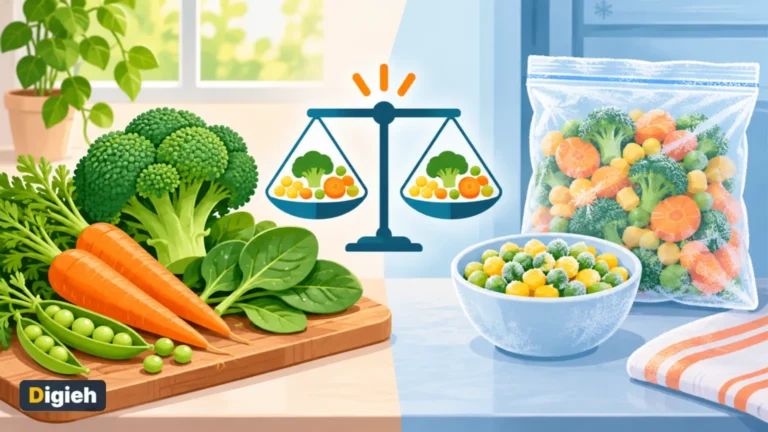
Wondering if frozen is as healthy as fresh? Read frozen vs fresh vegetables to see what research says.
Avocados need their own timing. Learn how to tell if an avocado is ripe and when to refrigerate it.
Freezing Fruits and Vegetables
Freezing is a great way to save produce you cannot eat in time. Most fruits and vegetables freeze well with a little prep.
- Wash, dry and cut produce into pieces first.
- Spread berries and fruit pieces on a tray and freeze them before bagging, so they do not clump.
- Briefly blanch most vegetables in boiling water, then cool them in ice water before freezing.
- Squeeze air out of freezer bags and label them with the date.
- Use frozen produce in smoothies, soups, sauces and baking.
Lettuce, cucumbers and other watery vegetables do not freeze well. They turn limp and soggy when thawed.
Shop Smarter to Waste Less
- Plan meals before you shop and buy only what you need.
- Buy a mix of ripe and less ripe fruit so it ripens over the week.
- Choose loose produce so you can pick the exact amount.
- Put new produce behind older items so you use the oldest first.
Small changes like these can save a surprising amount each month.
Food Safety Tips
- Refrigerate all pre-cut and packaged produce.
- Keep produce away from raw meat, poultry and seafood.
- Use separate cutting boards for produce and raw meat.
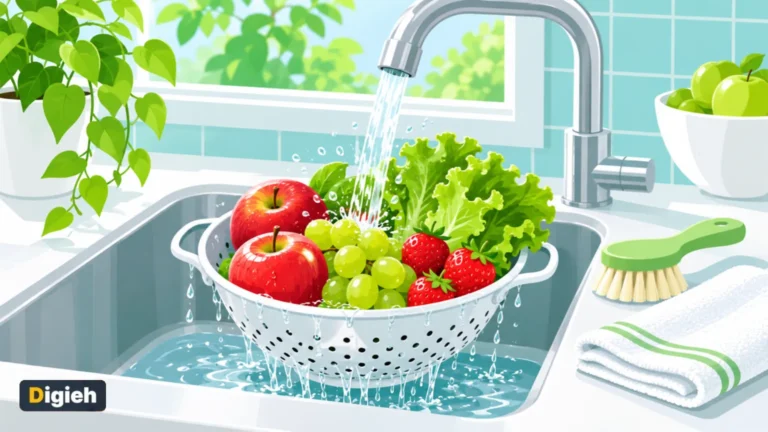
- Wash produce under running water just before eating or cooking.
- Do not use soap, detergent or bleach on produce.
The Oklahoma extension notes that produce labeled ready-to-eat or triple washed does not need rinsing again. It also suggests using cut, peeled or cooked produce within one to three days.
Use It Before You Lose It
Even with perfect storage, some produce will soften. That does not mean it belongs in the trash.
- Blend soft fruit into smoothies.
- Turn wilted vegetables into soup or stir-fry.
- Freeze ripe bananas for baking.
- Roast tired vegetables with olive oil and herbs.
Try our easy vegetable soup recipe to use up extras. After big meals, see our Thanksgiving leftover recipes.
Your Produce Storage Checklist
- My fridge is at 40 degrees or below
- Fruits and vegetables sit in separate drawers
- Tomatoes and bananas stay on the counter
- Potatoes and onions live in a cool, dark, airy spot
- I wash produce just before eating
- I use cut produce within a few days
Try this today. Move your apples away from your lettuce and see how much longer the greens last this week.
Test Yourself
Where should you store tomatoes for the best flavor?
- In the freezer
- On the counter
- In the coldest part of the fridge
Cold can damage tomatoes, so they keep better flavor at room temperature.
Why keep apples away from leafy greens?
- Apples are too heavy
- Greens make apples sour
- Apples give off ethylene that speeds spoilage
Ethylene from apples can make sensitive greens spoil faster.
Frequently Asked Questions
Should I wash fruit before putting it in the fridge?
Usually no. Wash produce just before eating, except leafy greens, which stay crisper if washed and dried first.
Can bananas go in the fridge?
Once ripe, yes. The peel darkens, but the fruit inside stays good a little longer.
Why do my potatoes sprout?
Warmth and light cause sprouting. Store them in a cool, dark, ventilated place.
How long do cut fruits and vegetables last?
Use them within one to three days and keep them refrigerated.
Conclusion
Storing produce well is simple once you know where each item belongs. Chill most vegetables and berries, leave tomatoes and bananas out and keep potatoes and onions cool and dark.
Separate ethylene producers from sensitive produce and wash just before eating to cut waste and save money.
Found this useful?
Editor’s Note
This guide is accurate as of November 9, 2026. It draws on the Food and Drug Administration and extension services at Oklahoma State University and Mississippi State University.
Storage times vary with ripeness and kitchen conditions, so check produce often.
Spot an error in this article? Please contact us at support@digieh.com or read our Corrections Policy.
Keep exploring
Your next read is waiting
 1Food & LifestyleHow to Make Mulled Wine: Easy Recipe and Tips for the Holidays8 min read
 2Finance & MarketsBuy Now, Pay Later Risks You Should Know Before Paying8 min read
 3AI & TechHow to Spot AI Voice Scam Calls and Protect Your Family8 min read
 4Fruits & VegetablesHow to Tell If an Avocado Is Ripe (and Ripen It Faster)8 min read
 5NewsBoxing Day 2026: Date, Bank Holiday and Traditions8 min read
 6Home & KitchenHow to Insulate Windows for Winter on a Budget8 min read